Fish
Fish Fire
Fire Hike
Hike Bird
Bird

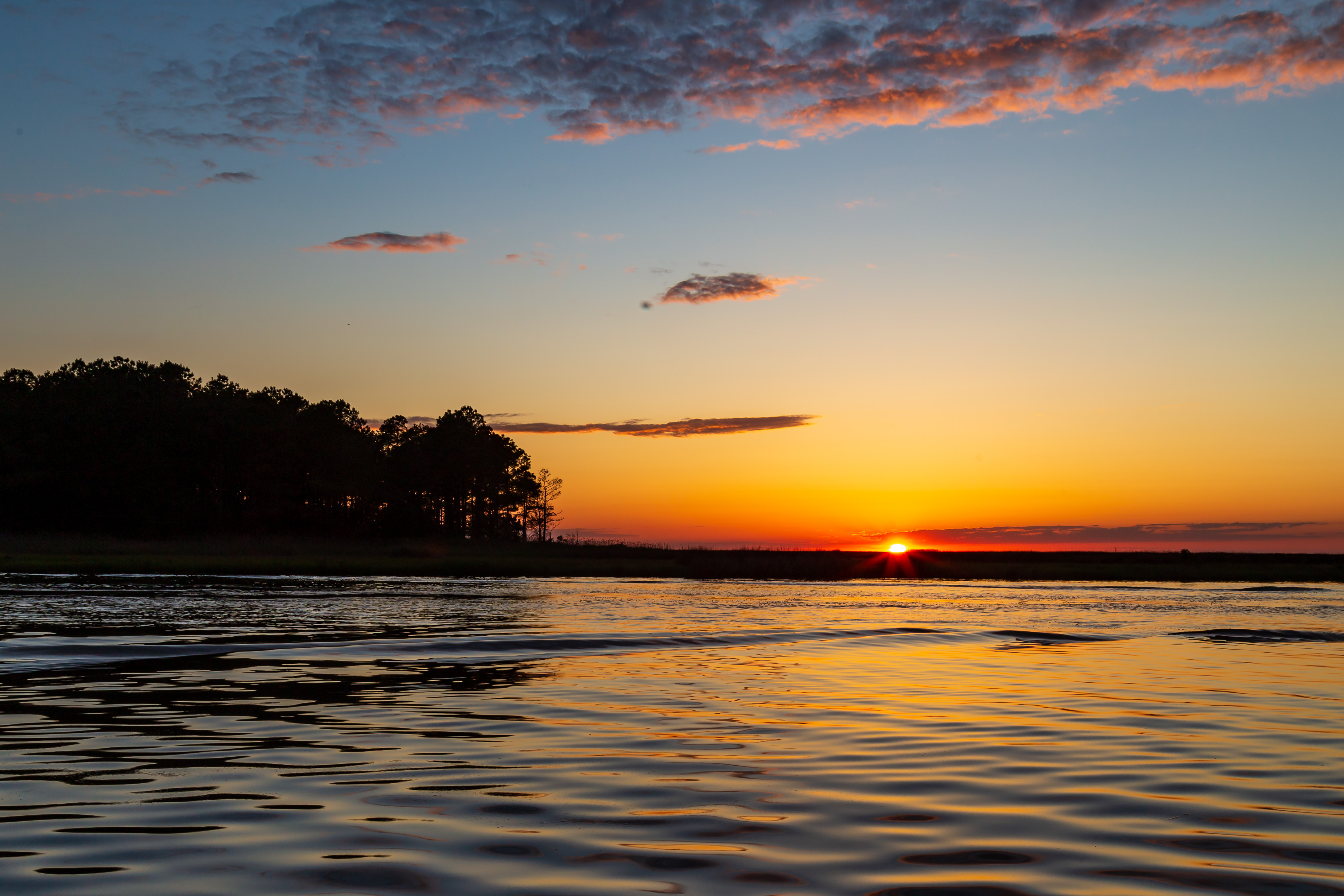

The Chesapeake Bay is the largest estuary in the United States, nearly 200 miles of brackish water reaching from the mouth of the Susquehanna River in Maryland down to the Atlantic at Virginia Beach, fed by dozens of rivers and rimmed by thousands of miles of marsh, points, and tidal creeks. For an angler it is hallowed ground: the Chesapeake is the single most important spawning and nursery area for striped bass on the entire Atlantic coast, and on top of that it grows a huge cast of other fish and the most famous blue crabs in the world. This guide takes the whole-bay view, Maryland and Virginia, top to bottom, and walks you through what swims here, where to find it, and how to catch it.
Striped Bass (Rockfish): The Bay's Signature Fish
If the Chesapeake has a soul, it's the striped bass, called rockfish by everyone who fishes here. The Bay is where most of the coast's stripers are born, and they're catchable somewhere in the system nearly year-round, with three distinct seasons.
Spring is trophy time. In April and May, big pre- and post-spawn fish stage in the Bay, and this is your best shot at a rockfish over 40 or even 50 pounds. Anglers troll large parachute jigs, bucktails, and umbrella rigs along channel edges for these giants, while up on the Susquehanna Flats at the head of the Bay, a famous catch-and-release trophy fishery lets you cast to spawning-run fish in the shallows.
Summer turns to structure and current. As the water warms, rockfish concentrate around the pilings of the Chesapeake Bay Bridge, hard bottom, and channel edges, and the classic techniques are chumming and live-lining a spot (a small baitfish) down to fish holding on the structure.
Fall is the light-tackle jigging season, and for many it's the best of all. In October and November, rockfish gorge on bait before winter, herding menhaden to the surface in blitzes marked by diving birds. You run to the birds and cast soft-plastic jigs on lead heads into the feeding frenzy, fast, visual, and addictive. Our how to catch striped bass guide covers the rigs in detail.
Striped Bass Fishing TechniquesBeyond Rockfish: The Bay's Deep Cast of Species
The Chesapeake is far more than a one-fish bay. White perch are the workhorse panfish, abundant, delicious, and perfect for kids fishing bottom rigs around docks, rivers, and hard bottom from late spring on. Spot and croaker fill the same role over sandy and muddy bottom in summer, biting bloodworms and squid and often saving the day. Bluefish and Spanish mackerel arrive with the warm water and blitz bait through the summer, taken by trolling small spoons fast or casting metal into surface schools. Flounder ambush the sandy edges and channels, and weakfish (gray trout) round out the light-tackle mix. Structure lovers chase tautog (blackfish) around the Bay Bridge, the tunnels, and wrecks in spring and fall. And in the lower Bay, the summer brings heavyweight visitors: cobia, which anglers sight-cast and chum for off Virginia, plus big red drum and black drum over the flats and channels. It's a bay where you can target a fifty-pound cobia in the morning and fill a cooler with panfish in the afternoon.
Light-Tackle Fishing for Drum and Inshore SpeciesThe Tidal Rivers: Catfish, Snakeheads, and Bass
Don't overlook the Bay's freshwater and brackish tributaries, because some of the fastest-growing fishing in the Chesapeake is up the rivers. The Potomac, James, Rappahannock, and their creeks now hold enormous numbers of blue catfish, an introduced species that has exploded to giant sizes, provides rod-bending action for beginners on cut bait, and makes excellent table fare (biologists actively encourage keeping them). The same tidal rivers are ground zero for the northern snakehead, another invader that has become a prized light-tackle and fly target in the grassy shallows, toothy, hard-fighting, and, again, encouraged for the cooler. Add resident largemouth bass in the tidal grass and lily pads, plus spring runs of white and yellow perch, and the rivers give you a completely different, sheltered fishery when the main Bay is blown out. For a family or a first-timer, an afternoon of nonstop blue catfish on a tidal river is one of the easiest ways to bend a rod in the whole watershed.
Prime Spots on the Bay
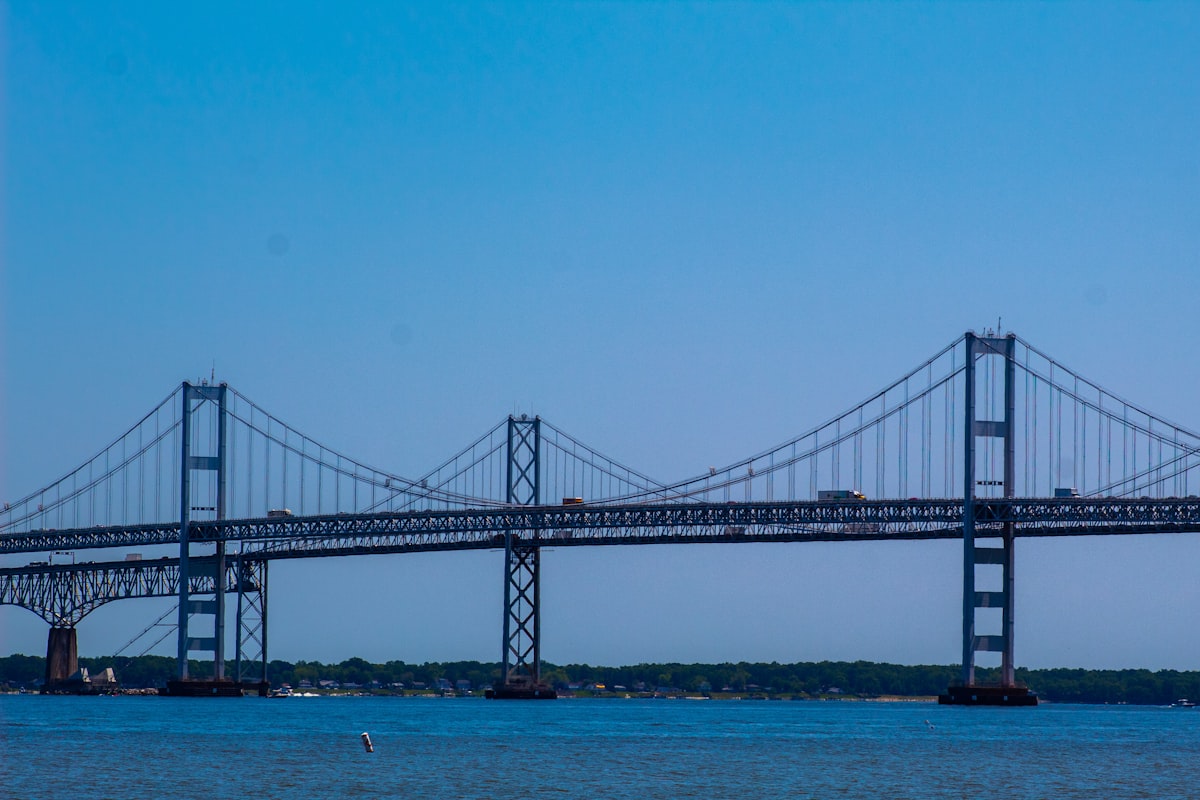
- The Chesapeake Bay Bridge, the twin spans off Annapolis create miles of piling structure that hold rockfish year-round; anglers troll the pilings in 25 to 50 feet, chum in summer, and jig the light-tackle bite.
- The Chesapeake Bay Bridge-Tunnel (CBBT), at the Bay's mouth in Virginia, this massive structure is a magnet for tautog, red drum, sheepshead, and flounder, and the surrounding waters are cobia country in summer.
- The Susquehanna Flats, the shallow grass flats at the head of the Bay, home to the spring catch-and-release trophy striper fishery.
- Poplar Island and the mid-Bay, rocky, restored islands and hard bottom that produce topwater rockfish.
- The tributary rivers, the Potomac, Choptank, Patuxent, Rappahannock, and James are fisheries in their own right for rockfish, perch, catfish, and more, and offer sheltered water when the main Bay is rough.
Techniques for the Bay
The Chesapeake rewards anglers who match the method to the season. Trolling spreads of spoons, bucktails, and umbrella rigs covers water for spring and fall stripers and summer blues and Spanish. Chumming, anchoring up-current of structure and ladling ground menhaden to draw fish into a slick, is a summer Bay institution. Live-lining a spot on light line to bridge pilings is deadly for summer rockfish. Light-tackle jigging with soft plastics on lead heads is the fall run's signature and works over structure year-round. Bottom fishing with simple two-hook rigs and bloodworms accounts for perch, spot, and croaker. And topwater at dawn over shallow structure will get you the most exciting strikes of your life. Learn two or three of these and you can fish the Bay in any season.
Blue Crabs: The Other Chesapeake Icon
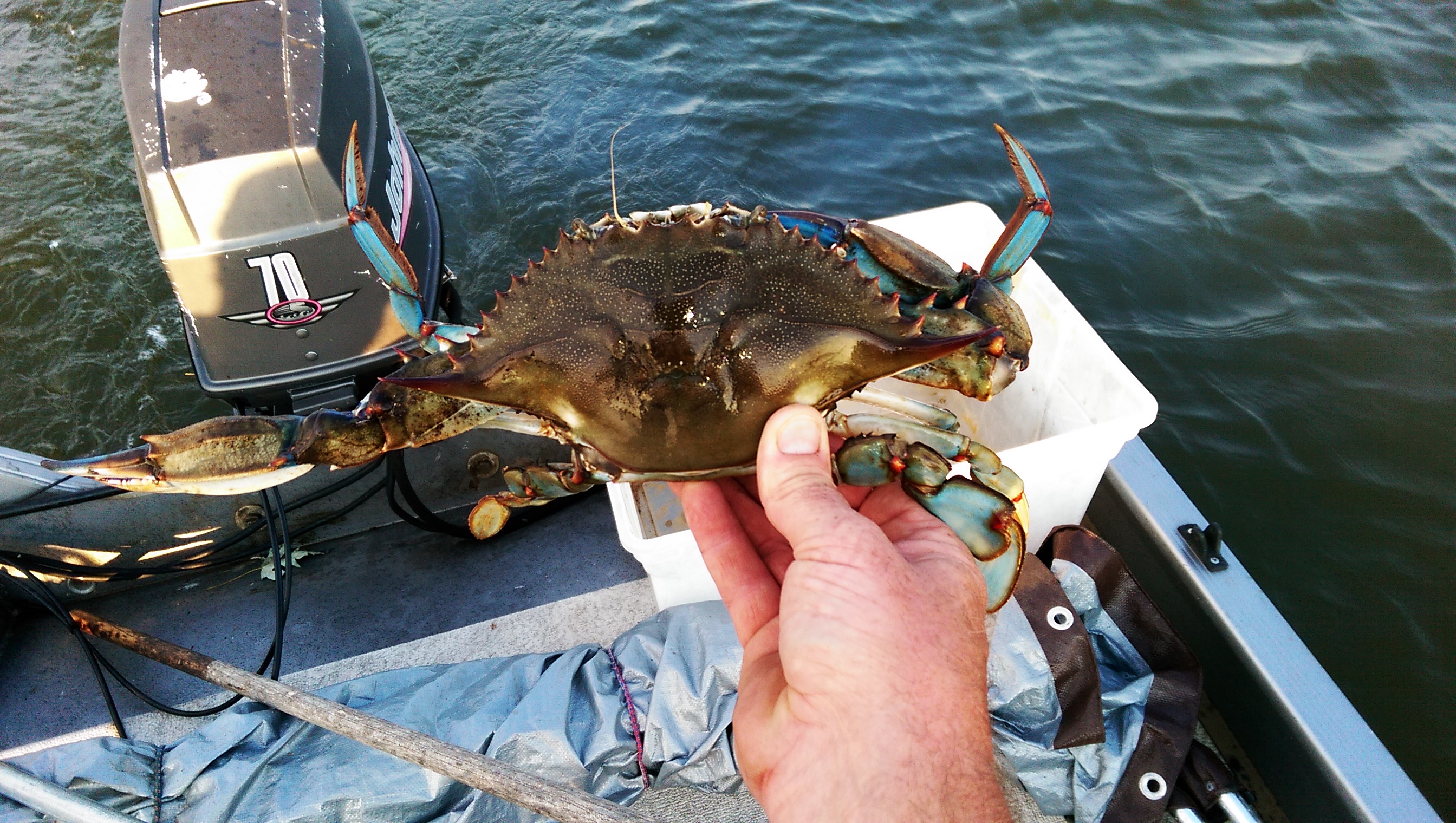
You cannot talk about the Chesapeake without the blue crab. Catching a bushel of "Maryland blues" is as much a part of Bay culture as fishing for rockfish, and it's dead simple: tie a chicken neck or a fish head to a string, drop it off a dock or a boat, and slowly raise it while a waiting partner scoops the feeding crab with a long-handled net. Crab pots and baited trotlines catch them in bulk. Summer is prime, you keep only legal-size hard crabs and release females as required, and a steamed pile of Old Bay-dusted blues is the reward. It's the most family-friendly thing you can do on the water here.
Fishing From Shore
You don't need a boat to enjoy the Chesapeake. Public piers, points, jetties, and bridge catwalks all over the Bay put you on fish, Sandy Point and Matapeake in Maryland, the CBBT fishing piers in Virginia, and countless community and county piers up the tributaries. From shore you'll catch white perch, spot, croaker, and small rockfish on bottom rigs, and larger stripers and blues from the right rocks and points on a moving tide. It's the cheapest, easiest way to get a first taste of Bay fishing, and it's how generations of Chesapeake anglers got their start.
Reading Tides and Water
Like any tidal fishery, the Chesapeake fishes best when the water is moving. The Bay has a modest tidal range, but that current is what positions fish: rockfish, perch, and blues stack on the down-current side of bridge pilings, points, channel edges, and reefs, waiting to ambush bait swept past them, and the bite typically turns on with the flood or ebb and slows at slack. Fish structure on a running tide and you'll out-catch someone soaking bait through a dead slack every time.
Water clarity and wind matter just as much. The Chesapeake is a shallow, wind-driven estuary, and a hard blow quickly stacks up a short, nasty chop and muddies the shallows, one big reason the sheltered tributary rivers are so valuable when the main Bay is rough. Summer heat brings another wrinkle: the deep channels can run low on oxygen, pushing fish shallower and prompting the summer no-target rules that protect stressed rockfish. And the whole Bay is a salinity gradient, fresher at the northern head, saltier toward the Virginia mouth, which is exactly why you catch largemouth and catfish up top and cobia and red drum down low. Learn to read the tide, the wind, and where you sit on that fresh-to-salt gradient, and this enormous, complicated bay starts to make sense.
The Summer Bay Bridge Game
The summer rockfish fishery around the Chesapeake Bay Bridge deserves its own mention, because it's a rite of passage. As the water warms and fish leave the open Bay for shade and current, they pack around the bridge's pilings and rock piles. Two techniques rule. Chumming means anchoring up-current of the structure and steadily ladling ground menhaden overboard to create a scent slick that pulls fish to your baited hooks drifting back in the current, a relaxed, deadly, and very Chesapeake way to fill a cooler. Live-lining is the run-and-gun version: you catch small spot, then send them back out alive on a light leader to swim naturally down to rockfish holding tight to the pilings, where a big fish inhales them. Both put you shoulder to shoulder with the local fleet on a summer morning, and both are beginner-friendly once someone shows you the anchor-and-current setup.
When to Go
- Spring (April–May): Trophy rockfish season, trolling for 40-pound-plus fish and catch-and-release on the Susquehanna Flats.
- Early summer (June): White perch, spot, and the first bluefish show; rockfish move to structure.
- Summer (July–August): Chumming and live-lining the Bay Bridge for rockfish; blues, Spanish mackerel, cobia, and red drum in the lower Bay; peak blue-crabbing.
- Fall (October–November): The light-tackle jigging run, the birds-and-blitzes season many anglers rate as the year's best.
- Winter: The main Bay largely closes to striped bass to protect the stock; tautog and some catfishing continue in the rivers.
Licenses and Conservation
The Chesapeake straddles two states, so know which water you're in: Maryland and Virginia each require their own saltwater fishing license (with reciprocal recognition on the tidal Potomac handled by a separate authority). Because the Bay is the striped bass nursery for the whole coast, rockfish are among the most tightly regulated fish in the country, size and creel limits, spring trophy rules, summer no-target closures during hot low-oxygen periods, and seasonal closures all apply, and they differ between Maryland and Virginia and change from year to year. Always check the current regulations for the exact state and area before you keep a fish. Handle and release rockfish carefully in warm water, use circle hooks when bait fishing as required, and you're helping protect the fishery that defines the Bay.
A Beginner's First Trip
If it's your first time, keep it simple and seasonal. In summer, take the family to a public pier with a few bottom rigs and a box of bloodworms and catch a bucket of white perch and spot, nonstop action and great eating. Add a chicken neck and a net and you're crabbing at the same time. If you want rockfish, the fall light-tackle jigging run is the easiest and most fun way to catch them: find the diving birds and cast a soft-plastic jig into the blitz. Either trip gets you on fish fast for the price of a license and a little tackle, and teaches you a corner of the Bay before you ever tackle the trolling game.
Guides and Gear
There's no shortcut for local knowledge on water this big, which structure, tide, and technique is producing changes constantly across 200 miles of bay, so time with the local fleet or a day riding along on a charter can teach you more than a season of guessing. For gear, a medium 7-foot rod with a 3000–4000 spinning reel and 15- to 20-pound braid handles jigging and light-tackle work; a Shimano Tekota line-counter reel on a stout trolling rod covers the spring and fall trolling. Stock soft-plastic jigs like a BKD or a Gulp swimbait on 1- to 2-ounce lead heads for rockfish, small spoons for blues and Spanish, and simple two-hook bottom rigs with bloodworms for perch and spot. A landing net, a crab net, and a bushel basket round out a proper Chesapeake day. Whatever you chase, watch the wind, the shallow Bay stacks up a nasty chop fast, and fish the moving tide.
The Chesapeake Bay rewards anglers who read the season and the tide across its 200 miles. Pick your target, a spring trophy rockfish, a summer cobia, a fall blitz, or a bushel of blue crabs, check the rules for Maryland or Virginia, and dig into the greatest estuary fishery on the East Coast. For a closer look at one corner, see our how to fish Chesapeake Bay, MD guide.