Fish
Fish Fire
Fire Hike
Hike Bird
Bird

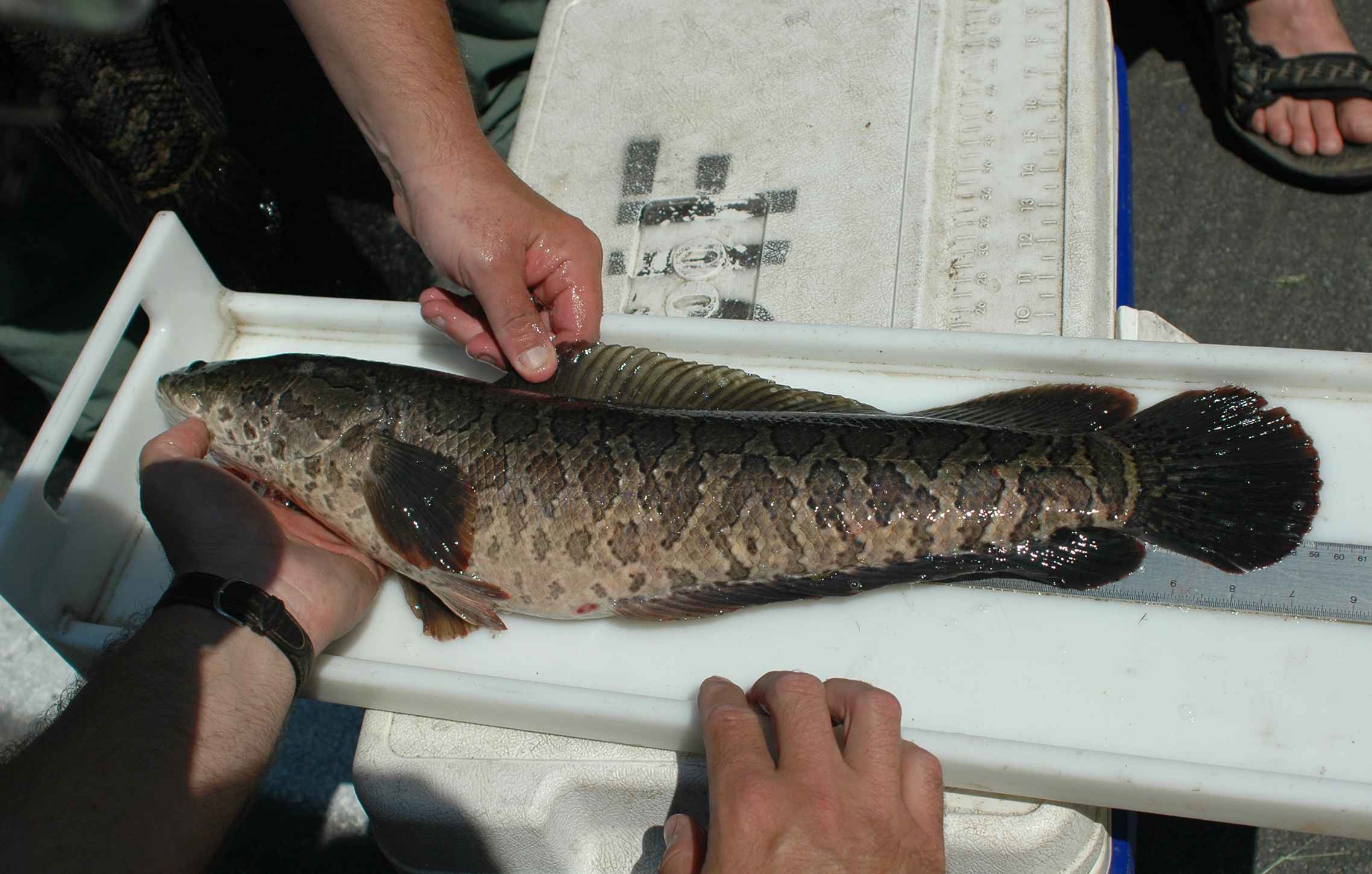

The northern snakehead (Channa argus) is one of the most exciting, and controversial, fish an angler can target in North America. This air-breathing, ambush-predator invader explodes on a topwater frog like few freshwater fish can, fights with brute strength in thick cover, and has spread through the Potomac and beyond into much of the mid-Atlantic and parts of the South. It is also an invasive species that in most places must be killed, never released. That combination, a hard-hitting gamefish that you're actually encouraged to remove, has made snakehead fishing wildly popular. This guide covers how to find and catch northern snakehead, and how to handle them responsibly and legally.
What Is a Northern Snakehead?
The northern snakehead is a long, cylindrical, ambush predator native to Asia, introduced to U.S. waters and now established in the Potomac River drainage and many other systems across the Northeast, mid-Atlantic, and South. It has a snake-like head, a long dorsal fin running most of its back, a big toothy mouth, and mottled brown-and-black blotches that provide superb camouflage in weedy shallows. Snakeheads commonly run 1 to 5 pounds and can exceed 15 pounds and three feet in the biggest specimens.
Two things make snakeheads unique. First, they are obligate air-breathers: they gulp air at the surface and can survive in warm, stagnant, low-oxygen water that would kill most gamefish, and even survive out of water for extended periods in damp conditions. Second, they are fierce parental guardians: snakeheads spawn in the shallows and both parents fiercely defend a tight ball of bright-orange fry, which is a key behavior anglers exploit. Their air-breathing lets them thrive in the thick, mucky, weed-choked backwaters where they ambush anything they can fit in their mouths.
Where and When to Catch Snakehead
Snakeheads love shallow, weedy, stagnant water: vegetated backwaters, tidal creeks, marshes, canals, ponds, and the grassy, lily-pad-choked edges of rivers like the Potomac. Look for them in the thickest cover you can find, matted grass, pads, spatterdock, reeds, and wood, in shallow, warm, often oxygen-poor water where other predators can't live but snakeheads flourish. They're an ambush predator, so they hold tight to cover and edges, waiting to blast prey.
The best time is warm weather, late spring through early fall, when snakeheads are shallow, active, and aggressive. Peak fishing often coincides with the spawn and post-spawn (roughly late spring into summer), when adults guard fry balls in the shallows: spot a squirming orange cloud of fry near the surface and there are almost always one or two big, aggressive parents right beneath it, ready to annihilate anything that threatens their young. Early morning and warm, calm days are prime, and because snakeheads breathe air, you'll often see or hear them gulp at the surface, which helps you locate fish. In cold weather they go deep and dormant and are much harder to catch.
Topwater Frogs: The Signature Technique
The number-one way to catch northern snakehead, and the reason so many anglers chase them, is a hollow-body topwater frog worked over and through thick vegetation. Nothing beats the heart-stopping, water-erupting strike of a snakehead crushing a frog.
Snakehead Fishing with Topwater FrogsCast a weedless hollow-body frog onto matted grass, pads, and open pockets, and work it with a walk-the-dog or twitch-pause cadence across the cover. Snakeheads will blow up through the salad to hit it. The critical part is the hookset: snakeheads often miss or slap the frog, and they have hard, bony mouths, so wait until you feel the weight of the fish, "bow to the cow", before setting hard, rather than swinging on the splash. Miss one? Cast right back, because a fired-up snakehead will often hit again. This is high-adrenaline, visual fishing at its best.
Swimbaits and Soft Plastics
When snakeheads won't commit to topwater, or when you're fishing edges and slightly deeper cover, swimbaits, paddletails, and soft plastics are deadly.
Catching a Snakehead on a SwimbaitRig a paddletail or soft jerkbait weedless (Texas-rigged or on a weighted swimbait hook) and swim it past cover edges, through pockets, and right in front of guarding fish. Chatterbaits and spinnerbaits also draw reaction strikes along grass lines. When you locate a fry ball, casting a swimbait or soft plastic right to the guarding parents almost always triggers a violent, protective strike, the adults attack to drive off the perceived threat. Bright colors that stand out and natural baitfish patterns both produce; let the fish tell you what they want.
Punching and Fishing Heavy Cover
Snakeheads live in the nastiest cover, and often the only way to reach them is to punch through matted vegetation with heavy tackle. This is close-quarters power fishing.
Punching Thick Grass for Northern SnakeheadsUse a heavy or extra-heavy rod, high-speed reel, and heavy braided line (50 to 80 pound), you need the backbone to horse a strong fish out of dense cover before it wraps you up and the abrasion resistance braid provides. Rig a compact soft plastic (a creature bait or craw) behind a heavy tungsten punch weight, punch it through the mat into the open water beneath, and hold on. When a snakehead eats in heavy cover, set hard and immediately pull it up and out on top of the mat, skiing it back to you before it can dig in. This isn't finesse fishing, it's a tug-of-war, and heavy gear is not optional.
Bowfishing for Snakehead
Because snakeheads are invasive and often cruise the shallows or hold near the surface to breathe air, they're a popular and legal bowfishing target in many areas, an effective way to remove them and a fun challenge in its own right.
Bowfishing for Northern SnakeheadBowfishers stalk the shallows, looking for snakeheads basking, guarding fry, or gulping air near the surface, and take them with a bowfishing arrow. It's sight-fishing that demands stealth and quick shooting, and because you're removing an invasive species, it's actively encouraged in many snakehead waters. As always, check your state and local regulations on bowfishing methods and any restrictions before you go, and remember the same rule applies: harvested snakeheads must be killed and kept, not returned to the water.
The Invasive Rules: You Must Not Release Them
This is the most important thing to know about snakehead fishing: in nearly every U.S. state, the northern snakehead is a prohibited invasive species that must be killed immediately and may never be released, transported alive, or moved between waters.
Why Anglers Must Kill Northern SnakeheadsSnakeheads are voracious predators that can damage native fish populations, and their air-breathing ability lets them survive being moved and even wriggle short distances over land, so releasing one, or trying to relocate it alive, can spread the invasion and is illegal in most places. If you catch a snakehead, the standard requirement is to kill it on the spot (typically by severing the head, gutting it, or placing it on ice) and never put it back. Report catches to your state wildlife agency where requested, as many track the spread. This is a rare fishery where harvest is the responsible, expected, and legally required outcome, so plan to keep every snakehead you catch. Always confirm the specific regulations for your state, since the details of legal dispatch and reporting vary.
Understanding Snakehead Behavior
To catch snakeheads consistently, think like a hunter of a shallow-water ambush predator. Everything centers on shallow, warm, heavily vegetated, low-oxygen water where snakeheads have a competitive edge thanks to air-breathing. They relate tightly to cover and edges, the line between matted grass and open water, pockets in the pads, the mouths of tidal creeks, where they can hide and ambush. Because they breathe air, watching and listening for surface gulps is a genuine location tool; a "gulping" fish tells you exactly where to cast.
The spawn is the single biggest opportunity. When snakeheads are guarding fry balls, they abandon caution and attack anything near their young, making them far easier to target and catch. Cover water to find active fish or fry balls, fish the thickest cover thoroughly, and be ready for explosive, close-range strikes. And because snakeheads are so strong and live in such heavy cover, always err toward heavier tackle than you think you need, a big snakehead in the salad will expose any weak link in your gear.
Dialing In Your Tackle
Because snakehead fishing is close-range power fishing in heavy cover, your gear matters as much as your presentation. Start with a heavy or extra-heavy fast-action rod with enough backbone to drive a hook into a bony mouth and immediately turn a strong fish before it buries in the salad. Pair it with a high-speed baitcasting reel, a fast retrieve helps you pick up slack quickly after a topwater blowup and keeps a hooked fish coming up and over the mat instead of down into it.
Braided line is non-negotiable. Use 50- to 80-pound braid for frogs and punching, because braid cuts through vegetation, has zero stretch for a hard hookset, and resists the abrasion of dragging a fish through grass and pads. For frogs, upsize the line and check your hook points often, since a snakehead's hard mouth dulls and bends cheap hooks. Keep terminal tackle simple and strong: quality frogs with stout hooks, heavy tungsten punch weights (three-quarter to over one ounce) with a good pegging system, and beefy extra-wide-gap hooks for creature baits. A landing net or a firm, confident grip behind the head helps you control a thrashing, toothy fish at the boat or bank. Cutting corners anywhere in this chain, light line, a soft rod, a dull hook, is how big snakeheads end up wrapped in the weeds and gone.
Sight-Fishing and Locating Fry Balls
One of the most productive and exciting ways to target snakeheads is to actively hunt for fry balls during the late-spring and summer spawn. Snakehead fry cluster in a dense, squirming ball of hundreds of bright orange-red young that sits near the surface in the shallows, and it's often visible from a distance as an orange smudge or a churning patch of water. Cruise the shallow, weedy edges slowly and scan for that telltale orange cloud, and when you find one, you've essentially found a guaranteed pair of catchable adults.
The guarding parents hold directly beneath or beside the fry and will viciously attack anything that comes near their young, so a well-placed cast, frog, swimbait, or soft plastic, right to the edge of the fry ball almost always triggers a savage protective strike. Approach quietly, because spooked adults will sometimes push the fry deeper or away, and make your first cast count. If you catch one parent, cast right back, since snakeheads often pair up and the second guardian may still be there. Beyond fry balls, learn to spot cruising and basking fish and watch for surface gulps, snakeheads must rise to breathe air, and a gulping or wake-pushing fish in the shallows is a target you can cast to on sight. This visual, hunting style of fishing is a huge part of the sport's appeal.
Cleaning and Eating Snakehead
Here's the upside of a fishery where you must keep your catch: northern snakehead is excellent eating. The flesh is firm, white, flaky, and mild, widely regarded as one of the best-tasting freshwater fish, and it holds up beautifully to frying, blackening, grilling, and use in fish tacos or chowder.
How to Clean and Cook Northern SnakeheadSnakeheads are tough-skinned and have a distinct bone structure, so many anglers fillet them by working along the backbone and rib cage carefully; the reward is thick, boneless, firm fillets. Because you're required to keep every fish, snakehead fishing has become popular precisely because it pairs great sport with genuinely great table fare, you get an explosive topwater fight and a delicious meal, all while doing conservation a favor by removing an invasive predator. Ice your catch promptly for the best quality, and enjoy one of the few fisheries where filling the cooler is the whole point. A sharp, stiff fillet knife and a pair of gloves make quick work of the tough skin, and the thick fillets freeze well if you catch more than you can eat fresh, so keep a well-iced cooler on board every trip, since with snakehead there's no such thing as too many fish in the box.
Bringing It All Together
The northern snakehead offers something almost no other freshwater fish can: guilt-free, encouraged harvest of a hard-hitting gamefish that blows up on topwater frogs and fights like a bulldog in the thickest cover. Find the shallow, weedy, stagnant backwaters, throw a frog or a weedless swimbait over and through the salad, especially near guarding fry balls in early summer, set hard with heavy braid, and be ready for an eruption. Then keep every fish, because that's both the law and a delicious reward. Just remember the golden rule of snakehead fishing: never, ever release one.
For more hard-fighting freshwater predators and a native look-alike, see our guides to the largemouth bass, the bowfin, and the chain pickerel.
Want to find the tidal creeks and grass mats where snakeheads live? Scout the shallow, weedy backwaters and marshy edges near you, get out early on a warm morning when the fish are gulping air in the shallows, and go get in on the explosive topwater action.