Fish
Fish Fire
Fire Hike
Hike Bird
Bird

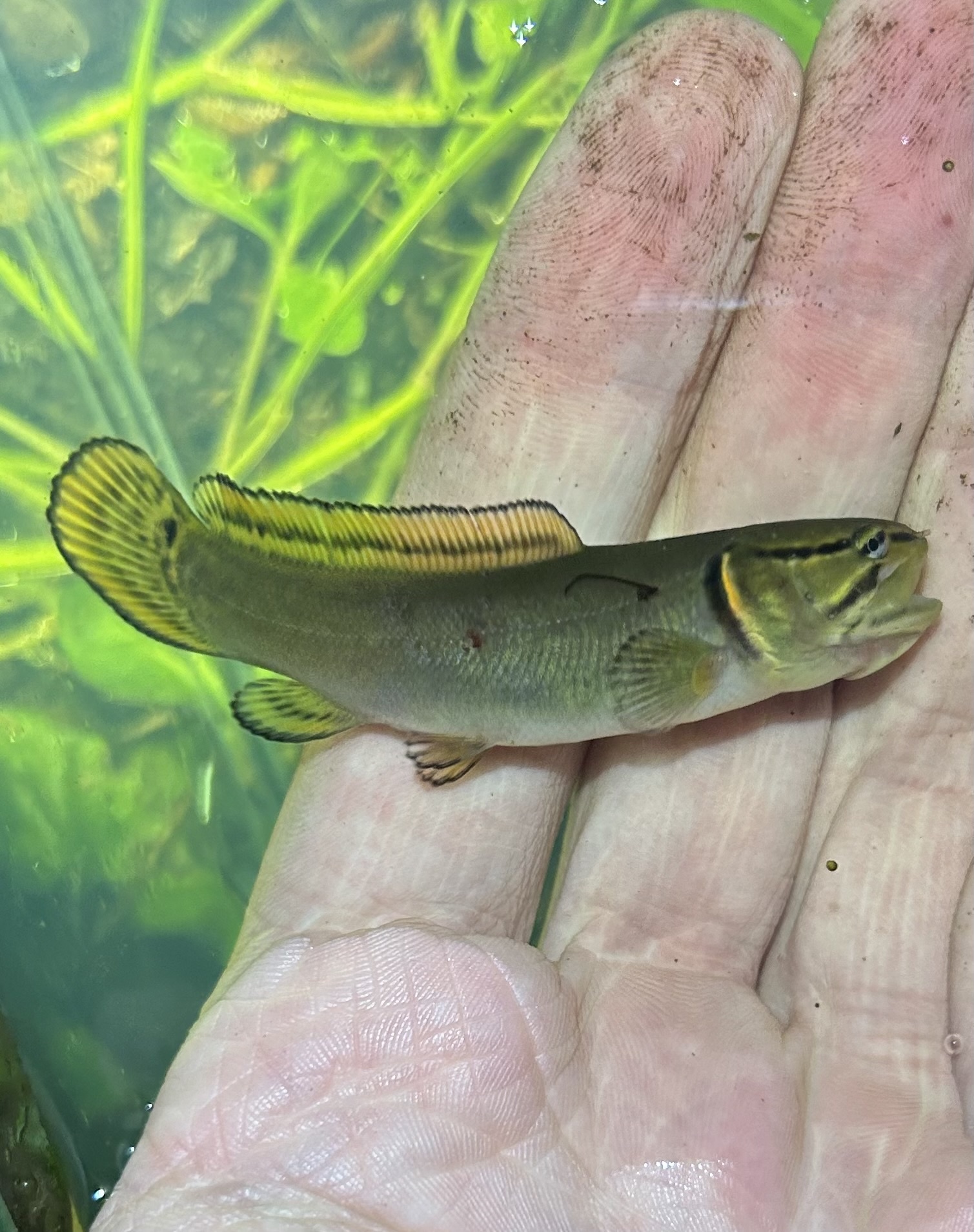

The bowfin is one of freshwater's great underrated brawlers, a prehistoric, torpedo-shaped predator that has cruised North American swamps and backwaters for tens of millions of years, and pulls like a freight train when you hook one. Known by a pile of regional nicknames, mudfish, dogfish, grinnel, cypress trout, swamp bass, the bowfin is the last survivor of an ancient lineage, a true living fossil that breathes air, thrives in water that would kill most fish, and fights with a violent, thrashing power that shocks anglers expecting a nuisance catch.
For a long time bowfin were dismissed as trash. Anglers are increasingly discovering the truth: they're abundant, they crush baits and lures, they grow big (double digits), and pound for pound they may be the hardest-fighting fish in the swamp. This guide covers everything, identifying a bowfin, the best cut baits and lures, rigs, where and when to find them, fly fishing, and how to safely handle a fish with a serious set of teeth.
Life of the Bowfin and How to Fish for BowfinMeet the Bowfin
The bowfin (Amia calva) is a long, cylindrical, heavy-bodied fish with a very long dorsal fin running most of the length of its back, a blunt, rounded head, a big mouth full of small sharp teeth, and a bony plate under the jaw. It's typically olive-green to brown, often mottled, with a distinctive black eyespot near the tail (ringed with orange/yellow in males, and used to confuse predators). Unlike gar, it has normal (cycloid) scales, not armor plating.
Key facts:
- Size: commonly 2 to 8 pounds; big ones exceed 10 pounds and 2.5-3 feet. They're thick, muscular, and much stronger than they look.
- Air-breathing: the bowfin has a lung-like swim bladder and gulps air, letting it survive in warm, stagnant, oxygen-poor swamps and backwaters, and even survive being out of water longer than most fish. It can live where bass and pike can't.
- Habitat: it loves warm, weedy, slow, and swampy water, vegetated backwaters, oxbows, sloughs, swamps, lowland lakes, and slow river stretches, especially around thick cover.
- Range: widespread across the eastern and central US, the Great Lakes and Mississippi basin, the Gulf and Atlantic coastal plains, from Texas to Florida and up the East Coast.
- Ambush predator: it's an aggressive, voracious hunter that ambushes fish, crayfish, frogs, and anything else it can catch, striking hard and often.
That toughness, abundance, and raw fighting power make the bowfin a genuinely fun, accessible sportfish, one that's finally getting the respect it deserves.
Best Baits: Cut Bait Is King
Bowfin hunt largely by scent and love an easy meal, which makes fresh cut bait the number-one method. A chunk of oily, bloody cut fish, shad, sucker, bluegill (where legal as bait), or other local baitfish, fished on the bottom is deadly.
Big Bowfin on Cut Bait and How I Catch Them- Bait: fresh cut bait, the bloodier and oilier the better. Whole dead baitfish and live baitfish also work, as do nightcrawlers, which frequently produce bowfin as a "bycatch" for catfish and panfish anglers.
- Rig: a simple bottom rig, a sliding-sinker (Carolina) setup or a fish-finder rig, with a strong hook, or a bait under a float near cover. Use enough weight to hold near the bottom.
- Hooks: a strong, sharp hook is a must; bowfin have hard, toothy, bony mouths, and their thrashing fights bend and break weak hooks. Circle hooks work well and help with clean releases.
- Location: cast to the edges of weeds, timber, and cover in warm, slow water.
Be patient for the pickup, then set hard, a bowfin's bony mouth needs a firm hookset. And hold on: the fight is immediate and violent.
Lures for Bowfin
Bowfin are aggressive predators that will absolutely smash lures, making them a great target for anglers who prefer to cast and cover water. They'll hit a wide range of presentations fished around cover.
The Top 3 Best Lures for BowfinTop lure choices:
- Soft plastics: weighted or weedless soft plastics (creature baits, craws, swimbaits) worked slowly near the bottom and through cover.
- Spinnerbaits and inline spinners: flash and vibration draw hard strikes.
- Topwater: frogs and buzzbaits worked over weedy, swampy water can trigger explosive bowfin blowups, a huge thrill.
- Spoons and lipless crankbaits: for covering open pockets and edges.
The keys are fishing in and around the thick, weedy, shallow cover bowfin love, and using strong tackle and sharp hooks, bowfin hit hard, fight harder, and are tough on gear. A slow, near-bottom presentation around cover is often best, but don't overlook the heart-stopping topwater bite.
Gear and Rigging
Bowfin are strong, and they live in snaggy cover, so beef up your tackle:
- Rod/reel: a medium-heavy to heavy baitcasting or spinning outfit with backbone.
- Line: 30-50+ lb braid is ideal for muscle and abrasion resistance in cover; heavy mono works too.
- Leader: a heavy fluorocarbon leader (or even light wire) helps against their teeth and bony jaws.
- Hooks: strong, sharp, and not too small, bowfin destroy light-wire hooks.
Their combination of power, sharp teeth, and heavy cover means the light stuff won't cut it. Fish gear you'd use for big bass or catfish.
Where and When to Find Bowfin
Location: think warm, weedy, slow, swampy water. Target vegetated backwaters, oxbows, sloughs, swamps, cypress backwaters, lowland lakes, and slow river stretches, focusing on thick cover, weed beds, lily pads, submerged timber, and undercut banks. Bowfin relate tightly to cover and shallow, mucky, low-oxygen water that other predators avoid.
Backwater Bowfin Everywhere!Timing: warm months are prime. Bowfin feed most actively in warm water, so late spring through early fall is best, with the pre-spawn and spawn period (spring, when males guard nests and fish are shallow and aggressive) offering fantastic action. On warm days you may see or hear bowfin gulping air at the surface in the shallows. They slow down in cold water but remain catchable in mild winters across the South. Early morning, evening, and overcast days are especially good for aggressive feeding.
Fly Fishing for Bowfin
Bowfin have become a cult favorite among warmwater fly anglers, and for good reason, they eat flies aggressively and fight ferociously on a fly rod. It's often a sight-fishing game in clear, shallow swamp water.
Fly Fishing for BowfinUse a stout 8-9 weight rod with a heavy leader (bowfin have teeth and bony mouths), and throw big, meaty streamers, baitfish and crayfish patterns, and even topwater poppers around cover and to fish you can spot cruising the shallows. Strip the fly with an erratic, wounded action, set hard when they eat, and hang on, a hooked bowfin on a fly rod is one of the wildest fights in fresh water.
Bowfin vs. Snakehead and Other Look-Alikes
A crucial identification for modern anglers: the bowfin is frequently confused with the invasive northern snakehead, and telling them apart matters because snakeheads are invasive and, in many states, illegal to release alive. The key differences are the fins and belly. The bowfin has a very long dorsal fin but a short, rounded anal fin, and a rounded tail; the snakehead has both a long dorsal AND a long anal fin running down the back half of its body, giving it a more eel-like look. The bowfin's belly is pale and it has that eyespot near the tail (prominent in males); the snakehead lacks the tail eyespot and has a more snake-like, flattened head with a busier pattern. When in doubt, note the anal fin: short = bowfin (native, fine to release), long = possible snakehead (know your local law).
Bowfin are also sometimes confused with burbot (which has barbels and a more cod-like look) and young gar (which have long toothy beaks and armored scales), but the bowfin's blunt head, long ribbon dorsal, and tail spot are distinctive once you know them. The native bowfin belongs in its waters and, in most places, should simply be released.
Spawning and the Nest-Guarding Bite
Understanding the bowfin's spring spawn unlocks some of the year's best fishing. In late spring, as water warms, male bowfin move into shallow, weedy, mucky areas and build circular nests, clearing out vegetation to create a shallow bowl. After spawning, the male fiercely guards the nest and the swarming ball of young, jet-black hatchlings that school in a dense cloud, for weeks. A nest-guarding male is extraordinarily aggressive, attacking anything that comes near his brood, which makes for explosive, reaction-strike fishing on lures and flies worked through shallow spawning areas. Sight-fishing these shallow, aggressive, cover-oriented fish in spring is a highlight of the bowfin season. (As always, handle and release spawning fish quickly and gently so the male can return to guarding.)
This parental care is unusual and part of what makes the bowfin such a fascinating fish, few freshwater species guard their young as devotedly, and it's a big reason bowfin populations stay healthy even in tough, marginal habitat.
An Ancient Survivor
The bowfin isn't just old for a fish, it's the sole surviving member of an entire order of fishes (the Amiiformes) that stretches back well over 100 million years, to a time when its relatives swam alongside the dinosaurs. Everything about it reflects that deep ancestry: the air-breathing swim bladder that works like a primitive lung, the bony gular plate under the jaw, the heterocercal-leaning tail, and a toughness that lets it endure conditions no modern game fish could. In a very real sense, catching a bowfin is reaching back into deep time, this is a fish essentially unchanged since the age of reptiles, still doing exactly what it has always done in the swamps and backwaters of a continent.
That heritage is a good reason to treat the bowfin with respect rather than contempt. It's a native fish, superbly adapted to its niche, and an important predator in the ecosystems it inhabits. The old habit of killing bowfin as "trash" on sight was both wasteful and misguided; the modern angler's approach, appreciate the fight, admire the living-fossil biology, and release the fish to fight again, is the right one.
Handling Bowfin: Mind the Teeth
A word of caution: bowfin have strong jaws and small but sharp teeth, and they thrash violently when landed, so handle them with care.
Bowfin: Fun Facts and Fishing- Use a rubberized net to land and control them, and keep them contained while you work, a green bowfin flopping on the deck is a handful.
- Keep fingers away from the mouth and use long pliers or a hook remover to back the hook out.
- Support the body with wet hands; a lip grip plus a supporting hand under the belly works for photos.
- They're slimy and slippery, so a firm, careful grip matters.
Bowfin are extremely hardy and release well, so most anglers photograph and release them. The meat is edible but soft and not highly regarded (it's better smoked or made into fish cakes, and the roe is eaten in some regions), so most fish go back to fight another day.
Why Bowfin Are Finally Getting Popular
For most of angling history, bowfin were persecuted, killed and tossed on the bank under the false belief that they decimated game-fish populations. That's changing fast, and for good reasons that are worth knowing if you're deciding whether to target them. First, they're everywhere: bowfin are abundant across a huge range and are often the most catchable big predator in warm, weedy water, so you rarely have to travel far to find them. Second, they're free of the pressure other species face, you can often have fast action to yourself while bass anglers crowd the same lake. Third, they hit a huge variety of methods, cut bait, soft plastics, spinnerbaits, topwater frogs, and flies, so they fit however you like to fish. And fourth, that fight: pound for pound, few freshwater fish pull harder or thrash more violently, and a big bowfin on appropriate tackle is a genuine handful.
Add in the living-fossil mystique and the accessibility (much of the best bowfin water is bank-fishable public swamp and backwater), and it's easy to see why a growing community of "roughfish" and multi-species anglers now chase bowfin on purpose. They're the perfect answer to a hot, mid-summer day when the bass have lockjaw and you just want something big to bend the rod.
Give the Mudfish Some Respect
The bowfin is the ultimate underdog gamefish: a hard-hitting, freight-train-fighting, air-breathing living fossil that's abundant, widespread, and criminally underappreciated. It'll hammer cut bait, crush a topwater frog, eat a fly, and then try to yank the rod out of your hands. Next time you're near a warm, weedy backwater, tie on some heavy tackle, fish a chunk of cut bait or a weedless lure around the thickest cover, and go tangle with a swamp dinosaur. You'll never call it a trash fish again.
For other prehistoric, hard-fighting rough fish that share the same warm, weedy water, see our guides to the longnose gar, the giant alligator gar, and the powerful common carp.
Want to find swamp bowfin of your own? Scout the warmest, weediest backwaters, sloughs, and cypress swamps you can reach, much of the best bowfin water is bank-fishable public land, pick a warm, overcast morning, and go do battle with a mudfish.