Fish
Fish Fire
Fire Hike
Hike Bird
Bird

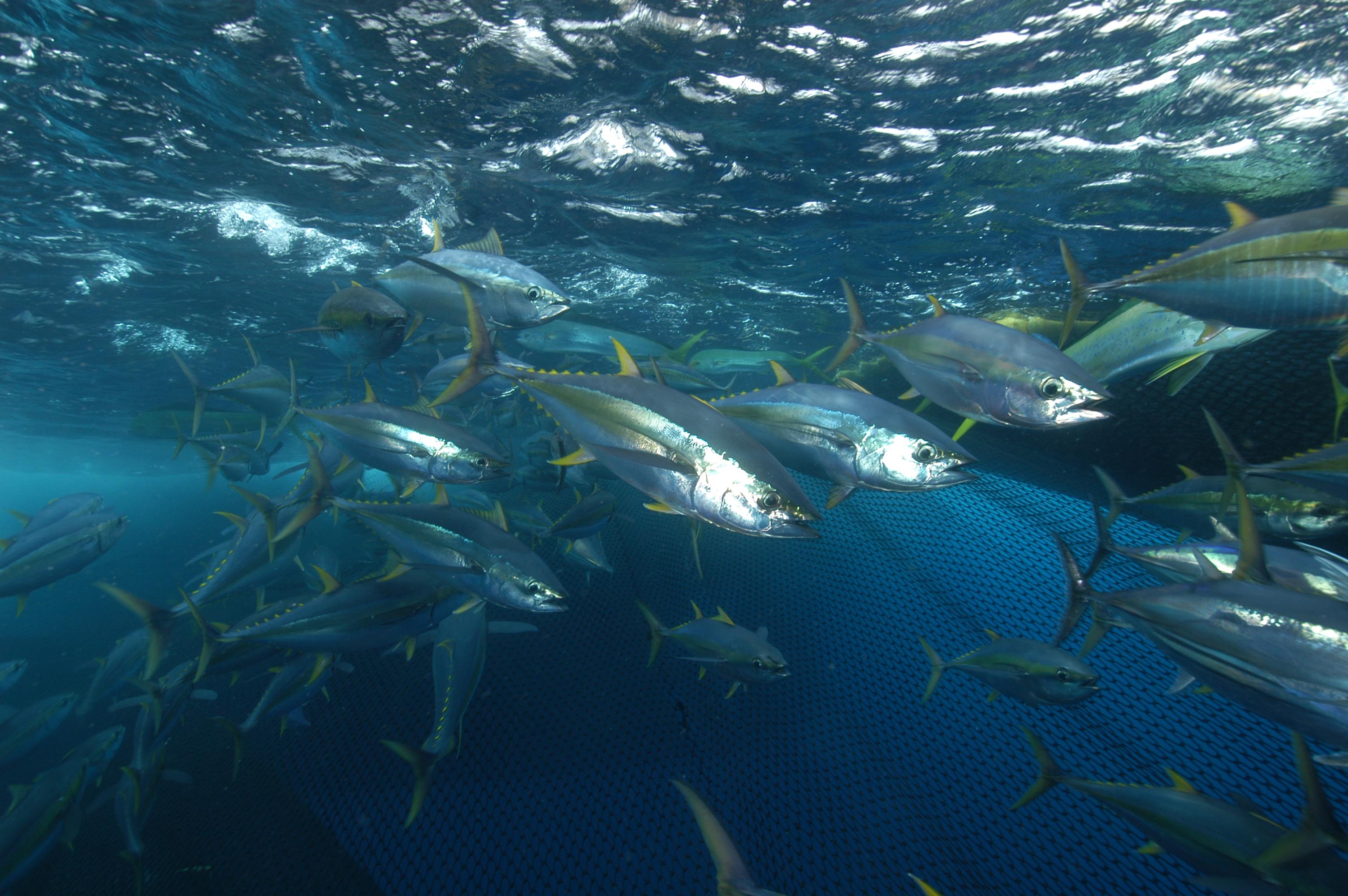

The yellowfin tuna is raw ocean power in a package built for speed. Sleek, muscular, and impossibly fast, a yellowfin turns a hooked fish into a screaming, deep-diving, back-breaking battle that can last from minutes to hours on a big one. They roam the blue water of the world in fast-moving schools, often exploding on bait beneath clouds of diving birds and pods of dolphins, and they eat a huge range of offerings, trolled lures, chunks, poppers, jigs, and live bait, which makes them one of the most exciting and versatile offshore targets there is. Add in the fact that few fish are better on the table (yellowfin is the "ahi" of poke and sashimi), and it's easy to see why anglers travel the globe to chase them. This guide covers what yellowfin are, where to find them, and every core technique, with step-by-step instruction, to hook and land these blue-water bruisers.
Yellowfin range across the blue water and canyons, roaming the same offshore grounds as other pelagics, so if you fish for one, you often run into the other. See our guide on how to catch mahi-mahi.
Meet the Yellowfin Tuna
The yellowfin tuna (Thunnus albacares) is a torpedo of muscle: a streamlined, football-shaped body built for speed, a dark metallic-blue back, silvery sides, and the bright yellow finlets, dorsal, and anal fins, plus a golden lateral stripe, that give the fish its name. Big yellowfin develop long, sickle-shaped dorsal and anal fins that sweep back dramatically. Everything about the fish is engineered for fast, sustained swimming in the open ocean, where it runs down bait with astonishing speed.
Yellowfin are big, powerful fish. School fish run 20 to 60 pounds, solid fish push 80 to 150, and true "cows" exceed 200 pounds (the record is over 400). They roam warm and temperate oceans worldwide, ranging across vast blue-water areas and famous grounds from the Gulf of Mexico and the Northeast canyons to Mexico, Hawaii, and beyond. Prized as both an incredible gamefish and premium table fare, the ahi of sashimi and poke, yellowfin combine a brutal fight with the best eating in the sea, making them a top-tier target everywhere they swim.
Where to Find Yellowfin: Reading the Signs
Yellowfin roam huge areas, so finding them is about reading the ocean for the signs that concentrate bait and fish:
- Birds and dolphins, the single best sign. Flocks of diving birds and pods of spinner or spotted dolphins often mark yellowfin schools feeding below; running to working birds is a classic way to find fish.
- Temperature breaks and current edges, where warm blue water meets cooler or greener water, bait and tuna stack up.
- Structure and features, offshore rips, canyons, seamounts, floating debris, weed lines, and (in some fisheries) shrimp-boat and oil-rig activity all concentrate fish.
- Bait and marks on the sounder, schools of bait and tuna showing on electronics.
The practical approach is often run and gun: cover water, watch for birds, dolphins, breaking fish, and bait, and then get in position on the fish you find. Yellowfin move fast and cover ground, so successful fishing is an active hunt, reading temperature charts, watching the horizon for birds, and running to the signs. Find the bait and the birds, and you find the tuna.
Using Radar to Find Birds and TunaTrolling Spreader Bars and Lures
Trolling is a mainstay for finding and catching yellowfin, and the deadliest tuna trolling tool is the spreader bar, a rig of multiple teasers (often squid or ballyhoo imitations) pulled to imitate a small, tight school of bait, with a hook bait trailing behind. Combined with skirted trolling lures, cedar plugs, and rigged ballyhoo, a spreader-bar spread pulled at 5 to 8 knots covers water and draws crushing strikes from tuna.
Spreader bars shine because tuna key on schools of bait, and a bar imitates exactly that, a tight cluster of "baitfish" fleeing across the surface. Set a spread of bars and lures at staggered distances, run the temperature breaks, rips, and bird activity, and be ready for a violent strike and a screaming reel. Trolling both locates fish and, when you hook up in a school, can lead to multiple hookups at once.
Spreader Bar Fishing 101 for TunaChunking
When you're on fish or anchored/drifting over a known spot, chunking is one of the most effective yellowfin methods. You establish a steady chum slick of cut bait chunks (butterfish, sardines, or similar) drifting back in the current, which pulls tuna up the slick and gets them feeding, then you drift a hook bait hidden in a chunk naturally back in the slick. When a feeding tuna eats your baited chunk, it's game on.
The keys to chunking are a consistent, steady flow of chunks (not too many, not too few) to keep the fish feeding and coming up the slick, and a naturally drifting hook bait on a leader light enough to fool wary fish but strong enough to hold. Chunking is a canyon and offshore-grounds staple, especially at night and around structure, and it accounts for enormous numbers of yellowfin. Patience and a well-managed slick are what make it work.
Chunking for Yellowfin and Bluefin TunaPopping Topwater
Few things in fishing are as visual and violent as a big yellowfin crushing a topwater popper. When tuna are feeding on or near the surface, busting bait, following birds, or raised to the boat, casting a large popper or stickbait and working it with sweeps to chug and splash draws explosive, heart-stopping strikes. Popping is a run-and-gun favorite: you spot breaking or busting fish, ease into casting range, fire a long cast, and work the plug back through the fish.
Popping demands heavy spinning gear, big rods and reels with strong drags and heavy braid, because a yellowfin that eats a popper boatside will test everything. Cast to the edges of breaking schools, keep the plug moving, and hold on for a surface eruption. It's the most exciting way to catch a yellowfin, and on a hot bite it is unforgettable.
How to Pop Topwater for Giant Yellowfin TunaVertical Jigging
When tuna are holding deeper, below the surface, marked on the sounder, or not showing up top, vertical jigging gets down to them and is deadly. Drop a heavy speed jig or slow-pitch jig to the fish's depth and work it back with sharp, fast rips (speed jigging) or fluttering lifts (slow pitch), imitating a fleeing or dying baitfish. Tuna, built to chase, smash a ripped jig on the drop or the rise.
Jigging lets you target fish you mark on electronics and reach tuna that surface tactics can't, and it delivers a direct, rod-in-hand fight. Match jig weight to depth and current so you get down and stay in the zone, and use stout jigging tackle and braid to handle a tuna's power at depth. On days when the fish won't come up, jigging is often what saves the trip.
Vertical Jigging for TunaLive Bait
Live bait is a premier yellowfin technique wherever lively bait can be had. Frisky live sardines, pilchards, mullet, or other baitfish, free-lined, lightly weighted, or fished under a kite, are irresistible to feeding tuna. In many fisheries, anglers chum with live bait to fire up a school, then drift a hooked live bait into the frenzy. Around structure like oil rigs, shrimp boats, and floating debris, a live bait presented to holding tuna is often the top producer.
The approach is to keep bait lively and present it naturally, matching hook size to the bait so it swims freely with the hook riding clean. A nervous, splashing live bait draws savage strikes and often tips you off that tuna are near. Combining a live-bait or live-chum approach with the right structure or slick is one of the most reliable ways to put big yellowfin in the boat.
Live Bait Fishing for Yellowfin TunaFighting a Yellowfin Tuna
Hooking a yellowfin is just the start, the fight is legendary. Yellowfin pull relentlessly, run fast, and dig deep, often sounding straight down and settling into a stubborn, circling battle that tests tackle and angler alike. Winning takes proper technique: lift the rod, wind down, and pump the fish up steadily, using a fighting belt or harness on bigger fish and keeping constant pressure without giving slack.
Use appropriate tackle so you can land the fish in reasonable time, stout stand-up or conventional gear with a strong, smooth drag for big fish, heavy spinning for poppers. Let the tackle and technique do the work, keep the pressure on, and expect a workout: a big yellowfin can take a long time and leave your arms burning. It's one of the most rewarding fights in all of fishing, pure, dogged power all the way to the gaff.
A few fighting tips make a big difference. Use the boat when you can, backing down on a fish or maneuvering to keep the line angle in your favor takes enormous strain off the angler and shortens the fight. Short-pump a deep, circling fish: gain line in small, steady increments rather than trying to horse it, and use the fish's own circling to take line on the down-stroke. Never give slack, a yellowfin will use any loose line to throw the hook or gain leverage. And when the fish comes up, be ready for the gaff on a controlled pass, with everyone clear and the fish's head coming toward the boat. Doing these things as a coordinated team is what turns a hooked cow into a boated one.
Timing and Conditions
Yellowfin fishing is highly seasonal and condition-driven, and the anglers who consistently score are the ones who pay attention to the details. In most fisheries, yellowfin push into range when the warm blue water and bait arrive, often summer and fall in temperate areas, with tropical grounds producing much of the year. Sea-surface-temperature and chlorophyll charts are invaluable for finding the temperature breaks, clean-water edges, and rips where fish concentrate before you even leave the dock.
On the water, light and activity windows matter: early morning and late afternoon often see the best surface bites, and around structure and slicks, tuna frequently feed hardest at night or on a moving tide. Calm-to-moderate conditions make it far easier to spot birds, breaking fish, and dolphins. Watch the horizon constantly, note where and when you find fish, and build a mental (and GPS) map of the productive water and the timing, over a season, that knowledge is worth more than any single lucky spot.
Common Mistakes to Avoid
Yellowfin expose weak links. Light or rough drags cost you fish on that first blistering run and the deep, circling fight, use quality reels with strong, smooth drags and set them right. Running over fish, charging straight into a breaking school or a bird pile, scatters them; ease into casting or trolling position from the edge. A poorly managed chunk slick (too many chunks, or gaps in the flow) fails to keep tuna feeding; keep it steady. Leader too heavy spooks wary fish in clear water, while leader too light gets broken off, match it to conditions. And not bleeding and icing fish immediately ruins world-class meat. Clean these up and both your catch rate and your table quality climb.
Table Fare and Handling
Yellowfin are among the very best fish to eat, the "ahi" of sashimi, poke, and seared tuna, with firm, rich, red meat prized worldwide. To get top quality, bleed and ice the fish immediately, a yellowfin properly bled and put on ice (or in an ice slurry) right away is dramatically better than one left in the sun. Handle and store the meat cold and clean. Follow local size and bag limits, which apply in many fisheries. Between the brutal fight and the world-class table fare, a yellowfin rewards you twice over, a great battle at the rail and a spread of sashimi at the dock.
Put It All Together
Yellowfin tuna fishing is a thrilling, active hunt: read the ocean for birds, dolphins, breaks, and temperature edges; troll spreader bars to find and raise fish; chunk a slick to bring them up and feeding; and pop, jig, or live-bait the fish you find, then settle in for one of the hardest fights in the sea. Sharpen your run-and-gun instincts and your tuna-fighting technique, ice your catch right, and you'll enjoy both a brutal battle and the best eating in the ocean. Running the canyons and blue water is a serious offshore commitment, so plan your weather window, fuel, and crew before you go, a big yellowfin is worth every mile you run for it. And for a colorful blue-water neighbor that shares the same water, read our guide on how to catch mahi-mahi next.