Fish
Fish Fire
Fire Hike
Hike Bird
Bird

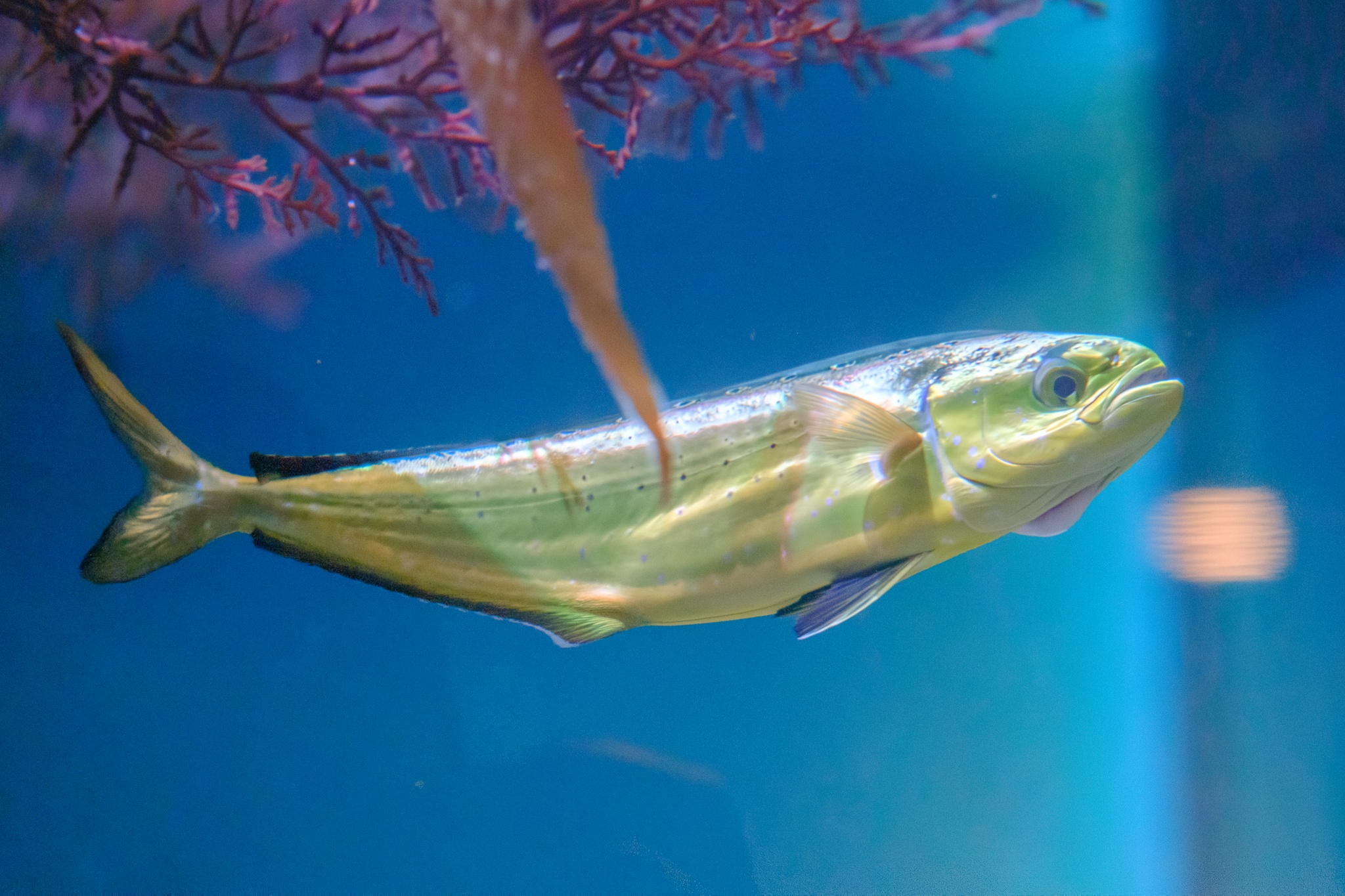

Pound for pound, the mahi-mahi may be the most exciting fish in the ocean. Blazing electric blue, green, and gold, it grows faster than almost any fish alive, hits a bait like a freight train, and greets the hook with a series of greyhounding, cartwheeling jumps across the surface. Better still, mahi travel in schools and hold near visible structure, floating weed, debris, and current edges out in the blue water, which makes them one of the most accessible offshore gamefish for anyone who knows how to hunt them. Add in the fact that they are among the very best fish to eat, and it is no wonder mahi-mahi (also called dolphinfish or dorado) are the offshore fish everyone wants to catch. This guide covers what mahi are, where to find them, and every core technique, with step-by-step instruction, to fill the box.
Ready to run the blue water for dolphin? The whole game comes down to knowing where the weed lines and current edges set up and how to work them once you find fish. If you love fast, hard-charging pelagics, see our guide on how to catch wahoo, a frequent neighbor out in the same blue water.
Meet the Mahi-Mahi
The mahi-mahi (Coryphaena hippurus) is one of the most spectacular fish in the sea: a long, laterally compressed body that flashes brilliant blue, green, and gold with scattered electric-blue spots, colors that literally pulse and shift when the fish is excited and fade quickly once it dies. Males, called "bulls," develop a tall, blunt, squared-off forehead; females, or "cows," have a rounded head. This is one of the few fish where you can tell the sexes apart at a glance.
Mahi are famous for explosive growth, they are among the fastest-growing fish in the ocean, reaching double digits in a single year, and they live fast and die young, rarely past four or five years. Most fish caught run from "schoolie" size (2 to 8 pounds) up through solid 10 to 20 pounders, with big bulls exceeding 40 pounds and the record over 80. They roam warm blue water worldwide, wherever the temperature and the current are right. Between their beauty, their speed, their acrobatics, and their superb table quality, mahi are the total package.
Where Mahi Live: Structure in the Blue Desert
The open ocean looks like a featureless blue desert, but mahi-mahi organize their lives around any bit of structure they can find. The single most important concept in dolphin fishing is this: find the structure, find the fish. Mahi relate hard to:
- Sargassum weed lines and patches, floating mats of golden-brown seaweed hold bait, shrimp, and crabs, and mahi patrol beneath and around them. A long, well-formed weed line is the classic mahi highway.
- Floating debris, a pallet, a log, a bucket, even a single floating board can hold a whole school of hungry dolphin.
- Current edges, color changes, and temperature breaks, where blue water meets green, or warm meets cool, bait piles up and mahi hunt the seam.
- Frigate birds, the offshore angler's best friend. A frigate bird hovering and diving over the water is very often marking mahi (or other pelagics) pushing bait to the surface. Following working birds is one of the deadliest ways to locate fish.
The practical takeaway: don't troll blindly across empty water. Run and look, cover ground scanning for weed, debris, birds, and color changes, and concentrate your effort on the structure you find. That is where the mahi are.
Dolphin Fishing and the Mighty Frigate BirdTrolling: Covering Water to Find Fish
The most common way to both find and catch mahi is trolling. You pull a spread of baits and lures at 6 to 9 knots along weed lines, debris, and edges, covering water until you get bit. The classic mahi bait is a rigged ballyhoo, naked or behind a small skirted lure, but skirted trolling lures, spoons, and diving plugs all produce. Spread your baits at staggered distances behind the boat and pull them right along the edge of the weed and structure.
When a mahi hits a trolled bait, the whole game opens up: leave the hooked fish in the water. Because mahi school, a hooked, struggling dolphin will often draw the rest of the school right up to the boat, setting up the fast, frantic action mahi are famous for. Trolling finds the school; keeping that first fish in the water lets you capitalize on it.
How to Catch Mahi-Mahi: Best Lures, Baits, and Trolling TechniquesKeeping the School at the Boat
This is the technique that separates a one-fish day from a cooler full: keeping a mahi school at the boat. When you hook up, mahi are intensely curious and competitive, and the school will follow a hooked fish to the surface near the boat, but they will lose interest and disappear if you don't hold them. The keys:
- Leave a hooked fish in the water while you cast or pitch to the rest.
- Keep at least one fish hooked at all times, as you land one, get another bait in before the last one comes out, so there is always a fish drawing the school.
- Chum and pitch baits, a steady drip of cut bait or live baits keeps the school fired up and next to the boat.
Get this right and a single floating pallet or weed patch can produce a dozen or more fish in a wild, sustained flurry. Get greedy and boat every fish immediately, and the school melts back into the blue.
How to Bring a School of Mahi to the BoatPitching Live Bait
Once the school is up, live bait is deadly. Live pilchards, sardines, small ballyhoo, or other baitfish pitched to a fired-up school get eaten instantly and keep the fish frenzied. The approach is simple: with fish visible at the boat, freeline or lightly weight a live bait right into the school and hang on. Live-baiting also tempts the bigger, warier bulls that sometimes hang back beneath the smaller schoolies. Keeping a livewell stocked with frisky bait is one of the best investments you can make for a big mahi day, it is the difference between watching fish and catching them.
How to Catch Mahi-Mahi on Live BaitCasting Lures and Jigs to Schoolies
You don't need bait to catch fired-up mahi, they will crush artificials with abandon. When a school is at the boat or you spot fish under a debris field, casting is fast, fun, and effective. Bucktail jigs, soft-plastic jigs, small poppers, and metal casting jigs all draw savage strikes. Cast past the fish or the structure, and work the lure back with a quick, erratic retrieve, mahi love a fleeing target and will race each other to eat it. Casting lets a whole crew stay hooked up at once, keeps the school engaged, and is often the most action-packed way to fish a hot school.
Casting Lures for Mahi-Mahi OffshoreFly Fishing for Dolphin
For the fly angler, mahi-mahi are a dream target: aggressive, visible, and willing to eat a fly with reckless enthusiasm. The tactic is to raise and hold a school, troll or run to find fish, get them fired up and at the boat with hookups and chum, and then present a fly to the visible, competitive fish. A 9- to 12-weight rod with a large-arbor reel and plenty of backing handles their blistering runs and jumps, and big, flashy baitfish-profile flies (poppers and streamers) draw explosive eats. Sight-casting a fly to a lit-up bull dolphin charging across the surface is one of the great thrills in all of saltwater fly fishing.
Mahi-Mahi on the Fly (Offshore Fly Fishing)Gaffing and Landing
A green mahi thrashing at the boat is chaos, and landing them cleanly matters, both for the fish in the box and for keeping the school engaged. Gaff fish decisively with a solid gaff shot behind the head or in the shoulder, and swing the fish directly into a cooler or fish box, never onto an open deck, where a wild, muscular dolphin can hurt someone and throw hooks everywhere. Have the box open and ready before you gaff. On a hot school, a smooth gaff-and-box routine keeps the action rolling; a botched one turns the cockpit into a rodeo and can cost you the whole school.
How to Gaff a Mahi-MahiTiming, Weather, and Reading the Water
Mahi are a warm-water fish, so the season peaks when the water is warm and the blue water and weed push in toward accessible range, generally late spring through summer and into fall across most of their range, though in the tropics they bite year-round. Look for the good stuff to line up: clean, warm, blue water; a well-defined weed line or current edge; and bait or birds. Calm-to-moderate conditions make it far easier to spot weed, debris, birds, and color changes.
The best mahi days come from actively hunting, running the edge, glassing for birds and weed, and reading temperature and color breaks, rather than sitting and waiting. Cover water, find the structure and the signs, and then work each piece hard.
Working the Structure You Find
Finding a weed line or a piece of debris is only half the job, how you fish it matters. Not all structure is equal: the best weed lines are long, well-defined, and clean (not scattered, broken-up scum), and the most productive debris is anything that has been in the water long enough to grow a food chain, a barnacle-crusted board or a long-floating pallet holds more life than a plastic bag that blew in yesterday. When you find a good line, work its full length, trolling or drifting along the edge and paying special attention to points, gaps, and corners in the weed where bait concentrates.
For isolated debris and lone floaters, approach quietly and fish the shady, down-current side where mahi tuck in and ambush. Ease up rather than roaring in, a school under a floater can be spooked by a fast, loud approach. Make your first casts or pitches count by placing baits tight to the object, then peel the fish away from the structure as you hook up so the rest of the school follows. And don't abandon a spot after one fish: a good floater or weed patch can hold numbers, so work it thoroughly before moving on to hunt the next piece.
Tackle and Rigging
Mahi are not leader-shy, but they have small teeth and a raspy mouth, so a short fluorocarbon or mono leader (30 to 50 pound for most fish, heavier if big bulls or wahoo are around) protects against chafe without spooking the fish. For trolling, a 20- to 30-pound conventional outfit pulls a ballyhoo spread comfortably and has the drag to handle a big bull's runs. For casting and pitching at the boat, a medium spinning outfit (4000 to 6000 size) with braid gives you the casting distance and quick pickup you want when fish are boiling boatside.
Keep your hooks sharp and matched to the bait, circle hooks work well for live bait and are easier on released fish, while J-hooks suit rigged ballyhoo and lures. Because the action can go from zero to chaos in seconds when a school shows, have multiple outfits rigged and ready, a trolling rod, a couple of spinning rods with jigs and live-bait rigs, and a pitch bait standing by, so you can keep the school fired up without fumbling for tackle. Preparation is what turns a brief flurry into a boxful of fish.
Table Fare and Handling
Mahi-mahi are among the finest-eating fish in the ocean, firm, mild, sweet white fillets that are superb grilled, blackened, fried, or as fresh sashimi. They are a fast-growing, resilient species, which makes them a relatively sustainable choice, but always follow local size and bag limits. Bleed and ice your fish immediately for the best quality, a mahi put on ice right away is dramatically better on the table than one left in the sun. Their quick, mild flesh is the reward for a wild day in the blue water.
Put It All Together
Mahi-mahi fishing is the whole package: run and hunt for weed, debris, birds, and color; troll to find the school; keep a fish in the water and pitch baits or cast lures to hold and multiply the action; and land your fish cleanly to keep it going. Do it right and you will have the fastest, most colorful, most acrobatic fishing of your life, plus a cooler of the best eating in the sea. The blue water rewards the angler who hunts hard for the weed and the birds rather than waiting for the fish to come to them. And for another blue-water speedster that shares the same edges, read our guide on how to catch wahoo next.