Fish
Fish Fire
Fire Hike
Hike Bird
Bird

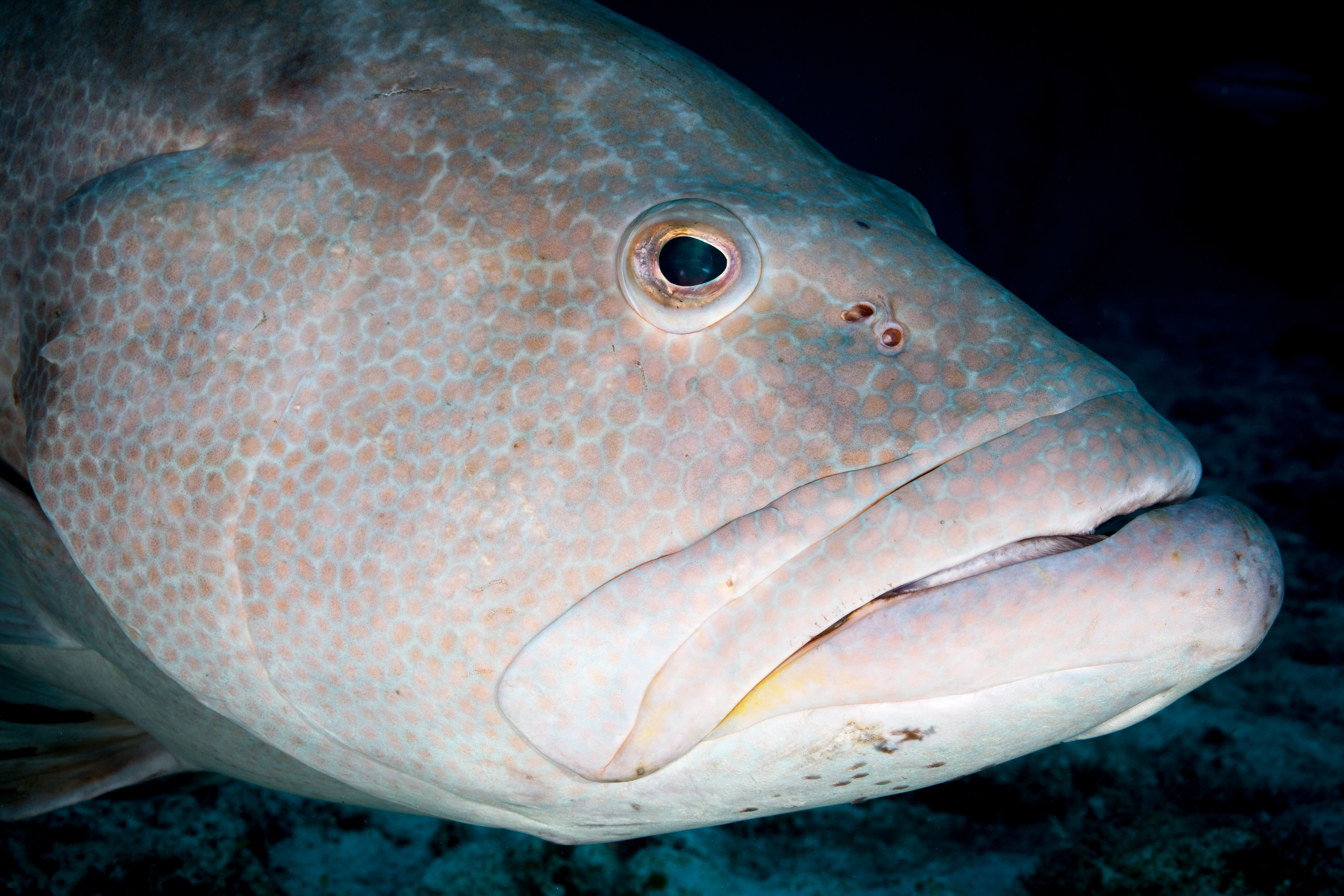

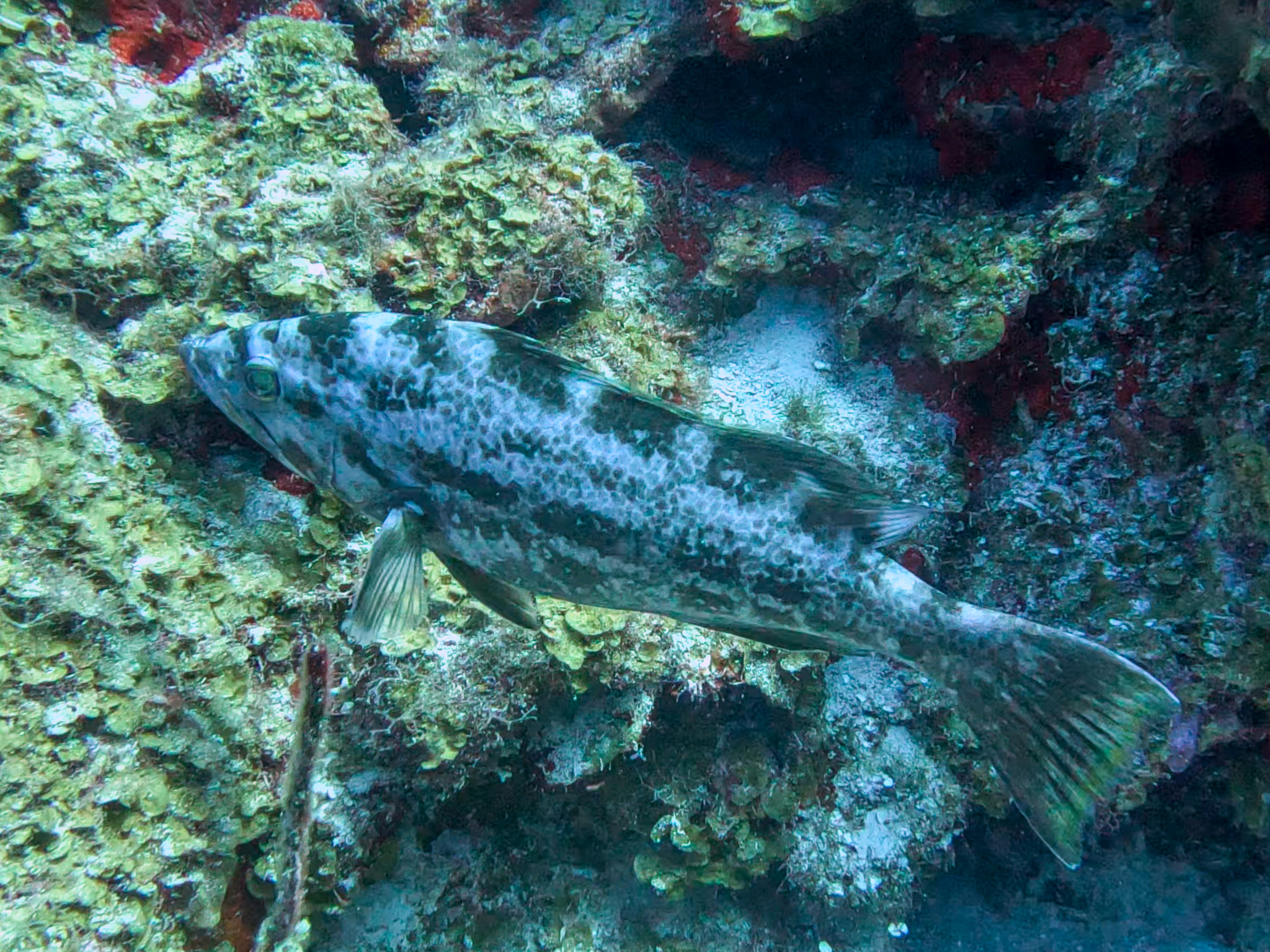
The yellowfin grouper (Mycteroperca venenosa) is one of the most beautiful and hardest-pulling reef fish in the tropical western Atlantic. Draped in dark leopard-like blotches over a pale-to-reddish body, it is instantly marked by the wash of yellow along the outer edge of its pectoral fins and its ability to shift color from ghostly pale to brick-red in seconds. Found from the reefs of Florida and the Bahamas through the Caribbean to Brazil, it is a prize for anglers who fish deep ledges, wrecks, and drop-offs with heavy tackle and live baits.
Yellowfin grouper are members of the Mycteroperca group, the slimmer, faster, more streamlined groupers that also includes the gag, scamp, and black grouper. That build matters: compared to the heavy-bodied red or goliath groupers, a yellowfin is quicker off the bottom and more willing to chase a bait or a jig up into the water column. But make no mistake, the moment it feels the hook, its first instinct is to dive straight back into the reef and break you off in the coral. Landing one is a test of drag, backbone, and reflexes.
This guide covers everything you need to catch yellowfin grouper: where they live, how to identify them, the tackle that turns the fight in your favor, the most productive techniques, and how to handle the fish once it hits the deck, including the ciguatera caution that comes with larger reef groupers.
Understanding Yellowfin Grouper Behavior
Yellowfin grouper are ambush predators that live in and around structure. They hold tight to coral heads, rocky ledges, wrecks, and the edges of reef drop-offs, usually in water from about 60 to 450 feet, though they can be found shallower on healthy reefs and much deeper on the outer shelf. Younger fish tend to hold on shallower patch reefs and seagrass edges, while the bigger adults move out to deeper, more current-swept structure.
They are opportunistic feeders. Their diet is dominated by fish, grunts, snappers, small jacks, herrings, and reef baitfish, along with squid and the occasional crab. Unlike the bottom-hugging red grouper, a yellowfin will readily rise off the structure to crush a bait drifting overhead or a jig fluttering down, which opens up more ways to target them.
That color-change ability is worth understanding. A relaxed yellowfin cruising a reef often shows a pale, blotchy pattern; a stressed, feeding, or territorial fish can flush dark red or nearly black. Divers report that fish will "light up" when competing for food, which is a good reminder that these are aggressive, reactive predators, a well-presented bait dropped into their zone rarely sits untouched for long.
Yellowfin Grouper Fishing in Key West FLCurrent is your friend. Yellowfin grouper feed hardest when tide or current is moving water, and therefore food, across their structure. Slack tide often means lockjaw; a moving tide over a productive ledge can turn the same spot on. Learn the stages of the tide over your best numbers and time your drops to the moving water.
Like many groupers, yellowfin gather in spawning aggregations, typically in the winter and early spring months around the full moon, staging on specific reef promontories and shelf-edge structure. These aggregations concentrate a lot of fish in a small area and were historically hammered by fishing pressure, which is exactly why some are now protected by seasonal closures. From a practical standpoint, it means the fish move and bunch up seasonally: a ledge that holds a handful of scattered fish most of the year can stack up during the pre-spawn stage. Pay attention to the calendar and the moon, respect any closures, and you will understand why the same numbers fish so differently from month to month.
How to Identify Yellowfin Grouper
Correct identification matters, both for the regulations and for the table. Key features of the yellowfin grouper:
- Yellow pectoral-fin margins. The outer edge of the pectoral fins carries a distinct wash of yellow or gold, the single most reliable field mark and the source of the name.
- Leopard-spotted body. Dark, rounded blotches cover a pale to reddish background, often arranged in loose rows. The pattern can look green-brown, gray, or brick-red depending on the fish's mood and depth.
- Red-orange around the mouth and inner fins. Many fish show reddish tones on the lower body, belly, and the inner portions of the fins.
- Streamlined body. Like other Mycteroperca, it is more elongated and less deep-bodied than a red or Nassau grouper.
The fish it is most often confused with is the black grouper, which shares a similar spotted pattern but lacks the yellow pectoral margins and tends toward a rectangular, blocky spot pattern with yellow only at the very fin tips. When in doubt, look at the pectoral fins, the broad yellow edge is the giveaway.
Best Tackle for Yellowfin Grouper
Yellowfin grouper fishing is a game of stopping power. The whole battle is decided in the first few seconds, when the fish tries to reach the reef. Your job is to turn its head and crank it away from the structure before it gets there, which means heavy gear and locked-down drags.
Rod: A stout 6 to 7 foot conventional bottom rod with a fast, powerful action. You want backbone to lift a fish off the bottom, not a noodle. For jigging, a purpose-built vertical jigging rod rated for heavy jigs.
Reel: A strong conventional reel, a two-speed lever drag in the 30 to 50 class is ideal for deeper drops, with a smooth drag capable of 20-plus pounds and enough line capacity for the depths you fish.
Line: Braid, 50 to 80 pound, for its thin diameter, low stretch, and direct feel in current and depth. Braid's lack of stretch is exactly what you want to feel the bite and drive the hook at depth.
Leader: A heavy fluorocarbon or monofilament leader, 60 to 130 pound depending on the fish size and reef sharpness. Yellowfin are less leader-shy than snapper, so err toward heavier to survive the coral.
Hooks: Circle hooks from 6/0 to 10/0 for bait fishing, they pin the corner of the jaw and improve survival on released fish, and are required in many reef fisheries.
How to Use Live Bait to Catch Big GrouperRig everything a size heavier than you think you need. A yellowfin that reaches the reef will part light leader on the coral edges, and undergunned tackle simply prolongs a fight the fish usually wins. Sharp hooks, fresh leader, and a drag you have tested are not optional.
Bottom Fishing Deep Reefs and Ledges
The bread-and-butter method for yellowfin grouper is fishing baits on or just above the bottom around structure. Position the boat up-current of a ledge, wreck, or coral head and drop your bait so the current sweeps it into the strike zone.
A knocker rig or a fish-finder rig with an egg sinker heavy enough to hold bottom in the current is the standard setup. Use just enough weight to stay in contact, too much and you lose feel, too little and the current sweeps you off the spot. Bait with a live or fresh-dead pinfish, grunt, sardine, or a big strip of squid or bonito.
Dropping Baits for Strong Reef FishWhen you get bit, do not swing hard the way you would with a J-hook. With circle hooks, let the fish load the rod and come tight, then lift and start cranking immediately. Every second counts: the first three cranks either get the fish's head up and moving away from the reef, or the fish wins. Keep steady, heavy pressure and do not give line once the fish is coming.
Anchoring versus drifting depends on your spot. Over an isolated coral head or small wreck, anchoring up-current lets you soak baits precisely in the zone. Over a long ledge or reef line, a controlled drift covers more water and helps you find where the fish are stacked.
Vertical Jigging for Yellowfin Grouper
Because yellowfin grouper will rise off the bottom, they are excellent targets for vertical jigging, and jigging lets you cover the water column and trigger reaction strikes without dealing with bait.
Drop a heavy vertical jig (150 to 400 grams depending on depth and current) to the bottom, then work it up with sharp, rhythmic lifts of the rod, reeling on the drop and rise. Yellowfin often hit the jig on the fall or during the first several cranks off the bottom, so stay ready the instant the jig touches down.
Vertical Jigging a Coral ReefMatch your jig color and weight to conditions: flashy silver, blue, and pink patterns work well in clear water, and you want a jig heavy enough to get down fast and stay near vertical in the current. Assist hooks at the top of the jig hook up more reef fish than a single trailing treble and are kinder for release. When a fish eats, the same rule applies, lock down and lift hard to keep it out of the coral.
Live Bait Around Structure
There is no better way to tempt a big yellowfin than a lively baitfish. A frisky pinfish, grunt, blue runner, or pilchard fished near structure sends out exactly the distress signals a grouper is tuned to. Slow-troll or drift live baits along ledges and over wrecks, or send them down on a rig to a marked fish.
Bridle-rig larger baits so they swim naturally and stay lively longer, and give the grouper a moment to fully take the bait before you come tight, but not so long that it buries in the reef. The bite is often a heavy, unmistakable thump followed by the fish trying to bolt for the bottom.
Live-baiting frequently produces the biggest fish on any given trip, because a large, active bait is more than a small fish will bother with but exactly what a trophy grouper wants. If you are hunting a specific big fish you have marked on the sounder, a big live bait dropped right on its head is your best play.
Deep Dropping the Outer Shelf
On the deeper end of their range, yellowfin grouper can be caught by deep dropping, fishing weighted multi-hook rigs in several hundred feet of water along the outer reef and shelf edges. This overlaps with the water that holds snowy grouper, tilefish, and queen snapper, and a yellowfin is a welcome bonus in that mixed bag.
Rig Your Own Deep Drop RigsDeep dropping uses heavy sinkers (16 ounces to several pounds) to get baits down fast and hold bottom, often with electric reels at extreme depths. Fresh cut bait, squid, bonito strips, or whole small fish, on circle hooks does the work. Watch your sounder for structure and bait on the bottom, and drop right on the edges where grouper stage. The takeaways from shallower fishing still apply: get the fish's head up quickly, because even from 300 feet a yellowfin will try to rock you up.
Cleaning and Cooking Yellowfin Grouper
Grouper is prized table fare, firm, white, mild, and versatile, and yellowfin is no exception. Fillet the fish, remove the skin, and you are left with thick, boneless fillets that hold together beautifully for frying, grilling, blackening, or baking. Bleed and ice your catch immediately for the best quality.
How to Fillet a GrouperOne important caution: yellowfin grouper are among the reef fish most frequently associated with ciguatera, a natural toxin that accumulates up the reef food chain and concentrates in larger predators. The toxin cannot be cooked, frozen, or cleaned out. Risk rises with the size of the fish and varies sharply by region, some areas have a long history of ciguatera in large groupers, others very little. Know your local waters, be cautious with large fish from high-risk areas, and when in doubt, release the biggest specimens. A moderate-sized fish from clean water is generally the better keeper.
Regulations and Conservation
Grouper are slow-growing, long-lived, and vulnerable to overharvest, so yellowfin grouper are managed with size limits, bag limits, and seasonal closures that vary by region and can change year to year. Always check the current rules for your area before you keep a fish. Circle hooks and, where required, descending devices or venting tools help released fish survive barotrauma from being pulled up from depth, a fish brought up from deep water with a swollen belly needs to be vented or sent back down to survive. Handle fish you intend to release quickly and get them back down fast.
Putting It All Together
Yellowfin grouper reward anglers who fish structure with conviction. Find the ledges, wrecks, and drop-offs; fish them hardest on moving current; use tackle heavy enough to turn a fish's head in the first few seconds; and pick your method, soaking live baits, dropping fresh cut bait, or working vertical jigs, to match the fish's mood and depth. Get the head up, keep it coming, and you will beat one of the reef's best-looking brawlers.
Ready to put it into practice? Start by scouting the ledges, wrecks, and drop-offs near you, plan your drops around the moving tide, and keep detailed notes on which numbers produce as the season and the moon change. That homework is what shortens the learning curve dramatically.
For more on chasing reef and bottom species, see our guides on how to catch goliath grouper, how to catch cubera snapper, and how to catch vermilion snapper.