Fish
Fish Fire
Fire Hike
Hike Bird
Bird

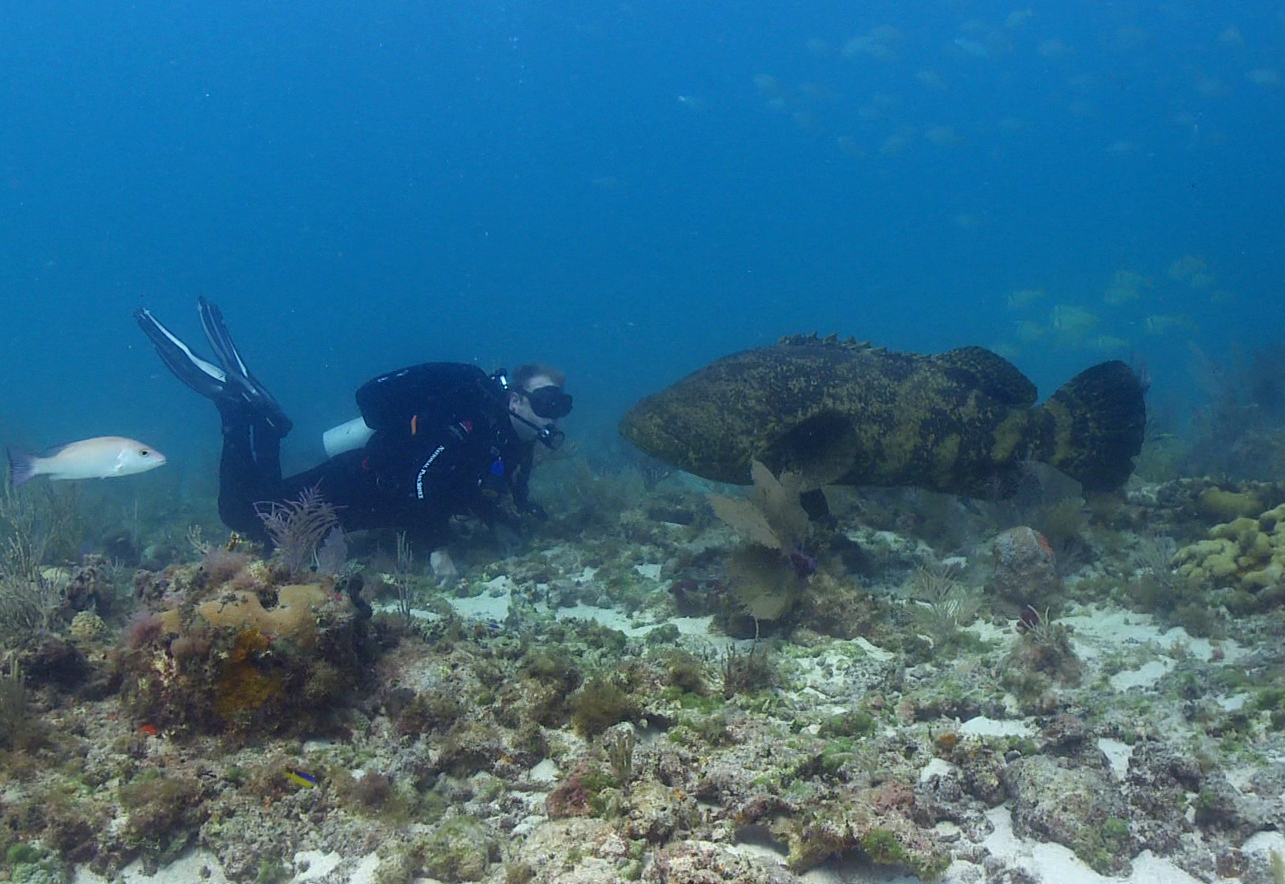

The goliath grouper (Epinephelus itajara) is the colossus of the reef, a truly enormous grouper that can exceed 500, 700, even 800 pounds, making it one of the largest bony fish an angler can hook in coastal waters. Once fished nearly to collapse and now strictly protected, the goliath has rebounded to become a spectacular catch-and-release target around Florida's wrecks, reefs, bridges, and inshore structure. Hooking one is like tying into a Volkswagen with fins: the goliath's first surge for the structure is nearly unstoppable, and landing a big one is among the most extreme tests in all of fishing. This is a fish you catch for the sheer spectacle, and then release. This guide covers how to catch and safely release goliath grouper.
What Is a Goliath Grouper?
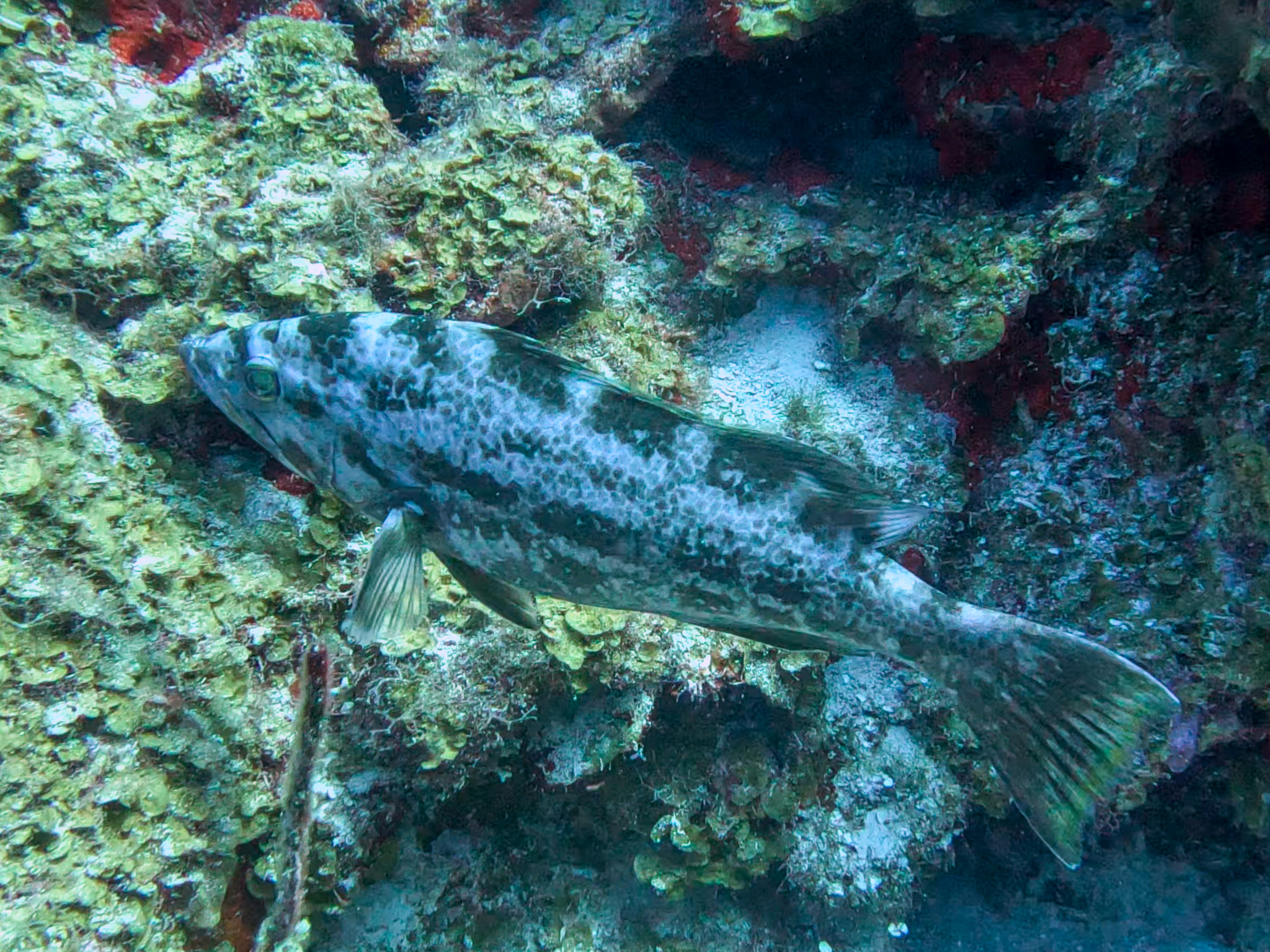
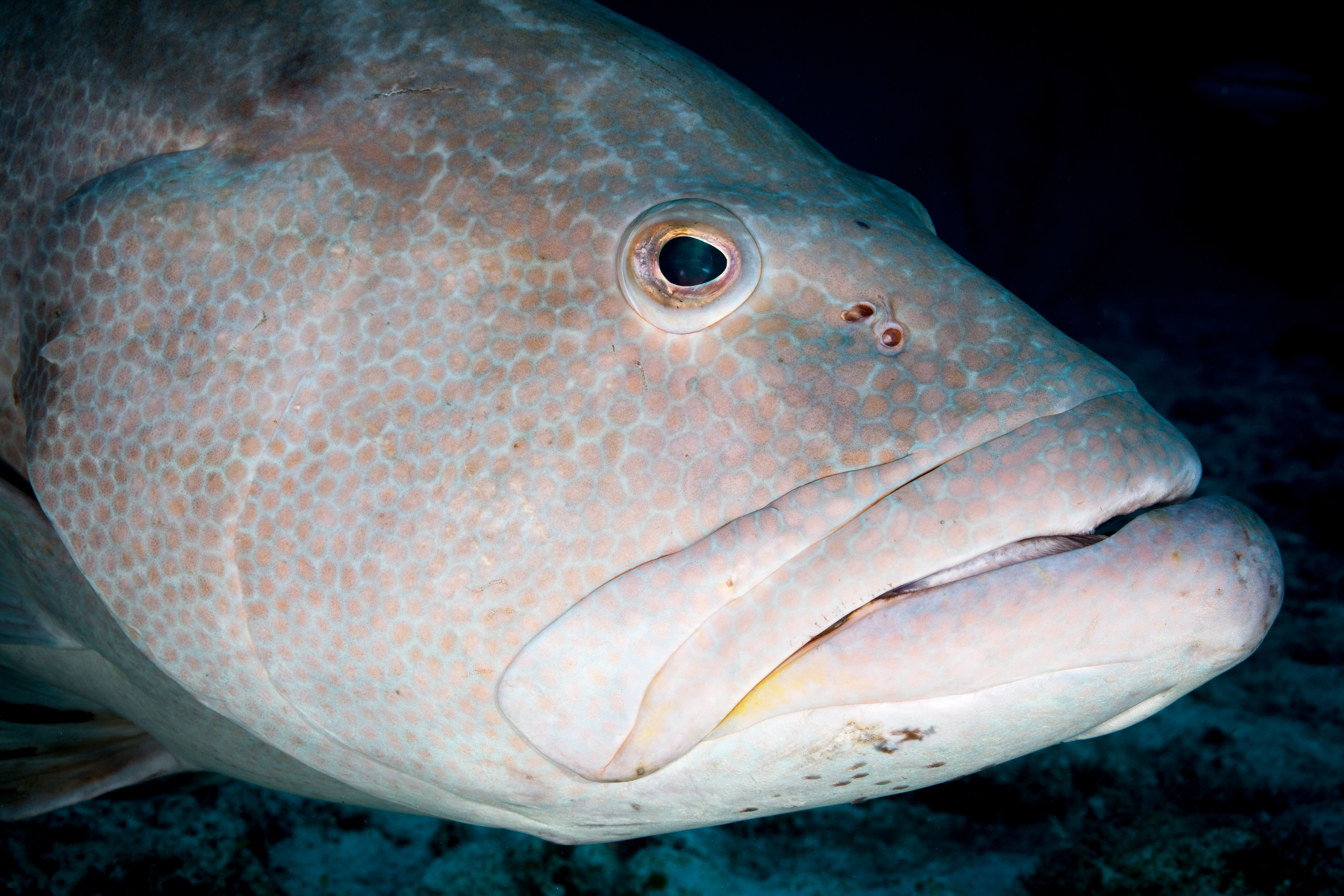
The goliath grouper is the largest grouper in the Atlantic and one of the largest reef fish in the world. It has a massive, robust, elongated body, a broad head with a huge cavernous mouth, small eyes, rounded fins, and a mottled tawny-brown-to-gray coloration covered in small dark spots, with juveniles showing more distinct dark blotches or bars. Its sheer size is the defining feature: goliaths commonly run 100 to 400 pounds where they're established, with giants exceeding 500 to 800 pounds and historical fish reported even larger. They are slow-growing, long-lived (potentially 40-plus years), and late to mature.
For anglers, the defining traits are that goliath grouper are immense, powerful, structure-dwelling ambush predators. They relate absolutely to heavy structure, wrecks, reefs, ledges, rock piles, bridge pilings, and even inshore channels and mangroves (for smaller fish), where they lurk in and around cover and inhale prey with a cavernous, suction-feeding mouth, eating fish, crabs, lobster, stingrays, and even smaller sharks. When hooked, a goliath makes an immediate, overwhelmingly powerful surge back into its structure, and stopping that first run is nearly impossible without extreme tackle, big goliaths routinely break off anglers and destroy gear. They're also curious and can be aggressive, sometimes "eating" hooked fish off anglers' lines. Because they were overfished to near-collapse, goliath grouper have been strictly protected (harvest prohibited for decades in U.S. waters, with only very limited, lottery-based harvest recently introduced in Florida), so they are overwhelmingly a catch-and-release fishery. Colossal, immensely powerful, protected, and unforgettable, the goliath grouper is the ultimate heavy-tackle spectacle.
Where and When to Catch Goliath Grouper
Goliath grouper are found in the western Atlantic, and in the U.S. they're concentrated in Florida (especially South Florida, the Gulf coast, and the Atlantic coast), with the Gulf of Mexico and Caribbean also holding them. They're structure fish through and through, so look for them around wrecks, artificial and natural reefs, ledges, rock piles, deep holes, and bridge pilings and channels, from inshore and nearshore waters out to moderate depths. Big goliaths famously hold on prominent wrecks and reefs and around large bridge structures; smaller juveniles use inshore habitats including mangrove estuaries and channels. Finding known goliath structure, big wrecks, reefs, and bridges, is the key, and many spots are well known for holding resident giants.
The best fishing is generally in the warm months, with summer especially productive, both because goliaths are more active in warm water and because they form spawning aggregations in late summer (around wrecks and reefs), a spectacular concentration of giants, though a sensitive event important to the population. Many anglers target them in summer around known structure. They feed around structure through the day and can be caught in daylight, though current and tide influence the bite (moving water often triggers feeding). Because they're resident on structure, timing matters less than finding the fish and fishing when conditions (current, weather) allow presenting big baits near the structure. Summer, warm water, and known wrecks, reefs, and bridges with current are prime for goliath grouper.
Huge Live Baits
The way to catch a big goliath grouper is with huge live baits, these giants want a large meal, and big baits also help select for big fish.
Big Baits for Giant Goliath GrouperThe go-to baits are large live fish, whole live jack crevalle, bonito (little tunny), ladyfish, mullet, blue runners, catfish, and other big baitfish, fished whole and live near the structure. A big goliath is accustomed to eating substantial prey, so a large, lively bait (often several pounds) presented near the wreck, reef, or bridge is the ticket, and it discourages smaller fish. Fish the bait on an extremely stout rig with a heavy leader and a large, strong circle hook, positioned near the structure where the goliath lurks. When a goliath eats, it inhales the whole bait with its cavernous mouth and immediately turns for the structure. Because everything about this fish is big, the bait, the fight, the tackle, anglers often catch the big bait first (jacks, ladyfish, bonito) and then deploy it live for goliath. Matching the goliath's appetite for large prey with a big live bait near structure is the fundamental approach, and it's how the giants are caught.
Extreme Heavy Tackle
Catching a goliath grouper is, more than almost any other fishing, about extreme heavy tackle and winning the first few seconds, stopping the initial run into the structure.
Heavy Grouper Tackle and GearWhen a big goliath eats, it makes an immediate, colossal surge back into the wreck, reef, or bridge, and if you can't stop it, it's over instantly, it will break off or wear through your line on the structure. So goliath fishing requires the heaviest of tackle: extremely stout, powerful rods (short, broomstick-like "goliath rods"), massive reels (often 80-wide class or larger) with maximum drag, very heavy line (100- to 400-pound-plus braid or mono), and a heavy leader. Some anglers even use commercial-grade or bent-butt setups. The technique is brute force: fish with the drag locked down near maximum, brace yourself (often in a harness or against the boat), and the instant the goliath eats, apply everything you have to turn its head and pull it up and away from the structure before it can dig in. There is no finesse, it's a raw power struggle, and even with the heaviest tackle, big goliaths win regularly. Land a giant and you've beaten one of the strongest fish in the sea. Come with tackle that's genuinely extreme (heavier than for almost any other coastal fish), lock the drag, and be physically ready for a violent, short, decisive battle.
Fishing Bridges, Wrecks, and Inshore Structure
Goliath grouper hold on specific heavy structure, and knowing how to fish wrecks, reefs, bridges, and inshore holes is central to catching them.
Goliath Grouper Under BridgesBig goliaths hold on prominent wrecks, reefs, and ledges offshore and nearshore, and around large bridge pilings, channels, and deep holes inshore, while smaller fish use inshore structure, docks, and mangrove channels. To target them, position over or beside the structure and present a big live bait right where the goliath lurks, using enough weight to hold in the current and keeping the bait near (but not so far in that you can't stop the fish). Around bridges, fish the pilings, channels, and shadow lines, often on moving tides that trigger feeding. Good electronics help you find wrecks and mark the giants, which often show as huge arches on sonar. Because goliaths are resident and often numerous on known structure, local knowledge of productive wrecks, reefs, and bridges dramatically improves your odds. Bridges in particular offer accessible goliath fishing, even from land in some spots, though landing and releasing a giant from a bridge is its own challenge. Find the structure that holds them, present a big bait, and be ready for the violent take.
Catch, Release, and the Rules
Because goliath grouper are protected, understanding the regulations and proper catch-and-release is essential, this is fundamentally a release fishery.
Goliath Grouper Regulations and ReleaseGoliath grouper were overfished to near-collapse and have been strictly protected in U.S. waters since 1990, with harvest prohibited for decades; only recently has Florida introduced a very limited, lottery-permit, size-restricted harvest of a small number of fish, while the fishery remains overwhelmingly catch-and-release. Know and strictly follow the current regulations, which are protective and specific (and differ between state and federal waters). Critically, large goliath grouper cannot legally be removed from the water in most cases and must be released, and for the fish's survival, big goliaths should be kept in the water, unhooked (or the leader cut) beside the boat, and revived and released promptly. Do not hang or drag a giant goliath out of the water; their organs can be damaged by their own weight in air, and it's illegal for large fish. Use heavy tackle to land the fish quickly (a prolonged fight stresses them), keep it in the water, remove the hook or cut the leader close, support and revive the fish, and let it swim back to its structure. Barotrauma can affect deeper-caught fish, so descending or venting may be needed. Responsible, quick catch-and-release, keeping big fish in the water and following the strict rules, is the essence of the goliath fishery and vital to protecting these recovering giants.
Identifying the Goliath Grouper
Goliath grouper are unmistakable at size, but juveniles and other big groupers can cause confusion, so identification is worth knowing.
Goliath Grouper IdentificationThe clinching features of a goliath grouper are its enormous size, massive robust body, broad head with a huge mouth, small eyes, rounded fins, and mottled tawny-brown-to-gray color covered in small dark spots (including on the head and fins). Juveniles are more boldly marked with irregular dark blotches or bars. Its sheer bulk and spotted, mottled pattern distinguish it from other groupers; a grouper of a few hundred pounds is a goliath (no other Atlantic grouper except the closely related, larger-growing Warsaw approaches that size, and the Warsaw is darker with a very long second dorsal spine and lives deeper). The goliath's small eyes relative to its huge head, the dense small spotting, and the rounded fins are good marks. When you see a colossal, spotted, mottled grouper on a wreck, reef, or bridge, you've got a goliath grouper, the giant of the reef.
Understanding Goliath Grouper Behavior
How to Catch a Goliath GrouperEverything about catching goliath grouper flows from the fact that they're immense, powerful, structure-dwelling ambush predators. They live in and around heavy structure, wrecks, reefs, ledges, bridges, and holes, and inhale large prey (fish, crabs, lobster, rays) with a cavernous suction-feeding mouth, which is why big live baits near structure are the method. When hooked, they surge for the structure with overwhelming power, so extreme tackle and stopping that first run are the entire battle. They're resident on known structure, curious, sometimes aggressive (even eating hooked fish off lines), and form summer spawning aggregations. And they're protected, so quick catch-and-release with the fish kept in the water is mandatory and essential.
Location is about known heavy structure: find the wrecks, reefs, ledges, and bridges that hold resident goliaths (electronics and local knowledge are key), fish big live baits on extreme tackle near the structure, ideally in summer and on moving current, and be physically and mentally ready to lock down and stop the run instantly. Then land the fish quickly and release it properly, keeping big ones in the water. Goliath fishing is a spectacle and a test of gear and grit more than a numbers game, you target a giant, hook a leviathan, win or lose the battle in seconds, and release a recovering natural wonder. It's one of the most extreme and memorable experiences in fishing.
Conservation and Handling
Goliath grouper are a conservation success story still in progress, and responsible angling is essential to their continued recovery. Overfished to near-collapse by the 1980s, they were fully protected in U.S. waters in 1990, and the population has rebounded significantly, though they remain slow-growing, long-lived, and late-maturing, and their spawning aggregations are vulnerable. The fishery is overwhelmingly catch-and-release, with only a very limited, recently introduced lottery harvest in Florida, so know and strictly follow the current, protective regulations, which differ by jurisdiction and are subject to change.
Proper handling is critical and largely mandated: do not remove large goliath grouper from the water, it's generally illegal and can fatally injure the fish (their internal organs are damaged by their own weight in air). Fight the fish quickly with heavy tackle to minimize exhaustion, keep it in the water boatside, remove the hook or cut the leader as close as safely possible, address barotrauma with descending/venting if the fish came from depth, support and revive the fish, and let it return to its structure. Use strong circle hooks to improve hookups in the corner of the mouth and ease release. Avoid targeting spawning aggregations irresponsibly. By following the rules, keeping big fish in the water, releasing quickly and carefully, and respecting the aggregations, anglers help ensure these magnificent giants continue to recover. Always confirm current regulations before targeting goliath grouper.
A Word on Eating (and Why You Shouldn't Keep the Big Ones)
For most of the last several decades, keeping a goliath grouper has been illegal, and the fishery remains overwhelmingly catch-and-release, so this is not a fish you generally take home. Beyond the legal protection, there are good reasons not to eat big goliaths even where a rare permit might allow harvest: like other large, long-lived reef predators, big goliath grouper can carry a significant risk of ciguatera poisoning and can accumulate mercury, making the large fish poor and potentially unsafe eating. Historically, goliath were not especially prized for the table compared to other groupers, and their ecological and recovery value as living giants far exceeds any food value.
The bottom line: goliath grouper are a catch-photograph-release fishery. Enjoy the incredible experience of hooking and battling a leviathan, get a quick photo with the fish in the water beside the boat, and release it to fight another day and continue the species' recovery. Do not attempt to keep a goliath unless you hold a specific, current legal harvest permit and understand the size limits and health risks, and even then, many anglers choose to release these magnificent, recovering giants regardless. The reward of goliath fishing is the battle and the spectacle, not the fillet. Always follow current regulations, keep big fish in the water, and release them responsibly.
Bringing It All Together
The goliath grouper is the ultimate heavy-tackle spectacle, a colossal, spotted reef giant that can top 500 pounds and will smoke you into the structure in seconds. Target them around known wrecks, reefs, ledges, and bridges, especially in summer and on moving current, with huge live baits (jacks, ladyfish, bonito, mullet) and genuinely extreme tackle, and be physically ready to lock the drag and stop that overwhelming first run. Above all, respect that this is a protected, catch-and-release fishery: land the fish fast, keep big ones in the water, unhook or cut the leader boatside, revive, and release. Learn to recognize the giant's spotted, mottled bulk, follow the strict and protective rules, and treasure the experience of doing battle with, and releasing, one of the largest and most powerful fish in coastal waters. Few things in fishing compare to hooking a goliath grouper.
For more powerful reef, wreck, and structure species, see our guides to the cubera snapper, the warsaw grouper, and the greater amberjack.
Want to experience the extreme thrill of hooking a goliath grouper around Florida's wrecks and bridges? Use Guidepole to scout the boat launches and bridge access near known structure, check the current conditions and regulations before you head out, and take on the giant of the reef (and release it).