Fish
Fish Fire
Fire Hike
Hike Bird
Bird


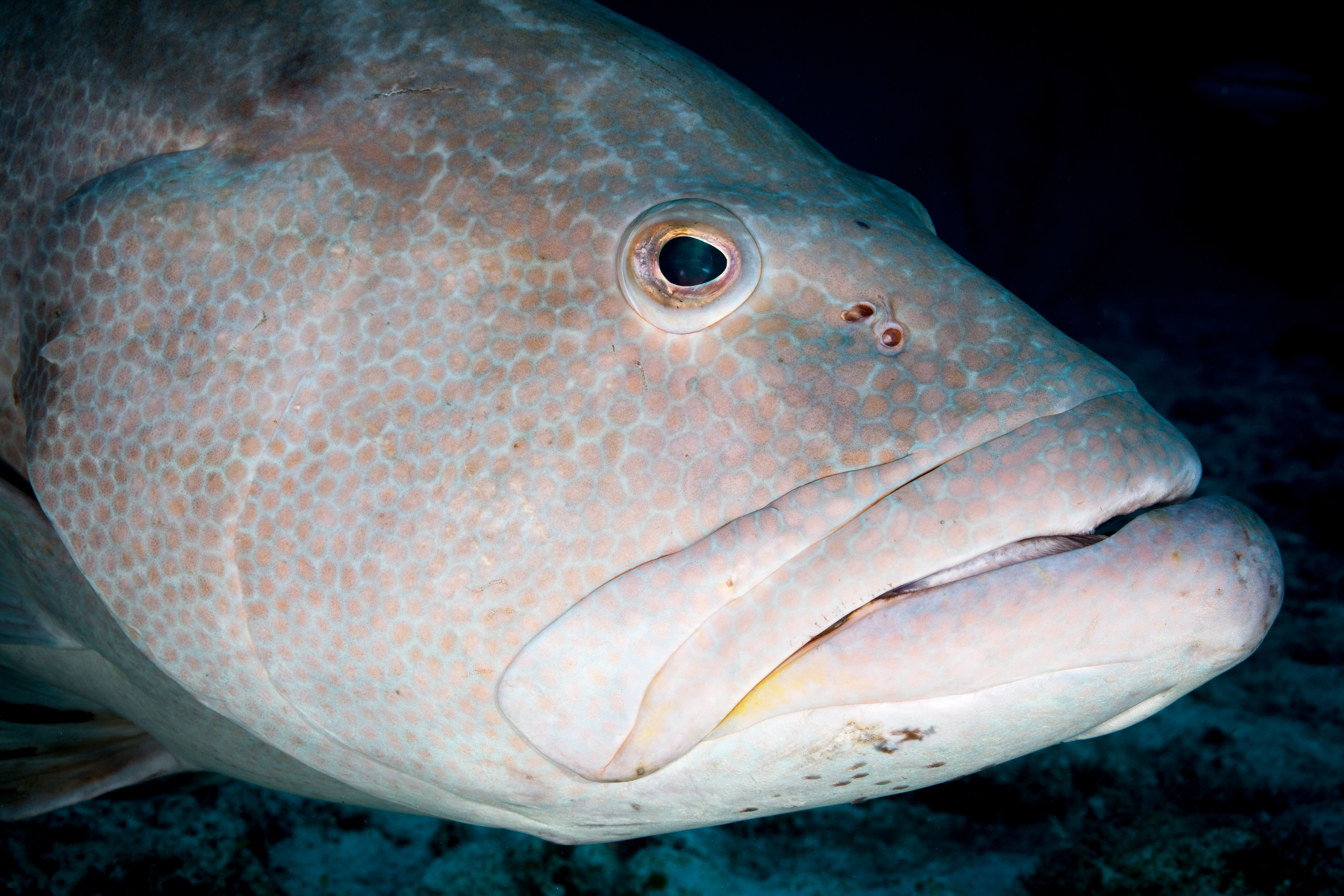
The Warsaw grouper (Hyporthodus nigritus) is the undisputed heavyweight of the Atlantic groupers, a deep-dwelling giant that can exceed 400 pounds and eight feet, dwarfing every other grouper in the western Atlantic except the protected goliath. Dark, heavy-bodied, and immensely powerful, a big Warsaw lives on rocky bottom, ledges, and wrecks hundreds of feet down and, when hooked, tries to drag the whole works straight back into its lair. Landing one is one of the ultimate tests in bottom fishing, demanding extreme tackle, deep-drop technique, and a lot of muscle or a strong electric reel.
Warsaw grouper are members of the Hyporthodus group of deep-water groupers, alongside the snowy and yellowedge. But where those fish are prized largely for the table, the Warsaw is prized for its sheer size and power, a genuine sea monster that patrols the deep shelf and upper slope as a solitary apex predator. They are relatively uncommon and slow-growing, which makes each one a memorable catch and also means the fishery is carefully managed to protect a vulnerable species.
This guide covers where Warsaw grouper live, how to identify them, the heavy deep-drop tackle the fishery demands, the techniques that hook and land these giants, and how to handle a fish that can genuinely test your gear, your back, and your knowledge of the regulations.
Understanding Warsaw Grouper Behavior
Warsaw grouper are deep-water, structure-oriented ambush predators. They hold on rocky ledges, drop-offs, high-relief hard bottom, and wrecks along the outer continental shelf and upper slope, typically from about 300 to 800 feet, and sometimes shallower or considerably deeper. Unlike the schooling snappers and some smaller groupers, a big Warsaw is usually a solitary fish holding a prime piece of structure, which it defends as its own.
They are voracious, opportunistic predators with cavernous mouths, eating fish, crustaceans, and even other bottom dwellers that share their deep habitat. That enormous mouth generates tremendous suction, a Warsaw can inhale a large bait in an instant, and the fish's size and power mean that once hooked, its dive for structure is nearly unstoppable if you are not prepared for it.
Fishing for Rare Warsaw GroupersBecause the biggest Warsaw grouper hold on specific deep structure, this is very much a fishery of precise numbers and good electronics. You are not covering water hoping to run into one; you are dropping on marked structure and rock piles that hold a fish. Like other deep-water groupers, they feed best when current moves food across their structure, so timing your drops to moving water improves your odds. And because they are relatively rare and slow-growing, big fish are many decades old, a productive spot is a valuable secret worth protecting and fishing sparingly.
It helps to understand how these fish relate to the terrain. The outer shelf and upper slope are cut with ledges, ridges, rock piles, and the wrecks that have gone down over the years, and a big Warsaw claims the highest-relief, most sheltered piece it can find, a spot that offers both a lair to retreat into and a current break where prey funnels past. That is why a single drop that lands squarely on a rocky pinnacle or the high side of a wreck can produce a monster while drops on the surrounding flat bottom go untouched. Reading your sounder to distinguish hard, high-relief structure from soft or featureless bottom is the single most valuable skill in this fishery, and marking a spot precisely so you can drop right back on it is what turns one bite into a repeatable pattern.
Warsaw grouper also seem to hold in the cooler, more stable water of the deeper shelf, and the depth that produces can shift seasonally as water masses move along the slope. Rather than pinning your hopes on one "honey hole," the anglers who consistently find big Warsaw build a network of proven deep spots across a range of depths, then fish whichever ones the conditions favor on a given day.
How to Identify Warsaw Grouper
A large Warsaw grouper is unmistakable by size alone, but several features confirm the ID at any size:
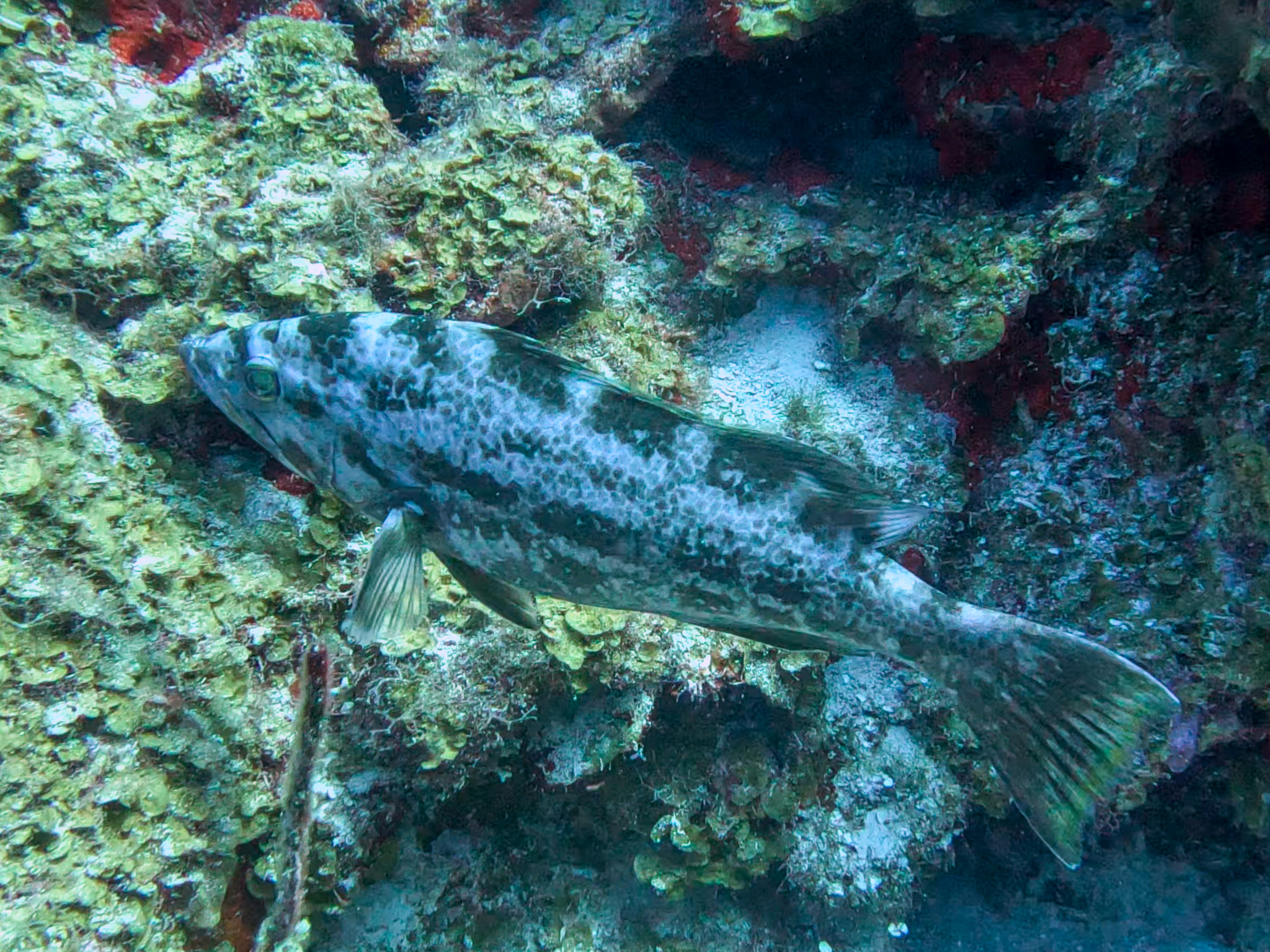
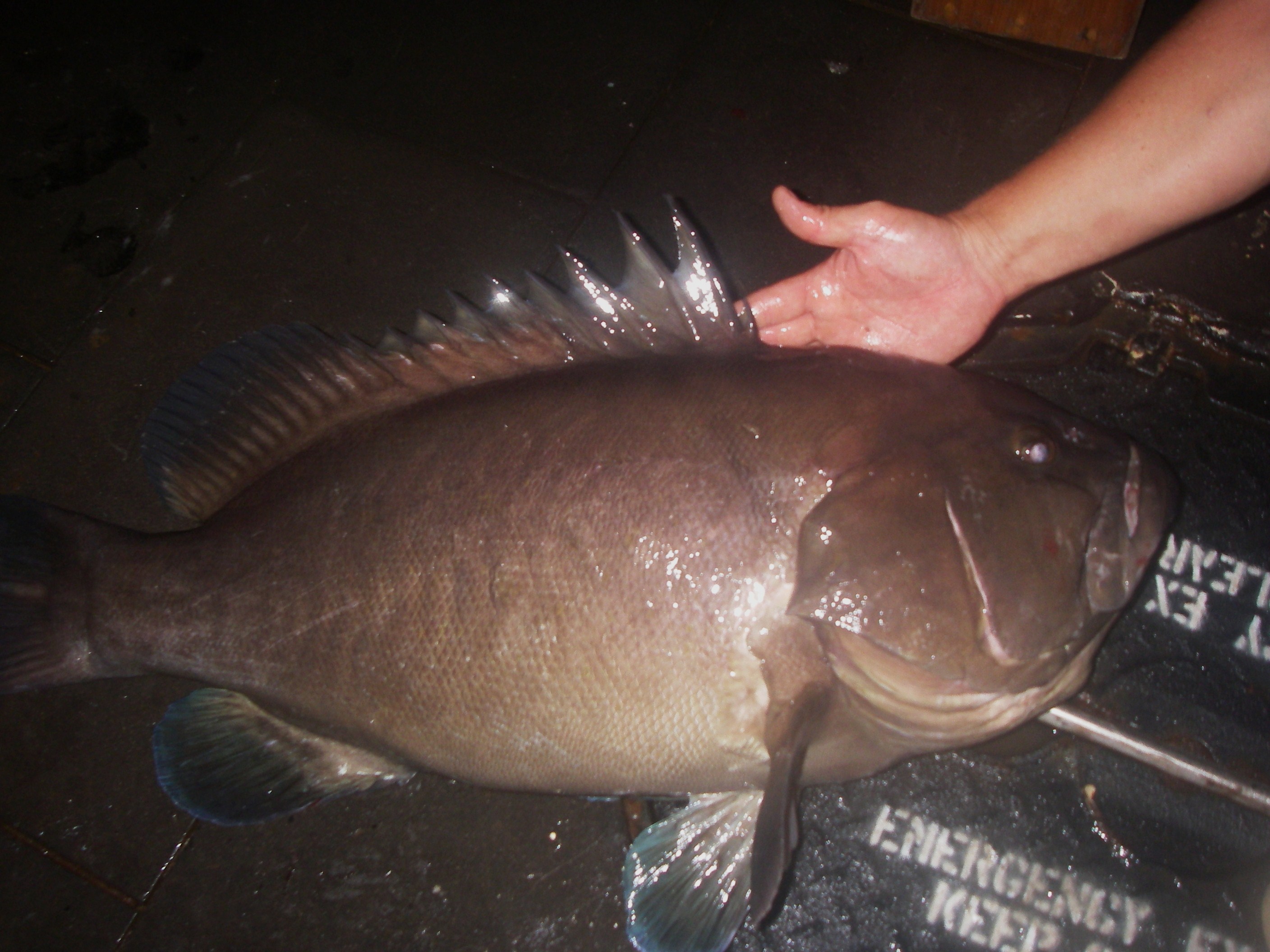
- Uniform dark coloration. Adults are a dark grayish-brown to nearly black, generally without bold markings, though small fish may show pale spots or a lighter mottling and sometimes a white patch on the body.
- The tall second dorsal spine. The Warsaw's defining field mark is the greatly elongated second spine of the dorsal fin, noticeably taller than the others, no other Atlantic grouper shows this so distinctly.
- Massive, robust body. Heavy-bodied and deep, with a large head and a huge mouth, built like the giant it is.
- Ten dorsal spines. A technical mark that, combined with the tall second spine, separates it from similar deep groupers.
The Warsaw is most likely to be confused with the goliath grouper (which is protected and shows a broader, more mottled pattern and different fin structure) and with other dark deep-water groupers. The elongated second dorsal spine is the giveaway.
Best Tackle for Warsaw Grouper
This is extreme bottom fishing. You are combining great depth, heavy sinkers, strong current, and a fish that can weigh as much as a person, so the tackle is at the heavy end of everything.
Reel: For big Warsaw in deep water, a powerful electric reel is the practical choice, capable of hauling a giant fish and heavy lead up from 500-plus feet. Serious hand-crankers use large two-speed conventional reels in the 50 to 130 class, but be honest about what it takes to move a 200-pound fish by hand from deep water.
Rod: A heavy, stout deep-drop or stand-up rod matched to the reel, with the backbone to lift extreme weight. Bent-butt rods fished from a holder are common for the deep-drop approach.
Line: Heavy braid, 100 to 200 pound, for thin diameter, minimal stretch, and the strength to pull a giant off the bottom.
Leader: Very heavy, 200 to 400 pound mono or heavy cable in some setups, because a big Warsaw and the sharp structure it lives in will destroy anything light.
Hooks: Large, strong circle hooks (10/0 to 16/0) that will not straighten under extreme pressure.
All the Gear Needed to Deep DropEvery component must be matched to the extreme. A big Warsaw grouper will find the weak link in your tackle, an undersized hook, a light leader, a worn knot, and exploit it instantly. This is not the place for compromise gear.
Deep Dropping for Warsaw Grouper
Deep dropping is the primary method. Rig a heavy deep-drop setup with a large circle hook and a heavy sinker (several pounds) to get your bait down fast and hold bottom in the current, and drop directly onto marked structure. Because a big Warsaw is a solitary fish on prime structure, precision matters, you want the bait right in its zone.
Deep Dropping Warsaw GrouperBig, tough baits are the ticket, whole fish like bonito, blue runners, or large chunks of cut bait that a giant grouper wants to eat and that survive the long drop. A small bait may draw smaller reef fish and never interest a true giant, so do not be shy about sending down a substantial offering; a big Warsaw has a mouth like a five-gallon bucket and wants a meal worth leaving its lair for. Some anglers add a light stick or LED to the rig to draw fish in the darkness at depth, and fresh, oily bait that puts scent in the water helps a grouper home in.
When a Warsaw eats, there is usually no mistaking it: a heavy, deliberate load followed by a powerful surge for the bottom. The critical moment is right then. You must turn the fish's head and get it moving up immediately, because if a big Warsaw reaches its hole or wedges into the structure, the fight is often over.
Rig Your Own Deep Drop RigsThis is where electric reels and heavy tackle earn their keep, the ability to apply immediate, sustained lifting power the instant the fish is hooked. With a hand-crank setup, angler and gear both have to be up to a genuine grind. Keep the pressure relentless and do not give an inch of slack; a Warsaw that gets its head down is halfway to breaking you off.
Fighting a Giant
Even after you turn a Warsaw's head, the fight is a battle of attrition against a fish that may weigh more than you do. Steady, heavy pressure is everything, pump and reel, or let the electric reel do the lifting, and never let the fish rest or regain the structure. A big fish coming up from deep water is dead weight plus the pull of the current on your line and lead.
Secrets of Warsaw Grouper FishingHave a plan for landing a giant at the boat: a large gaff (for a legal keeper) or a way to release a fish you cannot or should not keep. Coordinate the crew, keep everyone clear of the line, and be ready, a green Warsaw at the surface is still immensely strong.
Boat handling is part of the battle too. In deep water with current running, your line streams out at an angle, and keeping the boat positioned over or slightly up-current of the fish helps you maintain the direct, vertical pressure that lifts a giant most efficiently. A captain who works the boat with the angler, easing over the fish, keeping the line as vertical as possible, makes a hard fight winnable. Fought at a long angle against the current, the same fish can feel immovable. Communication between the helm and the rod is what lands the biggest Warsaw grouper.
Take care of yourself during the fight, too. Cranking a giant up from 600 feet, whether by hand or babysitting an electric reel under heavy load, is genuinely strenuous, and a stand-up harness or a solid rod holder saves your back and lets you keep steady pressure without wearing out. Rushing a green fish or backing off the drag to rest are both mistakes; smooth, relentless, controlled pressure is what beats a Warsaw grouper.
Regulations, Barotrauma, and Conservation
Warsaw grouper are exceptionally vulnerable to overfishing: they are slow-growing, long-lived, late to mature, and were heavily targeted in the past. As a result they are tightly managed, with very restrictive limits, often just one fish per vessel per day within the deep-water grouper aggregate in U.S. waters, and rules that vary by region and change over time. Always check the current regulations before you fish, and recognize that a Warsaw grouper is a fish to take seriously and sparingly.
Barotrauma is a major issue: a fish hauled up from several hundred feet suffers massive gas expansion and cannot swim back down on its own. Any Warsaw you must release, undersized, over the limit, or by choice, needs a heavy descending device to return it to depth, and even then release of such a large deep fish is difficult. Because these fish are so vulnerable and each large one represents decades of growth, many anglers choose to release Warsaw grouper when they can, keeping only a fish they intend to use.
Cleaning and Cooking Warsaw Grouper
A Warsaw grouper yields an enormous quantity of thick, white, firm fillets, the classic mild, versatile grouper meat, and it is excellent fried, grilled, blackened, or baked into a chowder. A single large fish can feed a crowd, which is another reason to keep only what you will actually use and to handle the meat well.
How to Clean and Cook a Huge GrouperBleed and ice the fish immediately; with a fish this size, getting it cooled down fast is essential to quality, and a large fish holds a lot of internal heat that will spoil the meat if it sits. Plan ahead for how you will handle a big fish on board, plenty of ice, room to work, and a plan to share or store the substantial amount of meat a large Warsaw yields. As with other large reef and deep-water groupers, be aware of ciguatera risk in certain regions, since the toxin concentrates in large predatory reef fish, know your local waters and follow regional guidance, especially with the biggest fish.
Putting It All Together
The Warsaw grouper is the giant of the Atlantic bottom, a fish that rewards preparation, precision, and serious tackle. Find the deep rocky structure and wrecks; drop heavy, tough baits right in the zone on extreme deep-drop gear; turn the fish's head the instant it eats and never let it reach its hole; and respect the strict limits and the fish's vulnerability by keeping only what you will use and releasing the rest with care. Do it right, and you will have tangled with one of the most powerful fish in the ocean.
This is gear- and boat-intensive fishing, and there is no shame in getting your first shot at a giant aboard a well-equipped offshore boat with the electronics and heavy deep-drop tackle these fish demand, running to proven deep numbers with the right rig aboard can shorten the learning curve dramatically before you invest in your own extreme setup.
For more on chasing reef and bottom species, see our guides on how to catch snowy grouper, how to catch goliath grouper, and how to catch scamp grouper.