Fish
Fish Fire
Fire Hike
Hike Bird
Bird

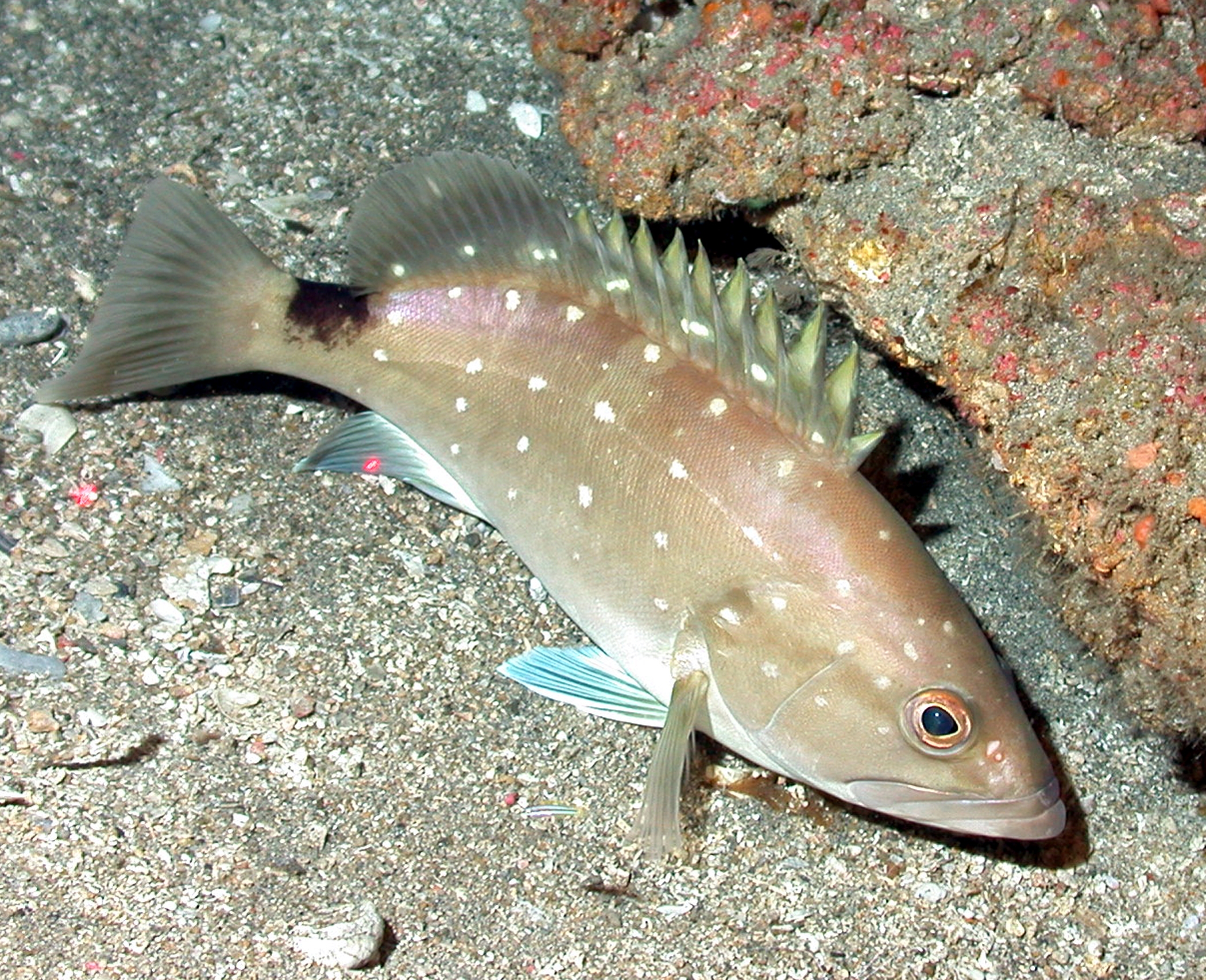

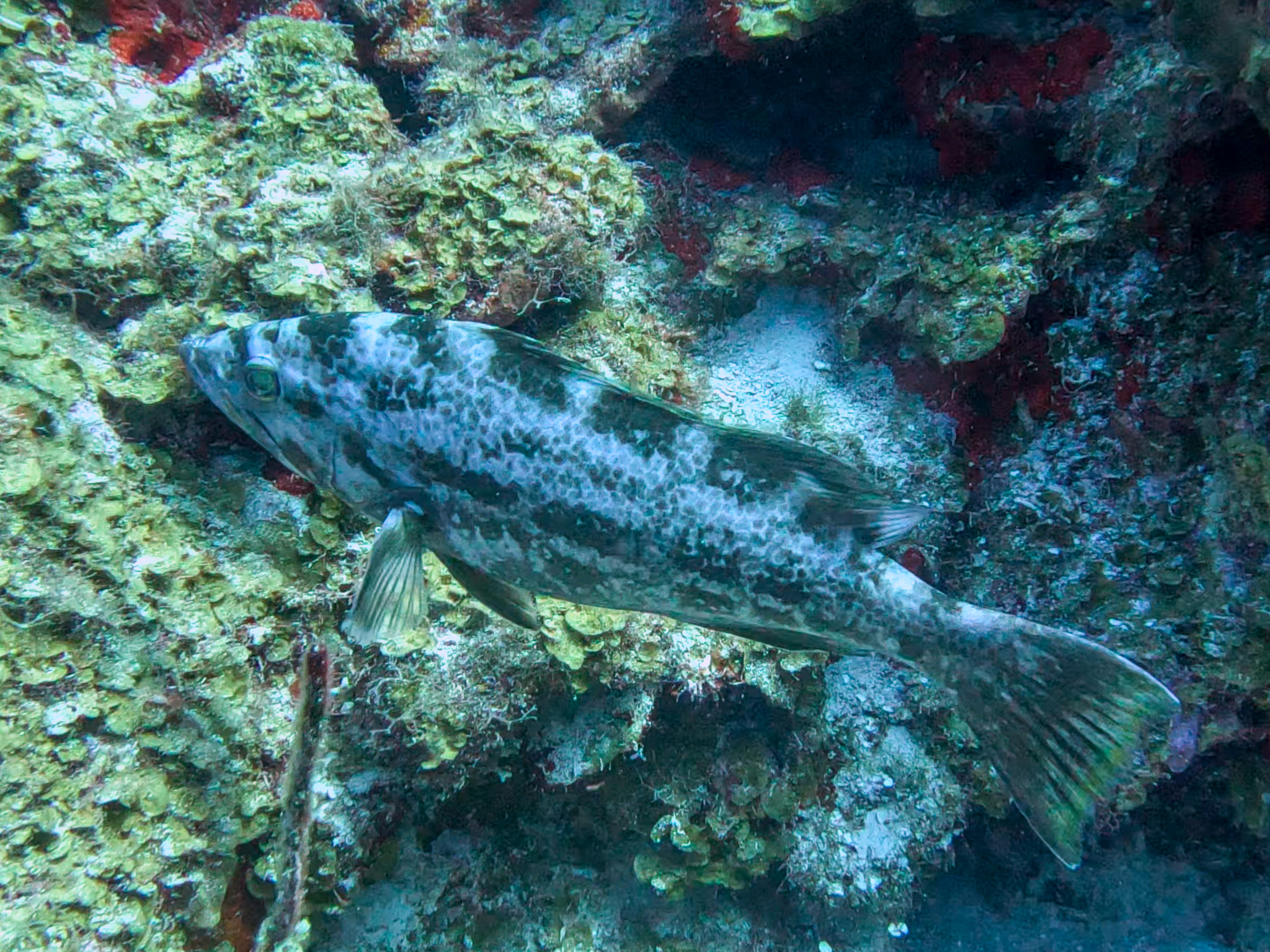
The snowy grouper (Hyporthodus niveatus) is a grouper of the deep, a fish of the outer continental shelf and upper slope that most anglers only reach with heavy sinkers, long spools of line, and often electric reels. Named for the pearly white spots that cover juveniles like flakes of snow on a dark background, the adult snowy is a heavy-bodied, dark brown-to-gray grouper that lives on rocky bottom in hundreds of feet of water. It is one of the most prized deep-drop targets in the western Atlantic and Gulf of Mexico, both for its size and for its outstanding table quality.
Snowy grouper are a true deep-water species. While juveniles occasionally turn up inshore and in shallower water, which is where those distinctive white-spotted little fish get caught and photographed, the adults you target live deep, typically from about 400 to 800 feet and sometimes deeper, on the rocky ledges, rubble, and hard bottom of the shelf edge. Reaching them is a different game from reef-grouper fishing: it is deep dropping, a specialized style built around getting fresh bait to extreme depth, holding bottom in current, and cranking heavy fish up from far below.
This guide covers where snowy grouper live, how to identify them, the deep-drop tackle and rigs that make the fishery practical, the techniques that put fish in the box, and how to handle and cook one of the best deep-water groupers in the ocean.
Understanding Snowy Grouper Behavior
Snowy grouper are structure-oriented ambush predators, just like their shallow-water relatives, they simply do it hundreds of feet down. They hold on and around rocky outcrops, ledges, drop-offs, and hard bottom along the shelf edge and upper slope, where cold, deep water and structure concentrate prey. Larger, older fish tend to occupy the deeper end of the range.
Their diet is dominated by fish, squid, and crustaceans that share the deep bottom. Down where they live there is no daylight-driven feeding window the way there is on a shallow reef; instead, current is the key variable. Moving water pushes food across their structure and triggers feeding, while slack current at depth often means a slow bite. Because you cannot see what is happening down there, you rely on your sounder to mark structure and, ideally, fish or bait, and on your feel for when the current is right.
Snowy Grouper Fishing OverviewSnowy grouper are slow-growing and long-lived, big fish can be decades old, which makes them highly vulnerable to overfishing and is why they are tightly managed. From a fishing standpoint, it also means the biggest snowy grouper are old fish holding on specific deep structure, so precise numbers and a good understanding of the bottom you are fishing matter enormously. Deep-drop fishing rewards anglers who do their homework on the chart and mark productive bottom carefully.
It also helps to understand how these fish relate to the terrain. The shelf edge is not a smooth slope; it is cut with ledges, ridges, rock piles, and rubble fields, and snowy grouper concentrate on the harder, higher-relief pieces rather than the surrounding mud or sand. A drop that lands on featureless bottom will usually go untouched, while a drop right on a rocky high spot can produce immediately. That is why reading your bottom machine, distinguishing hard rock from soft bottom, spotting the small pinnacles and ledges that hold fish, is the single most valuable skill in this fishery. Anglers who invest in good electronics and learn to interpret them out-fish those who simply drop over general depth.
Temperature and the character of the water at depth matter too. Snowy grouper favor the cooler water of the deeper shelf, and productive depths can shift seasonally as water masses move. On any given day, the fish are where the right combination of structure, current, and water conditions come together, which is why building a network of proven numbers across a range of depths pays off over a single "honey hole."
How to Identify Snowy Grouper
Identification changes dramatically with age, which is worth understanding:
- Juveniles are dark brown to black with numerous distinct pearly white spots scattered across the body, and often a dark saddle blotch on the tail base. This is the classic "snowy" look that gives the species its name.
- Adults lose most or all of the white spots, becoming a fairly uniform dark grayish-brown, heavy-bodied grouper. A dark saddle blotch above the tail base may persist.
- Body shape is the robust, deep-bodied build typical of the Hyporthodus deep-water groupers (which also includes the Warsaw and yellowedge groupers).
Because adults are relatively plain, snowy grouper are most often confused with other deep-water groupers like the yellowedge grouper (which shows yellow around the eye and fin margins) and the Warsaw grouper (much larger, with a distinctly tall second dorsal spine). Depth, the dark saddle, and overall coloration help separate them; when a juvenile shows those snowflake spots, identification is easy.
Best Tackle for Snowy Grouper
Deep-drop fishing is tackle-intensive because of the depth. You are fighting several pounds of lead, strong current, and a heavy fish, all through hundreds of feet of line.
Reel: An electric reel is the standard tool for serious snowy grouper fishing, cranking a heavy fish and several pounds of sinker up from 500-plus feet by hand, repeatedly, is exhausting and impractical for most anglers. A powerful manual two-speed reel can be used by those who want the challenge, but electric reels make the fishery accessible.
Rod: A heavy, relatively short deep-drop rod matched to the reel, with a bent butt for fishing from a rod holder and the backbone to handle heavy sinkers and fish.
Line: Heavy braid, often 80 to 130 pound, for its thin diameter and minimal stretch. At extreme depth, braid's low stretch is what lets you feel bites and set hooks; monofilament would stretch too much to be workable.
Rig: A deep-drop rig, typically a multi-hook high-low (chicken) rig with heavy circle hooks and a heavy sinker (2 to 5 pounds or more) at the bottom to get down fast and hold in current. Many anglers add a light stick or LED to attract fish in the darkness of the deep.
Sinker: Heavy, several pounds, because you must reach and hold bottom in current at depth. Bank sinkers or specialized deep-drop weights are standard.
Electric Deep Drop Reel SetupEverything about the setup is built around depth and current. If you cannot get your baits to the bottom and hold them there, you cannot catch snowy grouper, so match your sinker weight to the conditions and do not undergun the rig.
Rigging for the Deep
Your rig is the heart of deep-drop fishing. The standard is a high-low or "chicken" rig: a length of heavy monofilament with two or three dropper loops holding circle hooks, a swivel at the top to connect to your main line, and a heavy sinker clipped to the bottom. Circle hooks in the 8/0 to 12/0 range match the big baits and improve hookups and release survival.
How to Tie a High-Low (Chicken) RigMany deep droppers add a battery-powered LED light or a glow stick to the rig, because it is pitch dark where snowy grouper live and a light draws curious fish to your baits. Build your rigs at home with fresh, heavy leader and sharp hooks, retying at depth in current is miserable, and a rig that fails at 600 feet costs you a lot of time. Tie up several complete rigs before a trip and keep them on rig boards so you can swap a fouled or bitten-off rig in seconds and get baits back down while the bite is on. Space your dropper loops far enough apart that the hooked baits do not tangle, and use a heavy enough leader that a big snowy or a passing shark does not part it on the way up.
Baiting and Deep Dropping
Fresh, tough bait that stays on the hook through the long drop is what you want. Strips of bonito, squid, cigar minnows, whole small fish, and mackerel-style strip baits all work well. Bait that flutters and stays put through hundreds of feet of descent gives the grouper something to find.
Deep Drop Bait RiggingDrop your rig on marked structure and let it hit bottom, then reel up a few feet to keep the baits just above the rocks. Watch your rod tip and line: at depth, a bite often shows as a subtle change or added weight rather than a dramatic thump. When you are confident fish have loaded onto the hooks, and with a multi-hook rig it is often worth waiting for more than one, engage the electric reel and bring the whole thing up steadily. Do not stop cranking; keep the fish coming so it cannot rock you up into the structure.
How to Deep Drop for Grouper and TilefishBecause you are fishing blind at extreme depth, your electronics and your GPS numbers do the work. Mark productive bottom precisely, note the depth and current conditions when you get bit, and build a milk run of proven spots. This is a fishery of accumulated knowledge, the anglers who consistently catch big snowy grouper are the ones with the best numbers and the best feel for the deep bottom.
Boat control is a bigger factor than newcomers expect. In hundreds of feet of water with current running, your rig does not drop straight down, it sweeps out at an angle, and by the time it reaches bottom you may be well off your mark. Experienced deep droppers position the boat up-current and account for that sweep, sometimes using the motor to hold position or to slow the drift so baits stay in the zone. Too much current and even several pounds of lead will not hold bottom; too little and you struggle to feel bites. Learning to read the drift and adjust your sinker weight and boat position accordingly is what separates a productive drop from a wasted one.
Patience on each drop pays off with a multi-hook rig. Rather than reeling up the instant you feel a single fish, it often pays to wait a moment and let additional fish find the other baits, bringing up a doubleheader or tripleheader from 600 feet is far more efficient than making the long round trip for one fish. But do not wait so long that a hooked grouper works into the rocks; there is a balance, and feel for it comes with time on the water.
Handling Barotrauma and Release
Fish brought up from 500 or more feet suffer severe barotrauma, the gases in their bodies expand dramatically as they rise, and a snowy grouper reaching the surface will show a distended belly and bulging eyes. Fish you intend to keep are of course headed for the box, but any fish you must release, undersized or over your limit, needs help to survive the trip back down. Because of the extreme depth, release is genuinely difficult; a heavy descending device that carries the fish back to depth gives it the best chance. Know the regulations before you drop, because with deep-water groupers, a released fish's odds depend entirely on how you handle it.
Cleaning and Cooking Snowy Grouper
Snowy grouper is superb eating, thick, white, firm, and mild, widely rated among the very best of the deep-water groupers and rivaling the famous scamp for the table. Fillet the fish, remove the skin, and you have clean, boneless fillets that take beautifully to grilling, frying, blackening, baking, or ceviche.
Snowy Grouper Catch, Clean, and CookIce your catch immediately for the best quality. Because snowy grouper come from cold, deep water, they arrive at the surface in excellent condition when handled well, and the deep-water grouper's reputation at the table is a big part of why anglers make the effort to reach them.
Regulations and Conservation
Snowy grouper are slow-growing, long-lived, and were historically overfished, so they are managed with strict size limits, low bag limits (often just one fish per person or per vessel as part of a deep-water grouper aggregate), and seasonal or area rules that vary by region and change over time. Always check the current regulations for your area before you fish. Given how vulnerable these old, deep fish are, keeping only what you will use and handling released fish responsibly with a descending device is essential to keeping the fishery healthy.
Putting It All Together
Snowy grouper reward preparation and the right gear. Find the deep rocky bottom on the shelf edge; fish it when current is moving; rig heavy multi-hook deep-drop rigs with fresh, tough bait and a light to draw fish in the dark; and use an electric reel to get baits down and heavy fish up from hundreds of feet. Mark your productive numbers, respect the strict limits, and you will land one of the finest deep-water groupers the ocean offers.
Ready to put it into practice? If you do not yet own the electronics and deep-drop gear to reach these fish, going out on a well-equipped charter is a common way to see the technique done right and shorten the learning curve dramatically.
For more on chasing reef and bottom species, see our guides on how to catch scamp grouper, how to catch yellowfin grouper, and how to catch goliath grouper.