Fish
Fish Fire
Fire Hike
Hike Bird
Bird

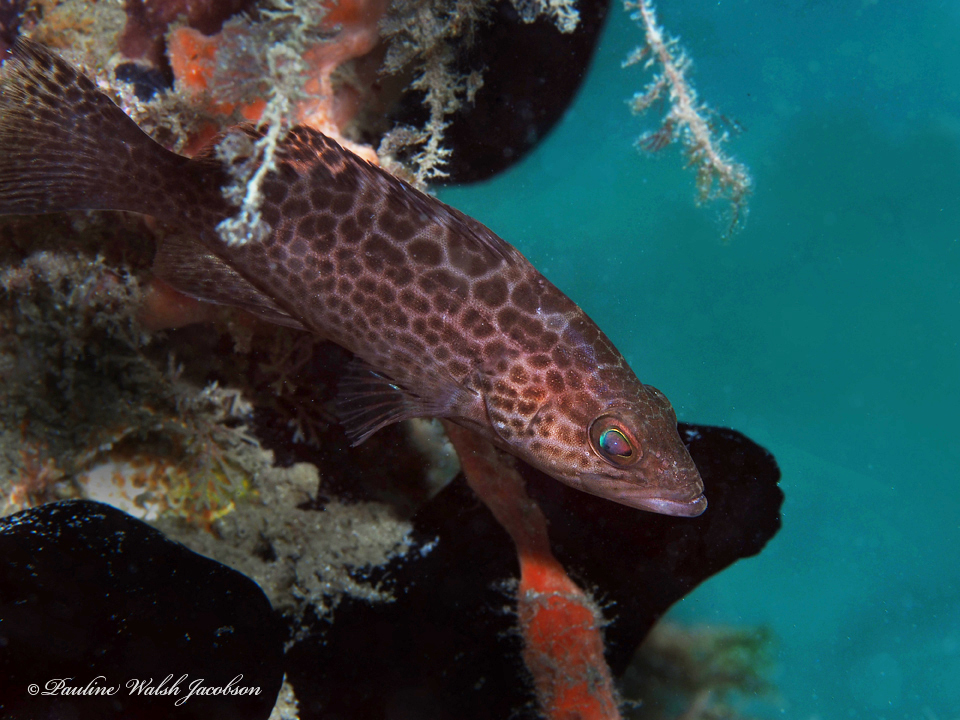

The scamp grouper (Mycteroperca phenax) is, pound for pound, one of the most sought-after groupers in the southeastern United States and Gulf of Mexico, not because it is the biggest or hardest-pulling, but because many anglers and chefs consider it the single best-eating grouper in the ocean. Slender and streamlined, cloaked in a fine pattern of dark brown spots over a tan-to-gray body, the scamp is a deep-structure fish that rewards anglers willing to fish rock piles, ledges, and hard bottom in real depth.
Scamp belong to the Mycteroperca group, the slimmer, faster groupers that also includes the gag, black, and yellowfin. Like its relatives, the scamp is quicker and more willing to move for a bait than the heavy red grouper, and its streamlined build lets it chase baitfish. But it is also a structure-oriented ambush feeder that will bolt for the rocks the instant it is hooked, so the fundamentals of grouper fishing, heavy tackle, fast reflexes, and getting the head up, apply just as they do to any reef grouper.
This guide covers where scamp grouper live, how to tell them apart from similar groupers, the tackle that turns the fight your way, the most productive techniques for deep hard bottom, and how to clean and cook a fish that earns its reputation at the table.
Understanding Scamp Grouper Behavior
Scamp grouper are hard-bottom specialists. They hold on rocky ledges, limestone outcrops, coral heads, wrecks, and live-bottom areas, generally in water from about 80 to 350 feet, though they can be found shallower on healthy reefs and deeper along the shelf edge. Bigger fish tend to hold in deeper water and on the more isolated, harder-to-reach structure, which is part of why trophy scamp are a genuine accomplishment.
They are ambush predators with a fish-heavy diet, small reef fish, baitfish, squid, and crustaceans. A scamp holds tight to its structure and darts out to grab passing prey, then retreats. That behavior shapes how you fish for them: you want your bait or jig in or right above the strike zone, and you want to move a hooked fish away from the rocks before it can retreat into them.
Scamp Grouper and Deep-Reef SpeciesScamp respond strongly to current. Moving water pushes food across their structure and turns on the bite; slack current often shuts it down. Time your drops to the moving stages of the tide over your best numbers, and keep enough weight on to hold contact with the bottom in the flow. When you find a piece of structure holding scamp, mark it precisely, these fish relate to very specific spots, and a rock pile the size of a car can hold multiple fish while barren bottom fifty feet away holds none.
Like other groupers, scamp form spawning aggregations, generally in the cooler months from late winter into spring, gathering on specific offshore ledges and hard-bottom promontories. These aggregations concentrate fish and were historically vulnerable to heavy fishing pressure, which is part of why the species is carefully managed today. Practically, it means your best structure will fish very differently from month to month: a ledge that gives up one or two scamp in summer can hold a genuine concentration during the pre-spawn period. Learn the seasonal rhythm of your area, respect any closures built around spawning, and you will understand why timing matters as much as location.
Scamp also relate to the quality of the bottom, not just its shape. Live bottom, areas of sponge, soft coral, and low relief teeming with small reef life, holds the forage scamp feed on, and productive scamp spots often combine that live bottom with harder relief the fish can hide in. When you are prospecting new numbers, look for that combination on your sounder: bait and life above hard, broken bottom is the signature of a spot worth dropping on.
How to Identify Scamp Grouper
Scamp are easy to confuse with several other groupers, and correct ID matters for the regulations. Key features:
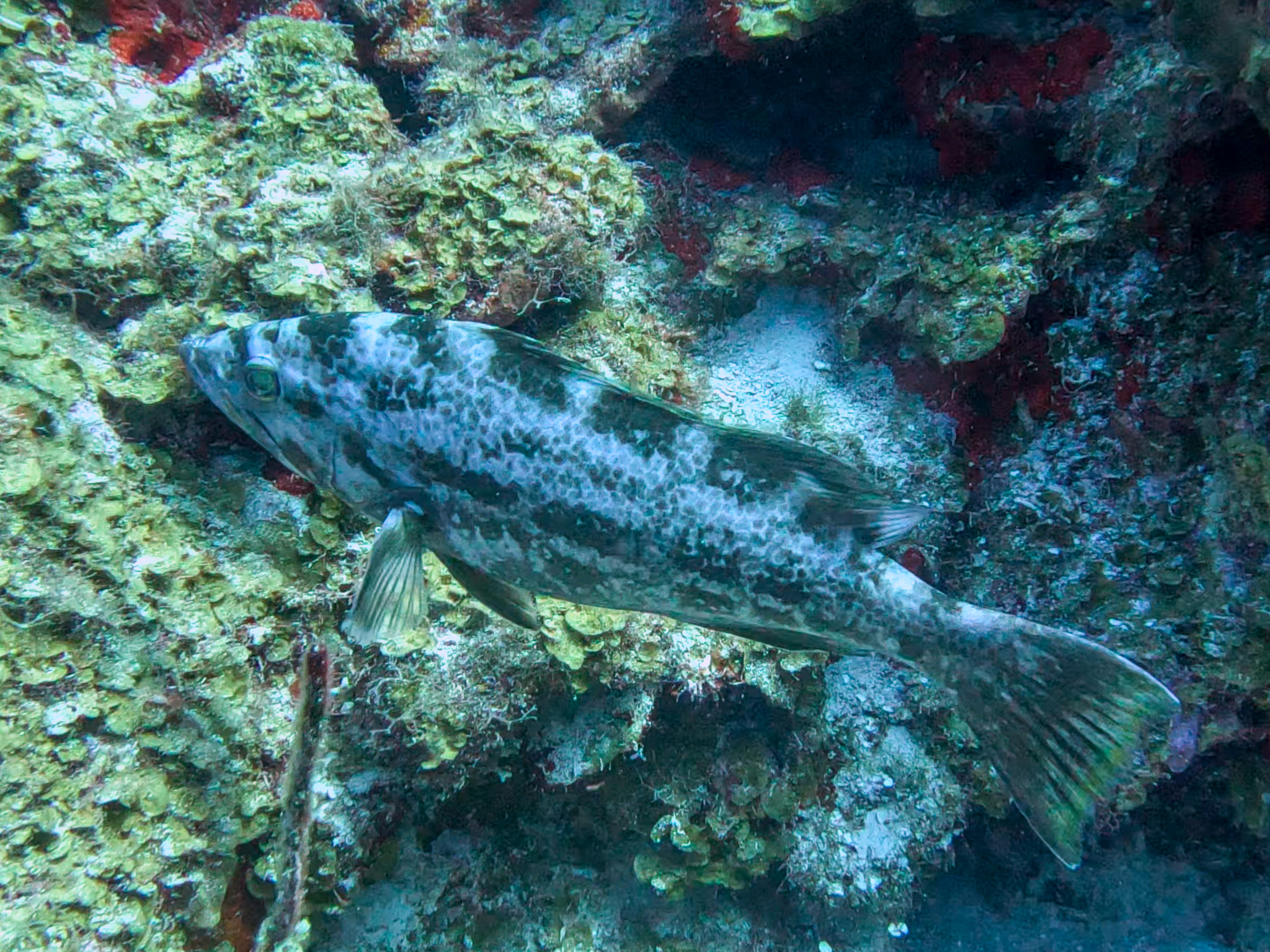
- Fine, dense spotting. The body is covered in small, close-set dark brown or reddish-brown spots over a lighter tan, gray, or brown background, a finer, more freckled pattern than the blotchy black or yellowfin grouper.
- Streamlined, slender body. Like other Mycteroperca, the scamp is elongated and not deep-bodied.
- "Broom tail" in larger fish. Big scamp develop distinctive elongated rays on the tail and sometimes the fins, giving a ragged, brushy appearance that is a strong ID clue.
- Yellowish mouth corners. The corners of the mouth often show a yellow tint.
The scamp is most often confused with the yellowmouth grouper, which is very similar but shows more yellow around the mouth and a slightly different spot pattern, and with juvenile black or gag grouper. When in doubt, note the fine freckled spotting and, in larger fish, the broom-tail rays.
Best Tackle for Scamp Grouper
Even though a scamp is not the bruiser that a big red or goliath grouper is, you still fish it on stout gear, partly because it dives for the rocks, and partly because you are often fishing deep water where you need to move the fish decisively off the bottom.
Rod: A medium-heavy to heavy conventional bottom rod, 6 to 7 feet, with a fast, powerful action and enough backbone to lift a fish out of the structure.
Reel: A conventional reel with a strong drag and line capacity for deep drops. A two-speed lever drag reel in the 20 to 50 class shines in deeper water, letting you crank power to move a fish and speed to retrieve slack.
Line: Braid, 50 to 65 pound, for thin diameter and low stretch. In deep water, braid's lack of stretch is what lets you feel a bite and drive the hook home hundreds of feet down.
Leader: Fluorocarbon or monofilament, 50 to 80 pound, heavy enough to survive the rock and the fish's initial dive.
Hooks: Circle hooks, 5/0 to 8/0, matched to your bait. They hook fish in the corner of the jaw and are better for releasing undersized or out-of-season fish.
How to Tie a Knocker Rig for Reef FishingAs with all grouper fishing, do not skimp on the terminal end. A scamp that reaches the rocks will cut you off, so fresh leader, sharp hooks, and a drag set to move the fish are the difference between a fish in the box and a story about the one that broke you off.
Bottom Fishing Deep Structure
The core scamp technique is fishing baits on the bottom over hard structure. Use a knocker rig or fish-finder rig with an egg sinker heavy enough to hold bottom in the current, and drop directly onto marked structure. A knocker rig, with the sinker riding right down to the hook, keeps your bait tight to the bottom and gives you direct contact, which matters when scamp are holding close to the rocks.
Offshore Bottom Fishing for Grouper and SnapperBait with fresh cut squid, sardines, cigar minnows, threadfin, or strips of bonito. Scamp are not especially fussy, but fresh, natural bait outproduces old, freezer-burned bait every time. Drop to the bottom, reel up a crank or two to keep the bait just above the rocks, and stay in contact so you feel the bite.
When a scamp eats, resist the urge to swing. Let the circle hook do its job: as the fish loads the rod, lift steadily and start cranking immediately to pull the fish up and away from the structure. The first few cranks are everything. Keep the pressure constant, give a scamp slack near the rocks and it will be back in its hole before you can react.
Boat positioning is a bigger part of bottom fishing than many anglers realize. Set up so the current carries your baits into the structure, not away from it, and use just enough weight to hold contact, too heavy and you lose feel, too light and you drift off the spot. On an anchored boat over an isolated rock pile, you can soak baits precisely in the zone; on a drift along a long ledge, you cover water and find where the fish are stacked. Either way, drop back down the moment you reset, because a fresh bait in the strike zone during moving current is what gets bit. A steady stream of cut-bait chunks or a chum bag can also pull scamp up and get them competing, turning a lazy bite into an aggressive one.
Vertical Jigging for Scamp
Because scamp will rise off the bottom for prey, they can be caught on vertical jigs, a fun, effective, bait-free way to target them and cover the water column. Drop a heavy jig (150 to 300 grams depending on depth and current) to the bottom and work it up with sharp rod lifts, reeling as you go. Scamp and other groupers often hit on the fall or in the first several cranks off the bottom.
Vertical Jigging Deep Reef StructureFlashy silver, blue, pink, and glow jig patterns all work; the key is getting the jig down fast and keeping it near vertical in the current. Use a jig heavy enough for the depth, and rig assist hooks at the head for better hookups and easier release. When a fish eats, the drill is the same as with bait, lock down and lift hard to keep it out of the rocks.
Slow-pitch jigging deserves a mention for scamp. Rather than the fast, aggressive lifts of speed jigging, slow-pitch uses a specialized rod to impart a fluttering, wounded-baitfish action to a flat, wide jig, letting it fall enticingly between short lifts. Groupers holding tight to structure often cannot resist a jig fluttering right in their face, and slow-pitch lets you keep the lure in the strike zone longer than a fast retrieve. On days when the fish are sulking and bait is going untouched, switching to a slow-pitch presentation can be the trigger that turns a scamp on.
Deep Dropping for Bigger Scamp
The largest scamp often live in deeper water along the shelf edge, where deep dropping puts baits in front of them. Fish weighted multi-hook rigs with heavy sinkers to get down fast and hold bottom, and drop right on the hard structure and ledges you mark on the sounder. This water overlaps with snowy grouper, tilefish, and queen snapper, so a deep-drop trip can produce a mixed bag with a trophy scamp among it.
Rig Your Own Deep Drop RigsUse fresh cut bait, squid and strip baits work well, on circle hooks, and watch your electronics for the structure and bait that hold scamp. At extreme depths electric reels make the fishing practical. As always, get the fish's head up quickly once it is hooked, even from several hundred feet down.
Deep dropping also puts you on water that few boats fish hard, and the biggest scamp, the broom-tailed old fish, tend to live exactly there. A quality sounder and accurate GPS numbers are worth more than any single piece of tackle when you are hunting trophy scamp on the shelf edge: find the right hard bottom in the right depth, and the fish will be there.
Cleaning and Cooking Scamp Grouper
This is where the scamp earns its fame. Its flesh is white, firm, moist, and exceptionally sweet, widely regarded as the finest-eating grouper and among the best of all reef fish. Fillet the fish, remove the skin, and you are left with clean, boneless fillets ideal for frying, grilling, blackening, baking, or a classic grouper sandwich.
How to Fillet a GrouperBleed and ice your catch immediately to preserve that quality. Because scamp are deep-reef predators, the same ciguatera awareness that applies to other tropical groupers is worth keeping in mind in high-risk regions, though scamp are generally considered lower-risk than the largest reef groupers. Know your local waters and follow regional guidance.
Regulations and Conservation
Scamp are slow-growing and prized, which makes them vulnerable to overharvest, so they are managed with size limits, bag limits (often as part of an aggregate grouper limit), and seasonal closures that vary by region and change over time. Always check the current rules for your area before keeping a fish. Because scamp come from deep water, released fish frequently suffer barotrauma, use a descending device or venting tool to give them a real chance to survive, and handle them quickly. Protecting the larger breeding fish keeps this fishery healthy for the future.
Putting It All Together
Scamp grouper reward precision and good structure. Find the rock piles, ledges, and hard bottom; fish them hardest on moving current; use tackle with the backbone to lift a fish clear of the rocks; and choose your method, soaking fresh bait on a knocker rig, dropping deep for the big ones, or working a vertical jig, to match the depth and the day. Get the head up, keep it coming, and you will land what many consider the best-eating fish in the sea.
Ready to put it into practice? The fastest way to shorten the learning curve is time on the water building your own hard-bottom numbers. Log every productive rock pile and ledge, note the tide stage, current, and season each fish came on, and mark the spots precisely, before long your best structure will start producing on a predictable rhythm, and you will know which ledges to run to when the conditions line up.
For more on chasing reef and bottom species, see our guides on how to catch yellowfin grouper, how to catch goliath grouper, and how to catch vermilion snapper.