Fish
Fish Fire
Fire Hike
Hike Bird
Bird

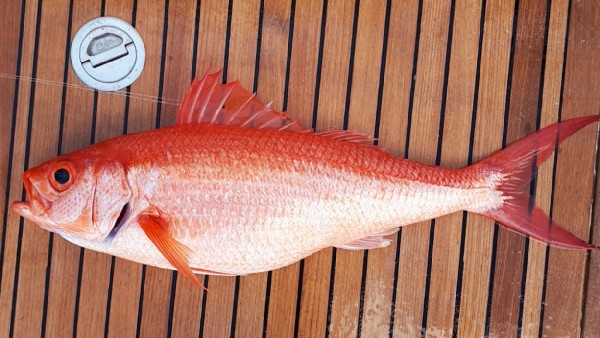

Of all the snappers in the tropical western Atlantic, few are as striking, or as coveted, as the queen snapper. A brilliant red-orange fish with an enormous eye and a long, elegantly forked tail, the queen snapper lives in the deep, dark water far below the reefs, from a few hundred to well over a thousand feet down. Catching one means venturing into the specialized world of deep dropping, where heavy weights, long lines, and often electric reels probe the depths for fish most anglers never see. The reward is worth it: queen snapper are not only beautiful and hard-earned but among the very best-eating fish in the ocean, prized for their sweet, delicate white fillets.
The queen snapper (Etelis oculatus) is built for the deep. Its huge eye gathers the faint light hundreds of feet down; its slender, streamlined body and deeply forked tail suit a life of chasing prey in open deep water off steep drop-offs and deep structure. They range from a couple of pounds up to genuine trophies of twenty pounds or more, and they are found from Florida and the Bahamas through the Caribbean and down to Brazil, wherever deep water and the right structure meet. Because they live so deep, everything about catching them is shaped by depth, the gear, the rigs, and the tactics.
This guide covers the queen snapper playbook: deep-dropping fundamentals, the rigs, jigging the deep, manual versus electric approaches, finding fish, and caring for your catch. Deep dropping is gear-intensive and location-specific, so getting onto productive deep-drop grounds, whether by patiently building your own set of numbers or by fishing a trip alongside a captain who runs the deep, is a big part of the game.
Understanding queen snapper: life in the deep
A little understanding of how queen snapper live makes the specialized fishing make sense. They are true deep-water fish, adapted to the cold, dark, high-pressure world hundreds of feet down. Their enormous eye is built to gather the faintest light at depth, and their slender, powerful body and forked tail let them chase prey in open water off deep structure. They feed on small fish, squid, shrimp, and other deep-water organisms, hunting more by detecting movement and scent in the gloom than by sight alone, which is exactly why glow attraction and scent-rich baits work so well down there.
Queen snapper also tend to move vertically in the water column, often rising off the bottom to feed, especially around low light and at night. This is why so many deep droppers fish their baits a bit up off the bottom and why the bite can change through the day. Understanding that they are not strictly bottom-pinned, but rather hold and feed in the lower part of the water column over deep structure, helps you position your baits where the fish actually are.
Because they live so deep and grow slowly, queen snapper are a fishery to treat with respect. They cannot survive being released from great depth due to barotrauma, so thoughtful anglers fish deliberately, taking what they will use, following the regulations, and not simply hauling up more than they need. Knowing the fish helps you both catch it and steward it.
Deep dropping: the core technique
Deep dropping is the primary way to catch queen snapper. The concept is straightforward but demanding: you send a baited rig down hundreds of feet to the bottom (or just above it), let the fish find it, and bring your catch up from the depths. Because you are fishing in 400 to 1,200-plus feet of water, you need heavy weights (often one to three pounds or more) to reach and hold bottom against the current, and a lot of low-stretch braided line to reach the fish and feel what is happening far below.
The heart of deep dropping is knowing when you are on the bottom and when you have a bite. Drop until your weight hits, then reel up a few turns to keep the baits just off the bottom where queen snapper feed, and watch your rod tip or line for the telltale signs of fish loading up. Queen snapper often hold slightly up off the bottom in the water column, so experiment with how high you fish your baits. When you feel weight, resist the urge to reel immediately, let a couple of fish load onto a multi-hook rig before you begin the long crank up.
How to deep drop for queen snapper and deep-water fishDeep dropping demands the right boat, electronics, and conditions, you are fishing far offshore over deep structure, so a capable boat, good weather, and quality electronics are part of the game. It is a specialized pursuit, but the fish it produces are like nothing else you can catch.
Deep-drop rigs and terminal tackle
The standard queen snapper setup is a multi-hook deep-drop rig, a heavy leader with several dropper loops, each holding a baited hook, and a heavy weight at the bottom. Fishing several hooks at once makes sense when a single drop takes minutes to reach the fish; you want multiple baits working so you can bring up two, three, or more fish per drop. Circle hooks in the 5/0 to 9/0 range are standard, hooking fish in the corner of the jaw for a solid hold on the long ride up.
Add attraction to your rigs, because it is dark down there. Glow beads, glow tubing, and small lighted deep-drop lights (LED strobes) above the hooks draw queen snapper to your baits in the lightless depths, and many deep droppers consider a light essential. Use a bank sinker or a specialized deep-drop weight heavy enough to hold bottom, and tie your rig on heavy monofilament or fluorocarbon leader that resists the abrasion and handles the weight of multiple fish.
Rigging your own deep-drop rigsBait matters even in the deep. Fresh cut squid, bonito, ballyhoo, and other oily cut baits put out scent that queen snapper home in on; keep baits fresh and generously sized. A well-built rig with glow attraction and fresh bait is the foundation of a productive deep drop.
Rig management is a real skill in deep dropping. Because each drop takes so long, you want everything ready before you send it down, pre-rigged leaders, fresh-cut bait, charged lights, and the right weight for the depth and current. Deploy the rig carefully so the multiple hooks and long leader do not tangle on the way down, and keep tension as it descends. When you crank up a rig with fish on it, manage the leader and the fish over the rail so you do not lose a hard-won catch or create a snarl that costs you the next drop. The anglers who catch the most queens are the ones who keep their deep-drop system organized and efficient, maximizing the number of good drops in a day of long descents.
Slow-pitch jigging the deep
While bait accounts for most queen snapper, slow-pitch jigging has become a thrilling way to target them. Slow-pitch jigging uses a specialized rod, reel, and heavy flutter jig worked with rhythmic lifts and drops to imitate a wounded baitfish fluttering in the deep. Queen snapper and the many other deep-water species crush these jigs, and doing it on rod-and-reel rather than an electric reel makes for a far more sporting, hands-on fight from hundreds of feet down.
Match your jig weight to the depth and current, often 250 to 500 grams or more in deep water, so you can reach and work the bottom. Drop to the bottom, then work the jig with the distinctive slow-pitch cadence of lift, flutter, and fall, keeping it in the strike zone just off the bottom. It is physical, technical fishing, but hooking a queen snapper on a jig and cranking it up by hand is one of the great deep-water challenges.
Slow-pitch jigging for deep-water queen snapperSlow-pitch jigging lets you cover the deep structure actively and target the size class you want, and it turns a deep-drop trip into a genuine sporting pursuit. On the right deep ledge, a jig can be deadly for queens and everything else down there.
Manual versus electric reels
Deep dropping is famous for electric reels, which take the labor out of cranking a heavy rig up from a thousand feet, and for many anglers running multi-hook rigs at extreme depth, an electric reel is the practical choice. But queen snapper can absolutely be caught on manual conventional tackle, and doing so is increasingly popular among anglers who want the challenge and the sport.
With a manual outfit, you use a powerful conventional reel with a high line capacity, a strong rod, and plenty of braid, and you earn every fish with a long, arm-burning crank from the depths. Manual deep dropping works best at the shallower end of the queen's range and with lighter weights and rigs, and it rewards you with a much more direct connection to the fish. Whether you go electric for efficiency or manual for sport, the underlying tactics, reaching the bottom, keeping baits in the zone, and reading the bite, are the same.
Deep dropping for snapper without an electric reelChoose the approach that fits your goals and your grounds: electric to fish deep and efficiently for the table, manual for the sporting challenge of hauling a queen up by hand. Either way, the fish at the end is the same beautiful, delicious prize.
Finding queen snapper
Finding queen snapper is largely about depth and structure. They relate to deep drop-offs, ledges, humps, and hard bottom in hundreds of feet of water, often along the edges of the continental shelf and around deep structure where current and bait concentrate. Quality electronics, a good sounder that reads the deep bottom and a chartplotter to work precise numbers, are essential, because you are fishing spots you cannot see and cannot reach quickly.
Successful deep droppers rely on marks: GPS numbers for productive deep ledges and structure built up over time, often shared within a tight circle or earned through exploration. Once over the right bottom, controlling your drift and drop so your rig lands on and works the productive structure is the challenge, since a small miss at the surface becomes a big miss a thousand feet down. Pay attention to the depth and the specific structure where you get bites, and you will start to pattern the fish.
Finding and catching queen snapper on deep structureBecause the grounds are far offshore and the fishing is so location-specific, local knowledge is invaluable. Building a set of productive deep numbers, or fishing with someone who has them, is the single biggest factor in consistent queen snapper success. Sea conditions and current also shape the day: a hard current makes it difficult to hold bottom and keep your rig vertical, so many deep droppers pick calmer days or slack-current windows to fish most efficiently. Watching your line angle tells you how much current you are fighting and whether you need more weight to stay in the strike zone far below.
Cleaning and eating queen snapper
Queen snapper are widely considered one of the finest eating fish in the sea, their flesh is white, sweet, and delicate, prized by chefs and anglers alike, and their beautiful fillets are a genuine reward for the effort of catching them. As with all fish brought up from deep water, get them on ice immediately; the cold deep water they come from means quality is excellent when they are handled well.
Filleting is straightforward: cut behind the head, run the knife along the backbone to the tail, and lift off two clean fillets, then remove the skin. The delicate, sweet flesh takes beautifully to gentle cooking, pan-searing, baking, and light preparations that let the flavor shine, as well as sashimi when perfectly fresh.
Cleaning and cooking queen snapperNote the practical realities of deep-caught fish: queen snapper come up from great depth, so released fish suffer barotrauma and rarely survive, which means deep dropping is generally a keep-what-you-catch fishery, plan your trip and your rig count accordingly, and respect the size and bag limits that apply. Keep what you will eat, and treat these hard-won fish with the care they deserve.
Bringing it together
Queen snapper reward the angler willing to fish deep: send a glow-rigged, fresh-baited deep-drop rig or a heavy slow-pitch jig down to the deep ledges and structure they call home, keep your baits just off the bottom, and be ready for the long, satisfying haul up from the depths. Whether you fish electric for efficiency or manual for sport, the keys are the right gear, good numbers, and attention to depth and structure. Master the deep drop, respect the fish and the rules, and you will earn one of the ocean's most beautiful fish and finest meals.
Ready to fish the deep? Build a set of good deep numbers, rig up with glow attraction and fresh cut bait, and pick a calm day or a slack-current window, the deep-drop grounds reward the angler who comes prepared.
For more deep-water and reef targets, see our guides on how to catch mutton snapper, how to catch snowy grouper, and how to catch tilefish.