Fish
Fish Fire
Fire Hike
Hike Bird
Bird

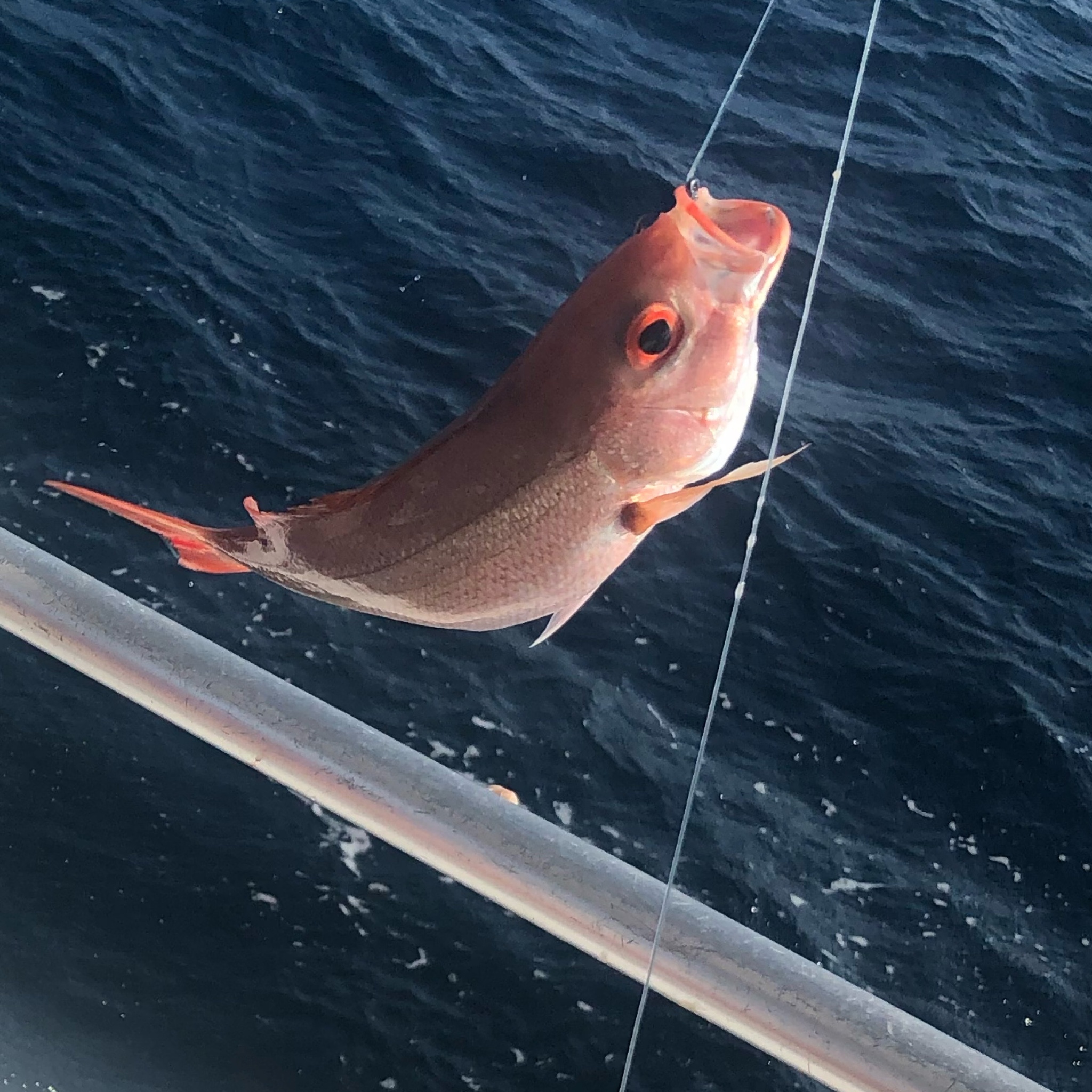

The vermilion snapper (Rhomboplites aurorubens), known throughout the South as the "beeliner" or "mingo", is one of the most abundant, reliable, and delicious deep-reef snappers of the Gulf of Mexico and South Atlantic. A slender, rosy-red snapper of the deeper hard bottom, the vermilion is often caught by the cooler-full on multi-hook rigs, providing fast, steady bottom-fishing action and superb white fillets. Frequently a mainstay when red snapper season is closed, and a prized target in its own right, the beeliner is a favorite of Gulf and Atlantic bottom anglers who want a fun day and a big meal. Small-mouthed and sometimes finicky, the vermilion rewards the right rig and technique. This guide covers how to catch them.
What Is a Vermilion Snapper?
The vermilion snapper is a member of the snapper family (Lutjanidae), related to red, mangrove, lane, and yellowtail snappers. It's a slender, streamlined snapper with a rosy-red to vermilion body (deep red above, fading to silvery-pink and pale below), a relatively small mouth, a forked tail, and often fine yellow-gold streaks or spots along the upper sides. Its slender shape, small mouth, and deep-red color distinguish it from the deeper-bodied, larger red snapper with which it's often confused. Vermilion snapper are modest in size: most run 10 to 15 inches and under a pound to a couple of pounds, with a big one reaching 15 to 18-plus inches and a few pounds; they don't grow nearly as large as red snapper.
For anglers, the defining traits are that vermilion snapper are abundant, schooling, deep-structure fish with small mouths. They relate to reefs, wrecks, ledges, banks, and hard bottom, usually in moderate to deep water (roughly 80 to 350-plus feet), where they feed on small fish, shrimp, crabs, squid, plankton, and other small prey, often up in the water column above the structure as well as near the bottom. They school in large numbers, so a good piece of hard bottom can produce fast, steady action and full coolers. Their small mouths mean small hooks and baits are key, and they can be finicky, requiring the right rig and light presentation. Abundant, willing (with the right approach), and excellent eating, the vermilion snapper is a bottom-fishing staple and a favorite for filling the cooler with delicious fillets.
Where and When to Catch Vermilion Snapper
Vermilion snapper are found in the western Atlantic from the Carolinas south through Florida, the Gulf of Mexico, and the Caribbean, and are especially abundant and heavily targeted in the Gulf of Mexico and the South Atlantic (off the Carolinas, Georgia, and Florida). They're deep-structure fish, so look for them over reefs, wrecks, ledges, banks, live bottom, and hard bottom, typically in moderate to deep water from around 80 to 350-plus feet. They school in large numbers over this structure, often suspending up in the water column above it, so finding productive hard bottom and the schools holding on and above it is the key. Good electronics and known bottom spots are invaluable for locating them.
The best fishing is generally year-round where seasons allow, with the warmer months often most productive, though vermilion are a reliable deep-bottom target across the seasons. Importantly, vermilion snapper are frequently targeted when red snapper seasons are closed, since they're abundant and have their own (often more liberal) regulations, making them a go-to bottom fish much of the year. They feed on the bottom and in the water column through the day. Because they relate to deep structure, timing matters less than location and conditions: find good hard bottom, fish when seas and current allow a good deep presentation, and you'll find beeliners. Calm, fishable offshore days with workable current over productive bottom are ideal, and current often gets the schools feeding actively.
Multi-Hook Rigs with Small Hooks
The classic and most effective way to catch vermilion snapper is with multi-hook "chicken rigs" using small hooks and small baits, the beeliner's small mouth demands it.
Simple Rig for BeelinersThe go-to setup is a multi-hook dropper rig (a "chicken rig" with two to several small hooks on droppers above a bank sinker) rigged with small hooks (vermilion have small mouths, so smaller hooks dramatically improve your hookup rate) and small baits, cut squid, cut fish (like cut sardine, cigar minnow, or bonito), and strips, sometimes tipped with a bit of colorful skirt or a small artificial to add attraction. Drop the rig to the bottom near the structure, then often lift it a bit to reach fish suspended above the bottom, and wait for the taps; because they school, you'll often hook multiple fish at once, a big part of the appeal. Use enough weight (a bank sinker) to reach and hold in the depth and current. The keys are small hooks, small baits, and getting the rig to the depth where the schooling fish are holding, whether on the bottom or up in the water column. This multi-hook, small-bait approach is how vermilion snapper are caught by the cooler-full.
Tying a Snapper Bottom RigTying a clean, well-proportioned dropper rig matters: keep the dropper loops short so the hooks stand off the main line, use a leader appropriate to the water, and match hook size to the small-mouthed vermilion. A tidy, correctly tied rig tangles less, presents baits better, and puts more beeliners in the box.
Deep Dropping and Reaching the Fish
Because vermilion snapper live over deep structure, reaching them effectively, often by deep dropping, is central to catching them.
Mingo (Vermilion) Snapper FishingVermilion are typically caught in moderate to deep water (often 100 to 300-plus feet), so you need tackle and technique suited to the depth: a conventional reel with adequate line capacity, braided line (for less stretch and better bite detection at depth), and enough weight (a heavy bank sinker) to get your rig down and hold bottom in the current. Electric reels are popular for the deepest drops. Drop your multi-hook rig to the bottom over the structure, then experiment with keeping it on the bottom versus lifting it up into the water column, since vermilion often suspend above the hard bottom. Good electronics help you find the structure and see the schools and the depth they're holding. Positioning the boat to drift or hold over the fish, accounting for current, is important for keeping your baits in the strike zone. Reaching the fish at depth with the right rig and enough weight, and dialing in the exact depth of the school, is what turns a good spot into fast, steady beeliner action.
Chumming and Bringing the School Up
Chumming is highly effective for vermilion snapper and can bring the school up off the bottom, concentrating the fish and firing up the bite.
Chumming for SnapperBecause vermilion school and readily rise in the water column, chumming, with a chum bag, cut bait, or chunks, draws the fish up and gets them feeding actively, sometimes bringing them well off the bottom and even near the surface, which makes for fast catching and lets you free-line or lightly weight baits into the feeding school. Anchor or position over productive hard bottom, start a chum slick, and drop or free-line small baits into the zone where the fish gather. When a school comes up in the chum, the action can be nonstop. Combining good structure, chumming to concentrate and elevate the school, and small hooks with small baits presented in the feeding zone is a deadly and efficient way to load up on vermilion snapper. Chumming also often draws other reef species, adding variety to the catch. Work the chum, keep baits in the slick, and enjoy the fast fishing.
Identifying the Vermilion Snapper
Vermilion snapper are most often confused with the red snapper (and other red-hued snappers), so identification matters, especially since regulations differ significantly.
Vermilion Snapper Tips and IDThe clinching features of a vermilion snapper are its slender, streamlined body, relatively small mouth, rosy-red to vermilion color (deep red above fading to pale below), forked tail, and fine yellow-gold streaks or spots along the upper sides. Compare it to the red snapper, which is much deeper-bodied, grows far larger, has a bigger mouth with an anal fin that comes to a point, and is a more uniform brick-red (and, as juveniles, has a dark spot). The vermilion's slender shape, small mouth, smaller adult size, and gold-flecked upper sides distinguish it. Regional names include "beeliner," "mingo," "b-liner," and "cioppino snapper." Correct ID is important because vermilion and red snapper have very different size limits, bag limits, and seasons, vermilion are typically more liberally regulated, which is why they're such a mainstay. When you catch a slender, rosy-red, small-mouthed snapper with gold-flecked sides over deep hard bottom, you've got a vermilion (beeliner).
Understanding Vermilion Snapper Behavior
Everything about catching vermilion snapper flows from the fact that they're abundant, schooling, deep-structure fish with small mouths. They relate to reefs, wrecks, ledges, banks, and hard bottom in moderate to deep water, feeding on small fish, shrimp, crabs, squid, and plankton both near the bottom and up in the water column, which is why small hooks and small baits on multi-hook rigs, presented at the right depth, work so well, and why chumming (which brings the school up) is so effective. Their small mouths mean small hooks are essential, and they can be finicky, so light, well-presented small baits matter. They school in numbers, so a good spot yields fast action and multiple hookups.
Location is about deep hard bottom and finding the schools: use electronics to locate reefs, wrecks, ledges, and live bottom, and to see the depth the fish are holding, whether on the bottom or suspended above it. Get your rig to that depth with enough weight, chum to concentrate and elevate the school, and use small hooks and small baits. Vermilion are a reliable, productive target much of the year (and especially valued when red snapper is closed). Fish good structure, reach the fish at depth, chum them up, and present small, and you'll fill the cooler with delicious beeliners. Their abundance, schooling behavior, and fine eating make them one of the most rewarding deep-bottom fisheries in the Gulf and South Atlantic.
Conservation and Handling
Vermilion snapper are abundant and generally well-managed, and they're often more liberally regulated than red snapper, but they're still subject to size limits, bag limits, and seasons that vary by region (Gulf vs. South Atlantic) and can change, so know and follow the current rules where you fish. Because they're caught in numbers and often from deep water, responsible handling and release of fish you can't keep is important.
Vermilion snapper caught from deep water are highly susceptible to barotrauma (the expansion of gases as they're brought up from depth), so releasing them successfully requires using a descending device to return them to depth, or venting as appropriate, descending devices are strongly recommended (and increasingly required) for deep-caught snapper and are essential for the survival of released fish. Have a descending device rigged and ready. Handle fish efficiently to minimize stress, and if keeping vermilion for the table, dispatch and ice them quickly for the best quality. Watch the sharp spines and gill plates when handling. Following the size and bag regulations, using descending devices to release deep-caught fish, and keeping only what you'll use all help sustain this valuable and productive fishery. Always confirm current regulations, which for snapper are detailed and change frequently.
Cleaning and Eating Vermilion Snapper
Vermilion snapper are excellent eating, the flesh is white, mild, sweet, and flaky, highly regarded and considered among the best of the "reef snappers" for the table, often rated as good as or better than red snapper by many anglers. Their abundance and fine flavor make them a favorite fish to catch for a meal.
Cleaning and Filleting Vermilion SnapperVermilion snapper are cleaned by filleting, yielding clean, white, mild fillets; remove the skin for the best result, though the skin can be left on for grilling or whole preparations. Because they're modest in size, they're sometimes cooked whole (fried or grilled) as well. The sweet, mild, flaky flesh takes beautifully to almost any method, frying, grilling, baking, broiling, blackening, or pan-searing, and is prized for its clean flavor. As with all fish, ice your catch promptly for the best quality, and cook it fresh. Because vermilion are abundant and often caught in numbers, they're a prime target for anglers who want a big meal of delicious snapper, and many prefer their flavor and flaky texture. Keep what you'll eat within regulations, release deep-caught fish with a descending device, prepare your fillets fresh, and enjoy some of the finest white fish the deep reefs have to offer.
Bringing It All Together
The vermilion snapper, or beeliner, is a deep-reef favorite for good reason, abundant, reliable, caught by the cooler-full, and superb on the plate. Find them over deep reefs, wrecks, ledges, and hard bottom (use electronics to spot the schools), drop a multi-hook chicken rig with small hooks and small baits to the depth where they're holding, and chum to bring the school up and fire up the bite. Come with tackle suited to the depth, a conventional reel, braid, and enough weight to reach bottom, and remember the beeliner's small mouth demands small hooks. Learn to tell them from red snapper (slender body, small mouth, gold-flecked sides), follow the snapper regulations, release deep-caught fish with a descending device, and enjoy fast action and some of the best white fillets in the sea. Especially valuable when red snapper is closed, and a genuine treat any time, the vermilion snapper is one of the most rewarding deep-bottom fish in the Gulf and South Atlantic.
For more prized reef and bottom snapper species, see our guides to the lane snapper, the mangrove snapper, and the yellowtail snapper.
Want to find the best deep reefs and hard bottom for vermilion snapper and other bottom fish? Scout your charts and sounder for reefs, wrecks, ledges, and live bottom, mark the productive numbers, and you'll fill the cooler with delicious beeliners.