Fish
Fish Fire
Fire Hike
Hike Bird
Bird

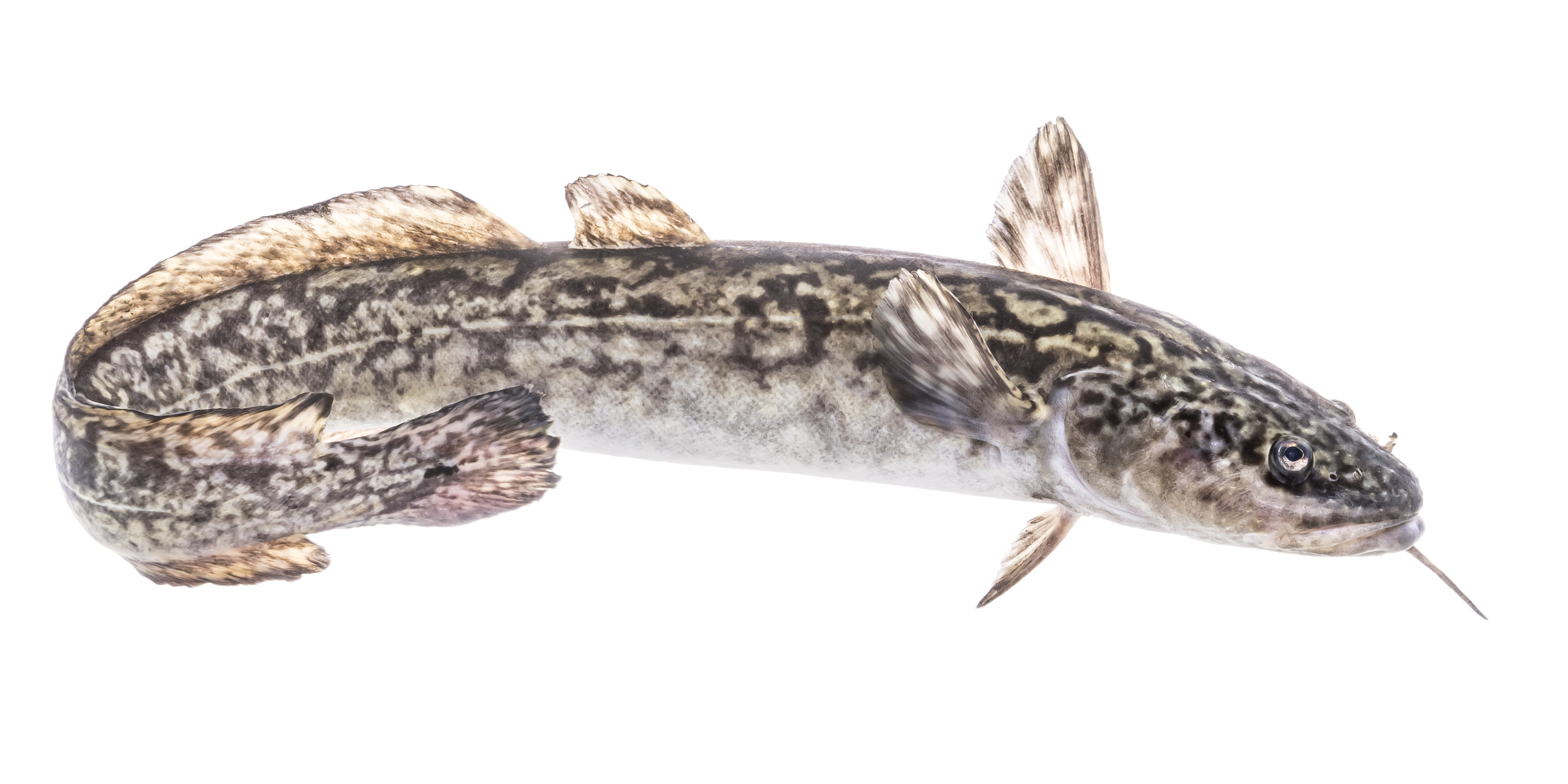

The burbot is one of the strangest and most rewarding fish in North America's cold northern waters. Known variously as eelpout, ling, lawyer, cusk, and mud blower, the burbot (Lota lota) is the only member of the cod family that lives entirely in fresh water, a slippery, marbled, single-barbeled predator with an eel-like tail that prowls deep, cold lakes and rivers, mostly at night and mostly in winter. For a long time anglers dismissed the burbot as an ugly nuisance, but the truth is it's a hard-pulling, aggressive gamefish and, cooked up as "poor man's lobster," one of the best-eating freshwater fish there is. This guide covers how to find and catch burbot, which for most anglers means one thing above all: jigging through the ice at night.
What Is a Burbot?
The burbot looks like a cross between a catfish and an eel, but it's neither, it's a true freshwater cod. It has a long, cylindrical body tapering to an eel-like tail, smooth skin with fine embedded scales, a broad flattened head, a single barbel on the chin (like its saltwater cod cousins), and long, low dorsal and anal fins running to the tail. Its marbled brown, black, and yellow camouflage helps it blend into rocky, muddy bottoms. Burbot commonly run 1 to 4 pounds, with fish of 5 to 10 pounds not unusual in good water and the biggest exceeding 15 pounds.
The key to understanding burbot is that they are cold-water, low-light, bottom-oriented predators. They thrive in deep, cold, well-oxygenated lakes and rivers across the northern U.S., Canada, Alaska, and around the Northern Hemisphere. They're most active in the cold months and feed heavily after dark, using that chin barbel and a keen sense of smell to hunt other fish, crayfish, and eggs along the bottom. Most remarkably, burbot spawn in the dead of winter, under the ice, one of the very few freshwater fish to do so, which concentrates them and drives the peak of the fishery.
Where and When to Catch Burbot
Burbot live in cold, deep water: large, deep lakes and reservoirs and cold rivers across the northern tier, the Great Lakes region, the northern Rockies, the Dakotas, Canada, and Alaska. In summer they retreat to the cold depths and are rarely targeted; the fishery belongs almost entirely to winter and the ice season.
The peak is midwinter, around the burbot's under-ice spawn (often January into February), when burbot move shallower onto rocky humps, points, and reefs to spawn and feed aggressively, concentrating in numbers. This is when burbot fishing is best and most famous, spawning "eelpout" festivals across the ice belt. Focus on deep water adjacent to rocky structure, main-lake points, humps, reefs, rock piles, and drop-offs, where burbot stage and feed. And remember the other rule: burbot are night feeders. The bite typically turns on from late afternoon into the night, and the hours after dark are prime, so plan to fish the low-light and dark hours over good structure.
Ice Fishing and Jigging: The Core Technique
The overwhelming majority of burbot are caught by jigging through the ice, and burbot are an aggressive, willing jigging target once you're over them.
Eelpout (Burbot) Ice Fishing BreakdownDrop a jigging spoon or jig to the bottom over rocky structure and work it with an aggressive, attention-grabbing cadence, lift, drop, and pound the bottom to kick up silt and send out vibration, then pause. Burbot home in on the commotion and the flash, then engulf the lure, often right on the bottom or the pause. Glow lures are a huge advantage because burbot feed in the dark and in deep, dim water: charge up glow spoons and jigs frequently with a light so they stay visible. Tip the hook with bait (more on that below) to add scent. When a burbot hits, set hard and keep steady pressure, they pull strong and will try to wrap around the line with that eel-like tail.
Tipping and Bait Rigs
Because burbot hunt largely by scent in the dark, tipping your lure with bait dramatically increases your catch. Scent plus flash plus bottom-pounding vibration is the winning combination.
How to Catch Burbot Ice FishingTip your jigging spoon or jig with a minnow, a chunk of cut bait (cisco, whitefish, or sucker), or a whole small baitfish, burbot are predators that eat other fish, so a meaty, scent-heavy offering is ideal. Some anglers use a stinger hook to catch short-biting fish. Fresh cut bait from local forage species is especially effective. Fish it right on the bottom, where burbot live, and refresh the bait as its scent fades. The combination of a glowing, bottom-pounding spoon tipped with fresh cut bait is about as close to a sure thing as burbot fishing gets when you're over active fish.
Deadsticks, Set Lines, and Multiple Holes
Burbot fishing rewards covering the bottom with multiple presentations, so a deadstick or set line alongside your jigging hole is a proven tactic where multiple lines are legal.
Ice Fishing for Burbot: Tips and LocationsSet a second rod (a deadstick) in a holder with a baited hook or jig sitting still on the bottom a short distance from your jigging hole: the active jigging draws burbot in with noise and flash, and the motionless baited deadstick catches the fish that come to investigate. Where legal, set lines and tip-ups baited with cut bait on the bottom let you cover more water and fish through the prime nighttime hours. Drilling several holes across a rocky point or hump and working them lets you find where the burbot are staging and moving. Because burbot roam and feed in low light, patience over good structure into the night usually pays off.
Night Fishing for Burbot
More than almost any other freshwater fish, burbot are a night bite, and embracing that is the single biggest key to consistent success.
Ice Fishing at Night for BurbotWhile you can catch burbot in the last hours of daylight, the bite typically intensifies after dark, and dedicated burbot anglers fish well into the night. Set up over deep rocky structure before dusk, get your glow lures charged, and fish through the evening and into the night when burbot move up to feed. Bundle up for genuine cold, bring good lighting to charge glow lures and manage your gear, and be ready for the bite to turn on suddenly once the sun is down. The nocturnal, wintertime nature of burbot fishing, often out on a frozen lake under the stars, is a big part of its rugged appeal.
Finding Burbot: Reading Deep Structure
Locating burbot is mostly about finding the right deep, rocky bottom and fishing it at the right time. Burbot relate strongly to hard structure in deep water: main-lake points, humps, reefs, rock piles, and the edges of drop-offs, typically in the deeper water of the lake.
Ice Fishing Alaska for Burbot: Catch and CookUse a contour map and electronics to find rocky humps, points, and reefs adjacent to deep water, and concentrate on the transition where hard bottom meets soft or where structure drops into the depths. During the midwinter spawn, burbot move onto these rocky areas in numbers, so a good rock pile near deep water can be loaded with fish after dark. Sonar helps you see fish coming in off the bottom and dial in your presentation. Once you find a productive piece of structure, it often produces year after year, since burbot return to the same spawning and staging areas.
Understanding Burbot Behavior
Everything about catching burbot follows from three facts: they love cold, they feed in the dark, and they live on the bottom. That's why the fishery is a winter, night, deep-structure game. In warm months burbot are locked in the cold depths and essentially out of reach for most anglers; in winter, and especially around their under-ice spawn, they become active, concentrated, and catchable. Their reliance on scent and vibration in dark, deep water explains why bottom-pounding, glowing, bait-tipped lures work so well, you're appealing to all the senses a burbot uses to hunt.
Think of burbot as a nocturnal bottom predator that comes to a disturbance. Pound the bottom to call them in, give them a scent trail with cut bait, keep glow in your lures, and fish the low-light and dark hours over rocky deep-water structure. Do that, and a fish many anglers never intentionally catch becomes a reliable, hard-fighting, and delicious winter target.
Catching Burbot in Open Water and Rivers
While ice fishing dominates the burbot world, you can also catch them in open water, particularly in cold rivers and during the cold-water windows of late fall and early spring. In rivers, burbot hold in deep holes, behind current breaks, and around rocky cover, and they move and feed after dark just as they do under the ice. The classic open-water method is a bottom rig fished at night, a sturdy sinker to hold bottom in current, a leader, and a hook loaded with cut bait or a minnow, cast into deep holes and left to soak while the scent does its work.
Set-line and bottom-fishing tactics shine here: bait up, get your offering firmly on the bottom where burbot travel, and be patient into the night, checking and refreshing bait as needed. Because burbot are strong and use the current and their twisting bodies to their advantage, use tackle with enough backbone to pull a heavy fish out of a deep hole. Late fall, before ice-up, and early spring, after the ice goes out, are prime open-water windows in many northern rivers, extending the burbot season on either side of hard water. The principles never change, deep, cold, rocky or current-broken water, fished after dark with scent-heavy bait on the bottom, whether there's ice overhead or not.
Common Mistakes to Avoid
A few missteps account for most blank burbot trips. The biggest is fishing at the wrong time: burbot are a cold-water, after-dark fish, so trying for them in warm months or only during bright midday hours is a recipe for frustration. Commit to winter and to the low-light and night hours, and your odds transform. The second common mistake is not fishing on the bottom. Burbot are bottom huggers that feed with their bellies on the substrate, so a lure or bait riding a foot or two off the bottom often gets ignored; keep your presentation right in the dirt and pound it there.
Other frequent errors: skipping the glow (burbot feed in the dark, and a charged glow lure vastly outproduces a dull one), skimping on scent (bare lures catch far fewer burbot than bait-tipped ones), and giving up too early (the bite can be slow until full dark, then turn on fast). Finally, many anglers fish featureless flats and wonder why they struggle, burbot relate to hard, rocky structure near deep water, so time spent locating a good rock pile, hump, or point before you drill is time well spent. Fix these, and burbot go from a fish you catch by accident to one you can target on purpose. It also pays to be persistent across several nights and spots: burbot roam and their movements onto structure can vary with the spawn timing and weather, so an unproductive rock pile one night may be stacked with fish the next, and the anglers who put in the cold, dark hours are the ones who consistently fill the bucket.
Cleaning and Eating Burbot: "Poor Man's Lobster"
Here's the burbot's best-kept secret: despite its homely looks, it is outstanding eating, firm, white, mild, and sweet, so much like lobster when poached in butter that it's famously called "poor man's lobster."
Cooking Burbot 'Lobster Style'Burbot have no scales to deal with and a simple bone structure (a backbone with no troublesome small bones), which makes them easy to clean once you get past the tough, slippery skin, many anglers skin them like a catfish or fillet and peel. The firm white flesh is superb boiled or poached and dipped in melted butter (the classic lobster-style preparation), and it's also excellent fried, baked, or in chowder. Ice your catch and clean it promptly for the best quality. The combination of an aggressive winter bite, a strong fight, and genuinely superb table fare is why more and more anglers have stopped calling the burbot ugly and started calling it dinner.
Bringing It All Together
The burbot rewards anglers willing to embrace cold, dark, and deep. Find rocky humps, points, and reefs adjacent to deep water; fish them in midwinter, especially around the under-ice spawn; and jig an aggressive, glowing, bait-tipped spoon right on the bottom, pounding up silt to call fish in, then keep fishing into the night, when the bite really turns on. Add a baited deadstick or set line where legal, set the hook hard, and be ready for a strong, twisting fight. Bring home a few, poach them in butter, and you'll understand why the "poor man's lobster" has quietly become a favorite of anglers in the know.
For more coldwater and deep-structure species that share the burbot's northern lakes, see our guides to the lake trout, the walleye, and the lake whitefish.
Want to get in on one of winter's best-kept secrets? Scout the deep, rocky humps, points, and reefs near you, wait for the ice to lock up and the sun to drop, and put in the cold, dark hours over good structure with a glowing, bait-tipped spoon pounding the bottom. The burbot bite is a hard-earned reward that pays off for the anglers willing to fish when everyone else has gone home.