Fish
Fish Fire
Fire Hike
Hike Bird
Bird

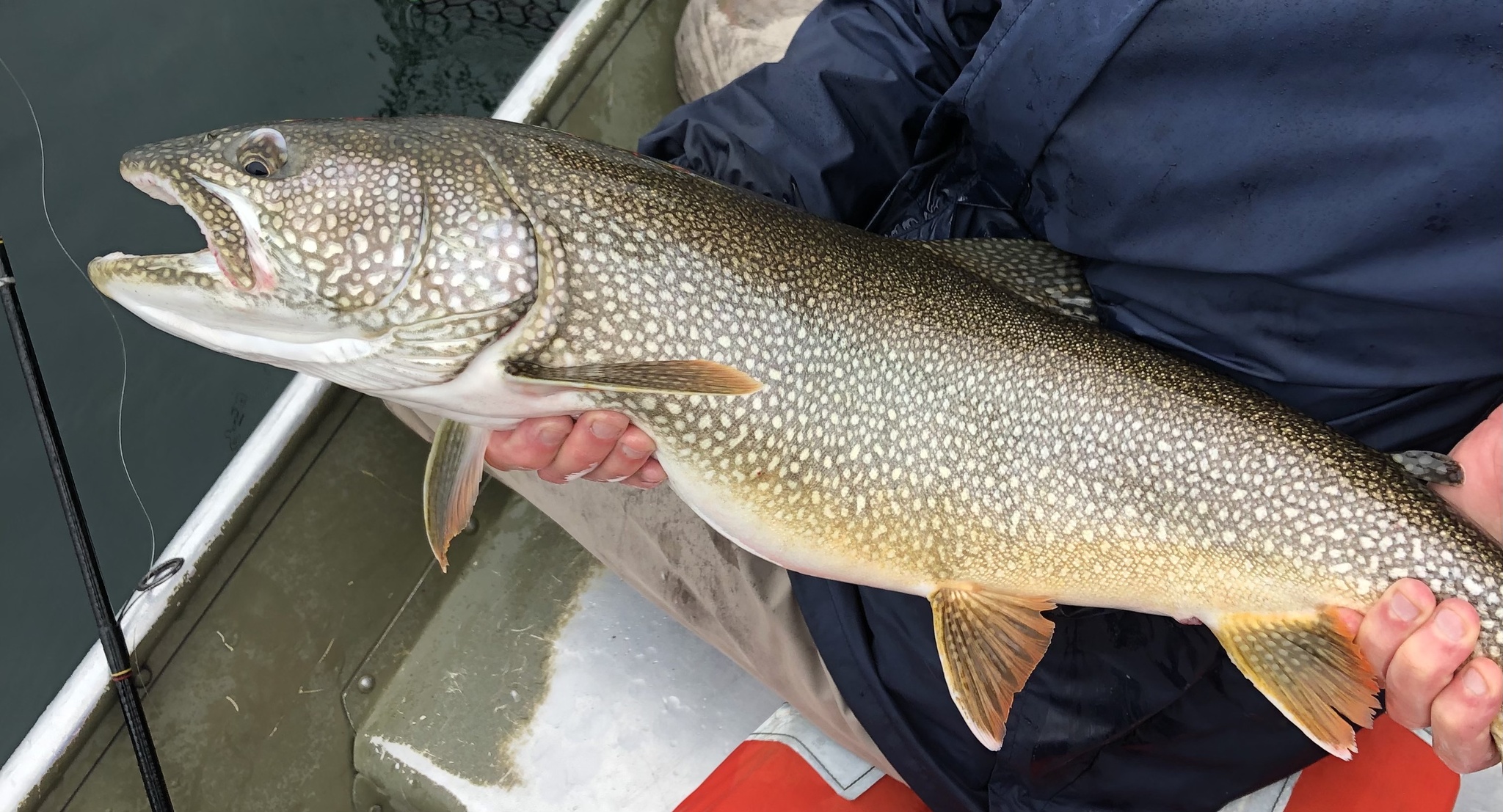

The lake trout is the giant of the char family and the apex predator of the cold, deep lakes of the North. "Lakers" grow old and huge, routinely into the teens of pounds and occasionally past forty, in the frigid, oxygen-rich depths of the Great Lakes, Canadian Shield lakes, and deep alpine reservoirs. They're a fundamentally different fish to catch than stream trout: instead of reading current and cover, you read depth and temperature, using electronics to find fish that may be hovering 3 feet down at ice-out or 90 feet down in August. Learn how lake trout track their preferred cold water through the year, and this "hard to find" fish becomes very catchable. This guide covers where lakers hold season by season and every core technique, with step-by-step instruction, to catch them.
Curious about their smaller char cousin? See our guide on how to catch brook trout.
The Deep-Water Char
The lake trout (Salvelinus namaycush) is, like the brook trout, a char rather than a true trout. Identify it by its grayish body covered in pale, cream-colored spots (light spots on a dark background, the reverse of a brown trout), and its deeply forked tail, a giveaway that separates it from other trout and char. Lakers are slow-growing and long-lived; a big fish may be 20, 30, even 50 years old, which is why sustainable harvest matters so much.
Everything about lake trout is governed by their need for cold water, they prefer roughly 48–52°F and can't tolerate warm water at all. In shallow, far-northern lakes they may roam near the surface all summer; in deep temperate lakes they're forced far down when the surface warms. Most lakers run 2 to 10 pounds, fish over 15 pounds are common in good water, and the giants exceed 40 pounds. They eat other fish, ciscoes, whitefish, smelt, sculpins, and any available baitfish, so most lake trout lures imitate a fish.
Lakers also make excellent table fare, with rich, oily flesh that ranges from pink to deep orange depending on their diet, the fish that feed heavily on ciscoes and smelt are especially prized eating. Smaller lake trout are best for the pan, while the biggest fish are better photographed and released. Their firm fillets take well to the grill, the smoker, and the classic northern shore lunch, making a day of laker fishing rewarding both on the water and at the table.
It's All About Depth and Temperature
Catching lake trout consistently means putting your bait at the depth where the water is cold enough and the fish are feeding. That depth changes dramatically through the year:
- Early spring (ice-out): The whole lake is cold, so lakers roam shallow, sometimes in just 5 to 20 feet, cruising rocky shorelines, points, and shoals to feed. This is the one time of year you can catch them casting from shore or a shallow boat.
- Summer: As the surface warms and the lake stratifies, lakers retreat below the thermocline to the cold layer, often 40 to 100+ feet down. Vertical jigging and deep trolling rule.
- Fall: Cooling water pulls lakers back shallow to spawn on rocky reefs and shoals, another prime shallow-water window (many areas have fall closures to protect spawners; check regulations).
- Winter: Under the ice, lakers are active and catchable, often suspended over deep basins and structure, and are a premier ice-fishing target.
Use a lake map and your electronics to find the right depth and the structure, humps, points, reefs, and drop-offs, where lakers ambush baitfish, and you're in business.
The Techniques That Catch Lake Trout
Lake trout are caught by casting, jigging, trolling, and through the ice. Here are the core methods, how to fish each, and when to use it.
Casting the Spring Shallows
Right after ice-out, the shallow-water window is the most fun way to catch lake trout, sight-fishing and casting to cruisers in cold, clear water.
How to fish it: From shore or a boat over shallow rocky shoals and points, cast a heavy casting spoon (a Little Cleo or Williams Wabler), a jerkbait, or a white bucktail or tube jig, and retrieve it steadily with occasional pauses, or let a jig sink and hop it back. Lakers cruising the shallows to feed will chase down a fleeing baitfish imitation. It's a brief, magical few weeks, take advantage of it before the fish go deep.
Casting for Shallow Spring Lake TroutVertical Jigging, the summer go-to
Once lakers pull deep in summer, vertical jigging directly over fish you've marked on sonar is the deadliest, most efficient technique.
How to fish it: Motor over deep structure, humps, points, and basins, watching your electronics, and when you mark fish or bait, drop a white tube jig (3–5 inch) on a heavy jighead or a bucktail jig (1–3 oz) straight down to their level or the bottom. Rip it up sharply a few feet and let it flutter back down on a controlled line, or work it with aggressive lifts and drops. Most strikes come on the fall, watch your line and electronics, and set on any tick, slack, or a fish rising to meet the lure. White is the classic laker color.
Vertical Jigging Techniques for Lake TroutJigging Spoons, flash for deep fish
A heavy jigging spoon flutters and flashes like a dying baitfish and reaches deep fish fast, making it a top vertical option alongside tubes.
How to fish it: Drop a flutter or jigging spoon (3/4 to 2 oz) to the fish's depth or the bottom, then lift the rod sharply and let the spoon flutter back down on a semi-slack line. The erratic falling flash triggers reaction strikes from lakers, and it works both in open water and through the ice. Tie it on with a snap or small swivel to reduce line twist, and set the hook on any hesitation as it falls.
How to Jig Spoons for Lake TroutTrolling with Downriggers, cover deep water
To find scattered fish across a big lake and present lures at a precise depth, downrigger trolling is the classic approach.
How to fish it: Run spoons, plugs, or flashers-and-flies behind a downrigger, which uses a heavy weight to carry your lure to an exact depth while you fish light line. Set lures at the depth you're marking fish, troll slowly (1.5–2.5 mph) along structure and contour lines, and use the downrigger counter to repeat the depth that produces. Multiple rods at staggered depths help you dial in where the active fish are holding.
How to Use a Downrigger for TrollingLead-Core and Wire-Line Trolling
Where downriggers aren't used, lead-core or wire line gets lures down without a heavy ball, and covers water efficiently.
How to fish it: Lead-core line (color-coded, weighted line) sinks a set amount per "color" of line let out, so you can dial depth by how much you deploy; wire line sinks faster still for the deepest fish. Troll spoons or plugs behind the weighted line at trolling speed along structure, counting colors or line out to reach and repeat the fish's depth. It's a simple, effective way to troll deep without a downrigger setup.
Lead-Core Trolling TipsIce Fishing, hardwater lakers
Under the ice, lake trout are aggressive and catchable, and ice fishing for them is a beloved northern pursuit.
How to fish it: Drill over deep structure and basins (often 20 to 60+ feet), watch a flasher or ice-electronics unit, and jig a white tube jig, a jigging spoon, or an airplane/swimming jig aggressively to call fish in from a distance, then feed them the lure as they rise. A cut-bait or minnow on a deadstick in a second hole picks off followers. Lakers will chase a lure a long way under the ice, so fish it actively. Put ice safety first.
Ice Fishing for Lake TroutLive and Cut Bait, a natural offering
A natural cut bait or live baitfish on or near the bottom is a proven laker producer, especially where legal and for anglers who prefer to soak bait.
How to fish it: Fish a chunk of cut cisco, sucker, or smelt (or a whole live baitfish) on a simple bottom rig or a jig, dropped to the fish's depth over structure. Keep it near the bottom where lakers cruise, watch for the take, and give the fish a moment to eat before setting. It's an effective, low-effort tactic that pairs well with jigging a second rod. Always check your local baitfish regulations.
Lake Trout Tactics for LakesFinding Lakers: Structure and Sonar
Because lake trout roam the vastness of big, deep lakes, finding them is the hardest and most important part, and good electronics turn an overwhelming lake into a manageable one. Lakers relate to the same kinds of structure that concentrate their baitfish: main-lake humps and reefs, long points, steep drop-offs, saddles between islands, and the edges of deep basins. They cruise these features hunting ciscoes and whitefish, so that's where you should look.
Learn to use your sonar to find both the bait and the fish. When you idle over a hump or basin and see baitfish clouds and hooks at a certain depth, that's your target zone, drop a jig right to it. In summer, also pay attention to the thermocline (often visible as a band on 2D sonar): lakers hold at or below it, in the cold water, so there's no point fishing above it. On unfamiliar water, use a contour map to identify the best-looking deep structure, then idle across it watching the graph until you contact fish, and repeat that depth and structure type elsewhere on the lake.
No electronics? You can still troll contour lines and count down jigs and spoons at varying depths until you find the fish, then stick to that depth, but on big lake trout water, sonar is the single biggest difference-maker there is.
Fighting and Landing a Big Laker
Hooking a good lake trout deep is the start of a genuine tug of war. Lakers are strong, and a big one hooked at 60 or 80 feet will use its broad body and the depth to fight all the way to the boat. Keep steady, even pressure and let the rod and drag do the work, don't try to horse a big fish up, and don't pump too aggressively, which can pull hooks. A laker will often make several strong dives right at the boat, so keep your rod tip up, your drag properly set, and be ready to give line.
Have a large net ready, and because deep-caught lakers can suffer barotrauma (their swim bladder expands as they rise), handle any fish you plan to release quickly: minimize its time out of the water, support its weight horizontally, and use a descending device to return a deep fish to depth if it can't swim down on its own. A well-handled laker swims off strong to be caught another day.
Gear for Lake Trout
Lake trout gear is built for depth and for fighting big, powerful fish:
- Jigging combo: A 7- to 7-foot-6 medium-heavy jigging rod with a fast tip and a solid baitcasting or spinning reel, spooled with 30–50 lb braid for sensitivity and hooksets at depth.
- Trolling combo: A medium-heavy trolling rod with a line-counter reel for downriggers, lead-core, or wire line.
- Line: Braid for jigging (thin diameter cuts water and telegraphs deep bites); lead-core or wire for weighted trolling; a fluorocarbon leader in clear water.
- Terminal tackle and lures: White tube jigs and heavy heads, bucktail jigs, jigging spoons, trolling spoons and flashers, a couple of casting spoons and jerkbaits for spring, plus cut bait when legal, cover every technique above.
Handle the Giants with Care
Lake trout grow slowly and live for decades, so a lake's population of big fish can't replace them quickly. Keep a few smaller "eaters" where regulations allow, but consider releasing the true giants, a 20-plus-pound laker may be older than you are. Because lakers are often caught from deep water, they can suffer barotrauma; when releasing a deep fish, get it back down quickly (a descending device helps), support big fish horizontally, minimize air time, and handle them gently. Careful release keeps trophy lake trout in the system for the future.
Master the Depths
Lake trout reward anglers who can read a lake, run electronics, and present lures at precise depths. Learn the reefs, basins, and seasonal depth patterns of your home water, and the pieces start to click: you find fish on sonar, work a jig at 80 feet, and set your trolling gear right in the productive zone. It takes time on the water to build that instinct, but few freshwater fisheries are as rewarding once you crack the code. Start with the season, figure out whether your lakers are shallow at ice-out, buried below the thermocline in summer, or up on the fall reefs, then match the technique to the depth and let your electronics do the searching. Do that, and the North's biggest, oldest trout become a fish you can pattern and catch.