Fish
Fish Fire
Fire Hike
Hike Bird
Bird

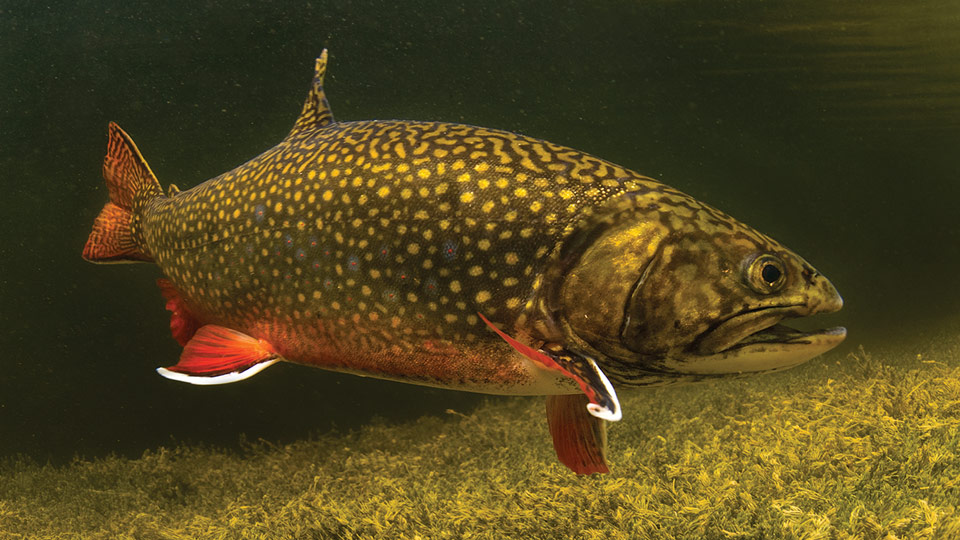

The brook trout is the fish that turns anglers into conservationists. Native to the cold, clean headwater streams of the eastern mountains and the north, "brookies" are almost impossibly beautiful, olive backs marbled with worm-like markings, flanks scattered with red dots ringed in blue, and fins edged in brilliant white. They're also wonderfully willing: in the tiny, tumbling streams where they live, food is scarce and brook trout are opportunistic, which makes them one of the most catchable and beginner-friendly fish in fresh water. Catching them is less about fooling a wary giant and more about finding the right water, approaching it quietly, and putting a simple offering in front of eager fish. This guide covers where brook trout live and every core technique, with step-by-step instruction, to catch them.
New to trout fishing? See our guides on how to catch rainbow trout and how to catch brown trout.
America's Native Char
Despite the name, the brook trout (Salvelinus fontinalis) isn't a true trout at all, it's a char, a cousin of the lake trout and Arctic char. You can identify it instantly by the worm-like "vermiculation" (light, squiggly markings) across its dark olive back and dorsal fin, the red spots surrounded by blue halos on its sides, and the white leading edges on its lower fins. Spawning males in fall turn a spectacular deep orange-red on the belly.
Brook trout are the ultimate cold-clean-water fish, they need pure, well-oxygenated water below about 65°F, which is why they survive mostly in remote headwaters, spring-fed creeks, mountain streams, and high-country lakes where other fish can't. Their presence is a badge of a healthy watershed. In their typical small-stream homes, brookies run 5 to 10 inches, and a foot-long native is a true prize. But given room and food, in beaver ponds, high mountain lakes, northern rivers, and especially the trophy waters of Labrador and eastern Canada, brook trout grow to several pounds, with the giants topping 8 pounds. Sea-run brook trout, called "salters," add another dimension along the northern coast.
Where Brook Trout Live
Finding brook trout is most of the battle, and it comes down to cold water and cover:
- Small headwater streams flowing off shaded, wooded hillsides, the colder and cleaner, the better.
- Plunge pools below small waterfalls and cascades, and the pools carved behind large boulders and downed logs.
- Undercut banks and log jams that give fish overhead cover.
- Beaver ponds and spring seeps, which hold surprisingly big brookies.
- High mountain lakes and remote northern ponds, often reachable only by a hike, and often full of eager, colorful fish.
Within a stream, brookies hold in the slower water beside the current, the soft edge of a plunge pool, the tail of a riffle, the cushion in front of a boulder, where they can rest out of the flow but dart into it to grab drifting food.
The Small-Stream Approach
More than fly choice or lure selection, how you approach the water determines your success on brook trout. Small-stream fishing is a mobile, stealthy game:
Keep moving. Brook trout streams fish best when you cover ground, make a few casts to a promising pool, and if nothing happens in a minute or two, move up to the next one. A good day might mean hiking a mile of stream and fishing dozens of pockets. The fish are there; you go to them.
Be stealthy. In thin, clear water, brookies spook easily. Stay low, keep off the skyline, wear drab colors, avoid stomping the bank (they feel vibrations), and fish upstream so you approach from behind the fish, which face into the current. Stay out of the water when you can, and make your first cast to the near edge of a pool before working the rest.
Master the quiet, mobile approach and you'll catch brook trout on almost anything you offer.
The Techniques That Catch Brook Trout
Brook trout eat bait, small lures, and flies with abandon. Here are the core methods, how to fish each, and when to use it.
Worms and Bait, the time-tested opener
Nothing out-fishes a live worm on a brookie stream, and it's how generations of anglers caught their first trout.
How to fish it: Thread a piece of garden worm or nightcrawler onto a small bait hook (size 8–12) with one small split shot a foot up the line. Cast or flip it to the head of a pool and let it tumble naturally with the current down through the deeper water, keeping just enough tension to feel the take. This "upstream worming", drifting the bait drag-free into the pockets, is deadly. When you feel a tap or the line stops, set gently. Salmon eggs and small pieces of nightcrawler work the same way.
Upstream Worming for Wild Stream TroutSmall Inline Spinners, cover water and trigger strikes
A tiny inline spinner flashes and vibrates through a pool and provokes brook trout to chase, making it the top small-stream lure for spin anglers.
How to fish it: Tie a small spinner (a Panther Martin or Mepps in size 0–1) directly to light line, or use a micro snap swivel to prevent twist. Cast to the head or far edge of a pool, and retrieve just fast enough to feel the blade spinning as it swings through the holding water. Brookies often nail it on the swing. Keep casts short and accurate in tight quarters, and cover each likely pocket before moving on.
Trout Fishing with Spinners in Small CreeksDry Flies, the joy of the surface eat
Because brook trout feed heavily on drifting insects and are so eager, dry-fly fishing is both effective and pure fun, often the most productive fly method on a small stream.
How to fish it: With a light fly rod, tie on a bushy, buoyant attractor dry fly (an Elk Hair Caddis, Royal Wulff, Stimulator, or Parachute Adams, size 12–16) that floats well and is easy to see. Cast upstream to the head and edges of pools and let it drift back drag-free over the holding water. When a brookie rises and takes, set with a gentle lift. In brook trout country you rarely need to "match the hatch" precisely, a well-drifted attractor fools eager fish all day.
Dry Fly Fishing for Wild Brook TroutNymphs, for when they won't come up
When fish are holding deep or the surface is quiet, drifting a nymph near the bottom catches brook trout that won't rise.
How to fish it: Drift a weighted nymph (a Prince Nymph, Copper John, or Pheasant Tail, size 12–16) through pools and pockets, either under a small dry fly (a "dry-dropper" rig) or a tiny indicator, adjusting depth so it ticks near the bottom. Set the instant the dry or indicator pauses. In the small pools where brookies live, a nymph dropped off a buoyant dry is a lethal, easy-to-fish combination.
Small-Stream Nymphing for TroutThe Woolly Bugger, the do-everything fly
For bigger brook trout and stillwaters, a Woolly Bugger, a fuzzy streamer that imitates a leech, minnow, or nymph, accounts for untold numbers of fish.
How to fish it: Tie on a black or olive Woolly Bugger (weighted or bead-head, size 8–12). In a stream, cast it across and strip it back in short pulls through pools; in a pond or lake, cast it out, let it sink, and retrieve it in slow strips with pauses. The undulating marabou tail looks alive, and brook trout, especially bigger ones, crush it. It's the single most versatile fly you can carry.
How to Fish a Woolly BuggerTenkara, made for brookie streams
Tenkara, the simple Japanese method of a long rod, a fixed length of line, and a single fly, with no reel, is almost perfectly suited to small-stream brook trout.
How to fish it: Extend the tenkara rod, attach the fixed line and a single fly (a small dry or a soft-hackle), and use the long rod's reach to place the fly precisely and hold it drifting drag-free over a pocket with the line off the water. The lack of a reel and the pinpoint control make it deadly in the tight, brushy quarters where brookies live, and it's wonderfully simple for beginners.
How to Tenkara for Small-Stream TroutFishing Brook Trout Ponds, where the big ones live
The largest brook trout in the lower 48 often come from ponds and high-country lakes, which fish differently than streams.
How to fish it: In a pond, target inlets and outlets, spring seeps, drop-offs, and weed edges. Suspend a worm under a bobber, cast small spoons and spinners, or fish a Woolly Bugger on a fly rod, letting it sink and retrieving slowly. Early morning, evening, and just after ice-out are prime. Adirondack and Maine ponds, and northern lakes, are famous for producing brook trout far larger than any stream fish.
Pond Fishing for Wild Brook TroutWhen to Go
Brook trout, as cold-water specialists, fish best in the cool seasons. Spring and fall are prime, comfortable water temperatures have brookies feeding actively, and fall brings out the stunning spawning colors (handle spawning fish gently and check regulations). Mountain streams and high lakes fish well through the summer because they stay cold, while low-elevation streams get too warm and the fish retreat to cold spring seeps and headwaters. As always, early morning and evening are the best windows, and the shaded, cold upper reaches of a stream are your summer refuge. Just after ice-out is a magic window on brook trout ponds.
How to Work a Plunge Pool
Most brook trout in a small stream live in plunge pools, the deeper basins scoured out below a waterfall, cascade, or log step, and knowing how to fish one turns a hike into a catch-fest. A plunge pool has three zones, and you should work them in order from the tail up.
Start at the tail-out, the shallow downstream lip where the pool drains back into the stream. Fish here often sit facing upstream watching for food, and because you're approaching from below, this is the closest and least-likely-to-be-spooked water, cast to it first before moving up. Next, work the flanks and slower edges along the sides of the pool, especially any spot with overhead cover or a foam line collecting insects. Finally, place your offering at the head of the pool, in the seam where the incoming plunge meets the calmer water and the bubble line delivers a steady conveyor belt of food. The biggest fish in the pool usually claims that prime lie at the head.
Drift your worm, swing your spinner, or float your dry fly through each zone, and if a fish flashes but misses, rest the pool a moment and try a different angle. Work every pool this way, cover ground between them, and you'll consistently draw brook trout out of water other anglers walk right past.
Gear for Brook Trout
Brook trout are small-water fish, so light, short, and simple wins:
- Ultralight spinning combo: A short 4-foot-6 to 6-foot ultralight spinning rod with a 500–1000-size reel is ideal for the tight quarters of a small stream, a shorter rod is far easier to cast under overhanging brush.
- Fly setup: A short 2- to 4-weight fly rod, 6 to 7.5 feet, is the classic brookie stick; add a tenkara rod for the ultimate small-stream tool.
- Line: 2- to 4-lb monofilament on the spinning reel, light line is essential in thin, clear water.
- Terminal tackle and lures/flies: Small bait hooks and split shot, a few size 0–1 spinners and tiny spoons, and a small box of attractor dries, a couple of nymphs, and Woolly Buggers cover every technique above.
Respect the Native: Keep and Release Wisely
Brook trout are a native treasure, and in much of their range wild populations are fragile and declining. It's fine to keep a few for a legendary streamside meal where regulations allow and populations are healthy, brookies are among the best-eating fish there is, but in native and wild waters, consider practicing catch-and-release, wetting your hands, keeping the fish in the water, and letting it go quickly. Pinch your barbs for easy release. Protecting these jewels keeps the headwaters full of brook trout for the next angler and the next generation.
Finding Wild Brook Trout Water
The hardest part of brook trout fishing is finding the right water, the cold, hidden headwaters and backcountry ponds that hold wild fish you'd never stumble onto by accident. Trace the small blue-line creeks on a topo map up into shaded, high-elevation ground, look for public land and legal access along their banks, and check water temperatures and flows before you commit to the hike in. Scout the coldest upper reaches, master the stealthy, mobile small-stream approach above, and you'll draw wild brook trout out of pockets that other anglers walk right past.