Fish
Fish Fire
Fire Hike
Hike Bird
Bird

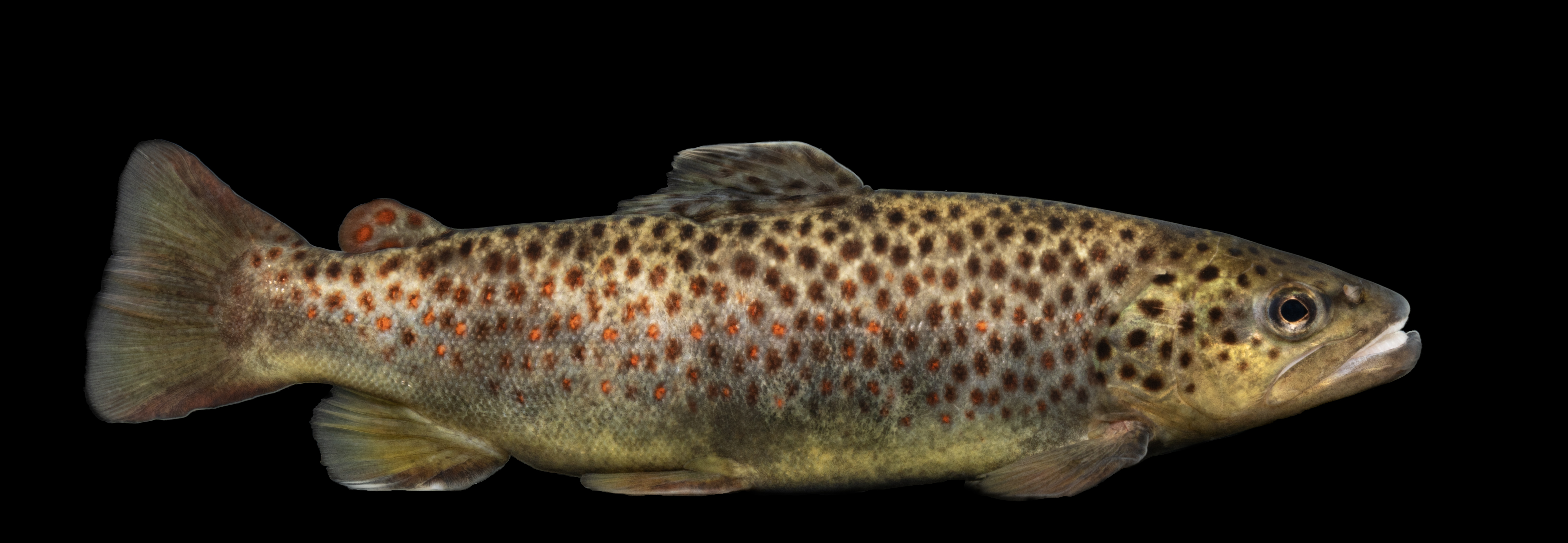

Of all the trout, the brown is the one that humbles anglers. A big brown trout is the wariest, most predatory, most nocturnal fish in the stream, a fish that grows old and cunning, hunts other fish (and mice) under cover of darkness, and lives in the spots most anglers walk right past. Browns aren't native to North America (they were brought from Europe in the 1880s), but they've thrived here, and they now offer some of the most challenging and rewarding trout fishing on the continent. Catch a small one and you'll admire its buttery gold flanks and red spots; hook a big one and you'll understand why anglers chase trophy browns for a lifetime. This guide covers where browns hide, why timing matters so much, and every core technique, with step-by-step instruction, to catch them.
New to trout? Start with our guide on how to catch rainbow trout, or explore trout fishing in Missoula, Montana.
The Wily, Predatory Brown
The brown trout (Salmo trutta) is easy to identify: a golden-brown to buttery-yellow body covered in large black and rusty-red spots, many with pale halos, and, unlike a rainbow, no pink stripe. It's a different animal from the rainbow in behavior, too. Browns are more structure-oriented, more nocturnal, more piscivorous (fish-eating), and far more wary, especially as they grow. A stream that gives up plenty of rainbows in daylight may hold big browns that only feed hard at dusk and after dark.
That predatory streak is the key to trophy browns. While small browns eat insects like any trout, big browns become fish-eaters, targeting sculpins, minnows, crayfish, smaller trout, and, in summer, mice and frogs that fall in at night. This is why the biggest browns are caught on streamers, jerkbaits, and after dark, not on tiny dry flies. Most stream browns run 10 to 16 inches, but browns commonly exceed several pounds, and in fertile tailwaters, big rivers, and the Great Lakes they grow to 10, 20, even 30+ pounds. They tolerate slightly warmer, and often bigger, water than other trout, which is part of why they get so large.
Browns also fight differently than rainbows. Where a hooked rainbow tends to run and jump, a big brown often bulldogs deep and makes a hard, determined bid for the nearest cover, the same logjam or undercut it was hiding in. Landing a good brown means turning its head and keeping steady pressure to steer it away from the snags, which is why anglers targeting big fish lean toward slightly heavier line and rods with backbone. Hook one in tight quarters and the fight is a close-range tug of war you won't soon forget.
Where Big Browns Hide
Browns relate to cover and shade more than any other trout, they want a roof over their heads and an ambush point. The bigger the brown, the better the lie it will claim. Target:
- Undercut banks, log jams, and root wads, prime big-brown lairs that provide overhead cover and ambush position.
- Deep, slow pools and the deepest holes in a stream, especially the head of a pool where current delivers food.
- Boulders and current breaks that give a fish a cushion out of the flow.
- Bridges, culverts, and any deep shade during the day.
- In lakes and the Great Lakes, rocky shorelines, points, harbors, and river mouths, especially in cool weather.
The rule of thumb: the best-looking piece of cover in a stretch of water usually holds the biggest brown. Fish the "frog water" and the dark, snaggy spots others avoid.
The Techniques That Catch Brown Trout
Browns eat everything from tiny nymphs to whole baitfish. Here are the core methods, how to fish each, and when to use it.
Streamers, the big-brown game
If you want a giant brown, streamer fishing is the most consistent way to get one. Streamers imitate the baitfish, sculpins, and small trout that big browns hunt.
How to fish it: On a fly rod (a 6- or 7-weight for big flies), tie on a streamer, a Woolly Bugger, a sculpin pattern, or a big articulated fly, and cast it tight to cover: banks, logjams, and current seams. Strip it back in erratic pulls with occasional pauses so it darts and flees like a wounded baitfish, and hang on, brown trout eats on a streamer are violent. Cover water, target every piece of prime cover, and fish the flanks of the day (early, late, and overcast). A conventional angler can fish a soft-plastic swimbait or a jig-and-sculpin the same way.
How to Fish Streamers for TroutThe After-Dark Bite, night fishing for giants
The biggest browns in a river often feed only at night, when they lose their caution and roam the shallows to hunt. Serious trophy hunters fish the dark.
How to fish it: In the last light of dusk and into full dark, work large, wake-producing flies (a mouse pattern or a big surface streamer) or a wide-wobbling jerkbait across pools, tailouts, and shallow flats. Fish slowly and cover water by feel and sound, and wait to feel the fish's weight before setting, night eats come as a heavy pull or a boil you hear more than see. It's an advanced, patient game, but it's how many of the largest browns are caught. Scout your water in daylight first for safety.
Night Fishing for Big Brown TroutInline Spinners, flash they can't resist
For all their wariness, browns will chase down the flash and vibration of an inline spinner, making it one of the most effective and simplest lures.
How to fish it: Tie a spinner (a Mepps Aglia or Panther Martin in size 1–3) to your line with a small snap swivel. In a stream, cast across and slightly upstream, and retrieve just fast enough to feel the blade turning as it swings past cover, undercut banks, and through pools. Brown trout often hammer a spinner on the swing right in front of their ambush lie. Larger blades tempt larger browns.
How to Fish Inline Spinners for TroutNymphing, the everyday numbers game
When you want to catch browns consistently (including plenty of good-sized ones), nymphing subsurface with insect imitations is the highest-percentage fly technique.
How to fish it: Drift a weighted nymph (a Pheasant Tail, Hare's Ear, or stonefly, size 12–18) under a strike indicator through pools, runs, and pocket water, adjusting depth so the fly ticks near the bottom where trout feed. Set the hook instantly whenever the indicator hesitates or dips. A drag-free, natural drift is everything. This is how most trout, browns included, feed most of the time.
Nymphing for Trout: Beginner GuideDry Flies and the Hatch, the classic surface game
When aquatic insects hatch and browns rise to sip them off the surface, few things in fishing are more rewarding than fooling one on a dry fly.
How to fish it: Watch for rising fish and bugs on the water, match the dry fly to the hatching insect (an Adams, a caddis, or a hopper in summer), and present it upstream of the fish with a drag-free drift so it floats naturally over the trout's feeding lane. Set gently when the fish takes. Big browns are famously selective surface feeders, so a careful approach and an accurate, natural drift matter enormously.
Matching the Hatch for TroutJerkbaits and Crankbaits, the conventional trophy tactic
Conventional-tackle anglers take big browns on jerkbaits and crankbaits that imitate a fleeing or wounded baitfish, deadly in bigger rivers, tailwaters, and lakes.
How to fish it: Tie a suspending jerkbait or minnow bait (a Rapala Husky Jerk, X-Rap, or Countdown) straight to your line, and work it with a twitch-twitch-pause cadence past cover and through deep pools; the pause, with the bait hanging in the strike zone, draws the eat. A wobbling crankbait retrieved so it bumps cover works too. These bigger profiles are aimed squarely at the fish-eating trophy browns.
How to Catch Big Brown Trout on JerkbaitsTrolling, big lake and Great Lakes browns
In large lakes and the Great Lakes, browns grow huge, and trolling is the way to reach them, especially in the cool months when they cruise the shallows and shorelines.
How to fish it: Troll spoons, stickbaits, and body baits, often on planer boards to reach shallow, spooky shoreline fish, and behind dodgers or on downriggers to fish deeper as the season warms. Work harbors, river mouths, and rocky shorelines in early spring and fall at 1.5–2.5 mph, and repeat the depth and lure that produces. It's the most efficient way to find scattered big-water browns.
Trolling for Lake Brown TroutTiming: When Browns Let Their Guard Down
Because browns are so wary, timing is everything. The best windows:
- Low light, the first and last hour of daylight, and overcast days, when browns feed with less caution.
- After dark, prime time for the biggest fish, especially in summer.
- Fall, as browns stage and spawn, they turn aggressive and territorial, attacking streamers and big lures; it's the top trophy season (fish spawning browns ethically and check local regulations).
- Higher, slightly stained water after a rain, which emboldens big browns to roam and feed in daylight.
On bright, low, clear days, big browns bury in cover and barely move, that's the time to nymph for smaller fish or rest the water and come back at dusk.
The Trophy-Brown Mindset
Catching big browns is as much about approach and patience as it is about tackle. Trophy-brown anglers tend to hunt individual fish rather than fish blindly, and it changes everything.
Start by finding the lie, not just the fish. Walk your water in daylight and identify the prime cover, the deep undercut, the sunken logjam, the shaded pool, that a big brown would claim. Then plan your approach so you can present to that spot without spooking it: come at it from downstream or from an angle that keeps you out of the fish's window, and make your first cast count. Stealth is non-negotiable, a big brown that senses you is a big brown that won't eat, sometimes for days.
When you work a known big-fish lie, give it more than one look and more than one presentation. A brown that ignores a nymph at midday may crush a streamer at dusk or a mouse after dark. If a fish boils on your fly and misses, rest it for several minutes, then change flies and come back, big browns will often eat on the second or third serious presentation once conditions tip in your favor. Patience, observation, and a willingness to return at the right hour separate the anglers who catch trophies from those who only hear about them.
A Note on the Fall Spawn
Fall is the best trophy-brown season precisely because spawning makes big fish aggressive and territorial, but it also means handling fish and fragile spawning habitat with care. Avoid wading through or fishing directly to browns actively spawning on their gravel beds (redds), which are visible as clean, oval patches of gravel; disturbing them harms the next generation. Target pre-spawn and post-spawn fish holding in pools and runs instead, follow your state's seasonal regulations (some trophy waters have fall closures or special rules), and release big females quickly and gently. Respecting the spawn keeps a river producing trophy browns for the long haul.
Gear for Brown Trout
Brown trout gear spans light finesse to trophy-hunting muscle:
- All-around spinning combo: A 6- to 7-foot medium-light spinning rod with a 2000–2500-size reel handles spinners, small jerkbaits, and bait for stream and stocked browns.
- Trophy conventional combo: A 6-foot-6 to 7-foot medium rod with slightly heavier line for throwing jerkbaits and working big browns out of cover.
- Fly setup: A 9-foot 5-weight for nymphs and dries; step up to a 6- or 7-weight with a sink-tip line for chucking big streamers.
- Line: 4- to 8-lb monofilament or fluorocarbon for spinning (heavier around heavy cover and for big fish); a fluorocarbon leader for clear water.
- Terminal tackle and lures: Inline spinners, a couple of suspending jerkbaits, streamers and a sculpin pattern, nymphs and a few dries, plus split shot and hooks for bait cover every technique above.
Cracking the Code on Big Browns
Big brown trout are arguably the toughest trout to fool, and local knowledge, which pool, which cover, which hour, which fly or lure, is worth its weight in gold. There's no shortcut around it: put in the time on a stretch of water, learn to read the cover, dial in your streamer presentation, and be there for the low-light and after-dark windows when giants feed. Every big brown you land teaches you something about where the next one lives and how it wants to eat. The anglers who catch trophies year after year are simply the ones who know their water intimately and fish it patiently, quietly, at the right hour, with the right fly or lure. Learn one river that well and it will reward you for a lifetime.