Fish
Fish Fire
Fire Hike
Hike Bird
Bird

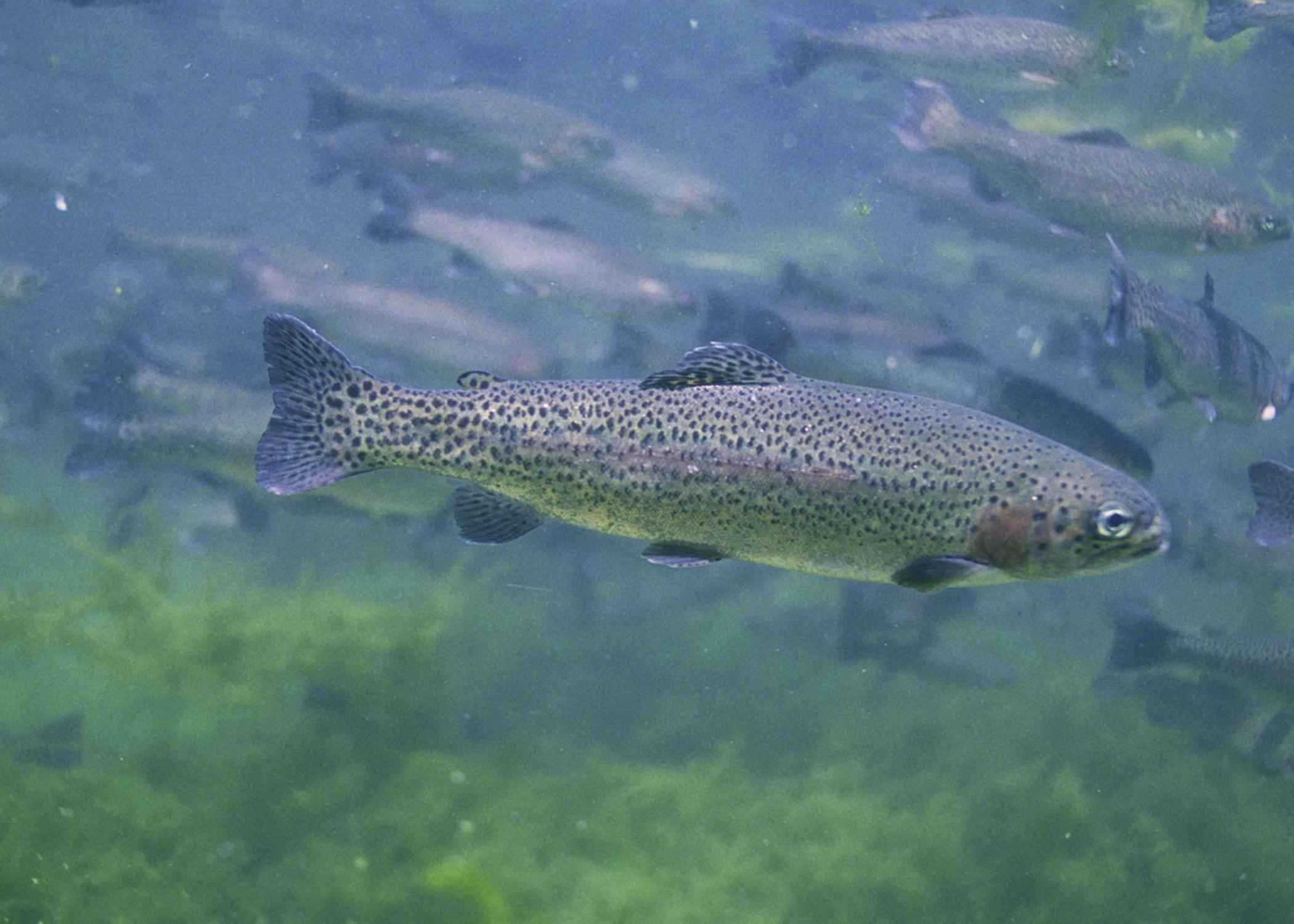

The rainbow trout is where a huge share of anglers catch their very first fish, and it's easy to see why. Beautiful, hard-fighting, delicious, and stocked by the millions into lakes, ponds, and streams across the country, rainbows are accessible to everyone from a kid with a worm on a bobber to a fly angler matching a mayfly hatch on a mountain river. They pull hard, leap when hooked, and live in some of the most gorgeous water in North America. Best of all, you can catch them with a handful of simple, proven methods. This guide covers where rainbow trout live and every core technique, with step-by-step rigging, to start catching them.
Want to explore legendary trout country? Dig into our destination guides to fishing West Yellowstone and fishing Bozeman, Montana, where cold rivers and stocked lakes give you a lifetime of trout water to learn.
Meet the Rainbow Trout
The rainbow trout (Oncorhynchus mykiss) is a member of the salmon family, native to the cold, clean waters of western North America and now stocked and naturalized across the continent and the world. It's unmistakable: a silvery, olive-green body peppered with small black spots and a broad pink-to-red stripe running down each side, the "rainbow" that gives it its name. A sea-run rainbow that migrates to the ocean (or the Great Lakes) and back is called a steelhead, a bigger, chrome-bright version of the same fish that we cover in a separate guide.
Rainbows come in two broad flavors. Stocked "put-and-take" trout are raised in hatcheries and released into accessible lakes and streams; they're eager, school up, and are the easiest trout to catch, especially in the first weeks after stocking. Wild and holdover trout are warier, stronger, and more selective, demanding better presentation and stealth. Most stocked rainbows run 10 to 14 inches, holdover and wild fish reach several pounds, and in fertile tailwaters and lakes rainbows can exceed 10 pounds. Whatever the size, they need cold, oxygen-rich water (ideally 50–65°F), which is why you find them in mountain streams, spring creeks, tailwaters below dams, and deep or high-elevation lakes.
Two Worlds: Stillwater and Streams
Rainbow trout live in two very different environments, and how you fish for them changes with each.
In lakes, ponds, and reservoirs, stocked rainbows often cruise the shallows near shore, particularly right after stocking and in the cool months. Look for them near inflows and creek mouths, around structure like submerged brush and points, off dam faces, and along drop-offs where shallow water meets deep. In summer, trout in a lake pull down to the cool, oxygenated layer (the thermocline), and you'll need to fish deeper or troll to reach them. Stillwater is where bottom-bait and bobber fishing shine.
In rivers and streams, trout hold where the current brings them food while sheltering them from the full force of the flow. Target the seams between fast and slow water, the heads and tails of pools, undercut banks, behind boulders and logs, and in riffles and pocket water. A trout stream is read pocket by pocket, cast to each likely holding lie and move upstream. This is the domain of spinners, drift-fished bait, and the fly rod.
The Techniques That Catch Rainbow Trout
Rainbows eat bait, lures, and flies. Here are the core methods, how to rig each, and when to reach for it.
Bait on the Bottom, the stocked-trout classic
For stocked trout in a lake or pond, nothing is more reliable, or more beginner-friendly, than floating dough bait fished on the bottom.
How to rig it (the slip-sinker "PowerBait rig"): Slide a small egg sinker or a few split shot onto your line, then tie on a barrel swivel. Add an 18- to 36-inch leader and a small treble or bait hook (size 12–16). Mold a pea-sized ball of Berkley PowerBait dough around the hook so it fully hides the hook and floats, the buoyant dough lifts the hook off the bottom, above the sinker, right into a cruising trout's view. (You can also fish a nightcrawler, salmon eggs, or a mealworm the same way.)
How to fish it: Cast it out, reel up the slack until the line is taut to the sinker, set the rod in a holder, and watch the rod tip or line. When a trout takes the floating bait, the tip will twitch and then load up, reel down and set. It's a patient, deadly, sit-and-wait method for stillwater rainbows.
How to Rig PowerBait for Stocked TroutFloat and Bobber Fishing, suspend the bait
When trout are cruising at a certain depth, or you're fishing a stream or the shallows, suspending bait under a bobber puts it right in front of them and telegraphs the bite.
How to rig and fish it: Below a bobber or slip float, add a small split shot and a bait hook with a piece of nightcrawler, a small PowerBait ball, a salmon egg, or a live worm. Set the depth so the bait rides just above where the fish are holding, 1.5 to 4 feet under the float for shallow cruisers. Cast it out and watch the float; when it dips or shoots under, reel down and set. It's simple, visual, and lethal on both stocked and wild trout.
How to Fish for Trout Under a BobberInline Spinners, the go-anywhere lure
An inline spinner is arguably the most effective and easiest trout lure, its spinning blade throws flash and vibration that provokes reaction strikes.
How to rig and fish it: Tie a spinner (a Panther Martin, Mepps Aglia, or Rooster Tail in size 0–2) straight to your line, or use a small snap swivel to reduce line twist. In a stream, cast slightly upstream or across and reel just fast enough to feel the blade thump as the current sweeps it through pools and seams. In a lake, cast out, let it sink, and retrieve steadily at varying depths. Cover water and let aggressive trout come to it. Gold and silver blades, and brown/olive bodies, are reliable starters.
How to Fish Inline Spinners for TroutCasting Spoons, flash for lakes and big water
A small, wobbling spoon flashes like a fleeing minnow and casts a mile, making it ideal for covering lakes and larger rivers.
How to rig and fish it: Tie a casting spoon (an Acme Kastmaster or a Little Cleo in 1/12 to 1/4 oz) to your line with a small snap. Cast it out, count it down to the depth you want, and retrieve steadily with occasional pauses and twitches so it flutters and flashes. Spoons excel for trout holding a bit deeper and for aggressive fish chasing baitfish. Vary your retrieve speed and countdown until you find the strike zone.
How to Fish Spoons for TroutDrift Fishing Bait in Streams, natural presentation in current
In a river, presenting bait so it tumbles naturally with the current, near the bottom, is how you fool wary stream trout.
How to rig and fish it: Use a light bait hook with a small nightcrawler, a single salmon egg, or a bit of PowerBait, and just enough split shot 12–18 inches up the line to tick the bottom. Cast upstream, let the bait dead-drift back toward you at the speed of the current, and keep your line relatively tight to detect the bite. A small float above the rig helps track the drift and signals the take. When the drift stops or the float dips, set the hook.
How to Drift Fish for TroutFly Fishing, the classic trout pursuit
Trout and the fly rod are inseparable, and fly fishing is deadly effective once you learn the basics. It breaks into three approaches: nymphs (subsurface imitations of aquatic insect larvae, how trout feed most of the time), dry flies (floating imitations of adult insects, fished during a hatch), and streamers (baitfish and leech imitations stripped to trigger bigger, predatory trout).
How to fish it: For beginners, nymphing produces the most fish, drift a weighted nymph (a Pheasant Tail or Hare's Ear, size 14–18) under a strike indicator through pools and runs, setting the hook the instant the indicator hesitates. Match your fly to the insects you see, present it drag-free, and let the current do the work. Fly fishing rewards study, but even a first-timer can catch trout on a well-drifted nymph.
Fly Fishing for Trout: Nymphing for BeginnersTrolling, cover a lake and find the fish
On a lake, trolling lets you present lures at a range of depths until you locate active trout.
How to rig and fish it: Pull a small spoon, an inline spinner, or a wedding-ring spinner tipped with a piece of worm, often behind a dodger or flasher for extra attraction, at a slow 1 to 2 mph. Use varying amounts of line, or downriggers and lead-core line, to reach the depth the trout are holding (near the surface in cool weather, down at the thermocline in summer). When you catch a fish, note the depth and repeat. It's the most efficient way to fish a large or unfamiliar lake.
How to Troll for Rainbow TroutWhen to Go and Seasonal Timing
Rainbow trout are cool-water fish, so spring and fall are the prime seasons, comfortable water temperatures put trout shallow and feeding aggressively, and spring stockings fill lakes and streams with eager fish. In summer, trout in lowland lakes retreat to cool depths (fish early, late, deep, or head for high-elevation and tailwater fisheries that stay cold); mountain streams fish well all summer. Winter fishing can be excellent on tailwaters and for stocked trout, with a slow presentation. As with most fish, early morning and evening are the best windows, and overcast days extend the bite. Right after a stocking truck visits, the fishing can be fast and easy, a perfect time to introduce a beginner to the sport.
Stealth and Handling: The Overlooked Keys
Two things separate anglers who consistently catch wild and holdover rainbows from those who don't, and neither is about tackle.
The first is stealth. Trout, especially wild ones in clear water, have excellent eyesight and spook at the slightest disturbance. Approach the water low and slow, keep your shadow off the pool, wear drab clothing, and, in a stream, fish upstream whenever you can, because trout face into the current and won't see you coming from behind. Step softly (fish feel vibrations through the water), make your first cast to the closest holding water before wading in, and cast beyond the fish so your line doesn't land on top of them. A careful approach will out-fish an expensive rod every time.
The second is handling for release. Rainbow trout are delicate, a fish you plan to release should be treated gently so it swims off strong. Wet your hands before touching one (dry hands strip the protective slime coat), keep it in or just over the water, support it horizontally, and never squeeze it or hold it by the gills. Use barbless hooks or pinch the barb to make release quick and easy, back the hook out gently, and cradle the fish facing into the current until it kicks free on its own. Keeping a few stocked trout for the pan is great; releasing wild fish carefully keeps a stream fishing well for years.
Gear for Rainbow Trout
Trout fishing is a light-tackle game, and one ultralight setup covers most of it:
- Ultralight/light spinning combo: A 6- to 7-foot light or ultralight spinning rod with a matching 1000–2500-size reel is perfect for bait, spinners, and spoons, the light tip protects light line and makes a modest trout a blast to fight.
- Line: 4- to 6-lb monofilament or fluorocarbon is the trout standard, light and low-visibility for clear, cold water. Use a fluorocarbon leader in very clear water.
- Fly setup (optional): A 9-foot, 5-weight fly rod with a matching reel and floating line is the classic all-around trout outfit.
- Terminal tackle and lures: A jar of PowerBait, small treble and bait hooks, split shot and egg sinkers, a few bobbers/slip floats, a selection of inline spinners and small spoons, and, if you fly fish, a box of nymphs, dries, and small streamers cover every technique above.
Putting It Together: Learn to Read the Water
Whether you want to catch your first stocked trout or learn to read a wild trout stream, the fastest progress comes from time on the water and the habit of reading it before you cast. Study each pool and run before you step in: pick out the current seams, the heads and tails of pools, the undercut banks and boulder pockets, and picture where a trout would sit to let the flow deliver its food. Start with the closest holding water and work outward, match your method to what's in front of you, bottom bait or a bobber in stillwater, a spinner, drift-fished bait, or a nymph in current, and pay attention to what the water and the insects are telling you. Every trip teaches you a little more about where trout hold and why, and that hard-won knowledge will put more fish in front of you than any single piece of tackle.