Fish
Fish Fire
Fire Hike
Hike Bird
Bird

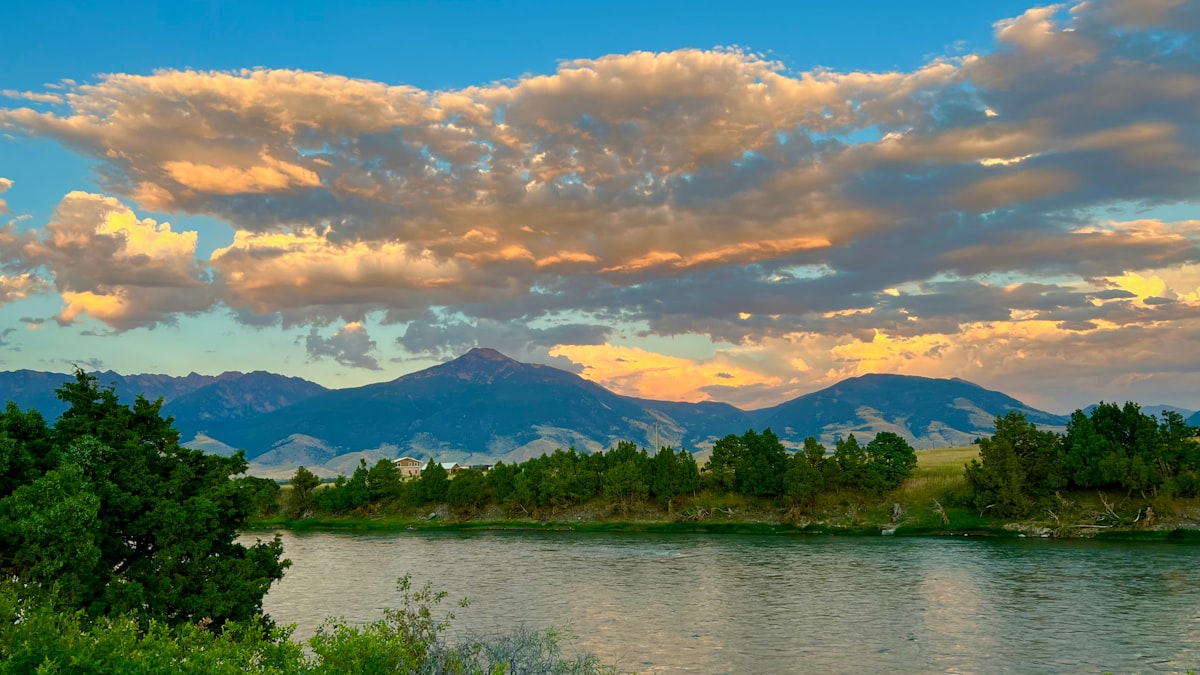
Bozeman sits in the Gallatin Valley of southwestern Montana, ringed by mountain ranges and positioned within an hour's drive of four blue-ribbon trout rivers that routinely appear on every "best fly fishing in America" list ever written. The Madison, the Gallatin, the Yellowstone, and the spring creeks of Paradise Valley each fish differently, hold different water, and reward different techniques, which means Bozeman is not just a great place to fish, it is one of the best places in the country to learn to fish.
If you have never held a fly rod, or if you are a spin angler curious about what the fuss is about, this guide covers the practical side: what gear you need, how to rig it, which flies and lures to use on which rivers, and the on-the-water techniques that will actually put trout in your net. No vague "match the hatch" platitudes. Real rigs, real fly patterns with sizes, real river sections, and honest assessments of difficulty.
For a full overview of Bozeman as a fishing destination, the seasons, the species, where to stay, and how to plan your trip, read our complete Bozeman fishing guide. For a deeper look at the best river sections, see our guide to the best rivers for fly fishing near Bozeman.
Gear: Fly Fishing Setups
Fly fishing is the dominant method on all four of Bozeman's rivers, and for good reason, the clear currents, prolific insect hatches, and educated trout make it the most effective (and most rewarding) approach. If you are a complete beginner, a combo outfit gets you on the water without a PhD in fly tackle.
The all-around rod: A 9-foot 5-weight is the standard tool for Montana trout fishing. It handles dry flies, nymphs, and small streamers on all four rivers. For a beginner, the Redington Crosswater 9'0" 5-weight combo (rod, reel, line, and backing) is hard to beat for value. If you want to step up, the Orvis Clearwater 9'0" 5-weight outfit is a noticeable improvement in feel and casting accuracy. Load either with a Rio Gold weight-forward floating fly line, it is slightly over-weighted compared to standard lines, which helps beginners load the rod on short casts.
A second rod for streamers and wind: If you want versatility, add a 9-foot 6-weight. Montana afternoons can be windy, especially on the Madison, and a 6-weight punches through gusts that make a 5-weight miserable. It also handles the larger streamer patterns (Woolly Buggers, sculpin imitations) you will throw on the Yellowstone. The Echo Base 9'0" 6-weight is a solid budget option.
Reels: For trout fishing on these rivers, a basic click-and-pawl or disc-drag reel that balances your rod is sufficient. You are rarely fighting fish that run into your backing. The reel that comes with the Crosswater or Clearwater combo is perfectly adequate.
Line and leader: Start with a 9-foot tapered leader in 4X (roughly 6-pound test). For dry fly fishing with smaller patterns, add a section of 5X tippet. For nymphing with heavier flies and split shot, 3X gives you the strength to pull free from snags without losing your entire rig. Carry spools of Rio Suppleflex tippet in 3X, 4X, and 5X.
Wading gear: You will wade all four rivers (though the Yellowstone is best fished from a drift boat). A good pair of wading boots with felt soles or rubber soles with studs is essential, the cobble bottoms of the Gallatin and Madison are notoriously slippery. Simms Tributary wading boots are a solid mid-range option. Pair them with breathable chest waders; the Redington Escape waders or Orvis Encounter waders work well for beginners. Even in July, Montana's rivers run cold, snowmelt from the surrounding ranges keeps water temperatures in the 50s and low 60s.
Vest or pack: A chest pack or sling pack keeps flies, tippet, floatant, split shot, and forceps accessible while wading. The Fishpond Thunderhead Submersible Lumbar Pack is popular with locals.
Gear: Spin Fishing Setups
Not everyone fly fishes, and you can absolutely catch trout on spinning gear in every river around Bozeman. Spin fishing is particularly effective with small inline spinners, spoons, and soft plastics.
The setup: A 6'6" to 7-foot ultralight to light-action spinning rod with a 1000- to 2500-size reel spooled with 4- to 6-pound monofilament. The Ugly Stik GX2 Spinning Combo in ultralight is a workhorse that handles Montana trout. Tie on a small barrel swivel and a 3-foot fluorocarbon leader of 4- to 6-pound test.
Lures that work: A Panther Martin 1/16 oz spinner in gold or black with yellow dots is deadly on the Gallatin's pocket water. Mepps Aglia spinners in sizes 0 and 1 (silver or gold blade) are equally effective. For the Madison, slightly larger Blue Fox Vibrax spinners in 1/8 oz cover more water. Small Rapala Countdown minnows in rainbow trout or brown trout patterns (CD-3 or CD-5) work well in the deeper pools of the Yellowstone. Berkley PowerBait trout dough in chartreuse or rainbow is effective where the rivers widen out and slow down, though many of these stretches are fly-fishing-only, always check regulations.
ORVIS - Fly Casting Lessons - The Basic Fly CastThe Madison River: Montana's Most Famous Riffle
The Madison is the river most people picture when they think of Montana fly fishing. It begins at the confluence of the Firehole and Gibbon rivers inside Yellowstone National Park and flows roughly 100 miles northwest through the Madison Valley before joining the Jefferson and Gallatin to form the Missouri River at Three Forks, about 30 minutes west of Bozeman.
The Madison's defining feature is the "50-Mile Riffle", a long, fast, shallow stretch of boulder-strewn water that runs from Quake Lake downstream to Ennis Lake. Despite looking like one continuous riffle, this section holds an extraordinary density of trout, up to 2,000 fish per mile in the best stretches, most of them 10 inches or larger. Rainbows and browns dominate, with some mountain whiting mixed in.
For a deep dive into every section and access point, see our complete Madison River fly fishing guide.
Where Beginners Should Fish the Madison
The upper wade section (Raynolds Pass to Lyons Bridge): This 12-mile stretch below Quake Lake is the most accessible walk-and-wade water on the Madison. Highway 87 parallels the river, with pullouts and access points every mile or so. Boating is legal here, but fishing from a boat is not, this is wade fishing country. The water is knee- to thigh-deep in most places with a cobble bottom, and the key to finding fish is locating the slightly deeper spots. When the whole river is two feet deep, a depression to four feet counts as a prime lie and will hold most of the trout.
Varney Bridge to Ennis Bridge: The river widens and deepens here, offering longer drifts and bigger fish. This section is popular for both wade fishing and float fishing. Access at Varney Bridge FAS is excellent.
Techniques for the Madison
Dry-dropper rig: This is the most versatile setup on the Madison, and arguably the best way for a beginner to learn. Tie a buoyant dry fly, a Chubby Chernobyl in size 8 or 10, or a Stimulator in tan or orange, size 8 (see our Chubby Chernobyl tying guide or Stimulator tying guide), to the end of your leader. From the bend of the dry fly hook, tie 18 to 24 inches of 4X or 5X tippet to a nymph: a Pheasant Tail in size 16 or 18, a Copper John in size 14, or a Hare's Ear in size 14. The dry fly acts as your strike indicator while also catching fish that are looking up. When the dry fly dips or moves unnaturally, set the hook, a trout has taken the nymph.
Learn to tie these essential Montana nymphs with our guides to the Pheasant Tail, Copper John, and Hare's Ear.
Indicator nymphing: In deeper runs and during non-hatch periods, a strike indicator with two weighted nymphs fishes deeper and more effectively than a dry-dropper. Attach a small yarn or foam indicator to your leader, adjust its position so your flies drift near the bottom (set the indicator at 1.5 times the water depth), add a small split shot 8 inches above the first fly, and tie on two nymphs spaced 18 inches apart, a heavier fly on top (a Pat's Rubber Legs in size 6 or a Copper John in size 12) and a smaller pattern below (a Zebra Midge in size 18 or a Pheasant Tail in size 16). Cast upstream, mend your line to get a drag-free drift, and watch the indicator. Any hesitation, twitch, or dip means set the hook.
How to Set Up a Nymph Rig, Fly Fishing for BeginnersDuring the salmonfly hatch (late June through early July): The salmonfly hatch is the single most famous event in Montana fly fishing. These enormous stoneflies (the adults are nearly three inches long) crawl out of the river to mate, and trout go absolutely berserk feeding on them. When the hatch is on, tie on a Chubby Chernobyl in size 4 or 6, a Norm Wood Special, or a dedicated salmonfly pattern in dark brown or black, and slap it against the bank. Accuracy matters more than delicacy, the splat of a big dry fly mimics a stonefly hitting the water, and aggressive trout will hammer it. The hatch moves upstream over two to three weeks, typically reaching the upper wade section by early July. Expect crowds, this is the Super Bowl of Western fly fishing.
Madison Fly Box Essentials
- Dry flies: Elk Hair Caddis #14-16 (tying guide), Parachute Adams #14-18 (tying guide), Chubby Chernobyl #6-10, Stimulator #8-12, PMD Comparadun #16 (tying guide)
- Nymphs: Pheasant Tail #14-18, Copper John #14-16, Hare's Ear #12-16, Pat's Rubber Legs #6-8, Prince Nymph #12-16 (tying guide), Zebra Midge #18-20 (tying guide)
- Streamers: Woolly Bugger #6-10 in olive, black, or white (tying guide), Sculpzilla #6, Zonker #6
The Gallatin River: Pocket Water Paradise
The Gallatin flows through one of the most stunning canyons in Montana, Gallatin Canyon, where Highway 191 winds between Big Sky and Bozeman. This is the river where the fishing scenes from A River Runs Through It were filmed (though the movie is set on the Big Blackfoot), and it is arguably the best beginner wading river near Bozeman.
The Gallatin is a wade-fishing-only river for most of its length, no boats allowed in the canyon. That makes it inherently beginner-friendly: you park at a pullout along Highway 191, walk to the river, and start fishing. No drift boat, no guide, no logistics.
Why Beginners Should Start on the Gallatin
The Gallatin's pocket water, the tumble of boulders, small plunge pools, and fast riffles that define the canyon section, is forgiving of imperfect casts. Each pocket is its own small world: a trout holds behind a boulder in the cushion of slower water, waiting for the current to deliver food. You only need to drift your fly through a two- or three-foot window. If your cast is slightly off, you simply lift the line and try the next pocket. Compare this to the spring creeks, where a drag-free drift over 30 feet of glass-smooth water is required to fool a single fish, and you can see why guides start beginners on pocket water.
How to Fish the Gallatin's Pockets
Wade upstream. Yes, upstream, pocket water fishes best when you approach from below, because trout face into the current and cannot see you behind them. Work each pocket individually: cast your dry fly or dry-dropper rig into the head of the pocket (where the current pours over or around a boulder), let it drift through the slow cushion behind the rock, and pick up for the next cast if nothing eats. Each pocket gets two or three drifts, maximum. If a fish is there and your drift is good, it will eat on the first or second pass. Then move to the next pocket upstream.
Fly selection for the Gallatin: The same dry-dropper approach that works on the Madison is deadly here, but size down slightly. An Elk Hair Caddis in size 14 or 16 with a Pheasant Tail dropper in size 16 or 18 is the classic Gallatin rig from July through September. During hopper season (August and September), a foam hopper pattern in size 8 or 10 with a Copper John dropper covers a lot of water. In the canyon's deeper runs, a Parachute Adams in size 14 works as a reliable searching pattern when you are not sure what is hatching.
Spin fishing the Gallatin: The pocket water is excellent for spin fishing. Cast a Panther Martin 1/16 oz spinner upstream into the head of a pocket and retrieve just fast enough to keep the blade turning as it drifts through the slow water. Small Mepps Aglia spinners in size 0 and 1 work the same way. The trout in the canyon are not large, mostly 8 to 14 inches, but they are aggressive and plentiful. Expect to catch a lot of fish once you figure out the pockets.
Rigging and Indicator Setup for Pocket Water Nymph Fly FishingWading Safety on the Gallatin
The Gallatin's cobble bottom is slippery, and the current is stronger than it looks in the canyon. Studded wading boots are essential, not optional. A wading staff adds stability, especially when crossing. Never wade deeper than your thighs in the canyon, and always cross at wide, shallow riffles rather than narrow, deep runs. The water is cold year-round; a slip that soaks you in July is uncomfortable, but a slip in September can be hypothermia-inducing.
The Yellowstone River: Big Water, Big Fish
The Yellowstone is a different animal entirely. This is the longest undammed river in the lower 48 states, and through Paradise Valley, the stretch between Yellowstone National Park and Livingston, about 45 minutes east of Bozeman, it is a powerful, wide river that holds large brown and rainbow trout, along with the occasional Yellowstone cutthroat.
For more on the spring creeks and the full Livingston-area fishery, see our Livingston spring creek fly fishing guide. For the in-park experience, read our Yellowstone National Park fly fishing guide.
How Beginners Should Fish the Yellowstone
Float, don't wade. The Yellowstone in Paradise Valley is generally too wide and too powerful for productive wade fishing, especially for beginners. The most effective (and safest) approach is to float with a guide in a drift boat or raft. The guide rows you along the bank, and you cast toward structure, undercut banks, boulder fields, log jams, and side channels, as you drift past.
If this is your first guided float trip, our guide on what to expect on your first Bozeman fishing trip covers everything from tipping to what to wear.
The Paradise Valley floats: From Emigrant to Mallard's Rest, the Yellowstone flows through a broad, languid valley with gentle currents, the easiest and most forgiving water on the entire river. Despite heavy fishing pressure, fish numbers remain high, and this section produces some of the river's largest brown trout. The Emigrant to Carter's Bridge float is a classic half-day trip that most guides run for beginners.
Techniques for the Yellowstone
Hopper season (August through September): This is the Yellowstone's signature event, grasshoppers blow off the grassy banks of Paradise Valley into the river, and brown trout up to five pounds crush them against the bank. Tie on a foam hopper pattern in size 6 or 8, a Morrish Hopper or Charlie Boy Hopper, and plop it two feet from the bank with a deliberate splat. Let it drift. Strip. Wait for the explosion. Hopper fishing on the Yellowstone is the most beginner-friendly dry fly fishing in Montana because the fish are aggressive, the flies are large and easy to see, and delicate presentation is actually counterproductive, you want the fly to hit the water hard. Drop a Pheasant Tail or Prince Nymph 18 inches below the hopper for a dry-dropper rig that doubles your chances.
Streamer fishing: The Yellowstone's big browns respond well to Woolly Buggers in size 4 to 8 (olive, black, or white), sculpin imitations (tying guide), and Zonker strips in sizes 2 to 6. Cast toward the bank on a 6-weight rod with a sink-tip line, let the fly sink for a two-count, then strip it back with short, erratic strips. The take is often violent. Streamer fishing is less technical than dry fly or nymph fishing, accuracy and strip speed matter more than a perfect drift.
The salmonfly hatch: Like the Madison, the Yellowstone gets a massive salmonfly hatch, typically in late June or early July depending on runoff. The timing is less predictable because it depends on when spring runoff subsides, but when it hits, the fishing can be even more explosive than the Madison because the Yellowstone holds bigger fish.
Yellowstone Fly Box Additions
Everything from the Madison box works here, plus:
- Hoppers: Morrish Hopper #6-8, Charlie Boy Hopper #8, Parachute Hopper #10
- Streamers (larger): Woolly Bugger #4-8, Sculpin patterns #4-6, Zonker #4-6
- Big dries: Salmonfly patterns #4-6, Golden Stone #6-8
Spring Creeks: The Graduate Program
Paradise Valley's spring creeks, DePuy's Spring Creek and Armstrong Spring Creek primarily, are private, pay-to-fish waters that offer a fundamentally different experience from the freestone rivers. The water is crystal clear, weed-rich, and loaded with large, exquisitely educated trout that have seen every fly pattern ever invented. These creeks produce hatches of tiny mayflies (PMDs, Blue-Winged Olives, Tricos) in such density that the trout become hyper-selective feeders.
This is honest assessment territory: spring creek fishing is hard. It will humble experienced anglers, and it can frustrate beginners who have not yet developed the casting accuracy and drift control these fish demand. But it is also some of the most fascinating and rewarding fishing in the world, and if you want to fast-track your development as a fly angler, a day on DePuy's, especially with a guide, will teach you more than a week on a forgiving freestone.
What Makes Spring Creeks Different
Constant water conditions: Unlike the Madison or Yellowstone, which fluctuate with runoff and weather, spring creeks flow at a consistent temperature (50-55 degrees year-round) and volume. This means insect hatches are predictable and prolific, and the trout feed confidently because their environment is stable. It also means the fish have time to become extremely selective, they can afford to inspect every fly closely before eating.
Longer leaders, lighter tippet: Plan on a 12- to 15-foot leader tapered to 5X or 6X (3- to 4-pound test). The calm, clear water means any drag on your fly, even micro-drag invisible to you, will put the fish down. A longer leader and lighter tippet give your fly more freedom to drift naturally.
Tiny flies: Where the Madison rewards size 8 Chubby Chernobyls, the spring creeks demand size 18 to 22 PMDs, BWOs, and Trico spinners. Carry a range: Pale Morning Dun Comparaduns in size 16 to 18 (tying guide), Blue-Winged Olive parachutes in size 18 to 22 (tying guide), Trico spinners in size 20 to 22 (tying guide), and RS2 emergers in size 18 to 22.
Spring Creek Tips for Beginners
Get a guide your first time. DePuy's is the more forgiving of the two creeks, its riffles and runs fish more like a classic freestone, but even so, a guide who knows the water will show you where the fish hold, how to approach without spooking them, and which fly to tie on. The knowledge you gain in one guided day will make every subsequent unguided visit dramatically more productive.
Slow down. Nothing happens fast on a spring creek. Spend ten minutes watching before you make your first cast. Identify a rising fish, study its feeding rhythm, identify the insect it is eating, then plan your approach. Cast from downstream or the side, never from directly above a rising fish.
Rod access fees: DePuy's and Armstrong's charge a daily rod fee ($100-150 per angler as of 2025) and limit the number of rods per day. Reserve in advance during peak season (July through September). Access details are at depuyspringcreek.com.
Montana Hatches: What to Expect and When
Knowing the rough hatch calendar helps you plan your trip and stock your fly box. Here is what happens on the Bozeman-area rivers by season:
Late May through mid-June: Mother's Day caddis hatch on the Yellowstone. PMDs (Pale Morning Duns) begin. Runoff on the larger rivers limits wade fishing but creates streamer opportunities.
Late June through early July: Salmonfly hatch moves through the Madison and Yellowstone. Golden stonefly hatch overlaps. This is the "big bug" window, the biggest, most exciting dry fly fishing of the year.
July: PMD hatch peaks across all rivers. Green drakes on the Gallatin. Caddis everywhere. The rivers clear from runoff and wade fishing is at its best. The spring creeks fish beautifully with PMD patterns.
August through September: Hopper season. Terrestrial patterns (grasshoppers, ants, beetles) dominate on the Yellowstone and Madison. Trico spinners on the spring creeks. Evening caddis hatches on the Gallatin. This is the best all-around month for beginners, warm weather, low water, aggressive fish.
October: Blue-Winged Olive (BWO) hatch on cloudy, drizzly days. Brown trout become aggressive as spawning season approaches. Streamer fishing peaks on the Yellowstone and Madison. Fewer crowds. Colder mornings.
Essential Knots for Montana Fly Fishing
You need four knots. Practice them at home until they are automatic.
Improved Clinch Knot, Connects your tippet to the fly. Thread the tippet through the hook eye, wrap five times around the standing line, pass the tag through the loop near the eye, then through the large loop. Works for tippets 3X through 6X.
Double Surgeon's Knot, Adds tippet to your leader. Overlap the leader and tippet by six inches, tie a double overhand knot (pass the loop through twice), and pull all four ends tight. This is the fastest, easiest leader-to-tippet connection.
Nail Knot or Loop-to-Loop, Connects your fly line to your leader. Most modern fly lines come with a welded loop; if your leader has a loop, simply interlock them. If not, a nail knot creates a clean, slim connection.
Non-Slip Mono Loop, Creates a small loop at the fly, giving streamers more action. Tie an overhand knot in the tippet, pass the tag through the hook eye and back through the overhand knot, wrap three to four times, and feed the tag back through the overhand knot. Essential for Woolly Buggers and sculpin patterns.
How to Set Up a Dry Dropper Rig, Fly Fishing for BeginnersPractical Details
Fishing license: Montana requires a fishing license for anyone 12 and older. Non-resident options include a season license ($117.50), a 5-day license ($73.50), or a 1-day license ($31.50). All include the required Conservation License and Aquatic Invasive Species Prevention Pass. As of 2026, all licenses must be purchased online through the Montana Fish, Wildlife & Parks (FWP) website at fwp.mt.gov, fly shops no longer sell them over the counter. Buy your license before you arrive.
Regulations: Montana's trout streams have varying regulations by section. Some stretches are catch-and-release only, some are artificial-flies-and-lures only, and some have specific size limits. The regulations booklet is available free at fwp.mt.gov and at every fly shop in town. Read the regulations for the specific section you plan to fish, ignorance is not a defense, and game wardens patrol the popular rivers regularly.
Fly shops in Bozeman: Stop at a fly shop before you fish. Montana Troutfitters, The River's Edge, and Bozeman Angler are local institutions with knowledgeable staff who will tell you what is hatching, which rivers are fishing best, and what flies to buy. They also offer guided trips, casting lessons, and gear rentals. If you have never cast a fly rod, book a half-day casting lesson, one hour of instruction on a lawn will save you ten hours of frustration on the water.
What to wear: Layers. A morning on the Gallatin in July can start at 40 degrees and climb to 80 by noon. Wear a moisture-wicking base layer, a fleece or light insulating layer, and bring a rain shell, afternoon thunderstorms are common in the mountains. A brimmed hat and polarized sunglasses (copper or amber lenses for spotting fish) are non-negotiable. Apply sunscreen, the altitude and thin mountain air mean you burn faster than you expect.
What to bring: Water, snacks, a compact rain jacket, sunscreen, insect repellent (mosquitoes along the river in July are fierce), a net (rubber-mesh is required on many waters for catch-and-release), forceps or hemostats for removing hooks, nippers for cutting tippet, and fly floatant (apply to dry flies before each drift to keep them riding high).
Best time for beginners: Mid-July through mid-September. The rivers have cleared from spring runoff, the hatches are diverse and productive, the weather is warm enough for comfortable wading, and the fish are actively feeding. August is the sweet spot, hopper season on the Yellowstone, caddis on the Gallatin, evening dry fly fishing on the Madison, and consistent hatches on the spring creeks.
A note on the West Yellowstone area: If you are driving to Yellowstone National Park, the town of West Yellowstone is the western gateway and has its own outstanding fishing, the upper Madison inside the park, the Firehole River, and Hebgen Lake. See our West Yellowstone fishing guide for details. Many anglers split a Bozeman trip between the park and the valley rivers.
Nymphing on the Madison and Gallatin Rivers