Fish
Fish Fire
Fire Hike
Hike Bird
Bird

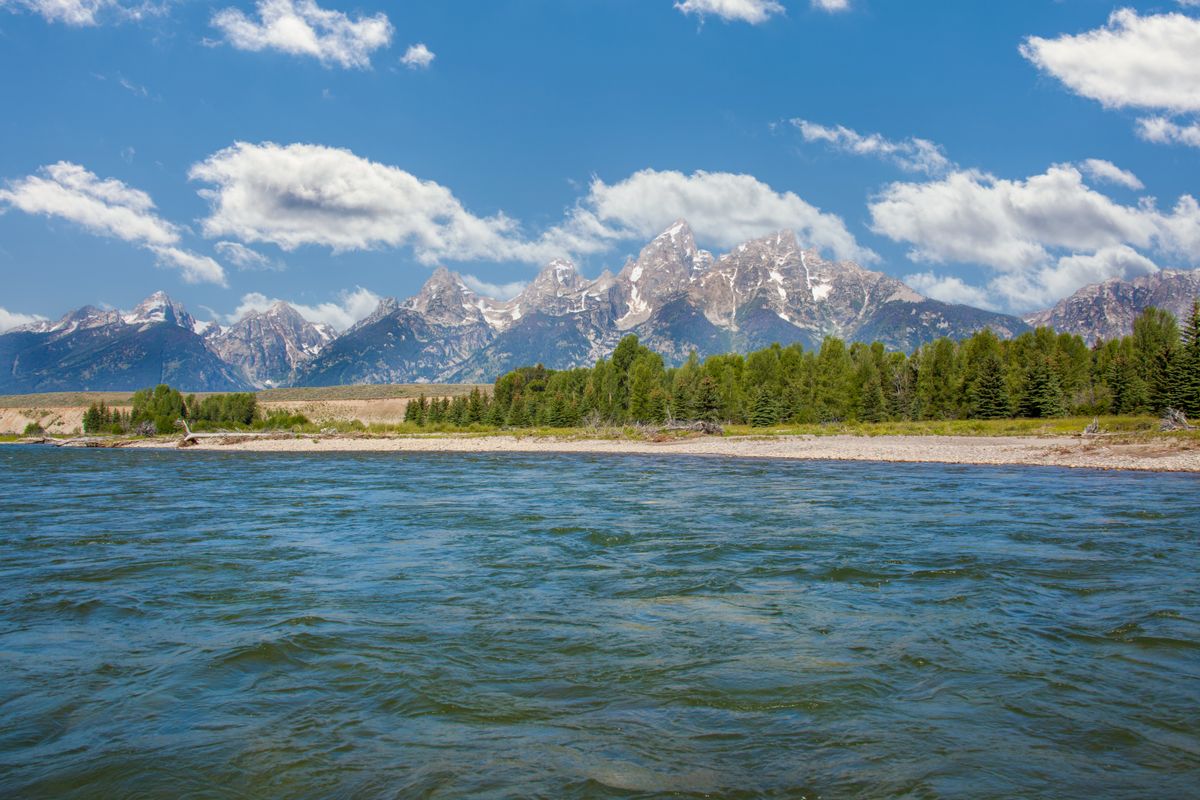
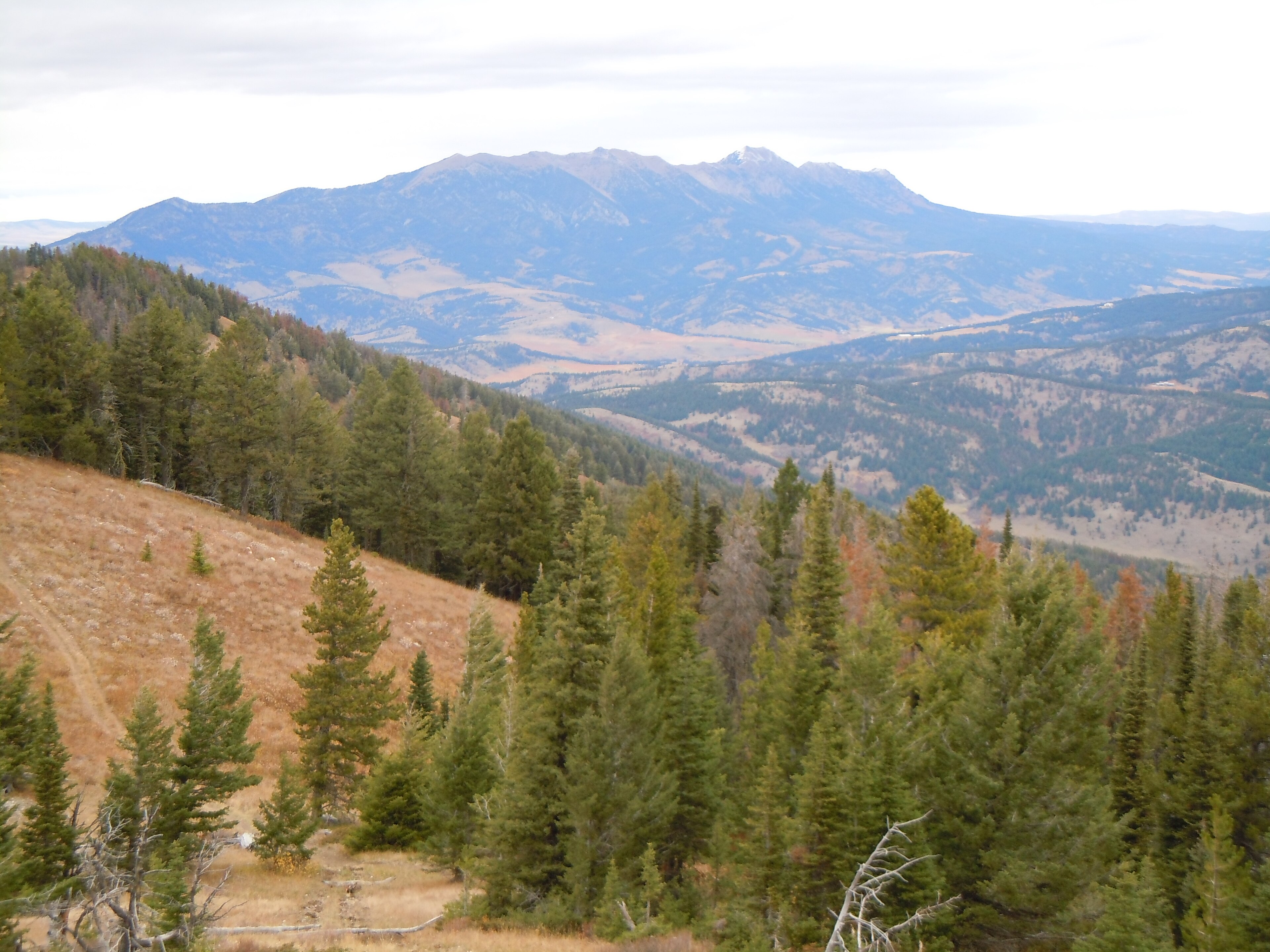
Yellowstone National Park is the most extraordinary setting in which a fly angler can cast to a trout. Not because the fish are the largest (they aren't, the Madison and Missouri outside the park grow bigger fish). Not because the hatches are the most prolific (the Henry's Fork next door has denser emergences). But because the entire experience, the wild cutthroat rising in a meadow stream while a herd of bison grazes 200 yards away, a wolf pack howls from the ridgeline, and the Absaroka Range catches the last light, is something no other fly-fishing destination on Earth can replicate.
The park holds over 2,500 miles of streams and rivers and the largest remaining populations of genetically pure Yellowstone cutthroat trout in their native range. The fishing is entirely catch-and-release for cutthroats, the rivers are wild and undammed, and the backcountry waters, accessible only by hiking, hold fish that see fewer anglers per season than most Western rivers see in a week.
This is fly fishing stripped to its essence: a rod, a box of dry flies, a pair of waders, and a trail into country that looks the same as it did when the park was established in 1872.
The Waters, Five Fisheries in One Park
Slough Creek, The Meadow Dream
Slough Creek is the stream every fly angler pictures when they imagine Yellowstone. Four meadows, Third, Second, First, and Lower, stretch through broad, open valleys in the park's northeast corner, holding wild Yellowstone cutthroat in clear, slow-moving meadow water that's designed for dry-fly fishing.
The meadows are accessed by hiking from the Slough Creek Campground trailhead. First Meadow is 2.5 miles in, a manageable day trip. Second Meadow is 4 miles, doable for fit anglers who start early. Third Meadow is 6 miles in and requires an overnight stay with a backcountry permit, but it holds the largest cutthroats, fish of 18 to 22 inches that have seen almost no fishing pressure.
The fishing is textbook meadow-stream dry-fly work. The cutthroat hold in feeding lanes in the slow, clear water, rising to PMDs, Green Drakes, caddis, and terrestrials with the confident, splashy rises that cutthroats are famous for. A #14 Parachute Adams or a #12 Elk Hair Caddis fished upstream on a dead drift is all you need for most situations. The fish aren't as selective as Henry's Fork Ranch trout, they eat with a willingness that makes the hiking worthwhile.
The wildlife is constant. Bison graze in the meadows. Wolves patrol the ridges, the Lamar Valley wolf packs are among the most-watched in the world. Grizzly and black bears are present. Moose browse in the willows along the creek. You fish with awareness here, bear spray on your wading belt, food stored in bear canisters, and one eye on the landscape at all times.
Best season: July 4 through mid-September. The creek clears from runoff by early July and fishes well until the park's October 31 closing.
The Lamar River, The Serengeti of North America
The Lamar River flows through the Lamar Valley, called the "Serengeti of North America" for its wildlife density, and holds wild cutthroat, rainbow, and hybrid trout in a mid-sized freestone river accessible from the Northeast Entrance Road.
The Lamar clears by mid-July and produces outstanding hatches of PMDs, Green Drakes, Grey Drakes, and caddis through August. The river is wider and faster than Slough Creek, with riffles, runs, and pocket water that demand a more active wading approach. A #16 Sparkle Dun during the PMD hatch or a #10 Green Drake Paradrake during the sporadic but electrifying drake emergence produces explosive takes from cutthroat that eat dry flies with an aggression that browns can't match.
Hopper fishing from late July through September is the Lamar's peak, a #8 Chubby Chernobyl or foam hopper bounced against the grassy undercuts produces the Lamar's largest fish.
The Firehole River, The Strangest Trout Stream on Earth
The Firehole flows through the most active geyser basins in Yellowstone, past Old Faithful, through the Upper and Midway Geyser Basins, and the geothermal influence creates a river unlike anything else in fly fishing. Hot springs and geysers warm the water, which means the Firehole hatches earlier in spring than any river in the region and shuts down earlier in summer when the water gets too warm.
The Firehole holds rainbow trout, brown trout, and brook trout (not cutthroat, the geothermal chemistry favors different species). The fish are wild and educated, the Firehole gets heavy traffic from park visitors who stop at the pullouts, and the fishing is technical. Long leaders, small flies (Pheasant Tail #16-18, Elk Hair Caddis #16, Parachute Adams #18), and drag-free drifts in the flat, slow pools are the game.
The window is narrow: Mid-May through late June is the Firehole's prime. PMDs, BWOs, and caddis hatch in the geothermally warmed water weeks before the park's other rivers clear from runoff. By July, the water warms past 70°F and the fish stress, ethical anglers stop fishing the Firehole by mid-July and don't return until fall.
The setting is surreal. You're casting to rising trout with steam from a geyser billowing behind you and the smell of sulfur in the air. The Firehole is fly fishing on another planet.
The Yellowstone River, Inside the Park
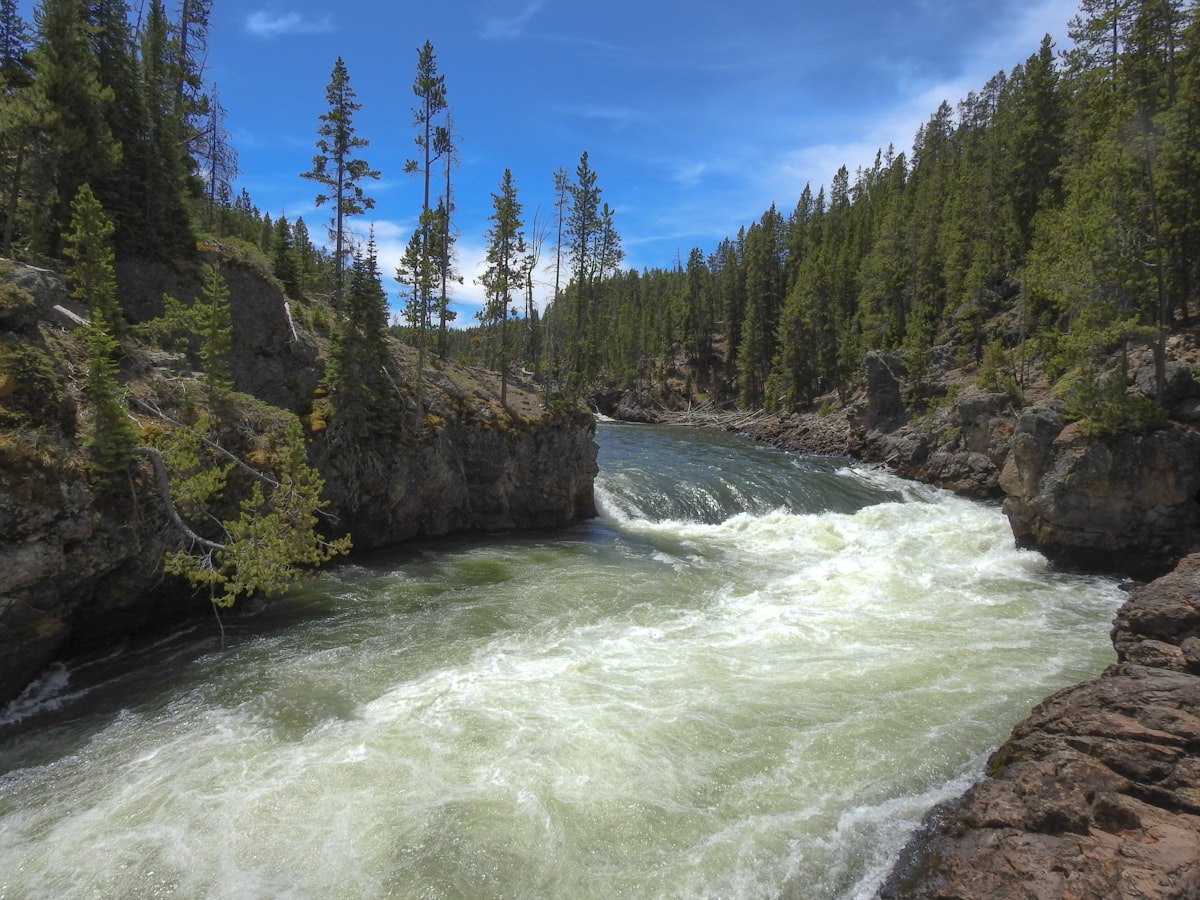
The Yellowstone River inside the park flows from Yellowstone Lake north through Hayden Valley and the Grand Canyon of the Yellowstone (with its famous waterfalls) to Tower Junction. The river holds native cutthroat trout throughout, with different sections offering different experiences:
Hayden Valley is closed to fishing (critical grizzly habitat), but the Buffalo Ford section upstream of Fishing Bridge was historically one of the most famous cutthroat fisheries in the world. (Check current closures, some sections remain closed for cutthroat conservation.)
The Grand Canyon section, from below the Lower Falls to Tower Junction, holds cutthroat in 15 miles of steep canyon water accessible only by serious hiking. Seven Mile Hole is the most famous access: a 5-mile hike each way with roughly 4 hours of streamside fishing. The fish in the canyon see almost no anglers, and the setting, fishing at the bottom of Yellowstone's Grand Canyon, is unforgettable.
Yellowstone Lake
Yellowstone Lake is the largest high-elevation lake in North America and historically held the largest population of native cutthroat trout anywhere. The lake trout (an invasive species introduced in the 1990s) has devastated the native cutthroat population, and the park has spent decades and millions of dollars on lake trout removal. The cutthroat population is recovering but remains fragile.
Fishing the lake's tributary streams during the June cutthroat spawning run, when fish stack at the creek mouths, is one of the great wildlife-and-fishing spectacles in the national parks. Grizzly bears, pelicans, and osprey all feed on the spawning cutthroat alongside the anglers.
The Hatch Chart, Park-Wide
- Mid-May–June: Firehole comes alive first, BWOs, caddis, PMDs in the geothermally warmed water. The rest of the park is still in runoff.
- Late June–July: Salmonflies on the park's Madison River section. Green Drakes and PMDs on Slough Creek and the Lamar. The park opens up.
- July–August: The main event, PMDs, caddis, and hoppers on every fishable stream. Slough Creek meadows at their best. Firehole shuts down from heat.
- September–October: Fall, hoppers fading, BWOs returning, browns and cutthroat feeding hard before winter. The park empties of tourists. The fishing improves.
The Fly Box
The Yellowstone fly box is simple, cutthroat are cooperative, and the hatches are readable:
Dry flies: Parachute Adams (#12-18), Elk Hair Caddis (#14-16), Chubby Chernobyl (#8-10), Stimulator (#8-14, gold/yellow), Sparkle Dun PMD (#14-16), Green Drake Paradrake (#10-12), foam hopper (#8-10), ant (#16-18), beetle (#14-16)
Nymphs: Pheasant Tail (#14-18), Hare's Ear (#12-16), Zebra Midge (#18-22), Prince Nymph (#12-16)
Streamers: Woolly Bugger (#6-10, olive/black), for the larger rivers and Firehole browns
The Gear
Rod: 9-foot 5-weight covers everything in the park. A 4-weight works for Slough Creek's meadow water. The 5-weight handles the Lamar's faster runs, the Firehole's longer casts, and the wind that blows across the Lamar Valley.
Leaders: 9 to 12 feet tapered to 4X-5X. The cutthroat aren't as leader-shy as the Bighorn's browns, but the clear meadow water on Slough Creek demands reasonable stealth. 5X covers most dry-fly situations.
Bear spray: Not optional. Every angler in the Yellowstone backcountry carries bear spray on their wading belt, accessible with one hand. Grizzly encounters are not rare, they're expected.
The Culture, West Yellowstone, the Park, and the Ethic
West Yellowstone is the gateway, the town where most Yellowstone fly anglers stay, buy their flies, and get the current park fishing report. The anchor fly shop, founded by the creator of the Sparkle Dun, has the most detailed park fishing reports, the most Yellowstone-specific fly selection, and the institutional knowledge of decades on these waters.
The fly shops in Gardiner (the north entrance) provide the other essential outfitting for the park's northern waters, Slough Creek, the Lamar, and the Yellowstone River.
The park fishing ethic is fundamental to the experience. Yellowstone's waters are catch-and-release for cutthroat, barbless hooks only, and the respect for the resource is palpable. The anglers who fish Yellowstone's backcountry understand that they're guests in a ecosystem that predates them by millennia, and they treat the fish, the wildlife, and the landscape accordingly.
Regulations: A Yellowstone fishing permit is required (available at park visitor centers or online). No bait. Barbless hooks only. Cutthroat must be released. Some waters have seasonal closures, check the park's current fishing regulations before planning.
When to Go
- Late May–June: Firehole early season, the park's first fishable water
- July: Slough Creek and Lamar clear from runoff, the main event begins
- August: Peak, every fishable stream producing, hoppers, the best overall month
- September: The park empties, the fish feed hard, fall BWOs, the quiet, rewarding window
- October (through Oct 31): Late season, cold mornings, midday hatches, almost nobody on the water