Fish
Fish Fire
Fire Hike
Hike Bird
Bird

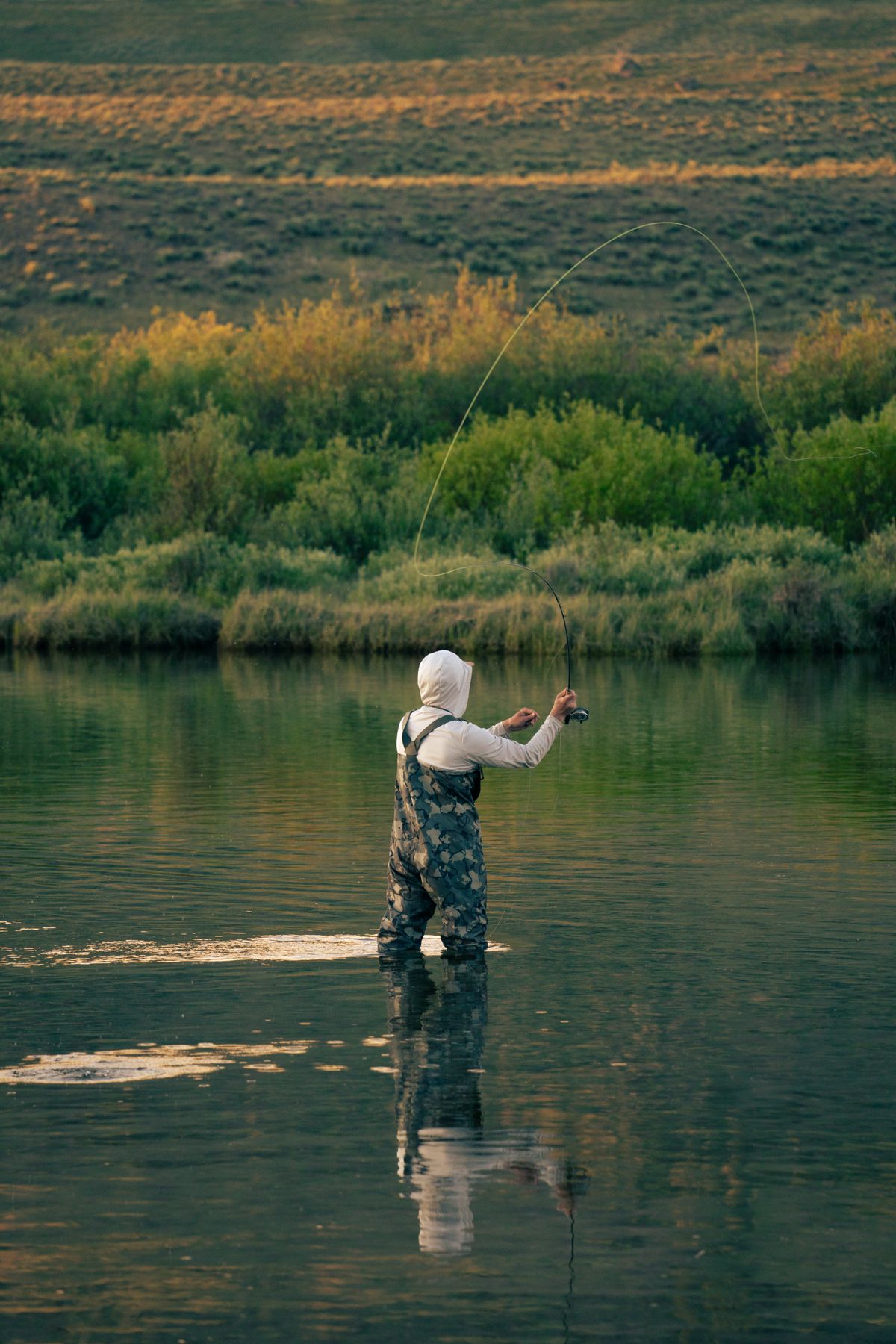

If the Madison River is a 50-mile sprint, fast water, aggressive fish, big bugs, constant action, the Bighorn River is the opposite. It's a 13-mile chess match. The water is slow. The fish are big. The hatches are prolific but technical. And the angler who catches the most fish is the one who figures out what the trout are eating, matches it precisely, and delivers a presentation clean enough to survive the scrutiny of fish that have been caught and released hundreds of times.
The Bighorn flows from Yellowtail Dam in southeastern Montana through the Crow Indian Reservation, creating one of the finest tailwater trout fisheries in North America. The dam's cold, stable releases keep the water at ideal trout temperatures year-round, support an extraordinary density of aquatic insects, and produce trout that average 15 to 18 inches with fish over 20 inches common and genuine trophies mixed in.
Fort Smith, the tiny community at the dam's base, is one of the most remote fly-fishing destinations in the lower 48. There's no town, really, just a few fly shops, a handful of lodges, and the river. You drive three and a half hours from Billings across open prairie to reach it. The remoteness filters the crowds, and the anglers who make the drive tend to be serious about their fishing.
The 13 Miles, Three Sections, One River

The fishable water runs 13 miles from the Afterbay Dam to Bighorn Access (with additional water below to Mallard's Landing). These 13 miles hold an estimated 3,000 to 6,000 trout per mile, one of the highest densities of any tailwater in the West. The fish are wild rainbow and brown trout, with rainbows predominating in the upper section and browns becoming more common downstream.
The Upper Section, Afterbay to 3-Mile (3 miles)
The first three miles below the dam are the most famous and the most technical. The water is cold (42-50°F year-round), clear, and relatively shallow, a broad, flat tailwater with fine gravel substrate, weed beds, and long glassy runs that hold pods of rising trout during hatches.
This is wade-fishing paradise. Named spots, the Breakfast Hole, Hot Dog Run, Red Cliffs, hold consistent fish populations because the constant flows and cold water create stable habitat. You can walk from your lodge to the river, wade into position, and spend the entire day within a half-mile, fishing to visible risers in the clear water.
The upper section is where the Bighorn's reputation for technical dry-fly fishing was built. The trout here have seen every fly in every box. They feed in specific lanes, eat specific insects in specific stages, and refuse anything that doesn't match. A size 20 Sparkle Dun in pale olive that drifted six inches to the right of the feeding lane will be ignored while the fish eats 40 naturals in the same time. This is the water that tests your tippet, your drift, and your patience.
The Middle Section, 3-Mile to Bighorn Access (10 miles)
The most popular float stretch. The river opens up, the riffles become more defined, the runs get deeper, and the fish spread across more diverse water. The middle section is where float trips cover the most productive water, guides row drift boats through the riffles and pull over to wade the best runs.
The fish are slightly less pressured than the upper section (more water to spread out across), which means they're marginally more forgiving, but "marginally" on the Bighorn still means you need to be precise. The middle section also holds larger brown trout in the deeper runs and along the undercut banks, where streamer fishing produces fish that the dry-fly anglers never see.
The Lower Section, Below Bighorn Access
Less fished, warmer water, fewer trout per mile but larger average size. Brown trout dominate the lower section, and the fishing shifts from hatch-matching to streamer work and terrestrial fishing. This is where anglers go for a shot at a genuinely big brown, fish over 22 inches that have grown large because they see fewer flies.
The Hatch Chart, Why the Bighorn Rewards the Student
The Bighorn's hatch cycle is one of the most complete of any tailwater in Montana, and the fish respond to hatches with a precision that makes hatch-matching not just useful but essential.
- Year-round: Midges (#18-24), the constant. The Bighorn's trout eat thousands of midges per day. Griffith's Gnat on top, Zebra Midge below. Midge fishing IS Bighorn fishing for much of the year.
- March–May: Blue Winged Olives (#18-22), the spring dry-fly fishing. Sparkle Dun and Parachute Adams in olive. Overcast days produce the best hatches.
- June–July: PMDs (#14-16), the summer headliner. Sparkle Dun and Comparadun in pale yellow. The PMD hatch on the Bighorn is one of the most anticipated events in Montana fly fishing.
- July–August: Caddis (#16-22), black and tan varieties. Elk Hair Caddis in black and tan. Dense hatches, aggressive feeding.
- July–September: Tricos (#20-24), the Bighorn's signature hatch. Trico spinnerfall at dawn blankets the water with tiny mayfly spinners, and the trout rise in rhythmic, sipping rises that can last for hours. Matching the Trico requires tiny flies (#20-24), fine tippet (6X-7X), and the patience to drift a fly the size of a pencil eraser through a feeding lane six inches wide. The Trico hatch draws anglers from across the country, it's the most technically demanding dry-fly fishing on any Montana tailwater.
- September–November: Fall BWOs (#18-22) return. Streamer fishing for pre-spawn browns with Woolly Buggers and Sculpins.
The Fly Box
The Bighorn rewards small, precise patterns. The big-bug Madison mentality doesn't work here.
Dry flies: PMD Sparkle Dun (#16-18), BWO Comparadun (#18-22), Parachute Adams (#16-22), Griffith's Gnat (#18-22), Elk Hair Caddis black (#16-20), Trico Spinner (#20-24)
Nymphs: Zebra Midge (#18-24, black/red/olive), Pheasant Tail (#16-20), Hare's Ear (#14-18), Scud (#14-18, pink/orange/olive), San Juan Worm (#12-14, red), Ray Charles (#16-20)
Streamers: Woolly Bugger (#6-10, olive/black), Sculpzilla (#4-6), Articulated streamers for fall browns
The Gear
Rod: 9-foot 4-weight or 5-weight. The 4-weight is the sweet spot for the Bighorn, the slower water and smaller flies don't need the power of a 5-weight, and the lighter rod protects the fine tippet you'll be using. Step up to 6-weight for streamer work.
Leaders: 9 to 12 feet, tapered to 5X or 6X for most situations. Go to 7X for Tricos and midge fishing. Fluorocarbon tippet is essential, the clear, slow water shows mono to the fish.
Line: Weight-forward floating. The slow water and gentle presentations don't require specialty lines.
The Culture, Fort Smith and the Crow Reservation

Fort Smith is not a town you visit casually. It sits on the Crow Indian Reservation in southeastern Montana, three and a half hours from Billings across open prairie. There are no chain restaurants, no cell towers along the drive, and no reason to come here except the fishing.
The local fly shops and lodges have been welcoming anglers for over 40 years. They serve as the information hub for the river: daily hatch reports, fly recommendations, guide bookings, and the kind of institutional knowledge that can only be built over decades on the same water.
Several operations offer all-inclusive packages, lodging, meals, guides, and a full-service fly shop in one operation. For anglers traveling to Fort Smith, an all-inclusive lodge is the most practical option because there's nowhere else to eat or resupply.
The fly-fishing culture at Fort Smith is distinctive, it's quieter, more serious, and more focused than the Madison Valley's bustling guide scene. The anglers who come to the Bighorn are typically experienced, they've fished the Madison, the Yellowstone, the spring creeks, and they come to the Bighorn because the technical fishing is what they want. The river rewards the angler who sits on a gravel bar, watches the water for 15 minutes before casting, and spends an hour working a single pod of rising fish rather than running to the next spot.
That patience, the willingness to slow down, observe, and solve the puzzle, is the Bighorn's lesson and its gift.
When to Go
- March–May: Spring BWOs, midge fishing, the river waking up, fewer anglers, excellent fishing
- June–July: PMD hatch, the premier dry-fly event, the most predictable fishing of the year
- July–September: Trico season, the technical pinnacle, dawn fishing for the dedicated
- October–November: Fall browns on streamers, BWOs returning, the quiet season