Fish
Fish Fire
Fire Hike
Hike Bird
Bird

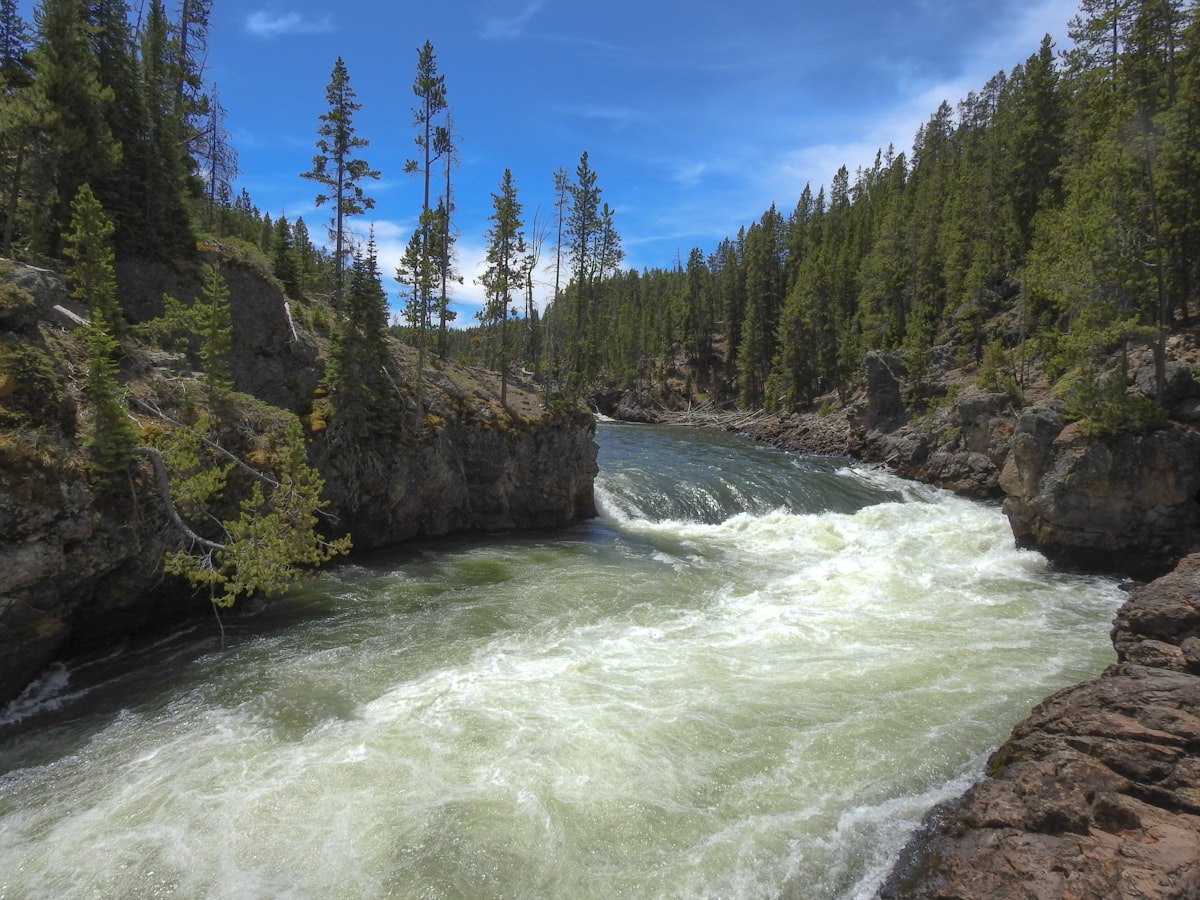

West Yellowstone is, for a lot of anglers, the center of the fly-fishing universe. This small Montana town sits at the west gate of Yellowstone National Park, and within a short drive you can fish a river warmed by geysers, a blue-ribbon trout stream that fills with three-inch salmonflies, a lake full of cruising trophy trout, and meadow creeks holding native cutthroat that have never seen a hatchery. It is a pilgrimage town, and it can be overwhelming, a dozen legendary waters, a wall of hatch names, and two different sets of fishing rules. This guide untangles it: the licenses you need, the trout you'll meet, and a plain-English tour of the waters that make West Yellowstone famous.
For the wider picture, the town, the outfitters, and trip planning, read our complete West Yellowstone fishing guide. For more of the region, see how to fish Bozeman and Jackson Hole.
First: Two Licenses (Know the Difference)
This is the thing that confuses first-timers most, so get it straight before you go. West Yellowstone straddles two fishing jurisdictions:
- To fish inside Yellowstone National Park (the Firehole, Gibbon, the park stretch of the Madison, the Yellowstone River, Slough Creek, and so on) you need a Yellowstone National Park fishing permit, a park-specific permit sold at Recreation.gov, park visitor centers and stores, and West Yellowstone fly shops (a 3-day, 7-day, or season option). A state license does not cover park waters.
- To fish outside the park in Montana, Hebgen Lake, Quake Lake, the Madison below the park, you need a Montana fishing license. And if you day-trip to the Henry's Fork, that's Idaho, requiring an Idaho license.
Park rules are also stricter than most anglers expect: the season runs from the Saturday of Memorial Day weekend through the first Sunday in November, fishing hours are sunrise to sunset, and gear is regulated to protect wild trout, barbless hooks only, no bait, no scented attractants, and no felt-soled boots (felt spreads invasive organisms). Most importantly, the park's native cutthroat trout must be released unharmed. Read the current regulations for whichever water you're on before you fish.
The Trout of Yellowstone Country
Everything here is wild, the park hasn't stocked fish in generations, which is a big part of the magic:
- Rainbow trout, abundant and hard-fighting throughout the Madison system.
- Brown trout, the big, wary prize, and the star of the Madison's famous fall run.
- Brook trout, colorful and eager, thick in the smaller streams like the Gibbon.
- Yellowstone cutthroat, the park's beautiful native, catch-and-release only, and the soul of the interior meadow streams.
- Arctic grayling and the occasional mountain whitefish round out the cast in a few waters.
The Firehole River: Fishing a Geyser Basin
There is no other trout river like the Firehole. It flows straight through Yellowstone's geyser basins, and the geothermal water warms it enough that it fishes beautifully early in the season (June) when other rivers are still cold or blown out with snowmelt. Fishing a rising trout to a caddis hatch with steam drifting off a geyser behind you, sometimes with bison grazing the banks, is one of the great experiences in the sport. The Firehole is a dry-fly and soft-hackle river: expect caddis, Baetis (blue-winged olives), and Pale Morning Duns in June, fished on a delicate presentation to often-picky fish. The one catch: by mid-July the same geothermal input pushes water temperatures too high, so the Firehole should be rested in the heat of summer and fished again in the cool of fall. Early season is its moment.
Nymphing the Madison RiverThe Gibbon River: A Beginner's Meadow Stream
The Gibbon is the Madison system's gentle sibling, a smaller river of meadow bends and pocket water that's perfect for a beginner or for a relaxed afternoon. It holds brook trout, browns, and rainbows, and below its waterfall the fish run larger. It doesn't demand the precision of the Firehole; a well-drifted attractor dry or a dry-dropper will draw eager fish. If you're learning to read water and mend a fly line, the Gibbon is a forgiving, gorgeous classroom.
The Madison in the Park: The Fall Pilgrimage
Where the Firehole and Gibbon meet at Madison Junction, they form the Madison River, which flows west and out of the park near town. The in-park Madison is classic walk-and-wade water, long, smooth glides and riffles holding rainbows and browns. But its real fame comes in late October, when big brown trout (and rainbows) run up out of Hebgen Lake into the park stretch to spawn, drawing anglers from around the world to swing streamers and drift nymphs for the biggest fish of the year. Cold, often snowy, and crowded with a devoted fall following, the Madison brown run is a genuine bucket-list event. It's also technical, hard-weather fishing, a great time to hire a guide.
Hebgen and Quake Lakes: Gulper Fishing
Just west of the park, Hebgen Lake is a big, rich stillwater full of oversized rainbows and browns, and it offers one of fly fishing's most addictive games: gulper fishing. On calm late-summer mornings, trout cruise the flat surface sipping Callibaetis mayflies and Trico spinners, leaving telltale "gulps." You pole or drift quietly, spot a feeding fish, and cast to lead it, sight-fishing to big trout on a mirror-calm lake. Chironomid (midge) fishing turns the lake on in May and June, too. Nearby Quake Lake (Earthquake Lake, formed by a 1959 landslide, with drowned trees still standing) fishes similarly and adds eerie beauty. Stillwater fishing is a different skill from rivers, and Hebgen is the place to learn it.
Fly Fishing for Cutthroat Trout in the RockiesInto the Park's Interior: Cutthroat Country
West Yellowstone is also the launch pad for day trips deeper into the park. Two experiences stand out. First, the Yellowstone River and its tributaries host the legendary salmonfly hatch in late June and early July, three-inch stoneflies that bring big trout crashing to the surface, one of the most exciting events in fly fishing. Second, the northeast meadow streams, Slough Creek and the Lamar River, are hallowed cutthroat water, where you sight-cast dry flies to willing native Yellowstone cutthroat in stunning open valleys (keep an eye out for bison, wolves, and grizzlies; this is wild country). These are longer drives from West Yellowstone, but they're the trips people remember for a lifetime.
The Henry's Fork: A Legendary Day Trip
An easy drive southwest into Idaho puts you on the Henry's Fork of the Snake, one of the most famous, and most humbling, dry-fly rivers on earth. The slow, glassy flats around Last Chance and Harriman State Park hold big rainbows that scrutinize every fly, and matching the hatch here (Green Drakes in June, PMDs and tricos in summer) is a graduate course in fly fishing. It requires an Idaho license, but for a serious angler it's a pilgrimage in its own right.
It's All About the Hatches
More than almost anywhere, fishing West Yellowstone means fishing hatches, timing your trip and your fly to the bugs that are on the water. The rough calendar:
- Late May–June: Mother's Day caddis, then Baetis, caddis, and PMDs on the Firehole; the early-season sweet spot before runoff clears the freestones.
- Late June–early July: The salmonfly hatch on the Yellowstone and Madison, the big show.
- July–August: PMDs, caddis, terrestrials (hoppers, ants, beetles), and gulper Callibaetis and Trico fishing on Hebgen and Quake.
- September–October: Fall Baetis, streamer fishing, and the Madison brown run, cool water, aggressive fish, thinning crowds.
Use the Fly Shops
West Yellowstone punches far above its size in fly shops, and they are your single best resource. The town's shops are staffed by people who fish these waters every day; a ten-minute stop nets you the current hatch, which river is fishing, the exact flies to buy, a map, your park permit and state license, and honest advice on where a beginner should go that afternoon. Many also book guides and rent gear. Don't skip this, walking into a West Yellowstone fly shop and asking "what's working and where should I go?" is the fastest shortcut to a great day on some of the most famous trout water in the world.
When to Go
- June: Early-season magic, the Firehole and Gibbon fish beautifully before the freestones clear, and the salmonflies start late in the month. A wonderful, less-crowded time.
- July–August: Peak summer, dry-fly and terrestrial fishing across the park, gulpers on Hebgen, warm days and long light. Fish mornings and evenings; rest the warm Firehole.
- September–October: The connoisseur's season, fall Baetis, streamer fishing, golden landscapes, and the famous late-October Madison brown run.
- Winter–spring: The park's fishing season is closed (roughly November through late May), though nearby year-round Montana tailwaters give diehards an option.
Gear: What to Bring
- Fly rod: A 9-foot 5-weight is the do-everything rod for the rivers; add a 6-weight if you'll throw streamers or fish Hebgen's wind. The Orvis Clearwater and Redington Vice outfits are dependable, affordable combos.
- Flies: Match the hatch, Elk Hair Caddis, Parachute Adams, PMD and Baetis patterns, salmonfly and Chubby Chernobyl dries for late June, hoppers for August, Callibaetis and Trico patterns for the lakes, and streamers (Woolly Buggers, sculpins) for fall. Everything barbless for the park.
- Boots: Rubber-soled wading boots, remember, felt is banned in the park. A pair of quality Simms or Redington waders and boots is essential in the cold water.
- Extras: Polarized sunglasses, layers and rain gear (mountain weather turns fast, and fall can mean snow), and bear spray, you are fishing in prime grizzly country, so carry it and know how to use it.
A First-Timer's Approach
If you've never fly fished, don't let West Yellowstone's reputation intimidate you, it's actually a wonderful place to learn, because the variety means there's always some water fishing at a beginner-friendly level. Start on the Gibbon or an easy stretch of the in-park Madison rather than the technical Firehole or Henry's Fork. Keep the rig simple: a single dry fly, or a dry-dropper (a buoyant attractor dry with a bead-head nymph hung 18 inches below), covers most situations and lets a beginner catch fish without a perfect cast. Learn to read the water, trout hold where current delivers food without costing them energy: the seams beside fast water, the tails of pools, the pockets behind rocks, and the foam lines. Focus on a drag-free drift, mending your line upstream so the fly floats naturally, and set the hook with a gentle lift the instant a fish rises to it. Wade carefully in the cold, pushy current, use a wading staff, and never wade deeper than you're comfortable. Above all, book a half-day with a guide for your first outing: one morning of a professional teaching you to read water and present a fly is worth a season of guessing on your own.
More Than Fishing: The Park Itself
You are, of course, fishing at the doorstep of the world's first national park, and that makes West Yellowstone a rare fishing destination that dazzles non-anglers too. Between sessions on the water you can watch Old Faithful and the rainbow-colored Grand Prismatic Spring erupt and steam, drive the wildlife-rich Lamar Valley ("America's Serengeti") to see bison herds, wolves, and grizzlies, hike to waterfalls, and stand on the rim of the Grand Canyon of the Yellowstone. Many of the best fishing waters, the Firehole through the geyser basins, the Madison's meadows, the Lamar's open valley, put the scenery and the wildlife right at your feet while you cast. The formula that works for a family is simple: fish the cool morning and evening hours when the trout are active, and see the park's headline sights in the middle of the day. Pair the fishing with the geysers and the wildlife and a few days based in West Yellowstone becomes the trip of a lifetime for everyone in the car, rod or no rod.
A Word on Conservation
Yellowstone's wild trout are a global treasure held in trust, and the rules exist for good reason. Release every native cutthroat unharmed, fish barbless, and skip the bait and felt boots, these protect the fishery and stop invasive species. Whirling disease, New Zealand mudsnails, and invasive lake trout are real threats, so clean, drain, and dry all your gear between waters. Rest the Firehole when it's warm, keep every fish you release wet and handle it gently, and pack out all your line and trash. Finally, respect the wildlife: give bison, elk, wolves, and bears a wide berth, never crowd them for a photo, and remember you're a guest in one of the wildest places left in the Lower 48. Fish it with humility and it will reward you for a lifetime.