Fish
Fish Fire
Fire Hike
Hike Bird
Bird

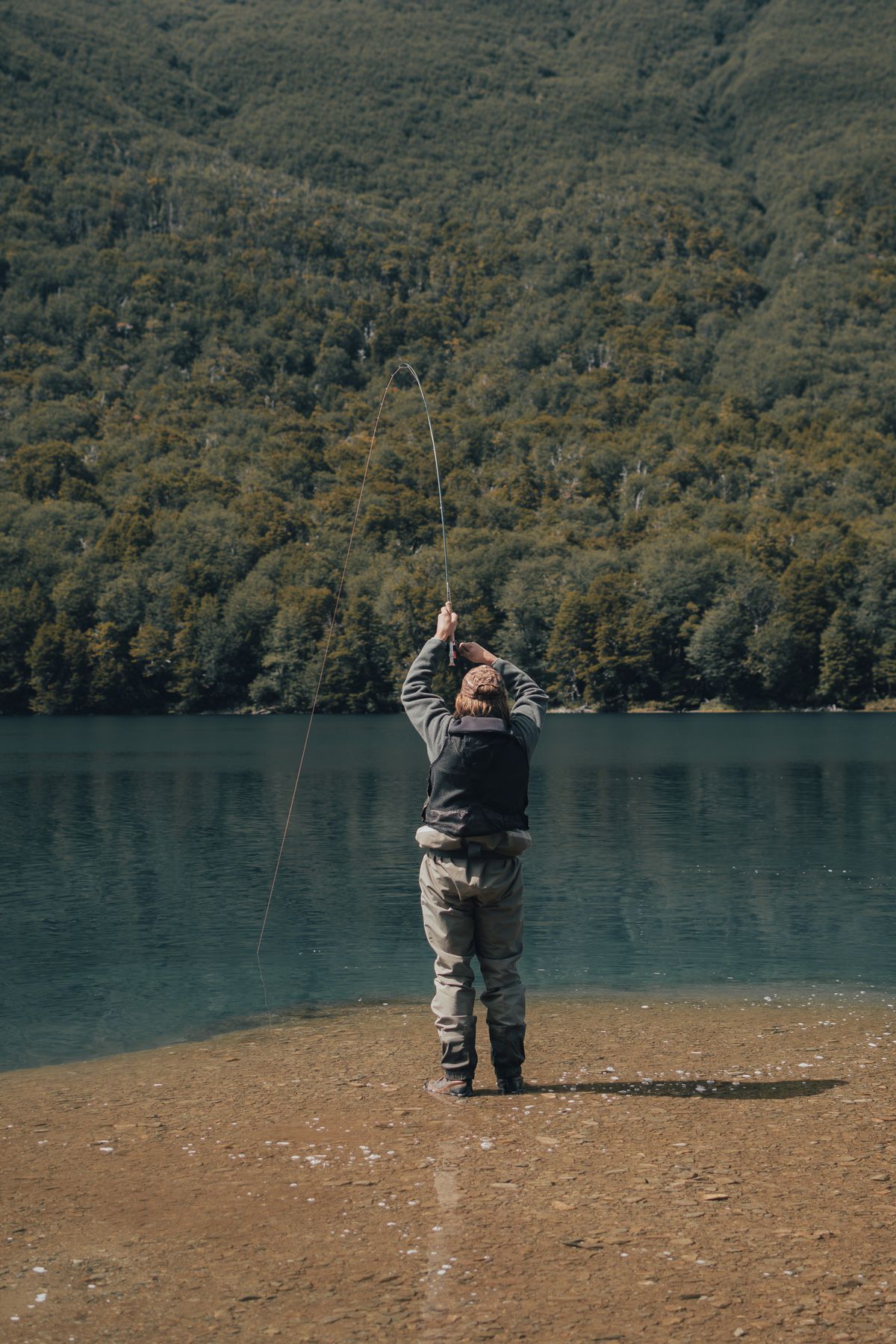

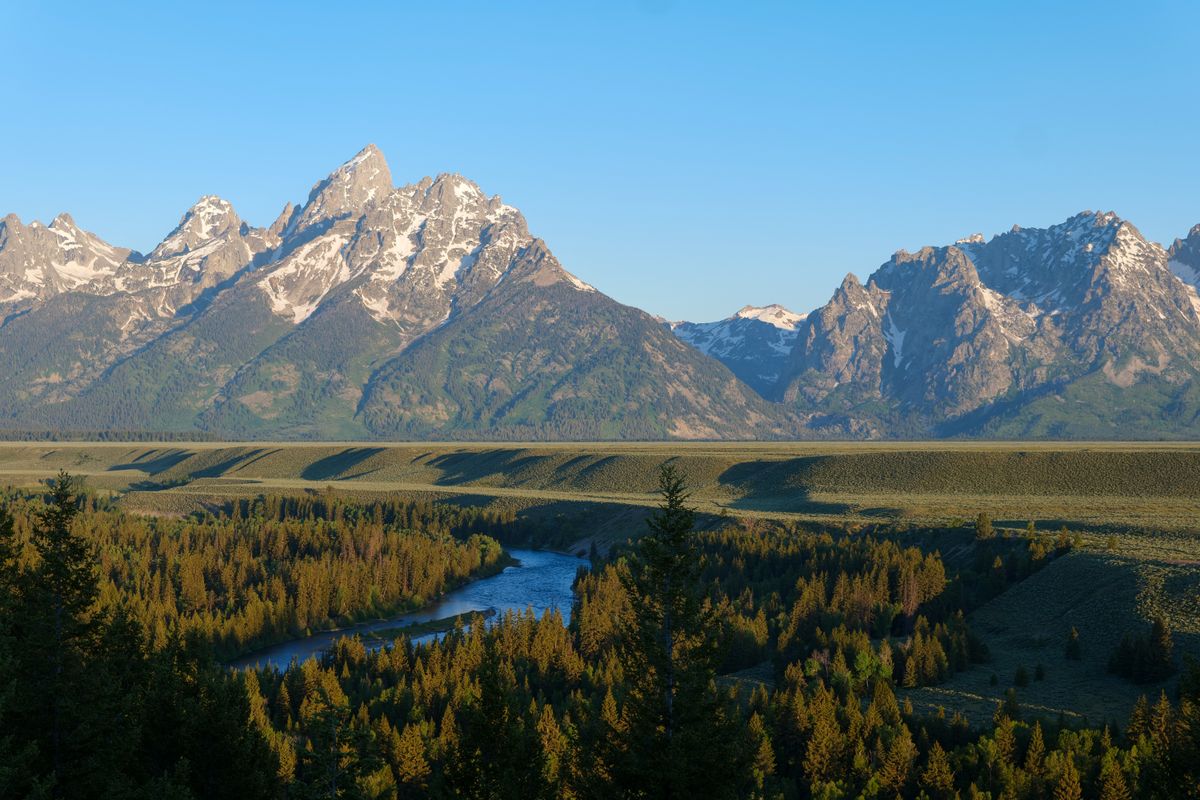
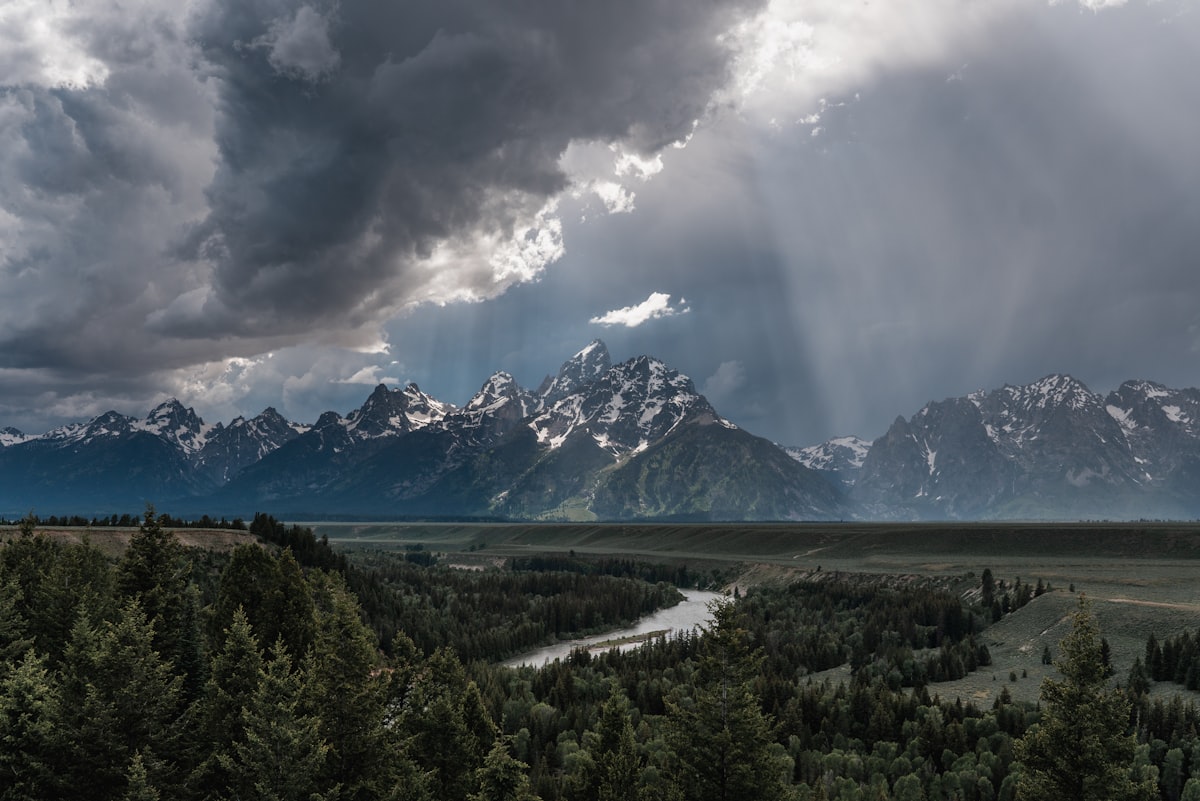
Jackson Hole sits in a mountain valley at 6,200 feet, framed by the Teton Range to the west and the Gros Ventre Range to the east. The Snake River cuts through the valley floor, fed by snowmelt, springs, and tributaries pouring out of two mountain ranges and Yellowstone National Park. This is one of the most famous fly fishing destinations in the world, not because the fish are huge (they're mostly 12 to 16 inches), but because the Snake River fine-spotted cutthroat trout is a native subspecies found nowhere else on earth, it eats dry flies with reckless enthusiasm, and the scenery makes every fish feel like it's happening inside a National Geographic photograph.
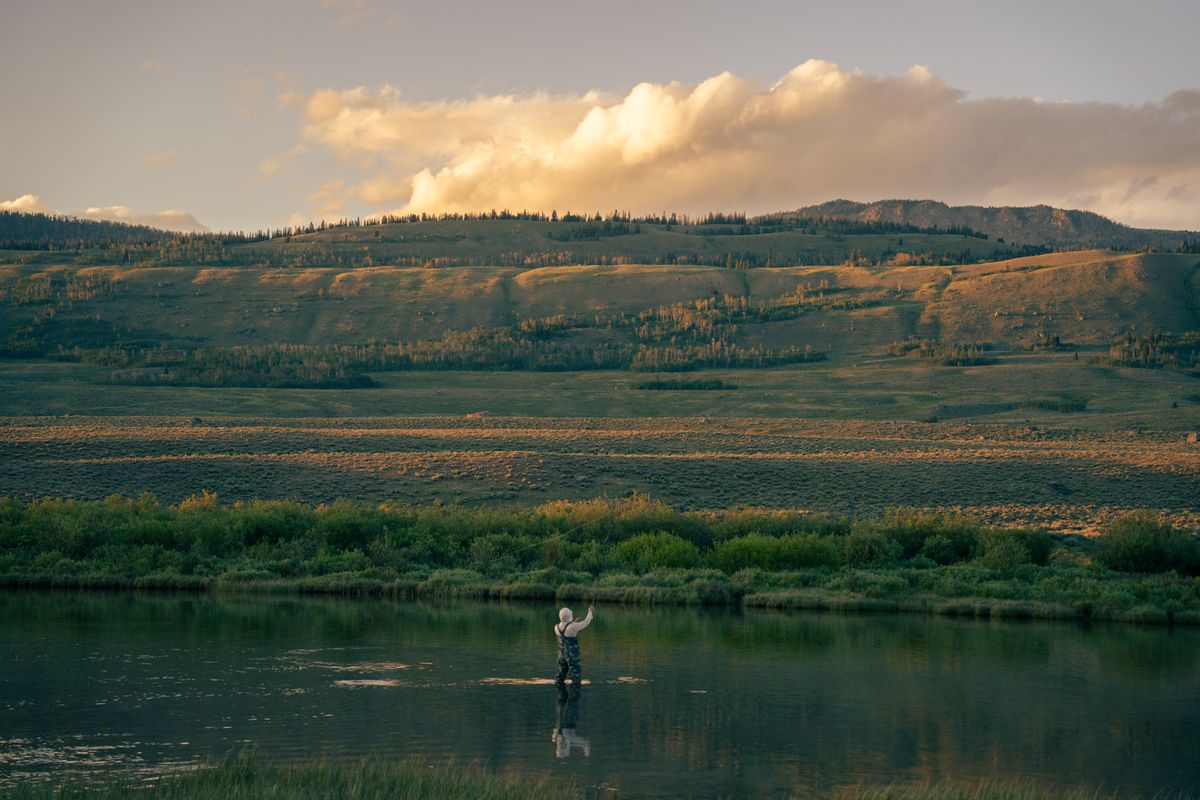
Jackson Hole fishing is almost entirely fly fishing. Spin fishing is legal on most water, but the culture, the guides, the shops, and the fishery are built around the fly rod. If you've never fly fished, this is one of the best places to learn, the cutthroat are forgiving, the guides are patient, and the river has long, accessible stretches of beginner-friendly water. If you already fly fish, Jackson Hole is a pilgrimage.
This guide covers the practical how-to, gear, techniques, where to fish, and how to read the Snake River. For the full destination overview, seasons, access, and trip planning, read our complete Jackson Hole fishing guide.
The Snake River: Understanding the Water
The Snake River in Jackson Hole is a big river, wide, braided, with multiple channels, gravel bars, log jams, and side channels. It looks intimidating, but understanding its structure makes it fishable.
Main channel: The deep, fast center channel holds fish but is difficult to wade and hard to fish from shore. This is where float trips shine, drifting in a McKenzie-style drift boat while casting to the banks.
Side channels: The Snake braids into dozens of smaller channels that are wadeable, slower, and loaded with cutthroat. These are the beginner-friendly spots. Fish hold behind rocks, in the tail-outs of pools, and along seams where fast water meets slow water.
Spring creeks: Flat Creek (in the National Elk Refuge) and other spring-fed streams offer sight-fishing for large trout in gin-clear water. Technical and challenging, small flies, long leaders, precise casts, but incredible when it comes together.
Fly Fishing the Snake River for Cutthroat TroutWhere to Wade
Below Jackson Lake Dam, the tailwater section below the dam is the most consistent, accessible fishing on the Snake. Controlled flows mean the river fishes well even during spring runoff when the rest of the Snake is blown out. The cobble bottom is firm and wadeable, and the trout density is high. Park at the dam and walk downstream. This is where beginners should start.
Moose to Wilson, this middle section of the Snake has numerous access points (bridge crossings and public land) with wadeable side channels. The main river is a classic big western freestone, powerful current, gravel bars, and sweeping bends with deep outside corners that hold the biggest fish.
South Fork of the Snake (Idaho, about 90 minutes west), if you want big trout (18 to 22 inches), the South Fork in Idaho is worth the drive. Brown trout and cutthroat in a canyon setting. Best as a guided float trip.
Float Trips: The Jackson Hole Experience
A guided float trip is the signature Jackson Hole fishing experience, and the best way for a beginner to fish the Snake. You ride in a drift boat with a guide who rows, reads the water, and positions you for casts along the banks. You cast to rising fish, undercut banks, log jams, and current seams while drifting through a landscape that includes the entire Teton Range as a backdrop.
Half-day float (4 to 5 hours): $550 to $650 for 1 to 2 anglers. Includes rods, flies, leader, and instruction. Most guides provide lunch on full-day trips.
Full-day float (7 to 8 hours): $650 to $850 for 1 to 2 anglers, lunch included.
What to expect: The guide rows while you stand on the casting platform in the bow and cast to the banks, 15 to 30-foot casts, usually. The guide calls the shots: "Cast to that log jam at 2 o'clock, let it drift, mend upstream." When a fish rises to your fly, the guide often sees it before you do and calls the set: "Set!" You lift the rod tip, and hopefully a cutthroat is on.
First Time Fly Fishing in Jackson Hole WyomingGear: What You Need
Fly Rod and Reel
A 5-weight, 9-foot fly rod is the standard Jackson Hole tool. It handles dry flies, nymphs, and small streamers in the Snake's currents. If you already own a fly rod in the 4- to 6-weight range, bring it. If you don't own one, your guide provides everything, or you can rent from local fly shops.
Buying your first setup: A Redington Crosswater combo or Orvis Clearwater combo are solid beginner outfits that include rod, reel, and line. The Crosswater is a great first rod you won't feel bad about scraping on rocks. The Clearwater is a meaningful step up in feel and performance.
Reel: Any reel that balances with a 5-weight rod and holds the fly line plus 75 yards of backing. For cutthroat, the reel is mainly a line holder, these fish don't make long runs. A Redington Behemoth or Lamson Liquid are solid mid-range options.
Fly line: A weight-forward floating line matched to your rod weight (Scientific Anglers Frequency or Rio Gold). You don't need sinking lines here.
Leaders and Tippet
Leader: A 9-foot knotless tapered leader in 3X or 4X (Rio Suppleflex). The leader tapers from thick (butt section, tied to fly line) to thin (tippet end, tied to fly). 3X is about 8-pound test, fine for most Snake River fishing. 4X (6-pound) for spookier fish or smaller flies.
Tippet: Additional thin line tied to the end of the leader to extend it or rebuild the taper. Rio Fluoroflex Plus in 4X and 5X. You'll burn through tippet tying on new flies.
Flies
Jackson Hole fly shops will set you up with the right patterns for the current conditions. But here's what to bring or buy:
Dry flies (fish on the surface):
- Stimulator in golden/tan, sizes 8-12, the workhorse big dry fly for cutthroat. Imitates stoneflies and general big bugs. Cutthroat love it.
- Parachute Adams, sizes 14-18, the universal mayfly imitation. If fish are rising and you don't know what they're eating, tie on an Adams.
- Elk Hair Caddis in tan, sizes 14-16, caddisfly imitation for evening hatches.
- Purple Haze, size 14, a Jackson Hole local pattern that works absurdly well.
- Chubby Chernobyl in tan or purple, size 8-10, the big foam attractor that doubles as a dry-dropper indicator.
Nymphs (fish below the surface):
- Pheasant Tail Nymph, sizes 14-18, the single most versatile nymph pattern in the West.
- Prince Nymph, sizes 12-16, flashy attractor nymph that works in broken water.
- Hare's Ear Nymph, sizes 12-16, buggy, general-purpose.
- Copper John, sizes 14-18, heavy beadhead nymph that gets deep fast.
- Pat's Rubber Legs, sizes 6-10, stonefly nymph, effective year-round on the Snake.
Techniques
Dry Fly Fishing
This is what people come to Jackson Hole for. Cutthroat trout are the most willing dry-fly eaters of any Western trout, they attack flies from below with a confident, splashy rise that never gets old.
How to fish dries: Look for rising fish, rings on the water surface, splashes, or noses poking through the film. Cast your dry fly 3 to 5 feet upstream of the rise and let it drift over the fish's position naturally. The fly must float drag-free, any unnatural movement from the line pulling the fly will cause the fish to refuse. This is called a "dead drift" and it's the fundamental skill of dry fly fishing.
Mending: After your fly lands, flip (mend) the belly of your fly line upstream so the current doesn't pull the line faster than the fly. On the Snake, you'll mend constantly, the conflicting currents from braided channels create drag on the line. Your guide will coach you through this.
The set: When a cutthroat eats your fly, you'll see the fly disappear and a boil on the surface, lift the rod tip with a firm but controlled motion. Don't rip the rod overhead like you're setting a bass hook, you'll snap the tippet. A smooth lift to the side or up is all you need.
Nymph Fishing
Trout eat 80% of their food below the surface. When fish aren't rising to dry flies, nymphing catches fish.
Dry-dropper rig: Tie a large, buoyant dry fly (Chubby Chernobyl or Stimulator) to your tippet, then tie 18 to 24 inches of 5X tippet from the bend of the dry fly hook to a beadhead nymph below. The dry fly acts as both an indicator (if it dips or twitches, a fish ate the nymph) and a possible target. This rig fishes two depths at once and is the most popular method on the Snake.
Indicator nymphing: Attach a small foam or yarn indicator 1.5 times the water depth above your nymph. Cast upstream and let the nymph drift along the bottom. When the indicator pauses, dips, or moves sideways, set the hook. Most strikes are subtle.
Cutthroat Trout Fishing, Snake River, WYStreamer Fishing
Streamers, larger flies that imitate minnows, sculpins, and leeches, target the biggest trout. Strip a Woolly Bugger in olive or black (size 6-8) or a Zonker through deeper runs and along undercut banks. The retrieve is an active strip-strip-pause. Hits are violent and unmistakable. Best on cloudy days, early morning, and when the river is slightly off-color.
Hatches: What the Trout Are Eating
The Snake River has prolific insect hatches that drive surface feeding. Knowing what's hatching tells you which fly to tie on.
Salmonflies and Golden Stoneflies (late June through mid-July), the biggest hatch of the year. These are large (2 to 3 inches) stoneflies that crawl out of the river to mate. The adults fall or flutter back onto the water, and trout, including the biggest fish in the river, gorge on them. Fish a Chubby Chernobyl or Stimulator in golden size 6-8.
Pale Morning Duns (PMDs) (July through August), small, pale yellow mayflies that hatch mid-morning. Size 16-18 Sparkle Dun or Parachute PMD. This hatch produces steady, reliable rising fish.
Caddis (June through September), tan-bodied flies that come off the water in the evening. Fish an Elk Hair Caddis size 14-16 during the evening rise.
Terrestrials (July through September), grasshoppers, ants, and beetles blown onto the water. When the wind blows in late summer, fish a foam hopper pattern (size 8-10) tight to grassy banks.
Where Else to Fish
Gros Ventre River, smaller, less pressured tributary. Good wading water with cutthroat and whitefish. Access off Gros Ventre Road.
Flat Creek, spring creek in the National Elk Refuge. Open August 1 through October 31 only. Sight-fishing for large cutthroat (16 to 20 inches) in crystal-clear water. Small flies (size 18-22), long leaders (12+ feet), and a delicate presentation required. Catch-and-release, artificial flies only, no wading (fish from the banks). This is expert-level fishing in a beginner's paradise.
Yellowstone National Park (1 hour north), endless backcountry streams and rivers holding native Yellowstone cutthroat. No state license needed, buy a $40 Yellowstone fishing permit at any park entrance. The Lamar Valley, Slough Creek, and Yellowstone River in the park are world-class.
Fly Fishing in Jackson HolePractical Details
Fishing License: Wyoming requires a license for anyone 14 and older. Non-resident daily license: $16. Non-resident annual: $102. Youth (14-17): $16 annual. Buy online at wgfd.wyo.gov or at fly shops in Jackson. Yellowstone National Park requires a separate $40 park fishing permit (no state license needed inside the park).
Fly Shops: Jackson Hole has excellent fly shops that sell gear, flies, and, most importantly, current fishing reports. Jack Dennis Outdoor Shop (on the Town Square) is the most famous, run by the legendary Jack Dennis. Orvis Jackson Hole (downtown), Westbank Anglers, and Snake River Angler are all first-rate. Stop in before your trip to get a report, buy flies, and ask questions. The staff fish these waters daily and know exactly what's working.
Guided vs. DIY: A guided trip is strongly recommended for first-time visitors. The Snake is big, braided, and its best water isn't obvious from the road. A guide puts you on fish immediately, teaches technique, and handles the boat. After a day with a guide, you'll know enough to explore on your own.
What to Wear: Waders are essential. The Snake River runs cold year-round, even in July, the water temperature is 45 to 55°F. Simms Tributary waders with gravel guards and felt-soled wading boots (felt grips better than rubber on the Snake's slippery cobble). Dress in layers under your waders, mornings start cool at altitude. Polarized sunglasses are non-negotiable, they let you see fish, read the bottom, and spot structure.
When to Come: Mid-July through mid-September is the prime window, stable flows, warm weather, prolific hatches, and the best dry fly fishing. The salmonfly hatch in late June/early July is the big event if you can time it. October offers fall colors and brown trout spawning activity but colder weather. Spring (March through May) is mostly off, the river is high and muddy from snowmelt.
Catch and Release: The Snake River cutthroat is a native species under conservation pressure from non-native lake trout and whitefish. Handle all fish gently, wet your hands before touching, keep the fish in the water for photos, use barbless hooks (pinch the barb flat), and release quickly. Many sections are catch-and-release only for cutthroat. Check regulations for your specific section.
Altitude: Jackson Hole is at 6,200 feet. If you're coming from sea level, you'll feel it, shortness of breath, fatigue, headaches. Hydrate aggressively (water, not beer) for the first day or two. The sun is stronger at altitude, sunscreen and a hat are essential. Thunderstorms can develop quickly in the afternoons, get off the water if you see lightning.