Fish
Fish Fire
Fire Hike
Hike Bird
Bird

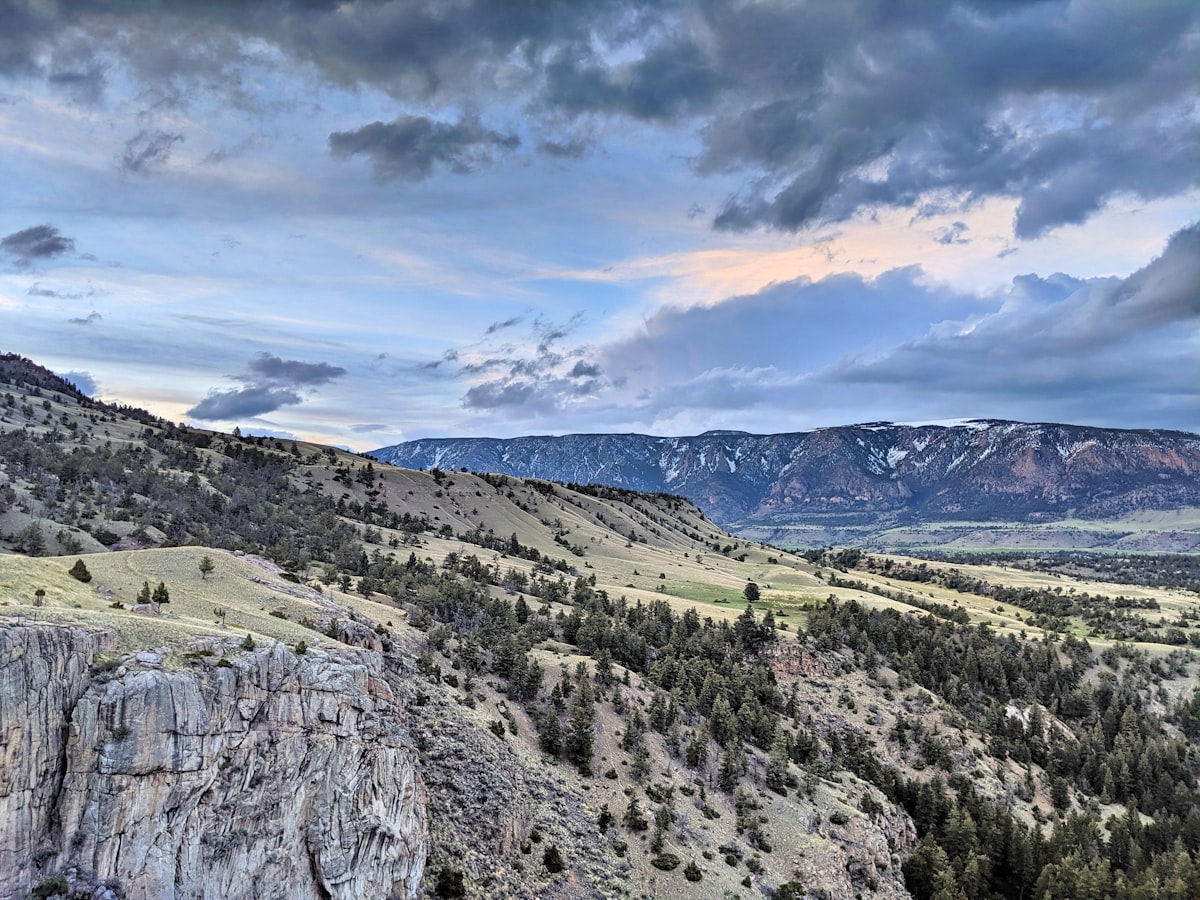
Cody sits at the eastern gateway to Yellowstone, in a high, dry basin where the Shoshone River drops out of the Absaroka Mountains and the Shoshone National Forest. It's trout country through and through, native Yellowstone cutthroat, rainbows, browns, and cuttbow hybrids in the rivers, lake trout and big browns in Buffalo Bill Reservoir, and Yellowstone's legendary waters just up the road through the East Gate. It has a deserved fly-fishing reputation, but you don't need a fly rod to catch fish here. This guide covers both fly and spin, water by water, for a first-timer.
For the bigger picture, the rivers, the reservoir, and the Yellowstone connection, read our complete Cody fishing guide.
First: License and Seasonal Closures
Anyone 14 or older needs a Wyoming fishing license plus a Conservation Stamp, available online from the Wyoming Game and Fish Department; daily and multi-day non-resident options exist for visitors. Wyoming and Yellowstone National Park are separate jurisdictions, if you cross into the park through the East Gate, you need a Yellowstone fishing permit and must follow park rules, which are different from Wyoming's.
The one rule to know around Cody: there's a spring spawning closure on the lower Shoshone from Buffalo Bill Reservoir up to and including Newton Creek, generally April 1 to July 1, to protect spawning rainbow and Yellowstone cutthroat. The river above Newton Creek (the upper North Fork toward the East Gate) stays open year-round. Always check the current Wyoming Game and Fish regulations for the specific stretch before you fish.
The Shoshone River: Cutthroat, Rainbow, and Brown Trout
The Shoshone is the heart of Cody fishing, running about 100 miles from the Absarokas to the Bighorn, and it splits into two distinct forks plus the main stem through town.
The North Fork, the road to Yellowstone's East Gate, is rated among the top trout rivers in the northern Rockies, with healthy numbers of native Yellowstone cutthroat, rainbows, cuttbow hybrids, and browns flowing through more than 30 miles of national forest. It's classic, scenic freestone water. The South Fork is a wilder freestone river dominated by brown trout (plus cutthroat, brook, and rainbows) that flows into Buffalo Bill Reservoir; it fishes well after spring runoff settles, typically from late June on.
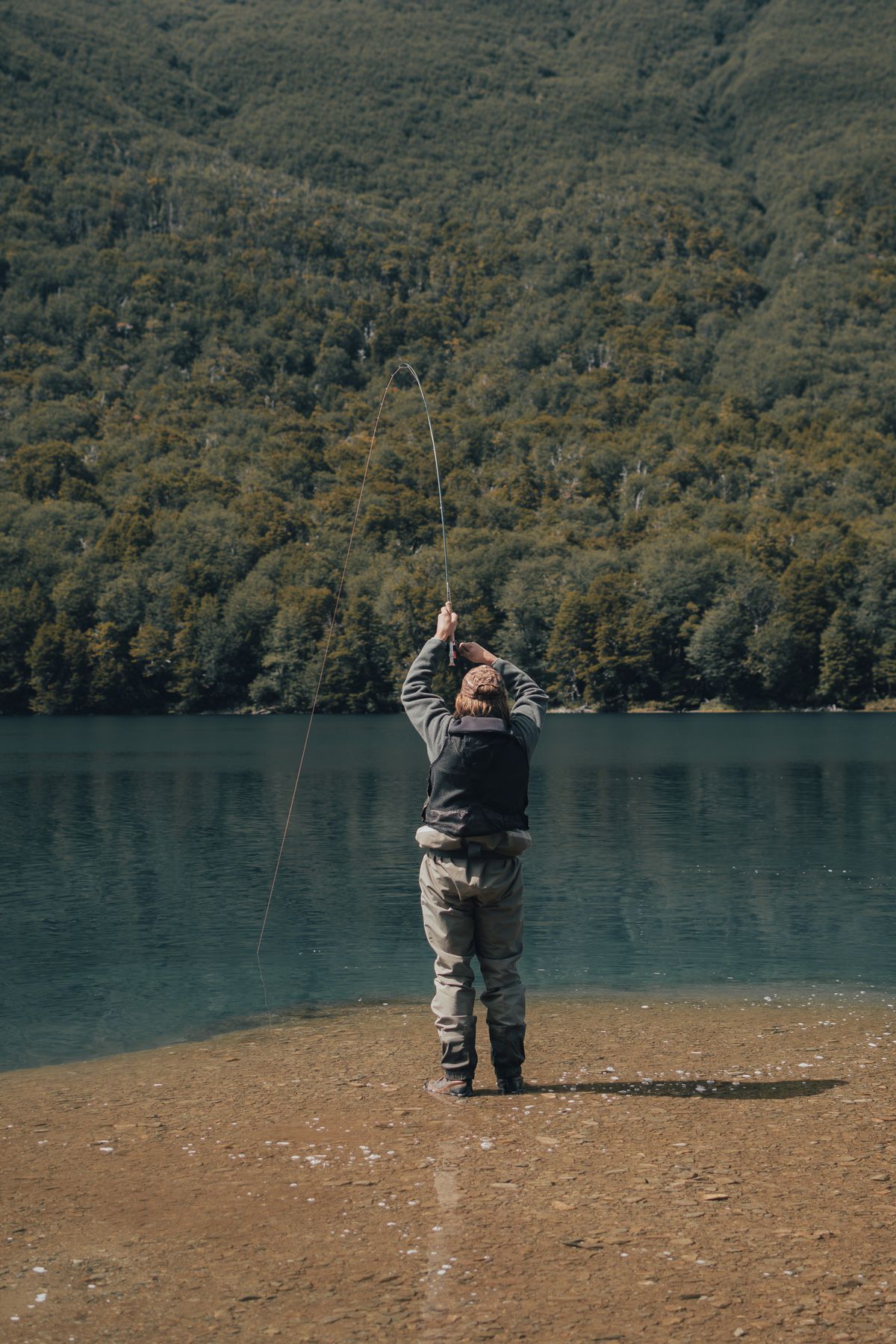
Fly fishing is the classic approach, and most of the time that means nymphing, drifting a weighted fly along the bottom under a strike indicator. A two-fly rig with a Pat's Rubber Legs stonefly and a Pheasant Tail or Hare's Ear dropper covers most days. When trout are rising to a hatch, switch to a dry fly, a Parachute Adams, an Elk Hair Caddis, or, in late summer, a hopper, and in high or off-color water, swing a Woolly Bugger streamer for the bigger browns. A 9-foot 5-weight (an Orvis Clearwater 5wt) is the ideal all-around rod.
Spin fishing works too where regulations allow: a Panther Martin or a Rooster Tail spinner cast across the current and retrieved just fast enough to turn the blade draws aggressive trout, and a small spoon covers water. Always confirm your stretch's tackle rules first.
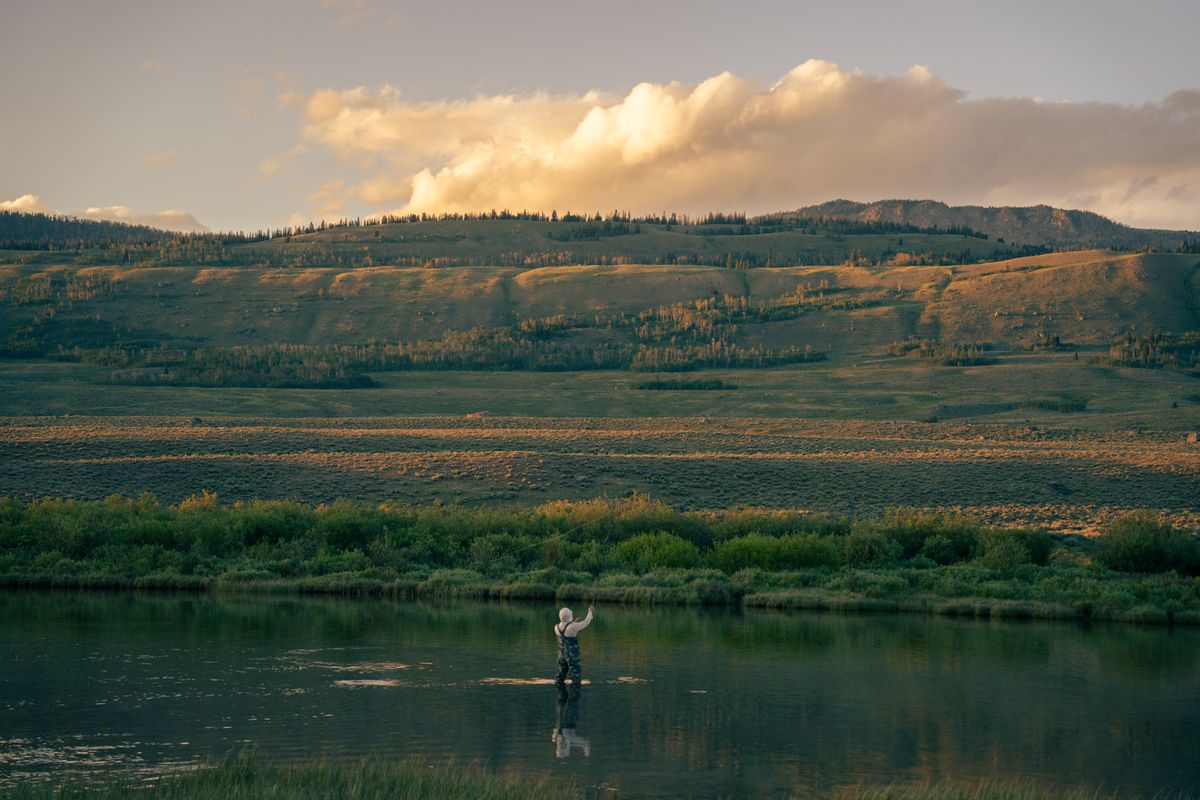
Fly Fishing a Rocky Mountain Trout RiverThese are mostly wild, native fish, so handle them with care: barbless hooks make release easy, keep the fish wet, and let them recover before swimming off. Releasing native Yellowstone cutthroat in particular helps protect a species under pressure across its range.
Buffalo Bill Reservoir
A few miles west of town, Buffalo Bill Reservoir backs up behind the dam across roughly 8,000 acres, and it offers a completely different style from the rivers. It holds rainbow trout, brown trout, cutthroat, and lake trout (mackinaw), some of them large. From a boat, troll a spoon or a flasher-and-bait rig for rainbows and browns in the upper water column, or go deep for lake trout with downriggers or jigs near the bottom. From the bank, cast spinners and spoons or soak Berkley PowerBait off the bottom for cruising trout. The reservoir is big, open, and famous for fierce afternoon winds, so fish the calmer mornings and keep an eye on the weather. It's a good option when the rivers are blown out by runoff or when you want a shot at a bigger lake-dwelling fish.
Stillwater and River Trout Fishing in the WestYellowstone and the Other Nearby Rivers
Cody's location makes it a launch pad for Yellowstone National Park fishing, the East Gate is about an hour up the North Fork, and the park's storied waters (the Yellowstone River, Lamar Valley streams, and the lakes) hold native cutthroat in a setting that's hard to beat. Park fishing requires a Yellowstone permit and follows park-specific seasons and rules (much of it catch-and-release, with required removal of invasive species), so plan it as its own trip.
Closer to home, the Clarks Fork of the Yellowstone, the Greybull River, and the Wood River are lesser-known, lower-pressure trout streams within driving distance of Cody, great water to explore once you've got the basics, and often a good escape from any crowds on the North Fork.
Spin, Bait, and Fishing with Kids
For the easiest possible start, or fishing with kids, the reservoir and the stocked ponds around the area are forgiving. A worm or a dab of Berkley PowerBait on a small hook under a bobber, or fished on the bottom with a sliding sinker, catches trout with almost no skill required, and a simple 6-foot spinning combo is the whole kit. The slower, accessible stretches of the Shoshone near town also fish well on spinners for a beginner who wants to learn moving water without committing to a fly rod.
Reading the Water and the Hatches
The skill that catches trout on the Shoshone is reading where they hold and drifting your fly naturally. Trout sit where they can rest out of the heaviest current while food washes past: the seam where fast water meets slow, the soft pocket behind a boulder, the deeper slot along a cut bank, and the head and tail of every pool and run. Cast upstream of those spots and let the fly dead-drift back to you, mending the line (flipping the slack upstream) so the fly tumbles at the exact speed of the current, drag, where the line pulls the fly unnaturally across the surface, is the single biggest reason beginners get refused. Watch your indicator (or the dry fly) closely and set the hook on any hesitation with a quick, low sweep.
It also helps to know the rough hatch calendar, because matching what's on the water is half the game. Spring brings blue-winged olives as the season opens on the upper river. Early summer, once runoff clears in late June, is prime: golden stoneflies and caddis come off heavily, and pale morning duns hatch through the mornings. By late summer, terrestrials rule, grasshoppers, ants, and beetles blown onto the water draw aggressive surface strikes, and a hopper-dropper rig (a big buoyant hopper with a small nymph hung beneath it) is one of the most fun and effective ways for a beginner to fish. Into fall, blue-winged olives return and the brown trout get territorial and eat streamers. If you're not sure what's hatching, stop into a Cody fly shop for a current report and a few of the right flies, it's the best two minutes you'll spend.
Wading vs. Floating
There are two ways to fish the Shoshone, and a first-timer should understand both. Wading is the accessible, low-cost option, you park at one of the many North Fork pullouts in the national forest, wear waders and felt or rubber-soled boots with good grip, and fish your way up or down a stretch on foot. Wade carefully (the freestone rocks are slick and the current is strong), fish the close, fishable water thoroughly before making long casts, and you can have a great day without a boat. Floating in a drift boat, almost always with a guide, lets you cover miles of river, reach water the wading crowd can't, and fish all day while the guide rows and positions you. For your first time, a guided float is the fastest way to learn the river and get into fish, but a DIY wade trip on the North Fork is very doable once you've got the basics. Either way, respect private land, much of the river alternates public and private, so know the access rules for your stretch.
More on Buffalo Bill Reservoir
The reservoir deserves a second look because it's the area's best bet for a genuinely big fish and for fishing when the rivers are high. The lake trout (mackinaw) in particular grow large and live deep, so targeting them means getting lures down 40 to 80-plus feet with downriggers, lead-core line, or heavy jigs worked near the bottom over the deeper basins, more of a summer and a serious-angler pursuit. Rainbows and browns are more accessible: troll spoons and flasher-and-worm rigs in the top 20 feet in spring and fall, or cast from shore where the river arms enter the reservoir, which concentrate fish and food. The wind is the real wildcard here, Buffalo Bill is notorious for building a dangerous chop on summer afternoons, so launch early, watch the forecast, and get off the water when the whitecaps build. A small boat or even a float tube works in the calm of morning, but respect the lake's moods.
Gear: Fly and Spin
- Fly: a 9-foot 5-weight (Orvis Clearwater 5wt), floating line, 9-foot 4X–5X leaders, strike indicators, split shot, and a box of nymphs (Pat's Rubber Legs, Pheasant Tail, Hare's Ear), dries (Parachute Adams, Elk Hair Caddis, hoppers), and a few Woolly Buggers.
- Spin: a light 6-to-7-foot rod with a 2500-size reel, 6-pound line, Panther Martin and Rooster Tail spinners, small spoons, and Berkley PowerBait for the reservoir and ponds.
- Reservoir trolling: spoons, a Mack's Lure Wedding Ring, and a way to get deep for lake trout.
- Bring layers (the high desert swings hot to cold fast), sun protection, and Simms Freestone waders for the rivers.
When to Go
- Late June–September: Prime time. Spring runoff settles by late June, the spawning closure lifts July 1, and summer brings strong hatches (caddis, stoneflies, PMDs) and great hopper fishing into September.
- Fall (October): Excellent, browns get aggressive before spawning, the crowds thin, and the high country is gorgeous.
- Spring (April–June): The upper North Fork fishes above the closure, but the lower river is closed and runoff colors the water; better for the reservoir.
- Winter: Tough but possible on the year-round upper water and the reservoir on mild days; mostly an off-season.
A First-Timer's Plan
For your first Cody trip, book a guided fly day on the North Fork of the Shoshone, the guide supplies rods, flies, and waders, teaches you to read the water, and times the trip to the post-runoff window and the day's hatch. Want easy action or fishing with kids? Soak PowerBait at Buffalo Bill Reservoir or a stocked pond, or throw a spinner on an accessible Shoshone stretch. If Yellowstone is on your list, plan it separately with a park permit. Buy your Wyoming license and Conservation Stamp online first, and check the spring closure dates before you fish the lower river.
For the full hatch calendar and the river-by-river rundown, see our complete Cody fishing guide. Chasing Rocky Mountain trout elsewhere? We also have first-timer guides for Jackson Hole and Bozeman.