Fish
Fish Fire
Fire Hike
Hike Bird
Bird

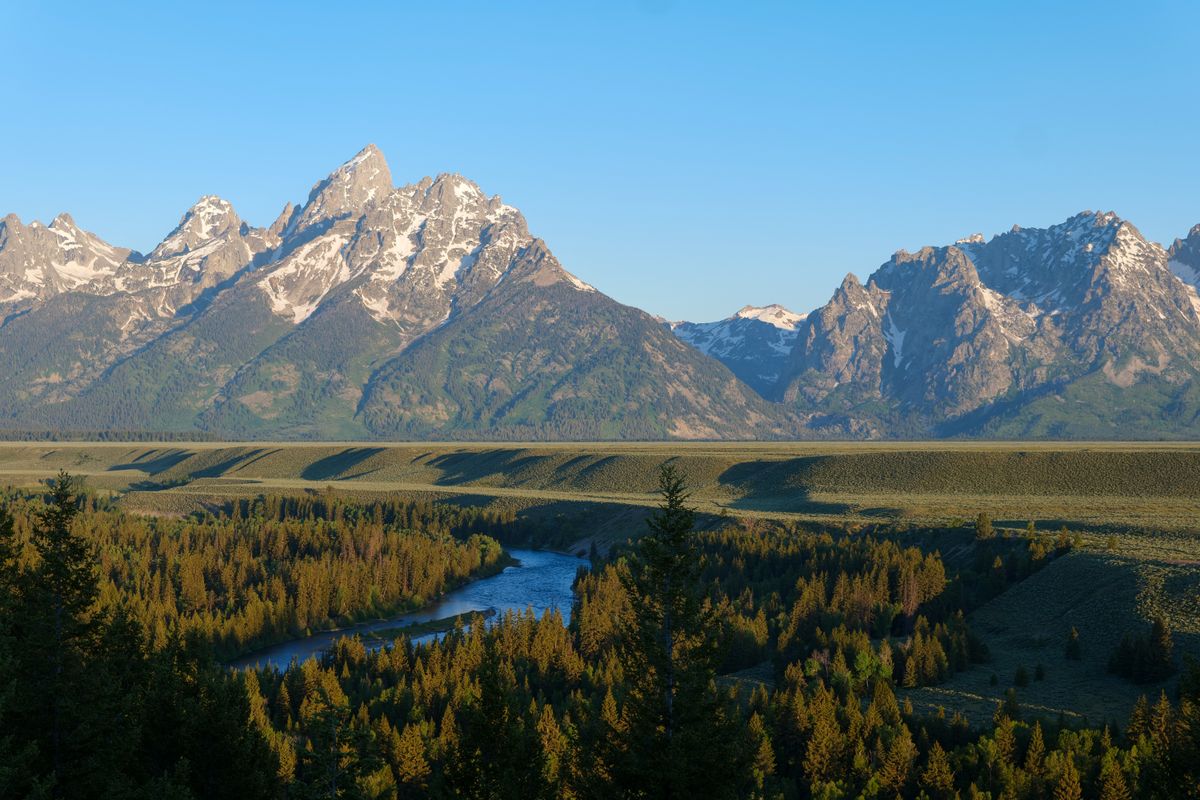

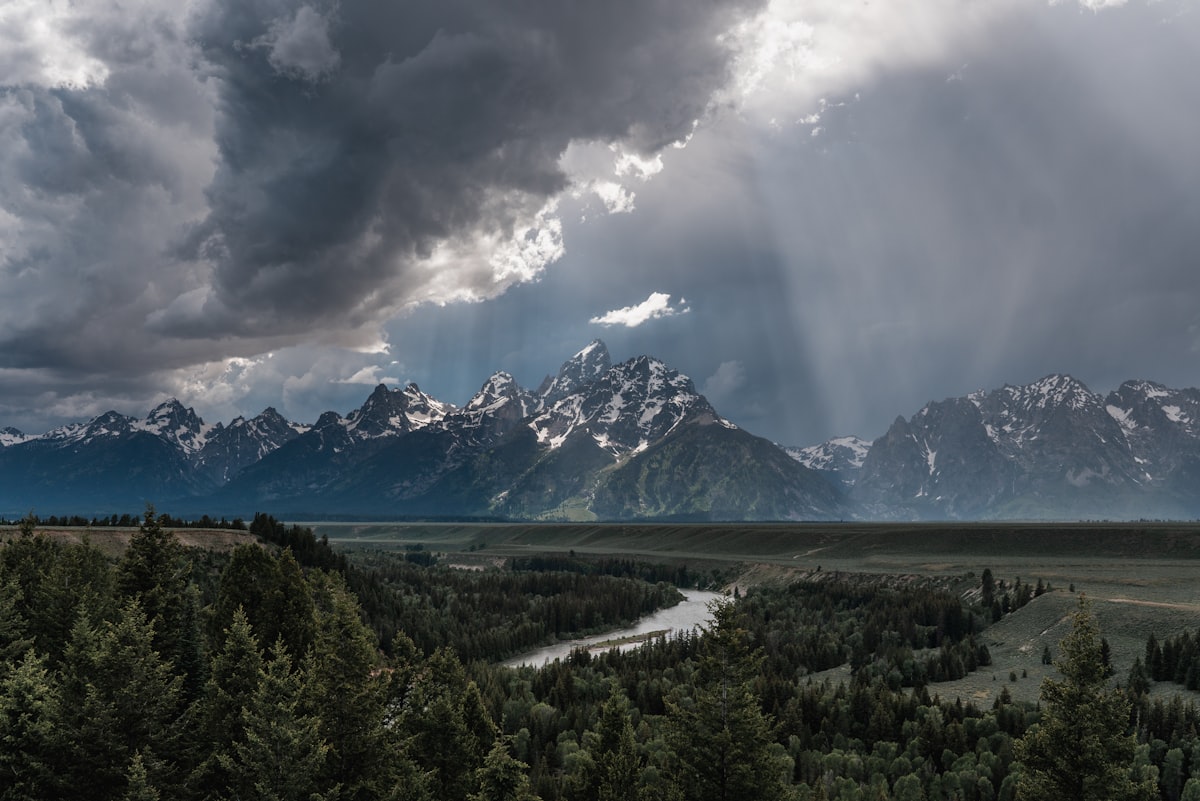
The photograph that defines American landscape photography, Ansel Adams' The Tetons and the Snake River, 1942, is also the photograph that defines American fly fishing. The Snake River curving through sagebrush flats with the jagged Teton Range rising 7,000 feet above the valley floor. That river holds a fish found nowhere else on earth: the Snake River finespotted cutthroat trout, a subspecies with smaller, more numerous spots than any other cutthroat, a willingness to eat dry flies that borders on reckless, and a fighting ability that belies its average 12-16 inch size.
Grand Teton National Park wraps around this river and the mountains above it, protecting 40 miles of the Snake and its tributaries, plus dozens of alpine lakes that hold cutthroat trout in water so cold and clear that you can see the fish from 30 feet away. The fishing here is not technical, the cutthroat are cooperative, the hatches are prolific, and the dry-fly fishing from July through October is some of the most consistent in the Rocky Mountain West. What makes it extraordinary is the setting. There is no other place in fly fishing where the backdrop competes with the fish for your attention.
If you've fished the nearby Yellowstone backcountry, Grand Teton is its complement, lower elevation, bigger water, larger fish, and easier access. If you've fished the Montana tailwaters and want something wilder, Grand Teton is the answer. If you've never fished the Rocky Mountain West at all, this is where you should start.
The Fish, Snake River Finespotted Cutthroat
The Snake River finespotted cutthroat (Oncorhynchus clarkii behnkei) is a unique subspecies, genetically distinct from the westslope cutthroat of Glacier, the Yellowstone cutthroat of Yellowstone, and the Bonneville cutthroat of the Great Basin. The distinguishing feature is right in the name: the spots are fine, smaller, more numerous, and more evenly distributed across the body than any other cutthroat subspecies. The fish are golden-olive with the signature red-orange slash under the jaw.
Snake River cutthroat average 12-16 inches in the main river, with fish over 18 inches common in the deeper runs and at tributary confluences. In the alpine lakes, fish to 20 inches are possible, slow-growing fish that have spent years feeding in cold, food-limited water. A 20-inch Snake River cutthroat from a Teton alpine lake is a trophy by any standard.
These fish eat dry flies with an enthusiasm that spoils you for every other trout fishery. A Parachute Adams in #14, a Stimulator in #10, or a foam hopper pattern dead-drifted along a grassy bank produces eat after eat after eat during the summer months. The cutthroat rise confidently, take the fly with an audible slurp, and fight with short, powerful runs toward structure. They are not selective fish. They are hungry fish in cold water, and they reward anglers who present a fly competently without demanding technical perfection.
The Waters
The Snake River, Float and Wade

The Snake River through Grand Teton National Park is the park's defining fishery, 40 miles of braided, gravel-bottomed river with classic riffle-run-pool structure, side channels, log jams, and cutbanks that hold cutthroat in every type of water.
Float fishing is the primary method. The Snake through the Tetons is a float-fishing river, the braided channels, side channels, and log jams create water that's difficult to access on foot but perfectly suited to a drift boat or raft. Guided float trips are the standard and the best way to cover water. The guide rows, you cast to the banks. The Snake's cutthroat hold tight to structure, undercut banks, log jams, and the seams where side channels rejoin the main flow. The Chubby Chernobyl with a Pheasant Tail dropper, cast tight to the bank and drifted through the seam, is the standard rig.
Wade fishing is possible but limited. The best wade access is at Schwabacher's Landing, Deadman's Bar, and below Jackson Lake Dam. The dam outflow provides consistent flows that make wade fishing more predictable than the braided sections downstream. Below the dam, the river runs single-channel for several miles before braiding out, this stretch fishes well on foot with dry flies and nymph rigs.
The hatch calendar:
- Late June–July: Stoneflies (golden stones, size 8-10) and caddis open the season as runoff clears. The brown stone hatch on the Snake is the first major dry-fly event, Stimulators and Chubby Chernobyls in tan and gold.
- July–August: PMDs (Pale Morning Duns, size 16-18), Green Drakes (size 10-12), and caddis overlap to create the most consistent dry-fly fishing of the year. Parachute Adams and Comparaduns cover the mayflies. Elk Hair Caddis covers the caddis.
- August–September: Terrestrials, hoppers, ants, beetles, become the dominant food source as grasshoppers fill the sagebrush flats along the river. Foam hopper patterns and Chubby Chernobyls in yellow and tan fished tight to grassy banks produce explosive surface strikes. This is the easiest fishing of the year, the cutthroat are fat, aggressive, and eating anything that lands on the water from the banks.
- September–October: Blue-winged olives (size 18-20) and October caddis (size 8-10) extend the season into fall. The crowds thin dramatically after Labor Day, and the fishing gets better. Fall is the locals' favorite, golden aspens, empty runs, and cutthroat that have been feeding all summer.
The Gros Ventre River
The Gros Ventre flows through the park's eastern side, a beautiful freestone river that runs through open meadows beneath the Gros Ventre Range. It's smaller than the Snake, more intimate, and accessible on foot. The Gros Ventre holds cutthroat and some rainbow-cutthroat hybrids in classic pocket water, riffles, and deep pools.
The salmon fly hatch begins on the Gros Ventre in early July, one of the most exciting dry-fly events in the park. Stimulators and Chubby Chernobyls in sizes 6-8 imitate the big stoneflies. Later in summer, terrestrials take over, grasshoppers from the surrounding meadows provide the majority of the trout's diet from August through October.
The stretch from Gros Ventre Campground upstream to the Kelly Cliffs area is the best wadeable water, scenic, accessible, and lightly fished compared to the main Snake.
Alpine Lakes, The Teton Backcountry

The Teton Range holds dozens of alpine lakes above 8,000 feet, many of them holding cutthroat trout. These are hike-in fisheries, 3 to 10 miles of trail with significant elevation gain, but the reward is solitude, stunning scenery, and fish that see almost no pressure.
Jenny Lake, The park's most famous lake (and the most accessible alpine water). Jenny Lake holds cutthroat that can be caught from shore, from a canoe, or from a kayak. The inlet and outlet streams are the most productive spots. Jenny is also the trailhead for Lake Solitude, a 9.6-mile one-way hike to a true backcountry lake surrounded by peaks, holding cutthroat that eat anything resembling a bug.
Leigh Lake, Larger and less visited than Jenny, Leigh Lake holds cutthroat and lake trout. A short trail from the String Lake trailhead provides access. Fish the inlet stream where the current concentrates insects and attracts feeding cutthroat.
String Lake, The shallow, warm connection between Jenny and Leigh. Less productive than either for fishing but a pleasant shoreline for beginners with children.
Backcountry lakes, Holly Lake, Amphitheater Lake, Lake Solitude, and Surprise Lake all hold cutthroat. Pack a 4-piece 3-weight rod, a box of Parachute Adams and Griffith's Gnats, and 5X tippet. That's the entire backcountry kit. The fish eat eagerly, these are not selective trout.
The Fly Box
The Grand Teton fly box is simple because the cutthroat are simple. Don't overthink it:
Dry flies (primary):
- Chubby Chernobyl #10-12, tan and yellow, hopper-dropper anchor
- Stimulator #10-14, yellow and orange, stonefly/attractor
- Parachute Adams #14-18, universal mayfly
- Elk Hair Caddis #14-16, tan, caddis hatch
- Comparadun / Sparkle Dun #16-18, PMD specific
- Foam hopper (Morrish Hopper, Club Sandwich) #8-10, August-September
- Griffith's Gnat #18-20, alpine lake midges
Nymphs (droppers):
- Pheasant Tail #16-18
- Hare's Ear #14-16
- Prince Nymph #14-16
- Copper John #14-16
- San Juan Worm #14, red, early season and runoff
- Pat's Rubber Legs #8, stonefly nymph
Streamers:
- Woolly Bugger #8-10, olive and black
- Muddler Minnow #8, sculpin imitation for larger cutthroat
The Gear
Rod: 9-foot 5-weight for the Snake River, enough backbone for wind and big dry flies. Bring a 6-weight for float trips where you're casting streamers and heavy nymph rigs. A 3- or 4-weight pack rod for alpine lake hikes.
Wyoming wind is real. The Teton valley funnels wind from the west, and afternoon gusts of 15-25 mph are common. Bring a rod that can punch into it. A delicate 3-weight on the Snake in a July wind is an exercise in frustration.
Leaders: 9 feet, 4X-5X for most river fishing. 7.5 feet, 5X-6X for alpine lakes.
Waders: Essential for wade fishing. The Snake runs 50-55°F even in August.
Licenses and Regulations
Grand Teton requires a Wyoming state fishing license, no park-specific license exists, but the state license covers all park waters. Cutthroat are catch-and-release in most park waters. Check current NPS regulations for specific limits on each water body, they change periodically based on population assessments.
When to Go
- Late June–early July: Runoff clearing, stonefly hatches beginning, rivers still high. The season starts.
- July: Golden stoneflies, caddis, early PMDs. Float fishing opens up as flows stabilize. Prime begins.
- August: The best month. Hopper fishing at its peak. PMDs and caddis still active. Warm evenings, long days, cooperative fish.
- September: The hidden gem. Crowds vanish after Labor Day. BWOs hatch on overcast days. Aspens turn gold. The fish are as fat as they'll be all year. This is when the locals fish.
- October: Season winds down. October caddis provide late-season dry-fly action. Snow on the peaks. Cold mornings, warm midday sun. The last casts of the year.
The Float Trip Experience
Floating the Snake through Grand Teton is one of the signature experiences in American fly fishing, not just because of the fish, but because of what you see while catching them. The Tetons rise directly above you as you drift. Bald eagles perch in the cottonwoods along the bank. Moose wade the side channels. Osprey dive-bomb cutthroat from above (your competitors, not your companions). The guide reads the braided channels and positions the boat so your cast drops a Chubby Chernobyl within inches of a log jam, and a 15-inch cutthroat rises to eat it in full view of the Cathedral Group.
The standard float covers 8-10 miles in a full day, with the guide handling the oars while you cast from the bow. Two anglers per boat is standard. The fishing is casting-intensive, you're making 200-300 casts per day, targeting specific structure on alternating banks. The guide calls the cast ("log jam, right bank, 40 feet"), you deliver the fly, and the drift does the rest.
Booking a float: Jackson Hole has more fly-fishing outfitters per capita than almost any town in the West, so options are plentiful once you're in town. If you want to fish August, the most requested month, reserve well ahead. September floats are easier to arrange, less expensive, and the fishing is often better.
The Yellowstone Connection
Grand Teton sits just south of Yellowstone National Park, the two parks share a boundary along the Snake River headwaters. A week-long trip combining both parks gives you the full spectrum of Rocky Mountain fly fishing: Yellowstone's backcountry streams and Lamar Valley for wild cutthroat and brook trout, then Grand Teton's Snake River for the float-fishing experience and the Teton alpine lakes. It's the best fly-fishing road trip in the American West.
The road from Yellowstone's south entrance to Jackson runs through Grand Teton, you're literally driving through one park into the other. Many anglers base in Jackson and fish both parks from a single location: Yellowstone's rivers to the north (two hours to the Lamar Valley, one hour to the Firehole) and the Snake River and Gros Ventre right outside the hotel door. If you're traveling from the Montana tailwaters or Livingston, the drive south to Jackson adds Grand Teton to an already legendary itinerary.
Wildlife and Safety
Grand Teton has a dense population of grizzly bears, black bears, and moose, all of which you may encounter while fishing. The same bear protocol that applies in Glacier applies here: carry bear spray, make noise, fish with a partner, give animals the right of way. Moose are particularly common along the Gros Ventre and in willow-lined side channels, they're bigger and more unpredictable than bears at close range. If a moose is between you and the water you want to fish, find different water.