Fish
Fish Fire
Fire Hike
Hike Bird
Bird

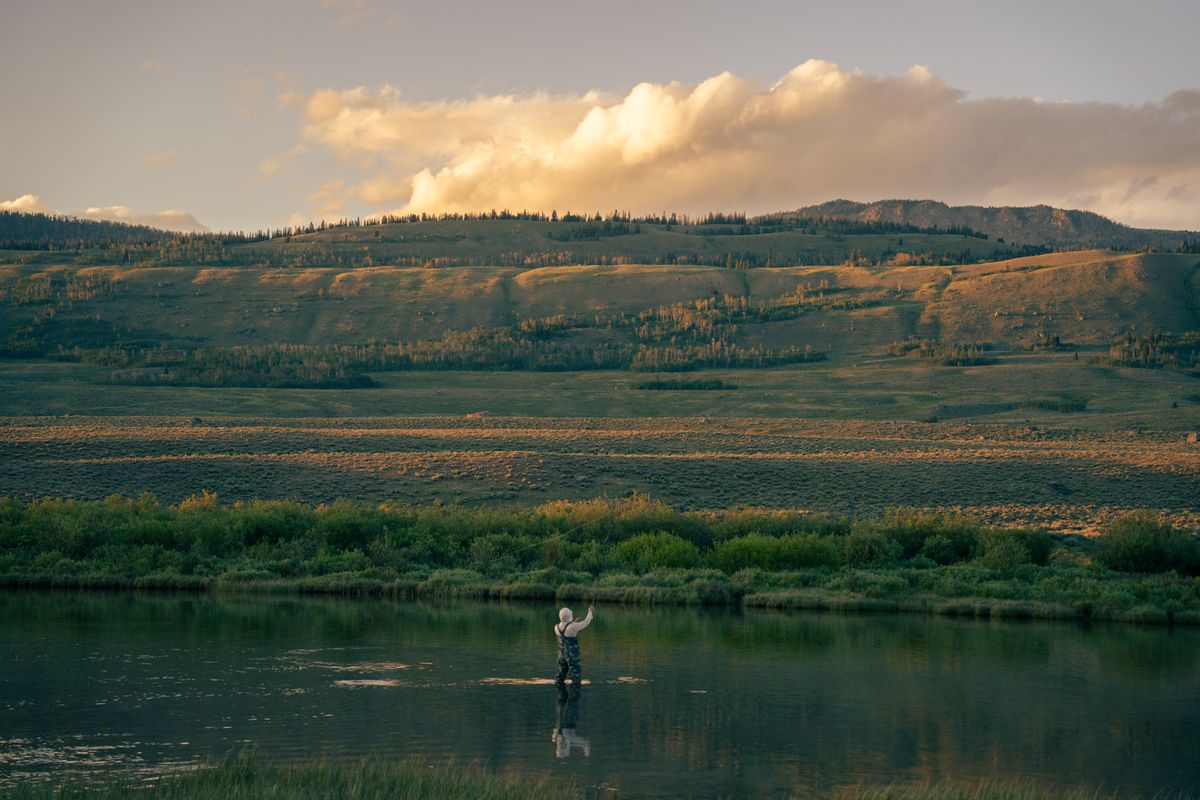

The North Platte flows through central Wyoming between a series of reservoirs, creating two world-class tailwater sections that rival anything in Montana, at a fraction of the pressure. The Grey Reef below Grey Reef Dam holds up to 8,000 trout per mile averaging 17-19 inches. The Miracle Mile between Seminoe and Pathfinder Reservoirs holds 4,000 trout per mile averaging 16-21 inches with a golden stonefly hatch that produces some of the best big-bug dry-fly fishing in the Rockies.
Nobody mentions the North Platte when listing the West's best tailwaters. The anglers who fish it prefer it that way.
Grey Reef, The Technical Tailwater

Grey Reef Dam sits 30 miles south of Casper on Highway 220. The 8-mile stretch from the dam to Lusby holds the highest trout density, wild rainbows averaging 17-19 inches, browns in the deeper runs, and Snake River cutthroat adding a third species uncommon on most tailwaters. Trophy fish of 25-30 inches weighing 6-15+ pounds are caught regularly, and the Grey Reef produces fish every season that would be the catch of a lifetime on most other rivers.
The water runs clear and cold (42-50°F from the bottom release), flowing over a cobblestone and gravel bottom with defined riffles, runs, and weed-bed edges that create classic nymphing water. The named spots, Lunch Counter, Government Bridge, Bessemer Bend, hold consistent fish populations because the stable flows create stable habitat year after year.
Grey Reef Techniques
Float fishing is the primary approach. Guides row drift boats through 8-10 miles of the upper section, working the seams, drop-offs, and weed-bed edges where trout hold. The guide positions the boat along the productive seams while the angler dead-drifts an indicator rig through the strike zone. On a good day, the indicator stops every few drifts.
Nymphing dominates the Grey Reef, dead-drifting indicator rigs along the seams and transitions where the current speed changes. The standard rig is a San Juan Worm or scud (#12-16) as the anchor fly, heavy enough to get the rig to the bottom, with a Zebra Midge or Pheasant Tail (#18-22) trailing 18 inches behind as the point fly. The trout eat the point fly 80% of the time. The indicator pauses, you set, and a 19-inch rainbow bends the rod into the cork.
Euro nymphing (tight-line, no indicator) has become increasingly popular on the Grey Reef. The technique provides more direct contact with the flies and detects subtler takes, a significant advantage with the Grey Reef's educated fish. Jig-hook versions of standard patterns (Pheasant Tail, Hare's Ear, perdigons) fished on a long, thin leader work well in the Grey Reef's moderate currents.
Dry-fly fishing picks up during summer hatches, PMDs, Tricos, BWOs, and caddis all bring fish to the surface. The Grey Reef's Trico spinnerfall (July-September) is as technical as the Bighorn's, tiny flies (#20-24), fine tippet (6X-7X), pods of sipping trout at dawn. When the Tricos are on, the Grey Reef produces the kind of sight-fishing-to-rising-trout experience that most anglers associate only with Montana.
Streamer fishing produces the largest browns, particularly in fall (October-November) when pre-spawn fish become aggressive. Woolly Buggers and articulated streamers fished along the banks and through the deeper runs target fish that the nymph-and-dry anglers never see. The Grey Reef's browns are genuinely large, 22 to 28 inches, and they eat streamers with a commitment that makes the hookup unmistakable.
Wade Fishing the Grey Reef
Wade access on the Grey Reef is more limited than on Montana's public-land tailwaters, much of the bank is private. But the access points that exist (the dam itself, Government Bridge, and a few public easements) provide walk-in fishing to productive water. The wading is manageable, cobblestone bottom, moderate current, chest-deep at most in the main channel.
Wade anglers who put in the walking to reach water away from the access-point crowds often find less pressured fish willing to eat patterns that the float-boat fish refuse.
New for 2026: Grey Reef from the dam to Ledge Creek is closed April 1-May 15 to protect spawning rainbows. The artificial-flies-and-lures-only section has been extended downstream to Government Bridge. Check Wyoming Game and Fish regulations before planning.
Fremont Canyon, The Middle Section
Between the Miracle Mile and Grey Reef, the North Platte flows through Fremont Canyon, a steep, narrow canyon between Pathfinder and Alcova Reservoirs. The canyon holds rainbow and brown trout in a dramatic setting of sheer rock walls and deep, emerald pools, but access is limited to a few trails from the rim. The fish see very few anglers, which means they're less educated, but reaching them requires effort.
Fremont Canyon is the adventurer's option, a hike-in fishery that rewards the angler willing to scramble down the canyon walls for uncrowded water and wild trout.
The Miracle Mile, Golden Stoneflies and Big Water
The Miracle Mile is seven miles of blue-ribbon tailwater between Seminoe and Pathfinder Reservoirs, 50 miles southwest of Casper. The water is wider and more freestone-like than the Grey Reef, pocket water, riffles, and braided channels that feel like a big Western river rather than a typical tailwater.
The fish average 16-21 inches with 4,000 trout per mile. Twenty-four-inch rainbows are realistic on any given day.
The Golden Stonefly Hatch
The Miracle Mile's golden stonefly hatch (Memorial Day through late June) is the event. Large golden stoneflies (#6-10) emerge and the trout respond with violent, slashing strikes. Stimulators (#6-10, gold), Chubby Chernobyls (#6-8), and Pat's Rubber Legs all produce during the hatch. After the stones, caddis and PMD hatches carry the dry-fly action through July, and hopper fishing takes over in August with Elk Hair Caddis and foam patterns along the grassy banks.
The Fly Box, Grey Reef and Miracle Mile Combined
The North Platte requires two fly boxes, the Grey Reef's technical nymphing box and the Miracle Mile's big-bug dry-fly box:
Grey Reef nymphs: Zebra Midge (#18-24, black/red/olive, carry 20+), Pheasant Tail (#16-20), Hare's Ear (#14-18), San Juan Worm (#10-14, red/brown), Scud (#14-18, pink/olive/orange), Ray Charles (#16-20), Juju Baetis (#18-20)
Grey Reef dry flies: Parachute Adams (#16-22), Sparkle Dun BWO (#18-22), Sparkle Dun PMD (#14-16), Griffith's Gnat (#18-22), Elk Hair Caddis (#14-16), Trico Spinner (#20-24)
Miracle Mile dry flies: Stimulator gold (#6-10), Chubby Chernobyl gold/tan (#6-10), foam hopper (#8-10), Parachute Adams (#14-18)
Miracle Mile nymphs: Pat's Rubber Legs (#4-8), Hare's Ear (#10-14), Pheasant Tail (#14-18), stonefly nymphs (#6-10)
Streamers (both sections): Woolly Bugger (#4-8, olive/black/white), Sculpzilla (#4-6), articulated streamers for fall browns
The Hatch Chart, Two Rivers in One
The North Platte's hatch chart is unique because it covers two different tailwaters with different insect communities. The Grey Reef is a midge-and-mayfly fishery like the Bighorn. The Miracle Mile is a stonefly-and-caddis fishery more like the Madison. Together, they cover the full spectrum.
- Year-round: Midges (#18-24) on the Grey Reef, the constant. Zebra Midge (black, red, olive), Griffith's Gnat on the surface. Scuds and San Juan Worms produce on both sections in every month.
- March–May: Blue Winged Olives (#16-22) on the Grey Reef. Sparkle Dun and Parachute Adams in olive. Overcast days produce the best activity. Note: Grey Reef closed April 1–May 15 in 2026 for spawning.
- Late May–June: Golden stonefly hatch on the Miracle Mile, the big-bug event. Stimulator and Chubby Chernobyl (#6-10). Fish eat them with violent, surface-busting strikes.
- June–July: PMDs (#14-16) on both sections. Sparkle Dun and Comparadun in pale yellow. Caddis (#14-16) on the Miracle Mile, Elk Hair Caddis in tan.
- July–September: Tricos (#20-24) on the Grey Reef, technical morning spinnerfall, the same dawn discipline as the Bighorn. Hoppers (#8-10) on both sections, Chubby Chernobyl tan with a Pheasant Tail dropper.
- October–November: Fall BWOs (#18-22) return on the Grey Reef. Streamer season for trophy browns on both sections, Woolly Bugger and sculpin patterns along the banks. The biggest fish of the year come in October.
- December–March: Winter midge fishing on the Grey Reef, productive, solitary, and cold. The tailwater stays fishable when everything else in Wyoming is frozen. Bring hand warmers.
The Gear
Rod: 9-foot 5-weight for the Grey Reef, the standard nymphing and dry-fly rod. 9-foot 6-weight for the Miracle Mile, the bigger flies, heavier rigs, and frequent wind demand more backbone. Wyoming is windy, the North Platte corridor sits in open prairie that funnels wind through the valley. A 4-weight is miserable here on most days. Plan for wind, bring the 6-weight even if you hope to fish the 5.
Leaders: 9 feet to 4X-5X for Grey Reef nymphing, the standard indicator setup. Go to 12 feet tapered to 6X for dry-fly and Trico work when the fish are sipping. 7.5 feet to 3X-4X for Miracle Mile stonefly and hopper-dropper rigs.
Tippet: Fluorocarbon on the Grey Reef is essential, the water is clear enough to see bottom at six feet, and the educated fish can see mono. Carry 4X through 7X. Nylon is fine on the Miracle Mile where the water is more broken.
Wading: Both sections are wadeable but the Grey Reef's limited public access means most anglers float. The Miracle Mile has more public walk-in access along the road. Felt soles on slippery cobblestone. Chest waders, you'll be in deep on the Grey Reef.
The Culture, Casper
Casper (population 58,000) is a real city, not a tiny tailwater village like Craig or Fort Smith. Hotels, restaurants, and services are plentiful, which makes trip logistics easier than most Montana tailwater destinations.
Casper has a strong fly-fishing community with several established fly shops and guide services that have been on this water for decades. The institutional knowledge of the local guides is what makes the difference between a good day and a great one, they know which sections are fishing, which hatches are active, and where the big fish are holding right now.
The Platte River Revival, a $23 million restoration project, has improved habitat, water quality, and access along the North Platte. The Grey Reef fishery has directly benefited, with trout populations increasing as the restoration work progresses.
When to Go
- Late May–June: Golden stonefly hatch on the Miracle Mile, the big-bug event
- June–July: PMDs on both sections, peak overall fishing
- July–September: Tricos on the Grey Reef, hoppers on both, the most diverse window
- October–November: Fall streamers for trophy browns, the biggest fish of the year