Fish
Fish Fire
Fire Hike
Hike Bird
Bird


If you had to pick one mayfly that matters more than any other to trout anglers across North America, the Blue-Winged Olive would win in a landslide. Not because it's the biggest, a BWO is a tiny, drab insect, olive-bodied with smoky gray wings, usually a size 18 or 20. It wins because of when it hatches. BWOs appear on the days that keep other mayflies grounded, cold fronts, low clouds, drizzle, snow, the raw autumn afternoons and frigid spring mornings when the parking lot is empty. The angler who carries the right BWO patterns fishes through seasons that most people write off entirely.
The Blue-Winged Olive is not a single species. It's a common name covering the Baetis genus, a family of small mayflies including Baetis tricaudatus, B. brunneicolor, and B. flavistriga. What they share matters more than what separates them: olive to olive-brown bodies, dark gray upright wings, sizes #16 to #24, and a preference for hatching in cool, overcast conditions. The trout eat them all the same way, and your fly box needs the same patterns regardless of which Baetis is on the water.
Why BWOs Matter, The Cold-Weather Staple
Most mayfly hatches are warm-weather events. PMDs need June sunshine. Green Drakes wait for July evenings. But Baetis evolved to exploit the gaps, hatching when competition from other insects is low and trout are hungry for anything on the surface.
-
September through November: Fall BWOs are the dominant surface food on most Western trout streams. The best days are overcast, drizzly, and raw, exactly the days most anglers stay home.
-
February through April: Spring BWOs are the first dry-fly hatches of the year on many rivers. On Colorado tailwaters, Montana spring creeks, and Eastern limestone streams, BWOs bring trout to the surface months before the first caddis appears.
-
Year-round on tailwaters: Below dams on the Bighorn, Missouri, San Juan, and Green, constant water temperatures support Baetis twelve months a year.
Master this bug and you fish twelve months instead of six.
The Recipe, Parachute BWO (#18-20)
The Parachute BWO is the workhorse pattern, visible, effective, and versatile enough to fish from September through April on any trout water in America.
| Component | Material |
|---|---|
| Hook | Standard dry fly, #16-22 (TMC 100, Dai-Riki 300, Umpqua U202) |
| Thread | Olive 8/0 (UTC 70 Denier, Danville 6/0) |
| Tail | Medium dun hackle fibers, split, one shank length |
| Wing post | White or light gray poly yarn, or white calf body hair |
| Body | Olive Superfine dubbing (Hareline), slim and tapered |
| Hackle | Medium dun dry-fly hackle, 3-4 turns around post |
The Parachute BWO rides in the surface film with the body flush and the hackle spreading horizontally, exactly how a natural dun sits on the water. The white post is visible to the angler at distance but doesn't spook fish the way a traditional upright wing can. Carry sizes #18 and #20 as the standard, #16 for early-season hatches when the bugs are larger, and #22 for late-fall situations when the Baetis get tiny.
The Variations, Six Patterns to Cover Every Stage
Comparadun BWO (#18-22)
The Comparadun, deer hair wing fanned 180 degrees over the body, no hackle, riding on hair tips and tail. It sits in the surface film rather than on it, presenting a lower, more natural profile than a hackled fly. The go-to on flat-water spring creeks like the Battenkill, Henry's Fork, and Pennsylvania limestone creeks. If fish refuse the Parachute, the Comparadun's flush ride usually gets the eat.
Sparkle Dun BWO (#18-22)
Craig Mathews' Sparkle Dun replaces the Comparadun's tail with a trailing shuck of Z-Lon that mimics a nymphal shuck still attached to an emerging dun, the most vulnerable stage of the hatch. Trout key on cripples and emergers because those bugs can't escape. A Sparkle Dun BWO in olive with a brown trailing shuck often outfishes a standard dun two to one during heavy hatches when fish become selective to emergers.
RS2 Emerger (#18-24)
Rim Chung's RS2, "Rim's Semblance", was created for BWO and midge emergences on Colorado's South Platte River in the 1970s. The pattern is almost comically simple: a split microfibett tail, beaver fur body, and a wing of CDC or saddle hackle webbing. It fishes in the top inch of the water column, the boundary layer where emergers are most vulnerable. On tailwaters like the South Platte, Bighorn, and San Juan, the RS2 is the single most effective BWO pattern, the fly guides tie on first and take off last. Fish it unweighted in the film to rising fish, or with a tiny split shot during pre-hatch activity. Sizes #20-24.
CDC BWO (#18-22)
CDC feathers float without floatant, move naturally, and provide a translucent wing profile that synthetics can't match. A CDC BWO uses one or two CDC feathers tied upright as a wing over an olive dubbing body, no hackle. Ideal for small sizes (#20-22) where traditional hackle creates too much bulk. The trade-off is durability, dress with desiccant powder (not liquid floatant, which mats CDC) after every few fish.
Barr's BWO Emerger (#18-22)
John Barr designed his emerger series in 1975 on Nelson's Spring Creek in Paradise Valley, the BWO version became a tailwater standard. Dark brown turkey biot body, short CDC wing, trailing shuck of brown Antron. Fish it as a dropper 12-18 inches below a Parachute BWO. A confidence pattern on the Bighorn, Missouri, and Colorado's South Platte system.
Olive Pheasant Tail Nymph (#16-20)
Frank Sawyer's Pheasant Tail was designed on English chalk streams to imitate Baetis nymphs, still the best subsurface BWO imitation ever tied. For BWO work, tie it in olive: olive-dyed pheasant tail fibers, copper wire rib, small bead head for deeper water. Trout eat far more BWO nymphs than duns, and an olive Pheasant Tail on a nymph rig is often the most productive BWO pattern on any given day. Fish it below a dry fly, on a euro rig, or under an indicator.
Where to Fish It
The BWO is the most universal mayfly hatch in American trout fishing. These are the waters where Baetis hatches define the fishing calendar:
-
Bighorn River, Montana, Year-round BWOs on 48°F tailwater. Overcast October days bring blanket hatches.
-
Missouri River, Montana, Massive fall BWO hatches from Craig to Cascade, September through November.
-
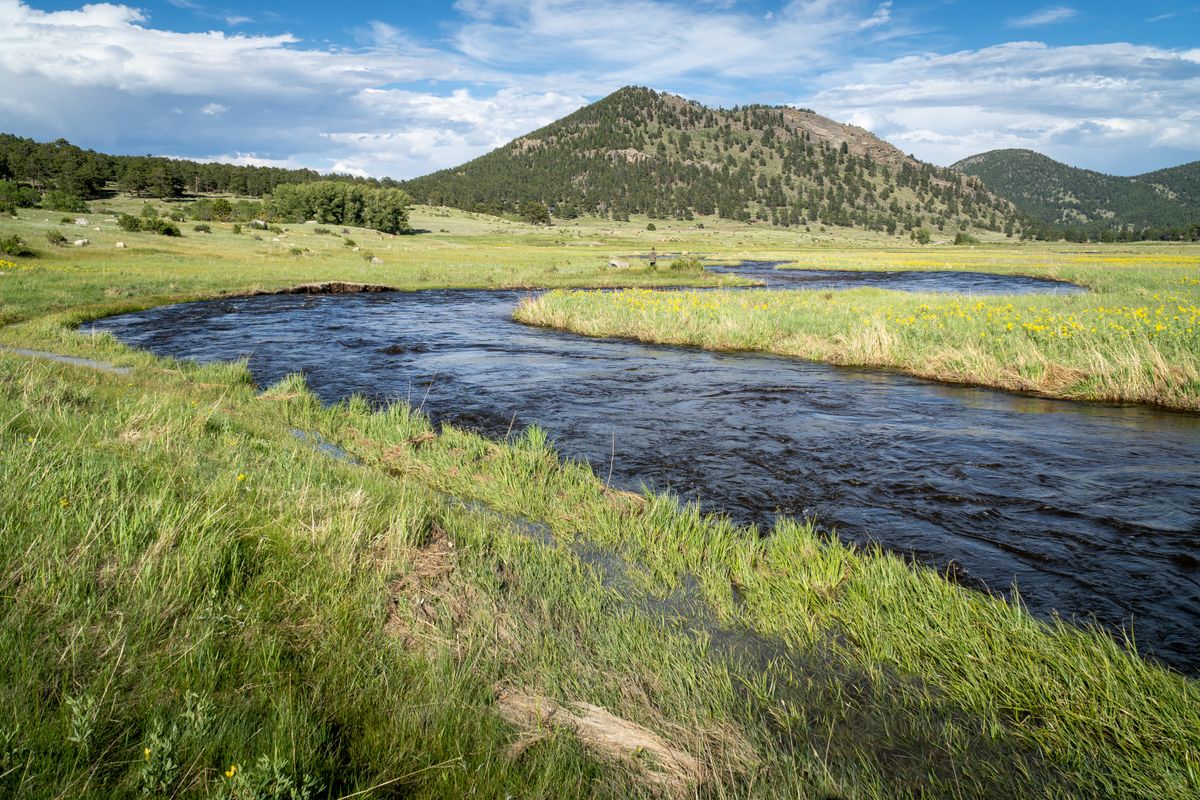
Henry's Fork, Idaho, The Railroad Ranch during a fall BWO hatch is a graduate seminar in technical dry-fly fishing.
-
Green River, Utah, Reliable BWO hatches October through March below Flaming Gorge Dam.
-
San Juan River, New Mexico, Year-round Baetis in the Quality Water. RS2 territory.
-
Livingston Spring Creeks, Montana, DePuy's and Armstrong's produce fall BWOs on constant 52°F water.
-
Madison River, Montana, Fall BWOs extend dry-fly season past hoppers, September into November.
-
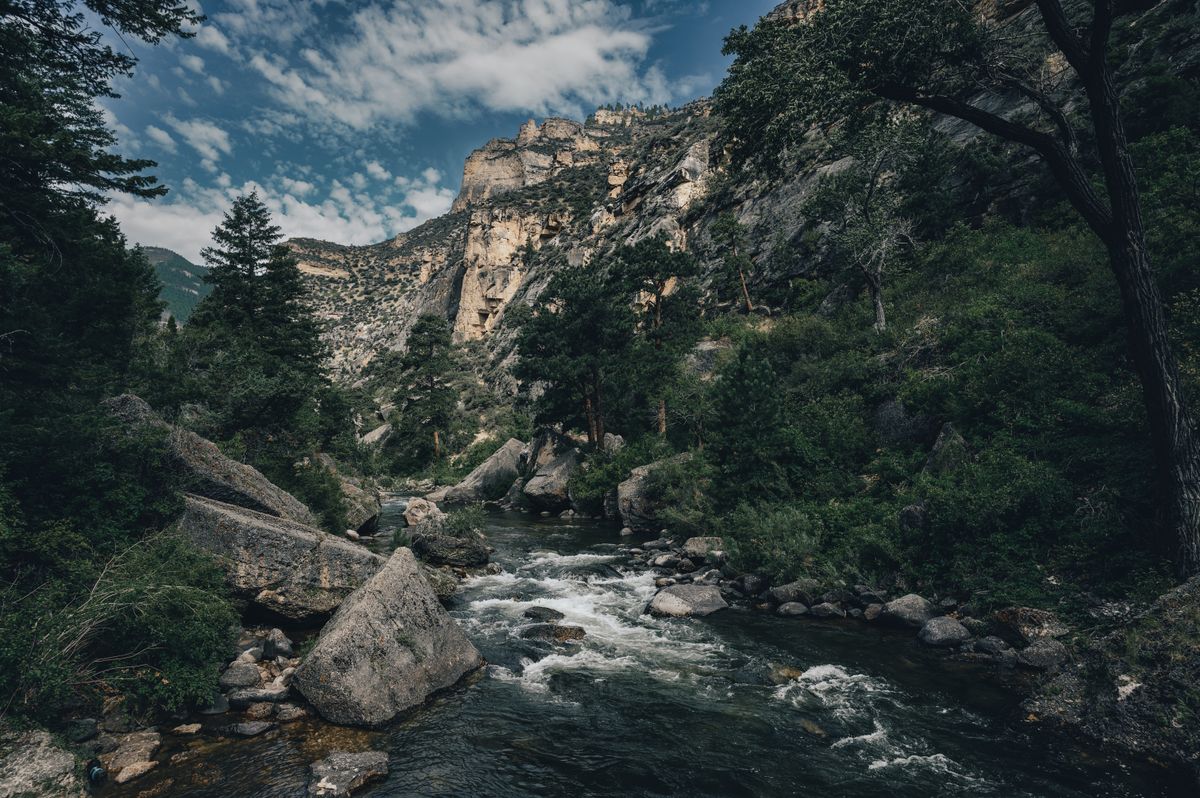
North Platte / Grey Reef, Wyoming, Strong tailwater BWO hatches in fall and spring.
-
Farmington River, Connecticut, The best BWO river in New England. Fall and spring hatches rival the West.
-
Battenkill, Vermont, October on the Battenkill with a #20 Comparadun is American fly fishing at its most traditional.
-
Pennsylvania Limestone Creeks, Technical BWO fishing on Spring Creek, Penns Creek, and the Letort.
-
Black Canyon of the Gunnison, Colorado, Fall BWOs in the dramatic canyon, some of Colorado's best dry-fly fishing.
-
Driftless Area, Wisconsin, Limestone spring creeks with excellent September through November BWO hatches.
-
White River, Arkansas, Tailwater BWOs through the cooler months below Bull Shoals Dam.
-
Yellowstone National Park, Reliable Baetis activity September into October, past the summer crowds.
-
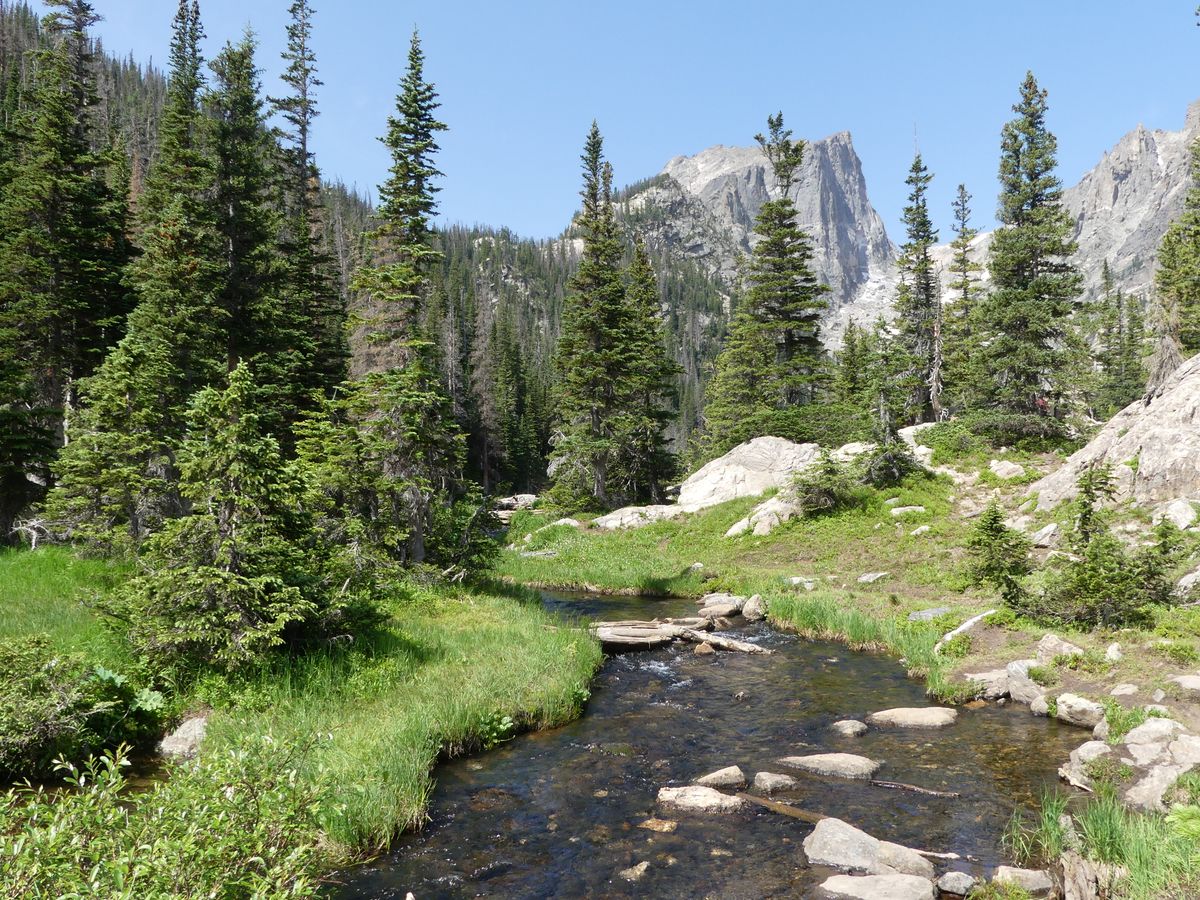
Rocky Mountain National Park, High-elevation freestone streams with fall BWO hatches.
-
Grand Teton National Park, Snake River fall BWOs keep dry-fly fishing alive into October.
-
Telluride / San Miguel River, Fall Baetis on Colorado's quieter southwestern rivers.
-
Snoqualmie River, Washington, Pacific Northwest BWOs thrive on the overcast, rainy days the region delivers.
-
Acadia National Park, Maine, Brook trout streams with fall BWO hatches on small water.
How to Tie It, Video Tutorials
The Parachute BWO is an intermediate tying pattern, the parachute post and hackle technique is the same as the Parachute Adams, just scaled down to smaller hooks. The RS2 is a beginner-friendly pattern with minimal materials and steps.
Parachute BWO, Blue-Winged Olive Dry Fly Tying Tutorial Life Cycle #6: Blue-Winged Olive / Baetis, Complete BWO Series Rim Chung's RS2, The Best Trout Fly Ever Invented? Tying TutorialTips From the Vise
Slim bodies win. Natural Baetis duns have pencil-thin abdomens. Your dubbing should be sparse enough to see thread color through it. Over-dubbed BWOs are the most common tying mistake, fish refuse them because the silhouette is wrong.
Olive is a spectrum. Early-season BWOs tend toward brighter olive, while late-fall hatches produce darker olive-brown bugs. Carry both shades. Hareline's BWO Olive and Wapsi's Olive Superfine are good starting points.
Downsize your tippet. BWO fishing means 6X or 7X fluorocarbon. The flies are small, the takes are subtle sips, and lighter tippet turns more fish even though you'll break off a few.
Fish the emerger first. Watch the rise forms, if fish are bulging without breaking the surface, they're eating emergers. Start with an RS2 or Sparkle Dun before trying a Parachute. Trout eat more bugs in the vulnerable emerging stage than they do fully formed adults.
Overcast is the trigger. If the sun disappears behind clouds at 1 PM, the hatch often starts within 30 minutes. Plan BWO fishing around the weather, not the clock.
Pair dries and emergers. The most effective BWO rig: a Parachute BWO (#18) as indicator with an RS2 (#20-22) on an 18-inch 6X dropper. When a fish takes the emerger, the dry dips, set the hook.
Build Your Box
Tie a dozen Parachute BWOs in #18 and a dozen in #20 (your two workhorse sizes). Tie a half-dozen Sparkle Duns in #18-20 olive for flat water. Tie a dozen RS2s in #20-22, the pattern that covers every tailwater in America. Add a half-dozen Comparaduns in #20 for spring creek work, a half-dozen CDC BWOs in #20-22 for when nothing else is delicate enough, and two dozen olive Pheasant Tails in #18-20 for subsurface work before and after the hatch. Supplement with Griffith's Gnats (#18-22) and Zebra Midges (#20-24), BWOs and midges often hatch simultaneously, and the trout don't always distinguish between them. Total: about 80 flies, enough to fish BWO season seriously from September through April on any water in the country.