Fish
Fish Fire
Fire Hike
Hike Bird
Bird


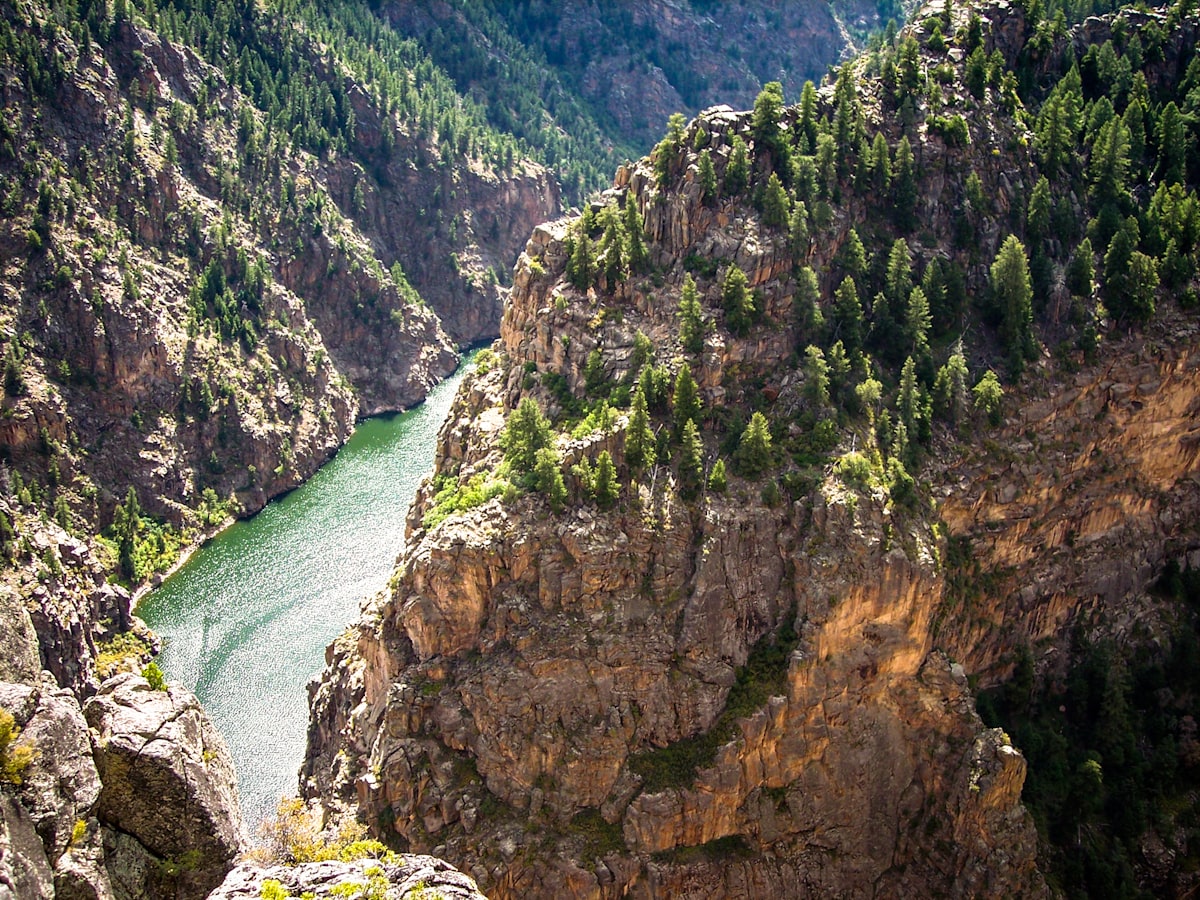
Black Canyon of the Gunnison is the national park that earns its fish. There is no casual fishing here. The Gunnison River runs through the bottom of a canyon that drops 2,000 feet in places, walls so steep, so dark, and so narrow that parts of the inner canyon receive only 33 minutes of sunlight per day. Getting to the river requires either driving a steep, narrow road to East Portal (when it's open) or hiking down unmaintained "routes", not trails, routes, that descend 600 to 1,800 vertical feet through loose rock, scree, and exposed ledges. One route includes an 80-foot section where a chain bolted to the cliff face is the only handhold.
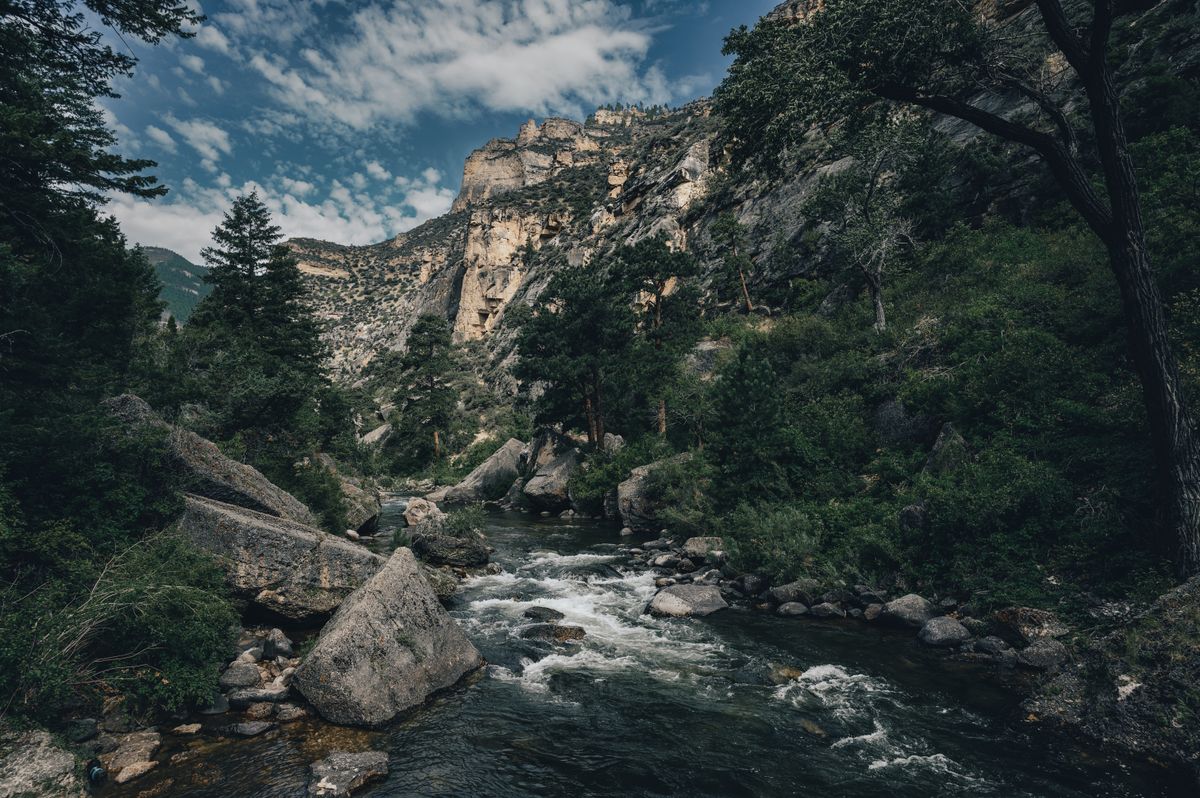
At the bottom, the reward: Gold Medal water holding over 8,000 trout per mile, wild rainbow and brown trout in one of the most dramatic settings in American fly fishing. Browns make up roughly 80% of the population and can exceed 20 inches. Rainbows are catch-and-release only, and many push past 16 inches. The river flows through emerald pools, boulder gardens, and steep-gradient runs that create textbook trout habitat, and the canyon's inaccessibility means the fish see far fewer flies than any other Gold Medal water in Colorado.
This is not the San Juan's gentle tailwater or the Green River's wide canyon floats. Black Canyon is big, raw, powerful water in a geological setting that makes every other canyon fishery feel like a city park. If you can handle the access, the fishing is extraordinary.
The Fish
Brown Trout, 80% of the Population
The Gunnison's browns are the canyon's dominant fish, aggressive, structure-oriented, and large. Fish over 20 inches hold in the deep pools at the base of boulder drops, in the undercut ledges along the canyon walls, and in the slow water behind the massive boulders that litter the riverbed. Fall (September-November) is prime brown trout season, pre-spawn aggression makes them chase streamers with a violence that belies their normally cautious temperament.
Woolly Buggers and Muddler Minnows in #4-8, stripped through the deep pools at dawn and dusk, produce the largest fish in the canyon. The browns in the Black Canyon are not the educated tailwater fish of the Bighorn or Missouri, they're wild, aggressive canyon fish that eat with conviction when they decide to eat.
Rainbow Trout, Catch-and-Release Only
Rainbows make up the remaining 20% and are fully protected, catch-and-release only throughout the 12-mile canyon stretch. They average 12-16 inches with fish over 18 not uncommon. The rainbows hold in the faster water, riffles, runs, and the heads of pools, and eat nymphs and dry flies more readily than the structure-bound browns.
Pre-spawn rainbows in early spring (March-April) are the most aggressive, big fish moving into shallow gravel to spawn, willing to eat streamers and large nymphs. The Gold Medal regulations protect this vulnerable period by requiring release.
The Water, Gold Medal in a Geological Wonder
The Gunnison River through Black Canyon is 12 miles of continuous Gold Medal water, Colorado's highest designation for a trout fishery, requiring 60 pounds of trout biomass per acre and at least 12 quality fish (14+ inches) per acre. The Black Canyon stretch meets these thresholds comfortably.
The river character is big, powerful freestone water with:
- Boulder gardens, car-sized rocks creating pockets, eddies, and plunge pools
- Emerald pools, deep, slow-water holds at the base of drops, colored green by the dark canyon walls
- Steep-gradient runs, fast, heavy water that demands weighted nymphs and aggressive wading
- Undercut ledges, dark canyon-wall overhangs where the largest browns lurk
East Portal, Drive-In Access
East Portal Road is the only vehicle access to the river within the park. The road descends steeply from the South Rim to Crystal Dam at the top of the canyon stretch. From East Portal, you can wade upstream into the canyon or fish the tailwater immediately below the dam. This is the "easy" access, and it's still a steep, narrow road that closes in winter and restricts vehicles over 22 feet.
Inner Canyon Routes, Earn Your Fish
The real Black Canyon fishing requires hiking into the inner canyon on unmaintained routes that the NPS describes as "extremely steep and strenuous." These are not trails with switchbacks and trail markers. They are scree fields, exposed rock, and scrambling descents that require route-finding skills and physical fitness.
The Gunnison Route, The most popular (relatively speaking). Drops 1,800 feet in 1 mile from the South Rim Visitor Center. Includes the famous 80-foot chain section. At the bottom, you have access to some of the best water in the canyon.
S.O.B. Draw, Long Draw, and Slide Draw, North Rim routes that are steeper and less traveled. The names tell you what you need to know.
Permits: A free backcountry permit is required for inner canyon access. The park limits hikers per route per day, which means you'll have the river mostly to yourself at the bottom.
Gunnison Gorge, Below the Park
Below the national park, the Gunnison River flows into the Gunnison Gorge National Conservation Area, managed by the BLM, with less dramatic walls but easier access. The Gorge holds the same Gold Medal water with access via the Chukar Trail (most popular), Duncan Trail, and Ute Trail, all dropping 600-1,200 feet. Many anglers fish the Gorge rather than the inner canyon because the access is more manageable and the fishing is equally good.
The Salmonfly Hatch, Black Canyon's Main Event
The salmonfly hatch, the first two weeks of June, is Black Canyon's signature fishing event. Giant stoneflies (Pteronarcys californica, sizes #4-8) emerge from the river in massive numbers, and every trout in the canyon feeds on the surface with abandon. The hatch turns the normally nymph-dominant fishery into a dry-fly circus, 18-inch browns eating size 6 dry flies off the surface in water that looks like it should be fished with streamers.
Stimulators in #6-10, Chubby Chernobyls in #6-8, and Sofa Pillows in #4-6 cover the salmonfly hatch. The takes are explosive, a big brown trout eating a size 6 stonefly dry in a canyon pool is one of the most dramatic moments in Colorado fly fishing.
Golden stoneflies follow in late June and early July. Caddis and PMDs provide steady dry-fly fishing through summer. Fall brings BWO hatches and the brown trout streamer season.

The Fly Box, Canyon Water
Black Canyon demands flies that handle big, powerful water:
Dry flies (salmonfly season and summer):
- Stimulator #6-10, gold and orange, THE salmonfly dry
- Chubby Chernobyl #6-8, hopper-dropper anchor, salmonfly alternative
- Parachute Adams #14-18, PMD and general mayfly
- Elk Hair Caddis #14-16, summer caddis
Nymphs (year-round workhorses):
- Pat's Rubber Legs #6-8, stonefly nymph, the canyon staple
- Copper John #14-16, black, deep runs
- Pheasant Tail #16-18
- Hare's Ear #14-16
- San Juan Worm #12, red, heavy water point fly
Streamers (fall browns, dawn/dusk):
- Woolly Bugger #4-8, olive and black
- Muddler Minnow #4-6, sculpin in the boulder gardens
- Slumpbuster #4, rabbit-strip sculpin for trophy browns
The Gear, Built for Canyon Water
Rod: 9-foot 5- or 6-weight. The 6-weight is preferred, the canyon demands heavy nymph rigs, split shot, and the ability to fight big fish in fast current. A 5-weight is fine for the salmonfly hatch dry-fly fishing.
Waders: Essential year-round. The water is cold (dam releases from Blue Mesa Reservoir). Studded felt soles or Vibram with studs, the boulders are slippery and the wading is aggressive.
Wading staff: Mandatory in the canyon. The current is strong, the boulders are uneven, and a swim in the Gunnison's cold, fast water is dangerous.
Backpack your gear. If you're hiking an inner canyon route, everything goes in a pack, rod in a rod tube, waders strapped outside, vest/pack with minimal gear. You're hiking a mountain route, not walking to a parking lot.
License: Colorado state fishing license required.
When to Go
- March–April: Pre-spawn rainbows. Streamer fishing. East Portal Road may be closed; check conditions.
- Late May–June: Salmonfly hatch, the main event. Plan your trip early. East Portal Road opens.
- July–August: Caddis, PMDs, Yellow Sallies. Consistent nymphing. Hot days but the canyon stays cool.
- September–November: Brown trout streamer season. Pre-spawn aggression. Fall colors on the rim. The best time for trophy browns.
The Canyon Experience
Fishing the inner Black Canyon is a full-body experience, not just fishing but mountaineering, route-finding, and wilderness survival compressed into a single day. You wake before dawn, drive to the rim, hike 1,800 vertical feet down loose rock into a canyon so deep the sky is a narrow strip above you, fish for hours in water that thunders through boulder gardens, and then hike 1,800 vertical feet back up, arriving at the rim exhausted, exhilarated, and absolutely certain that you earned every fish.
No other Gold Medal water in Colorado requires this commitment. The South Platte has roadside access. The Frying Pan has paved pull-offs. The Arkansas has parking lots. Black Canyon has a chain bolted to a cliff face and 1,800 feet of scree between you and the river. That's the filter, and it's why the fish at the bottom are bigger, wilder, and more willing than anything on a drive-to river.
The Telluride / San Miguel is an hour south, a gentler mountain fishery with freestone cutthroat and brook trout. The Green River is four hours west, wide canyon water with drift-boat access and a gentler gradient. Neither has the physical intensity or the geological drama of Black Canyon. This is Colorado's wildest trout water, and it demands, and rewards, the angler willing to work for it.
The Gunnison Gorge, The Accessible Alternative

Many anglers confuse the Black Canyon and the Gunnison Gorge. They're different places with different access and the same spectacular fishing. The Gunnison Gorge National Conservation Area begins where the national park ends, downstream of the canyon, where the walls are less vertical but still dramatic, and the river holds the same Gold Medal trout population.
The Gorge is more accessible than the inner canyon:
Chukar Trail, The most popular access. A 1-mile descent (about 800 feet of elevation) to the river. Manageable for most fit hikers. The trail is maintained and marked, unlike the inner canyon routes.
Duncan Trail and Ute Trail, Longer approaches with more elevation but access to less-fished water.
Multi-day float trips, The Gorge can be floated in rafts or kayaks over 2-3 days, camping on the gravel bars. This is the way to cover the most water with the least effort, and the camping experience, sleeping on a gravel bar beneath canyon walls with the river as your soundtrack, rivals Katmai's Alaska wilderness for remoteness and beauty.
The fishing in the Gorge is identical to the canyon, the same Gold Medal densities, the same brown-to-rainbow ratio, the same salmonfly hatch, the same streamer-chasing fall browns. The only difference is access: the Gorge gives you the fishing without the mountaineering.
Safety, This Is Not Optional
The inner Black Canyon kills hikers. Not often, but often enough that the NPS takes it seriously. The routes are steep, loose, and exposed. Heat exhaustion, falls on loose rock, and flash flooding are real dangers.
Tell someone where you're going. The free backcountry permit requires you to register, this is so search and rescue knows who to look for if you don't come back.
Carry water. There's no shade in the inner canyon during the descent. In summer, the exposed rock radiates heat. Carry at least 2 liters per person for the round trip.
Don't wade beyond your ability. The Gunnison is powerful water. A wading staff is mandatory. If a crossing looks sketchy, it is sketchy. Walk around.
Start early. The hike out, ascending 1,800 feet in a mile after a full day of fishing, is the hardest part. Start fishing at dawn and begin your climb out by early afternoon. The last thing you want is to be scrambling up a chain route in the dark.
The Painted Wall and the Fishing Below It
The Painted Wall, the tallest cliff face in Colorado at 2,250 feet, is the canyon's geological centerpiece. Light-colored pegmatite dikes streak across the dark Precambrian gneiss in patterns that look hand-painted, giving the wall its name. The fishing directly below the Painted Wall is among the best in the canyon, deep, slow pools at the base of the cliff where the river pauses before the next cascade, holding browns that have grown large in water that receives almost no sunlight.
Fishing below the Painted Wall requires the most committed inner canyon route, the descent is long and technical. Most anglers who reach this section camp overnight on a gravel bar (backcountry camping is permitted with a permit). The experience of camping in the inner Black Canyon, surrounded by 2,000-foot walls, listening to the river, watching the narrow strip of stars wheel overhead, is as wild as anything in Katmai's Alaska or Olympic's rainforest. This is genuine wilderness, an hour from a Colorado town, hiding in plain sight at the bottom of a canyon.