Fish
Fish Fire
Fire Hike
Hike Bird
Bird


There's a region of southwestern Wisconsin where the glaciers never came. While ice sheets flattened everything around it, this pocket of land, about 24,000 square miles spanning Wisconsin, Minnesota, Iowa, and Illinois, was left untouched. The result is a landscape of steep-sided coulees (narrow valleys), limestone bluffs, and spring-fed creeks that flow at a constant 48-50°F year-round.
Those springs feed over 600 trout streams with more than 13,000 miles of classified trout water, one of the highest concentrations of spring creeks anywhere in the world. And most fly anglers outside the Midwest have never heard of it.
The Driftless Area isn't famous. It doesn't have a marketing budget. It doesn't appear on the cover of fly-fishing magazines (though Outdoor Life called it "the best kept secret in the trout world"). What it has is an almost absurd quantity of small, clean, cold spring creeks holding wild brown trout, brook trout, and rainbow trout in water that never freezes, never gets too warm, and produces hatches from February through November.
If you live in Chicago, Minneapolis, or Madison, world-class spring creek fly fishing is a three-hour drive away. You just have to know where to go.
The Water, What Spring Creeks Look Like Here

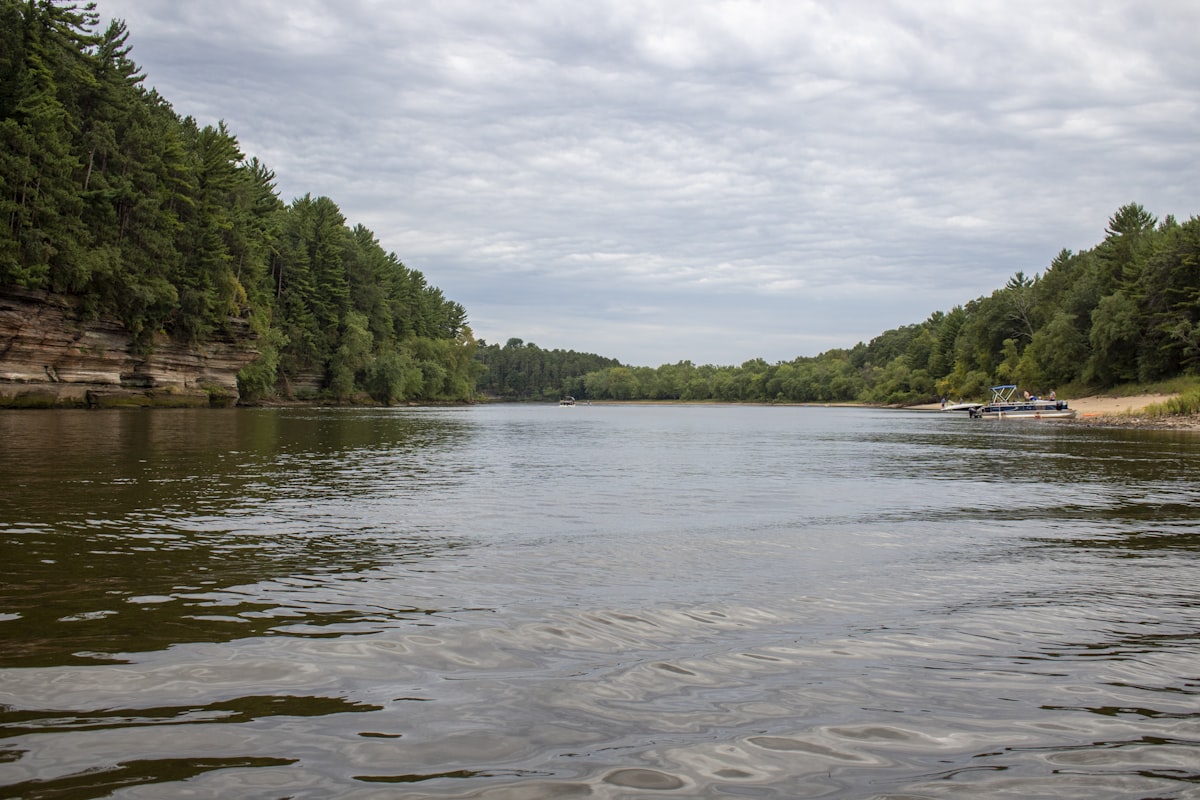
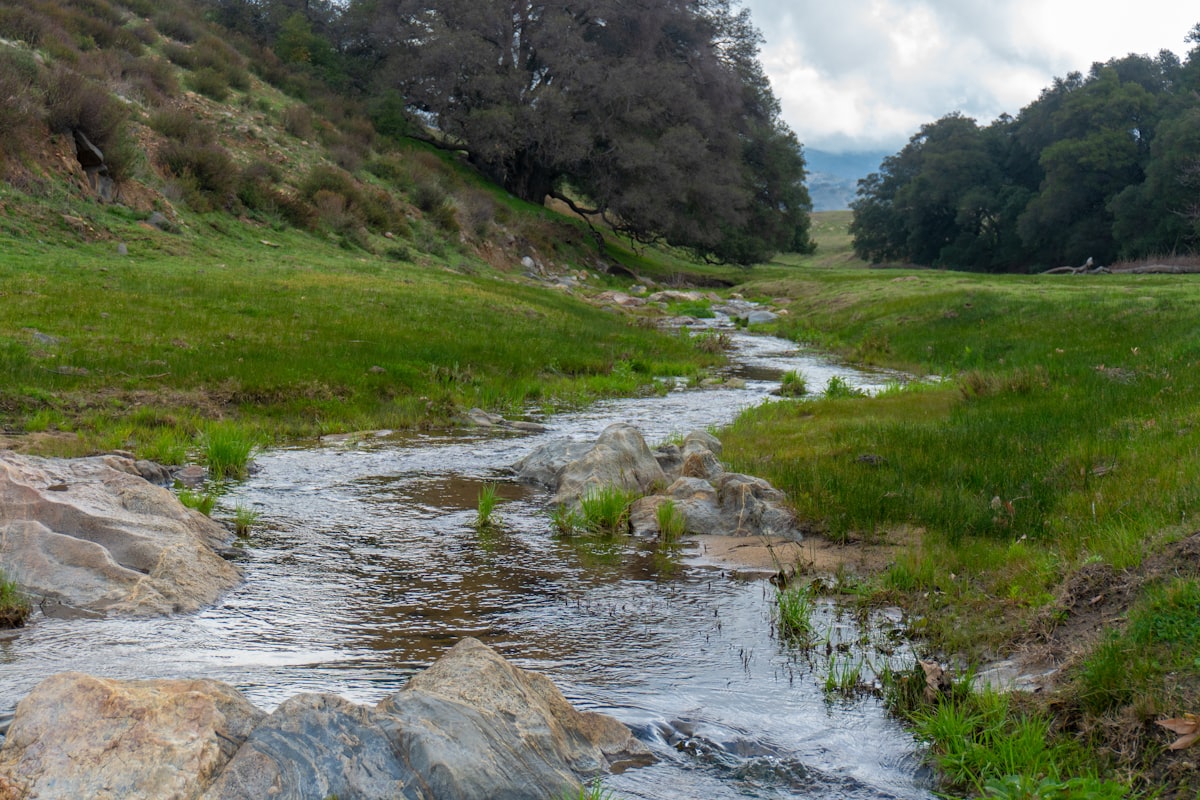
Driftless spring creeks don't look like Montana spring creeks. There are no manicured lodges on the banks, no rod fees, and no celebrity guides. These are small streams, many no wider than 10 feet, winding through dairy farmland, under county road bridges, and through wooded coulees where the only sound is the water and the birds.
The water flows from underground limestone aquifers at 48-50°F, which means the streams don't freeze in winter and don't get lethally warm in summer. The constant temperature supports insect life year-round, which supports trout year-round, which means you can fly fish the Driftless in every month of the year.
Brown trout are the dominant species on most streams, wild, self-sustaining populations that reproduce naturally in the gravel. The average fish is 8 to 12 inches, which doesn't sound impressive until you realize these are wild stream-born fish in small water, and a 14-inch brown from a Driftless spring creek fought harder and earned its inches more honestly than a 20-inch stocker from a tailwater.
Brook trout hold in the colder headwater sections of many streams, the smallest, coldest water where browns don't dominate. Native brook trout in the Driftless are brilliantly colored and willing to eat dry flies. Finding a cold headwater creek holding wild brookies is one of the great small-stream experiences in American fly fishing.
Rainbow trout are present in some streams, though less dominant than browns. They tend to hold in the wider, faster sections with more oxygen.
The Streams, Where to Start

With 600+ streams, the Driftless can be overwhelming. Here's where to start:
Timber Coulee Creek (Vernon County)
Timber Coulee is the Driftless gateway stream, the one most visiting anglers fish first. It flows from Westby through Coon Valley, roughly 15 minutes from Viroqua, and it's a Class I stream with excellent public access. The lower sections hold brown trout averaging 10 to 14 inches, with fish over 16 in the deeper bends. The upper sections near Westby hold brook trout in the colder headwaters.
Timber Coulee gets more pressure than most Driftless streams because it's the best-known, but the trout population absorbs it. On a weekday in May, you'll have the stream to yourself.
Blue River (Grant & Iowa Counties)
The Blue River is the largest and most well-known Driftless stream, nearly 20 miles of Class I trout water with fish averaging 12 to 18 inches, larger than most Driftless creeks. The Blue is wider water by Driftless standards (20 to 30 feet in the lower sections), which means longer casts and more room to swing streamers. The fall brown trout migration on the Blue River produces some of the biggest fish of the year.
Bohemian Valley Creek (Vernon County)
Part of the cluster of streams near Viroqua that includes Timber Coulee, Spring Coulee, and Rullands Coulee. Bohemian Valley is smaller and less pressured, with wild browns in a tight, wooded coulee setting. If Timber Coulee is the front door, Bohemian Valley is the side entrance, quieter, more intimate, and the fish are less educated.
The "Discovery" Streams
The real magic of the Driftless is the unnamed and lesser-known creeks. Every valley, every coulee, every fold in the landscape holds a stream, and many of them have never been mentioned in a magazine article. Driving the back roads with a DeLorme atlas (or the Wisconsin DNR trout stream maps) and stopping at bridges to look for trout is the Driftless equivalent of prospecting. You'll find streams where a #14 Elk Hair Caddis dropped under a bridge produces a brown trout on the first cast because the fish has never seen a fly before.
The Hatches, Small Bugs, All Season

The Driftless hatch cycle is different from Western rivers. The insects are generally smaller, the hatches are less dramatic, and the fishing is more about matching a steady diet than timing a single explosive event.
- March–April: Midges (#18-24) and early Blue Winged Olives (#16-20). The first risers of the year. The catch-and-release season opens in January, but March is when the dry-fly fishing starts.
- April–May: Black caddis (Grannoms, #16-20), the first major hatch. When the Grannoms come off, brown trout lose their caution and eat with abandon. This is the Driftless equivalent of the salmonfly hatch, the most exciting dry-fly fishing of the spring.
- May–June: Sulphurs (#16-18) and Hendricksons (#12-14) overlap with the caddis. BWOs continue. The streams come alive with multiple hatches and the fishing is at its most diverse.
- June–July: Caddis (#14-16) dominate. An Elk Hair Caddis in tan or olive covers most situations. Yellow Sallies (small stoneflies, #14-16) appear on some streams.
- July–August: Tricos (#22-24), morning spinnerfall on the slower sections. Tiny flies, fine tippet, rising fish. Terrestrials (ants #16-20, beetles #14-16, hoppers #8-12) take over in the afternoon. The hopper-dropper rig works as well here as it does in Montana.
- September–October: Fall BWOs (#16-20) return. Streamer season, browns become aggressive and territorial as they prepare to spawn. Swinging Woolly Buggers, Turkey Leeches, and Sculpins through the deeper pools produces the largest fish of the year. October is when the Driftless rewards the angler who stays late.
- November–December: Late-season midge fishing. The streams don't freeze (remember, constant 48-50°F), and the fish still eat. You'll have the water entirely to yourself.
The Fly Box
The Driftless fly box is smaller and simpler than you'd think:
Dry flies: Elk Hair Caddis (#14-18, tan and olive), Parachute Adams (#14-18), BWO Comparadun (#16-20), Sulphur Parachute (#16-18), Trico Spinner (#22-24), foam beetle (#14-16), ant (#16-20), small hopper (#10-14)
Nymphs: Pink Squirrel (#14-18), the Driftless signature fly. Pheasant Tail (#14-18), Hare's Ear (#12-16), Zebra Midge (#18-22), Copper John (#14-16)
Streamers: Turkey Leech (#6-10), the Driftless all-rounder. Woolly Bugger (#6-10, olive and black), Sculpzilla (#6-8)
The Pink Squirrel deserves special mention, it was designed for Driftless spring creeks and has become the region's signature pattern. It's a simple squirrel-dubbing nymph with a pink collar, and it outfishes everything else subsurface on most days. Carry a dozen in sizes 14 and 16.
The Gear
Rod: A 7.5- to 8.5-foot 3-weight or 4-weight is the Driftless standard. The streams are small and brushy, you need a short rod that can roll-cast under tree branches and deliver a fly at 20 feet, not 60. A 9-foot 5-weight is too much rod for most Driftless water. Some anglers fish tenkara rods (fixed-line, no reel), the Driftless is one of the best tenkara fisheries in America.
Leaders: 7.5 to 9 feet, tapered to 5X or 6X. The water is clear but not as technical as a Western spring creek, 5X covers most situations. Go to 6X for Tricos and midge fishing.
Line: Weight-forward floating. Nothing fancy. Double-taper works well on shorter rods for the roll casting you'll do constantly.
Wading: Hip boots or lightweight waders, the streams are knee-deep at most. Some anglers wet-wade in summer (the 48°F water makes this bracing). No wading boots with felt soles, Wisconsin requires rubber-soled boots to prevent the spread of invasive species.
The Culture, Viroqua and 157,000 Anglers Who Keep a Secret

The Driftless Area's fly-fishing culture is quietly intense. Over 157,000 anglers fish for trout in the Driftless every year, but the streams are so numerous and the landscape so spread out that pressure on any individual creek is surprisingly low. People don't talk about their best streams. The culture is one of exploration and discretion, you're expected to find your own water, and you don't post GPS coordinates on social media.
Viroqua is the de facto capital of Driftless fly fishing, a small town (population 4,500) in Vernon County surrounded by 63 trout streams and 250 miles of classified trout water. The town has an organic-farming, arts-community character that pairs surprisingly well with the fly-fishing culture.
The anchor fly shop on Viroqua's main street is a full-service operation with a guide service, a huge selection of Driftless-specific flies (the Pink Squirrel, the Turkey Leech, and patterns you won't find anywhere else), and the local knowledge that turns a confusing map of 600 streams into a productive fishing trip. The local guides don't take you to the famous streams, they take you to the water that's fishing best that day, which might be a creek you'd drive past without a second glance.
Near Madison, several outfitters offer guided Driftless trips with access to both public and private water, and multi-day trout camp programs that immerse visiting anglers in the Driftless experience.
The culture extends to conservation. The Wisconsin DNR, Trout Unlimited chapters, and local conservation groups have invested decades of habitat work in the Driftless, removing dams, stabilizing banks, and restoring cold-water habitat. The result is a fishery that's getting better, not worse, which is rare in American trout fishing.
Why the Driftless Matters
The Driftless Area is the answer to a question that most fly anglers eventually ask: "Is there world-class trout fishing that isn't in Montana, Idaho, or Colorado?" The answer is yes, it's in Wisconsin, Iowa, and Minnesota, and it's been there the whole time.
The fish are smaller. The streams are tighter. The hatches are subtler. But the experience, exploring an unknown creek in a quiet valley, casting a dry fly to a wild brown trout that's never seen one, and releasing it in water that's been cold and clean since the glaciers missed this place, is fly fishing at its most essential.
When to Go
- April–May: Black caddis hatch, Sulphurs, the streams waking up, the best dry-fly window
- June–August: Caddis, terrestrials, Tricos. Warm weather, long days, hopper fishing on the meadow streams
- September–October: Fall streamer season, the biggest fish of the year. Browns on the move. Colors in the coulees.
- November–March: Winter midge fishing. The streams don't freeze. You'll be the only person out there.