Fish
Fish Fire
Fire Hike
Hike Bird
Bird

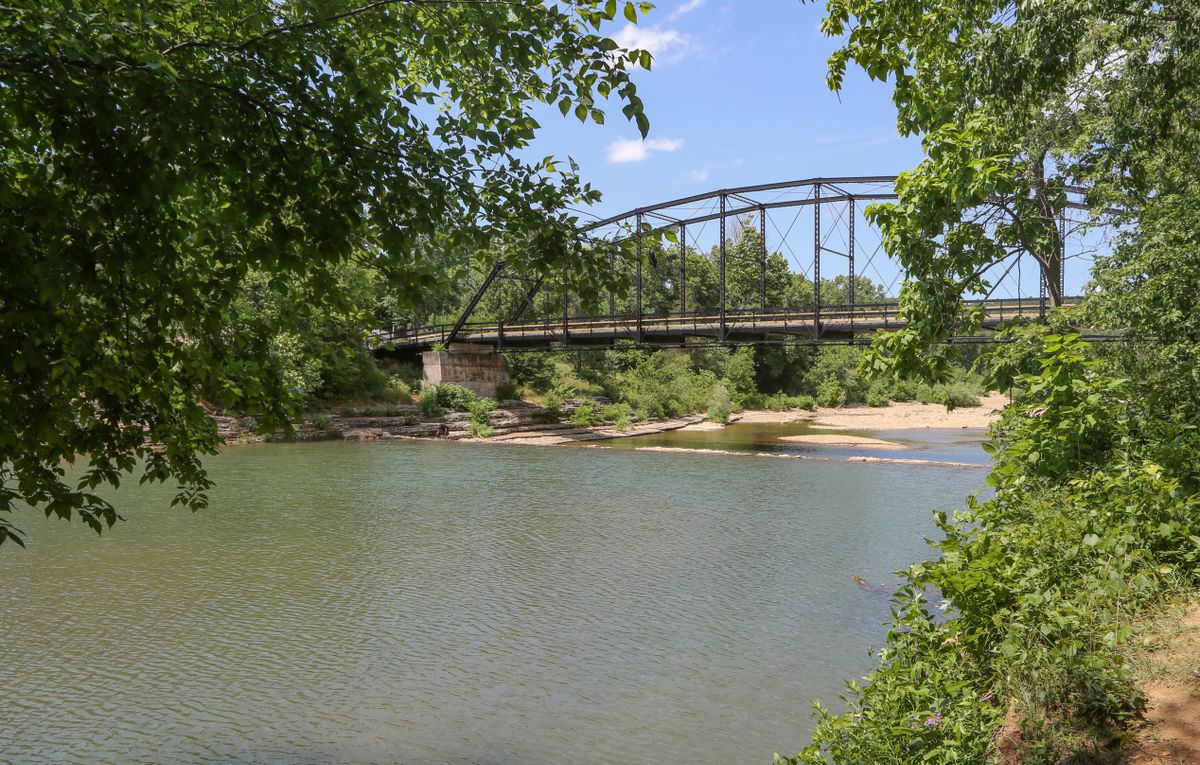

The White River below Bull Shoals Dam in northern Arkansas grows brown trout that make Montana anglers go quiet. Not 5-pounders. Not 10-pounders. Brown trout over 30 pounds, fish that have spent years in the tailwater's cold, nutrient-rich water, feeding on scuds, sowbugs, sculpins, and, when winter kills push threadfin shad through the dam, gorging on baitfish until they reach sizes that seem impossible for a river this far from the ocean.
The Mountain Home destination post covers the broader area. This guide goes deep on the fly-fishing techniques, the hatch chart, and the single most important variable on the White River: the generation schedule.
The Dam, The Variable That Controls Everything
Bull Shoals Dam releases water from the bottom of the reservoir through hydroelectric turbines, and the flow can change from 500 CFS to over 24,000 CFS within a day. The river can rise 8 feet in a matter of hours. One moment you're wading a shin-deep riffle casting to rising trout; the next, that riffle is a fast, deep, unfishable torrent.
This is the White River's defining challenge and its defining opportunity. The generation schedule, published daily by the Army Corps of Engineers, dictates when and how you fish:
Low water (no generation, 200-700 CFS): The river drops to wadeable levels, and the trout spread across riffles, runs, and shallow flats. This is when the dry-fly fishing happens, caddis, sulphurs, and BWOs bring fish to the surface, and you can wade and sight-fish to visible trout in clear, shallow water. Low water is the premium window, and experienced White River anglers plan their entire trips around the generation schedule to maximize these hours.
During low water, the White River fishes like a classic Western tailwater, clear runs over gravel, pods of rising trout during hatches, and the kind of technical nymphing with sowbugs and scuds that rewards a precise dead-drift. The best low-water fishing often happens early morning before generation begins, or late afternoon after the turbines shut down. Some days offer all-day low water. Others offer none. The schedule is published online by the Army Corps, and checking it before you leave the lodge is as fundamental as checking the weather.
Rising water (generation starting): The river begins to climb. This is the transition window that catches visiting anglers off guard, the water that was knee-deep 20 minutes ago is now waist-deep and climbing. Smart anglers move to the banks immediately and fish the seams where rising water pushes bait against the shoreline. The trout reposition along the edges, feeding on scuds, sowbugs, and crane fly larvae flushed from the substrate by the rising current. Nymphing the bank seams during rising water, heavy rigs tumbled tight against the bank, can be some of the most productive fishing on the entire river, because the fish are feeding aggressively on food the current is delivering directly to them.
High water (full generation, 10,000+ CFS): The river is a fast, deep, colored torrent. Wade fishing is impossible and dangerous, the current will sweep you off your feet. Guides switch to drift boats, floating the high water and fishing heavy nymph rigs or streamers along the bank seams and in the back eddies where trout shelter from the main current. Big streamers, sculpin patterns, articulated leeches, Woolly Buggers (#2-6), Circus Peanuts, target the trophy browns that position in the slack water during high flows. The biggest brown trout on the White River are caught during high water by anglers stripping big streamers through the back eddies from drift boats.
The high-water streamer game is where the White River most closely resembles its reputation as a trophy fishery. The fish that hide in deep structure during low flows become accessible in the current seams and eddies. The streamers that look absurdly large for trout fishing, #2 articulated patterns, 5 inches long, are proportional to the fish that eat them.
The chess match: The best White River anglers check the generation schedule every morning, plan their day around the windows, and adjust in real time as flows change. A typical day might start with low-water nymphing at dawn, transition to bank-seam fishing as the water rises mid-morning, shift to drift-boat streamers during full generation in the afternoon, and finish with low-water dry flies if the turbines shut down before dark. A guide who reads the generation schedule, knowing when the water will drop, when the best wade window opens, and when to switch techniques, is worth every dollar. This adaptability is what separates productive White River anglers from frustrated ones.
The Trophy Browns, How They Get So Big
The White River's brown trout grow to extraordinary sizes because of three factors:
Cold, constant water. The bottom release from Bull Shoals keeps the water at 48-55°F year-round, ideal trout temperatures that allow continuous feeding and growth. The fish don't slow down in winter like they do on freestone rivers.
Massive forage base. The tailwater supports enormous populations of scuds, sowbugs, and crayfish, high-protein food items that fuel rapid growth. A brown trout eating scuds and sowbugs 365 days a year grows faster than a brown eating insects seasonally.
The shad kill. In cold winters, threadfin shad, a warm-water baitfish that lives in Bull Shoals Reservoir, get pulled through the dam's turbines and enter the tailwater dead or dying. The shad kill creates a feeding frenzy among the river's largest brown trout, who gorge on the 3- to 5-inch baitfish. A big brown that spends two months eating shad gains weight at a rate that no insect-feeding fish can match. The shad kill is the secret ingredient that pushes White River browns past 20 pounds.
Flies for the shad kill: White and silver streamers (#1/0-4), Craft Fur Shad, Murdich Minnow, white Woolly Bugger, Deceiver in white/silver. Fish them on sink-tip lines, stripping erratically to imitate a dying shad tumbling in the current. The trophy browns eat shad patterns with the kind of commitment that makes the hookup unmistakable.
The Hatch Chart, Subsurface Dominance
The White River is fundamentally a nymphing river. The subsurface food sources, scuds, sowbugs, midges, are available year-round and constitute the majority of what the trout eat. Dry-fly fishing happens, but the nymph game is where the consistent catching lives.
- Year-round: Sowbugs (#14-16, grey/tan) and scuds (#14-16, pink/olive/orange), the foundation. These crustaceans live in the river's aquatic vegetation and are available in every month. Hare's Ear nymphs and specific sowbug/scud patterns cover this.
- Year-round: Midges (#18-24), Zebra Midge (ruby, rootbeer, purple), Griffith's Gnat on the surface during midge clusters. Ruby midges excel on the White, rootbeer midges on the Norfork.
- March–May: BWOs (#16-20) and Hendricksons (#12-14). Parachute Adams and Sparkle Dun in olive. Caddis (#14-16) begin in March.
- May–July: Sulphurs (#14-18), the best dry-fly fishing of the year. Comparadun Sulphur, Light Cahill (#14-16). March Browns (#10-12).
- June–September: Terrestrials, hoppers, ants, beetles along the grassy banks during low water.
- October–March: Shad kill window (cold winters only). White/silver streamers. The trophy season.
- Year-round: Sculpin and crayfish patterns (#4-8), Woolly Bugger, Sculpzilla, Circus Peanut. The subsurface meat-and-potatoes for big browns.
The Fly Box, White River Specific
Nymphs (the core): Sowbug (#14-16, grey), Scud (#14-16, pink/olive/orange), Zebra Midge (#18-22, ruby/rootbeer/purple), Pheasant Tail (#14-18), Hare's Ear (#12-16), San Juan Worm (#10-14, red/brown), egg patterns (#10-14)
Dry flies (for low water): Parachute Adams (#14-18), Elk Hair Caddis (#14-16), Comparadun Sulphur (#14-18), Griffith's Gnat (#18-22), hopper (#8-10)
Streamers (for trophies): Woolly Bugger (#2-8, olive/black/white), Sculpzilla (#2-6), Circus Peanut (#2-4), Craft Fur Shad (#1/0-2, white), Articulated leeches
The Gear
Nymphing setup: 10-foot 5- or 6-weight for indicator nymphing. Long leaders (12-15 feet) with a strike indicator and split shot. The White River's currents during generation demand heavier rigs than most trout fishing. Euro/tight-line nymphing with a 10-foot 3-weight works well during low water.
Streamer setup: 9-foot 7-weight with a sink-tip line for high-water streamer fishing from the drift boat. Heavy tippet (0X-2X), the big browns don't care about leader diameter, and you need the strength to turn a 10-pound fish away from structure.
Dry-fly setup: 9-foot 5-weight during low water windows. Standard trout leaders (9-foot, 5X). The dry-fly fishing is straightforward when it happens, the challenge is timing the generation schedule to have the water low enough.
The Culture, Cotter, "Trout Capital USA"
Cotter, Arkansas (population 900) sits on the White River below Bull Shoals Dam and calls itself "Trout Capital USA." The town's economy runs on trout fishing, guides, lodges, fly shops, and the anglers who travel from across the country to fish the tailwater.
The local fly shops in Cotter are the anchor, carrying White River-specific flies (the ruby midge, the sowbug patterns, the shad-kill streamers that you won't find in a Montana fly shop), daily fishing and generation reports, and guide bookings. Several outfitters and guide services provide additional local expertise.
In Flippin (15 minutes upstream), an all-inclusive lodge offers guided trips, a fly shop, and private water access on 600 acres. The lodge experience is the most comfortable way to fish the White River for visiting anglers.
The White River guide community is specialized in a way that's unique among American tailwaters. These guides read the generation schedule the way the Missouri River guides read the hatch chart, it's the primary variable, and their ability to adapt to changing flows in real time is what separates a productive day from a blank one.
When to Go
- March–May: Spring BWOs, caddis, low-water dry-fly windows, the most balanced season
- May–July: Sulphur hatches during low water, the best dry-fly fishing of the year
- October–March: Shad kill window (cold winters), trophy brown trout on streamers, the biggest fish of the year
- Year-round: Nymphing with scuds, sowbugs, and midges produces every day, every month