Fish
Fish Fire
Fire Hike
Hike Bird
Bird

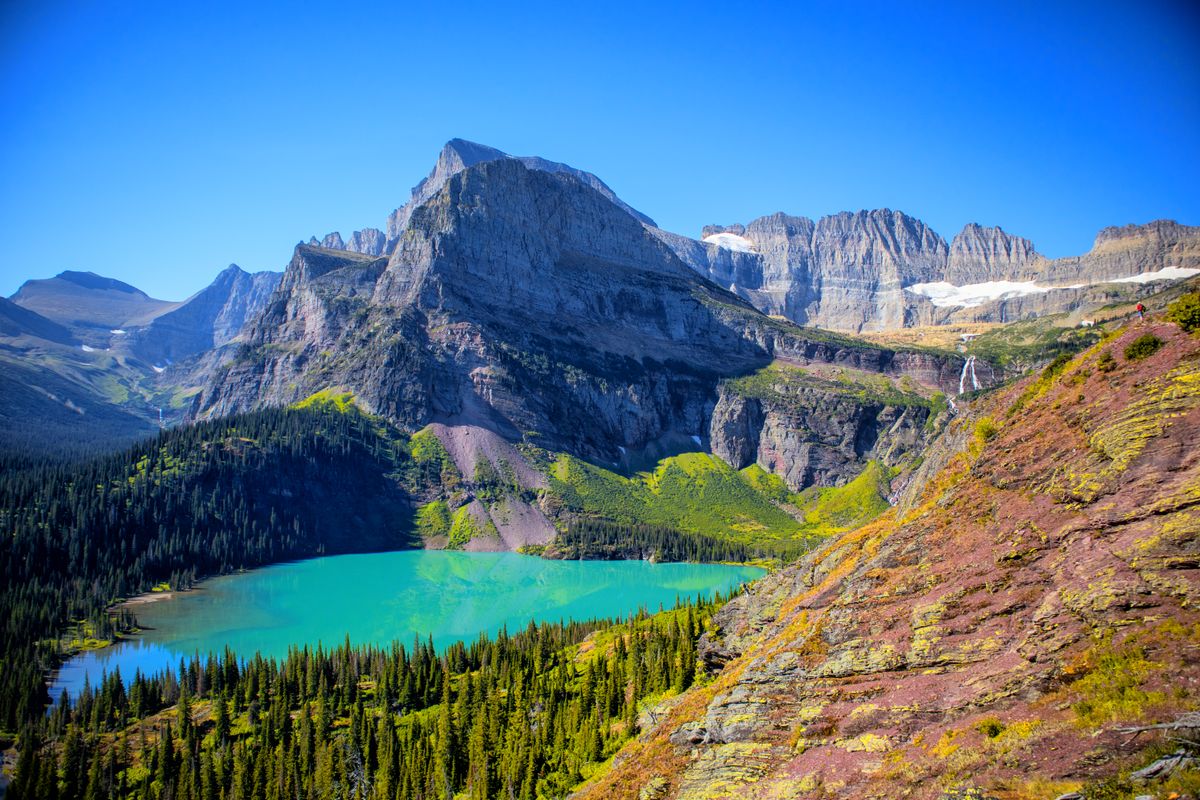

Glacier National Park is the place where fly fishing and wilderness merge completely. There are no stocked fish. There are no hatchery trucks. There are no managed flows or generation schedules. The 700 miles of streams and 130+ named lakes in this park hold the same species that swam here before Lewis and Clark passed through, native westslope cutthroat trout, bull trout, mountain whitefish, and the occasional lake trout that migrated in from Flathead Lake. The fish are wild, the water is glacier-fed and impossibly clear, and the landscape, jagged peaks, hanging glaciers, alpine meadows, and old-growth cedar forests, is the most dramatic backdrop to a trout stream anywhere in the lower 48.
This is not a place you come for numbers or size. Glacier's cutthroat average 8-12 inches, with occasional fish to 16. The bull trout are larger but protected, catch-and-release only, handled with extreme care. What you come for is the experience: standing knee-deep in water so clear you can count the pebbles at 10 feet, casting a dry fly to a cutthroat that has never refused an Elk Hair Caddis because it has never seen one, with a grizzly bear fishing the same river a half mile upstream.
Glacier is fly fishing in its most elemental form, you, the water, and the fish, in a landscape that predates the sport by a million years.
The Fish, Native and Protected
Westslope Cutthroat Trout
The westslope cutthroat (Oncorhynchus clarkii lewisi) is Montana's state fish and Glacier's signature species. These are genetically pure native trout, not the hybridized cutthroat found in many Western rivers where hatchery rainbows have interbred with wild cutthroat populations. Glacier's isolation has preserved these fish in their original genetic form, making them one of the most important native trout populations in North America.
Westslope cutthroat are beautiful fish, golden-olive bodies peppered with black spots that concentrate toward the tail, and the vivid orange-red slash under the jaw that gives cutthroat their name. They're cooperative feeders. They eat dry flies with abandon. They don't require 7X tippet or size 22 midges. A Parachute Adams in #14 or an Elk Hair Caddis in #16, dead-drifted through a pocket or a pool, catches westslope cutthroat in Glacier reliably and consistently.
The fish average 8-12 inches in the streams, with occasional 14-16 inch fish in the deeper pools and lake outlets. In the alpine lakes, cutthroat can reach 18 inches, fish that have spent years feeding in cold, food-limited water, growing slowly but steadily.
Bull Trout
Bull trout (Salvelinus confluentus) are the apex predator of Glacier's rivers, large, powerful char with olive-green bodies, pale yellow spots, and white-edged fins. They can reach 24 inches or more in the larger rivers and lakes. But bull trout are federally protected under the Endangered Species Act, and Glacier's population is critical to the species' survival.
You cannot target bull trout. If you catch one incidentally while fishing for cutthroat, you must release it immediately, no photographs out of water, no prolonged handling, no air exposure. Keep the fish in the water, remove the hook with hemostats, and let it swim away. Barbless hooks are strongly recommended (and required on some waters) specifically because they reduce handling time for accidental bull trout catches.
Lake Trout (Non-Native)
Flathead Lake, the massive natural lake that sits just outside the park's western boundary, contains a thriving population of non-native lake trout (mackinaw) that have invaded some of the park's lakes. In Lake McDonald, lake trout have suppressed the native cutthroat and bull trout populations. Anglers are encouraged to harvest lake trout from park waters to help protect the native fish. This is the one species where keeping fish is a conservation act.
The Waters, Rivers, Streams, and Alpine Lakes
The Flathead River System
Glacier National Park is bordered by three forks of the Flathead River, the North Fork (western boundary), the Middle Fork (southern boundary), and the South Fork (through the Bob Marshall Wilderness to the south). These are big, powerful, glacier-fed rivers with cold, clear water and native trout populations.
The North Fork runs along Highway 486 from the Canadian border to Columbia Falls. It's the most accessible of the three forks, with roadside pull-offs and campgrounds providing bank access. The North Fork holds westslope cutthroat, rainbow trout, mountain whitefish, and bull trout. The water is cold year-round, even in August, the North Fork runs in the mid-50s°F. Fish the riffles and pocket water with dry flies and nymphs. The Chubby Chernobyl with a Pheasant Tail dropper is the standard rig.
The Middle Fork is the classic Glacier fly-fishing river, a designated Wild and Scenic River that flows through the heart of the park's southern boundary. Access is limited to a few bridges and trail crossings, which means lower fishing pressure and wilder fish. The Middle Fork is float-friendly for experienced rafters, and guided float trips are the best way to access the remote middle sections. Westslope cutthroat are catch-and-release on the Middle Fork.
Important regulation: Both the North and Middle Forks require a Montana state fishing license even when fishing from park boundaries. The park's no-license policy only applies to waters entirely within the park.
Lake McDonald
Lake McDonald is the largest lake in the park, 10 miles long, 472 feet deep, and surrounded by old-growth cedar forest. It holds native cutthroat and bull trout, plus the invasive lake trout that anglers are encouraged to remove. Shore fishing is accessible from Going-to-the-Sun Road and several campgrounds. Fish the inlet (McDonald Creek) and outlet for cutthroat feeding in the current. Lake trout require sinking lines and large streamers fished deep, or trolling from a boat.
Alpine Lakes, The Backcountry Reward

Glacier's backcountry lakes are where the fishing and the hiking merge into a single experience. Lakes like Trout Lake (accessible via a 3.6-mile trail from Lake McDonald), Avalanche Lake, Cracker Lake, and dozens of unnamed alpine tarns hold cutthroat trout that see almost no fishing pressure. The fish are small (6-10 inches typically) but spectacularly colored and eager to eat.
The hike is the price of admission. Most backcountry lakes require 3-10 miles of trail hiking, often with significant elevation gain. Pack a 4-piece 3- or 4-weight rod in a travel tube, a small box of dry flies, and a spool of 5X tippet. That's the entire backcountry fishing kit. The cutthroat in these lakes eat Parachute Adams, Griffith's Gnats, and small Elk Hair Caddis with zero selectivity, they're hungry fish in cold, food-limited water, and they'll eat anything that looks like an insect.
St. Mary River and the East Side
The east side of Glacier, drier, windier, and less forested than the west, offers different fishing character. The St. Mary River flows from St. Mary Lake through open prairie toward the Blackfeet Reservation. The river holds cutthroat, rainbow, and whitefish, and the wind can be brutal, bring a 6-weight and be prepared to cast into 20-knot gusts. The east-side streams fish best in late summer when water levels drop and the fish concentrate.
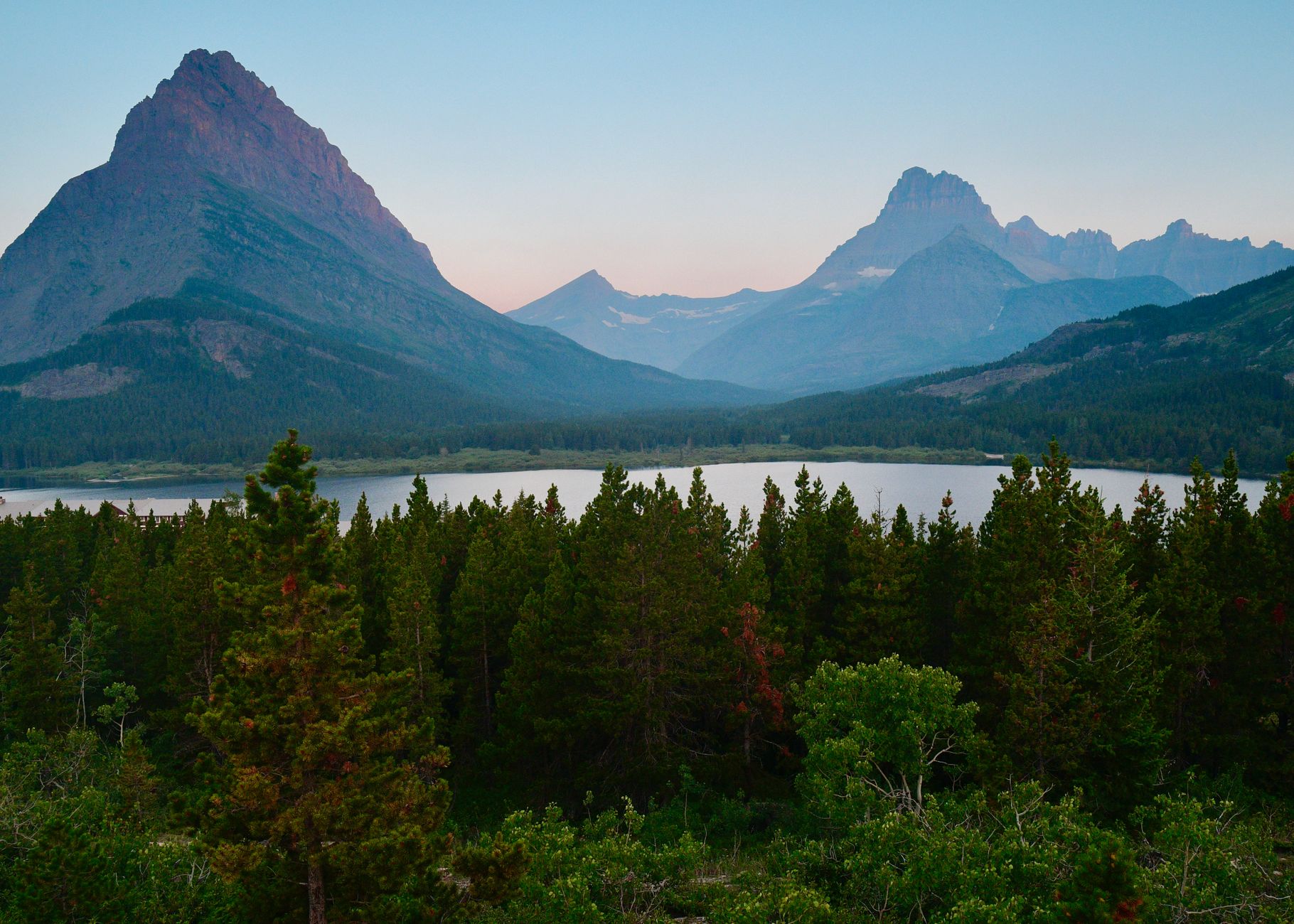
St. Mary Lake itself is a stunning fishery in a stunning setting, turquoise glacial water beneath some of the park's most iconic peaks (Going-to-the-Sun Mountain, Fusillade Mountain). Shore fishing near the inlet and outlet produces cutthroat and whitefish. The lake is cold and deep, the trout hold near structure and current, not in the open water.
Logging Creek and the Remote Northwest
For anglers willing to work for solitude, Logging Creek in the park's remote northwest corner offers something rare: water that almost nobody fishes. Access requires long drives on unpaved roads followed by multi-mile hikes. The creek holds small cutthroat and bull trout in a setting so wild that grizzly bears are more common than other anglers. This is Glacier fishing at its most primitive, no maintained trails to the best water, no cell service, no bailout. Pack bear spray, tell someone where you're going, and fish with one eye on the water and one on the brush.
McDonald Creek
McDonald Creek connects Lake McDonald to the Middle Fork Flathead and is one of the most accessible streams in the park, it parallels Going-to-the-Sun Road for several miles. The creek holds cutthroat, whitefish, and the occasional bull trout, and the fishing is straightforward pocket-water nymphing and dry-fly work through riffles and pools. The accessibility means more pressure than the backcountry waters, but the fish are still native and still willing. In fall, kokanee salmon run up McDonald Creek to spawn, they're not targets for fly anglers, but the spectacle of bright red salmon in clear mountain water is worth seeing even if you don't cast.
The Fly Box, Keep It Simple
Glacier's cutthroat are not selective fish. They eat generously and punish overthinking. The fly box for Glacier should be simple, compact, and focused on visibility and floatation:
Dry flies (80% of your fishing):
- Parachute Adams #12-16, the universal searching dry
- Elk Hair Caddis #14-16, tan and olive
- Stimulator #10-14, stonefly/attractor for fast water
- Chubby Chernobyl #10-12, hopper-dropper anchor
- Griffith's Gnat #18-20, midge clusters on calm water
Nymphs (dropper flies):
- Pheasant Tail #14-18
- Hare's Ear #14-16
- Prince Nymph #14-16
- Zebra Midge #18-20
- Pat's Rubber Legs #8-12, stonefly nymph for big water
Streamers (for larger fish):
- Woolly Bugger #8-10, olive and black
- Black Bunny Leech #6-10, for deeper pools and lake outlets
The Gear
Rod: A 9-foot 5-weight handles 90% of the fishing, streams, rivers, and alpine lakes. Bring a 6-weight for the Flathead River main stem and for fighting the east-side wind. A 3- or 4-weight packable rod (4-piece) for backcountry lake hikes.
Leaders: 9 feet, 4X-5X for most situations. The fish aren't leader-shy. Go to 6X only on the calmest alpine lakes where cutthroat are sipping midges.
Waders: Breathable waders for the rivers (the water is cold even in August, 50-55°F). Wet-wade in the backcountry if you're hiking, carrying waders 8 miles uphill isn't worth it.
When to Go
-
Late June–early July: Rivers are clearing from snowmelt runoff. The fishing starts on the lower-elevation streams first. Stonefly hatches begin on the Flathead forks. High-country lakes are still iced over or just thawing.
-
July–August: Prime season. Rivers are clear, hatches are active (caddis, PMDs, stoneflies), and the alpine lakes are accessible. This is when the backcountry fishing peaks. Also peak tourist season, popular waters like McDonald Creek and Avalanche Lake will have company.
-
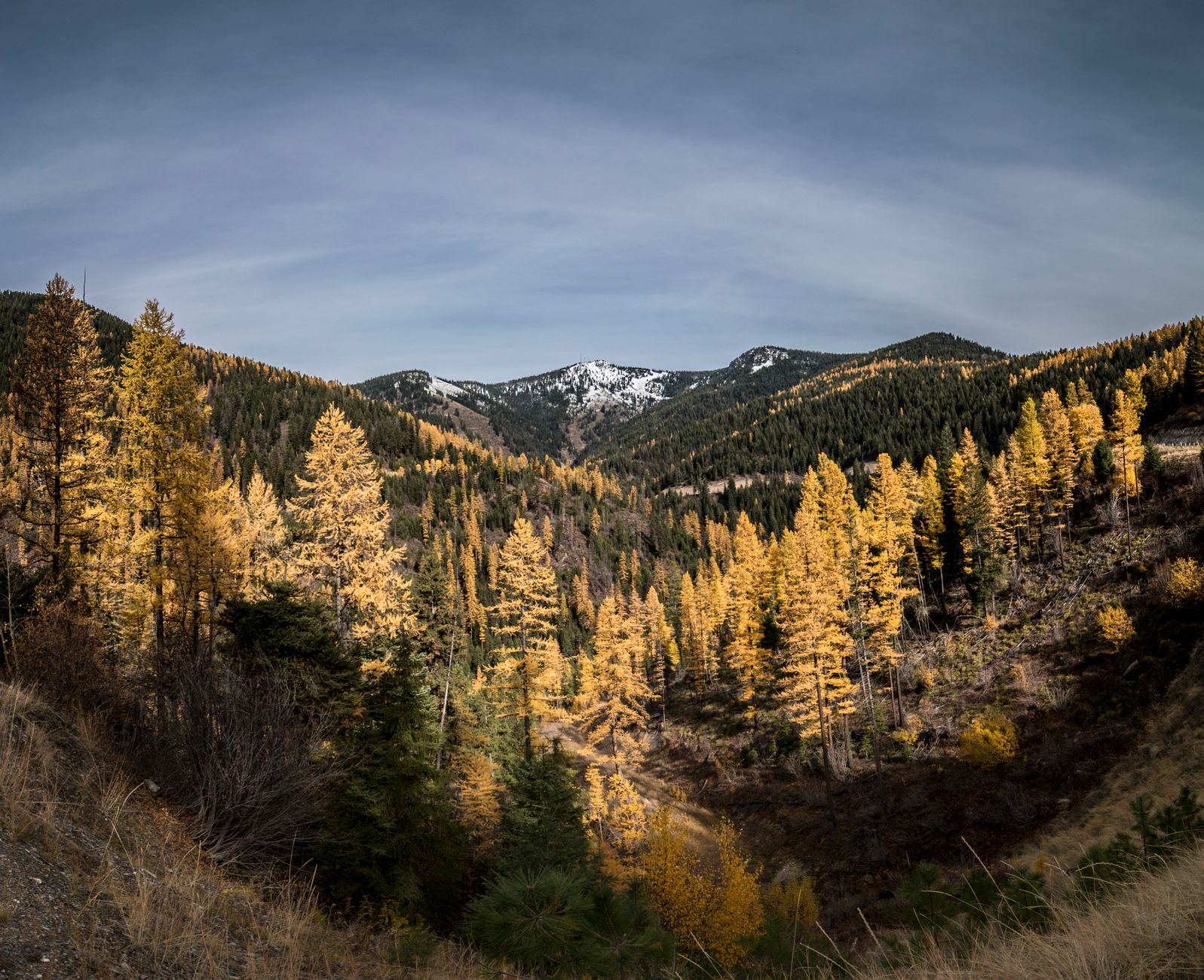
September–early October: The best fishing of the year. Tourist crowds thin dramatically after Labor Day. The fish are feeding aggressively before winter. Fall colors in the larch forests are spectacular. Water temperatures are ideal. Late September on the North Fork, with golden larches overhead and a dry fly on the water, is one of the finest experiences in American fly fishing.
-
October–November: Snow begins. Access narrows. Going-to-the-Sun Road closes (usually mid-October). But the fishing on the lower rivers (North Fork, below Lake McDonald) can be exceptional for those willing to deal with cold weather. Brown trout from the Flathead system move up to spawn, and the last cutthroat of the season feed aggressively in water that's dropped to 45°F. This is solitude fishing, the park is nearly empty.
Grizzly Bears and Fishing
This isn't a footnote, it's a fundamental part of fishing in Glacier. The park has one of the densest grizzly bear populations in the lower 48, and bears fish the same rivers you do. You will see bears in Glacier. You may see bears while you're fishing. The protocol is non-negotiable:
Carry bear spray. On your belt, not in your pack. You need it accessible in two seconds.
Make noise. Talk, sing, clap, especially when wading around blind bends. A surprised bear is a dangerous bear. An aware bear will usually leave.
Never fish with food on you. Clean fish (if keeping lake trout) at designated areas, not on the riverbank. Bears smell fish from a mile away.
Give bears the run. If a bear is fishing a stretch of river, leave. Come back later. The bear was there first, and there are plenty of other runs.
Fish with a partner. Bear encounters are less dangerous when two people are present. Solo backcountry fishing in Glacier is beautiful but carries real risk.
The bears aren't a reason to avoid Glacier, they're part of what makes it extraordinary. Fishing in country where apex predators share the river is humbling in a way that no other fishing experience in the lower 48 can match.
Conservation, Handle With Care
Glacier's fish populations are under pressure from climate change (warming water temperatures, shrinking glaciers, reduced snowpack), invasive species (lake trout, brook trout hybridization), and increasing visitor traffic. The park's fish are not replaceable, there are no hatchery programs to supplement native populations. Every cutthroat you catch in Glacier is a wild, genetically pure native fish that took years to reach its size.
Use barbless hooks. It's required on some waters and should be practiced on all of them. The faster you can release a fish, the better its survival odds.
Keep fish in the water. Wet your hands before handling. Support the fish horizontally. No grip-and-grin photos with the fish held vertically, that damages internal organs.
Report bull trout catches. The park tracks bull trout encounters for population monitoring. Note the location, approximate size, and whether the fish was healthy.
Harvest lake trout. Keeping non-native lake trout from Lake McDonald and other invaded lakes is a conservation act that directly helps native fish.