Fish
Fish Fire
Fire Hike
Hike Bird
Bird

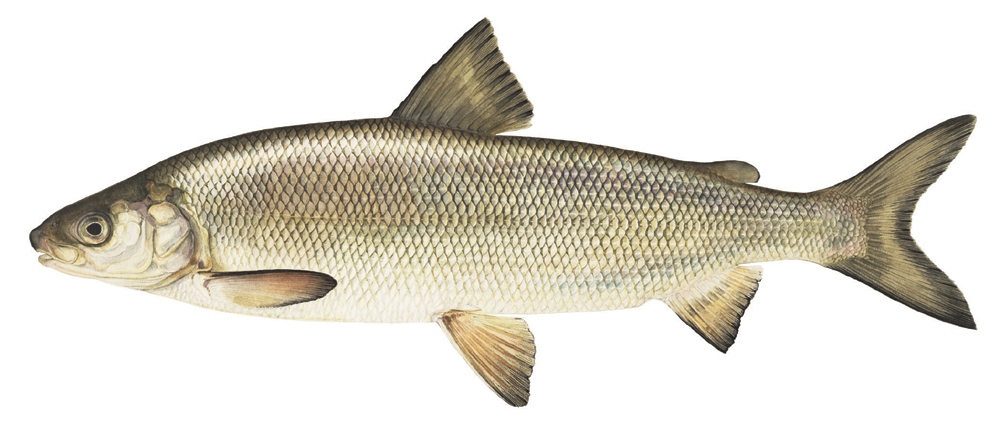

The lake whitefish is one of the north country's best-kept secrets, a hard-fighting, silver, deep-water member of the salmon and trout family that pulls surprisingly hard, tastes absolutely superb, and has exploded in popularity among ice anglers and jig fishermen who've discovered how fun they are to catch. Long thought of mainly as a commercial and netting fish, the lake whitefish is now a prized sportfish, especially through the ice, where dialed-in anglers catch them in numbers on small spoons and jigs.
Whitefish live deep and school up, so catching them is a game of finding the fish (electronics help enormously) and coaxing their soft, downturned mouths onto a small jig or spoon. It's a finesse, deep-water, cold-weather fishery for the most part, and a genuinely rewarding one. This guide covers everything: the whitefish's biology and habits, the best jigging spoons and jigs, ice-fishing tactics, open-water methods, fly fishing, and how to clean and cook this delicious fish.
Whitefish Tips and TechniquesMeet the Lake Whitefish
The lake whitefish (Coregonus clupeaformis) is a member of the salmon family (Salmonidae), and like trout and salmon it has an adipose fin and a deeply forked tail. It's a silvery, streamlined fish with a small head, a small, downturned (subterminal) mouth suited to bottom feeding, large scales, and an olive-to-greenish back fading to bright silver sides and a white belly.
Key facts:
- Size: commonly 1-4 pounds; good ones reach 5-8 pounds, and the biggest exceed 10-15 pounds. They fight well above their weight.
- Deep and cold: whitefish are coldwater fish that spend most of the year in deep water (often 30-80+ feet), coming shallower mainly to spawn in late fall over rocky/gravel shoals.
- Bottom feeder: they feed on insect larvae, small mollusks, zooplankton, and small fish rooted from or near the bottom, using that downturned mouth.
- Schooling: whitefish travel in schools, so once you find one you often find many, key to the fast action they can provide.
- Range: across the northern US and Canada, the Great Lakes and countless northern lakes from the upper Midwest and Northeast across Canada to Alaska.
- A soft bite: whitefish have soft mouths and can bite subtly; detecting and setting on the bite is part of the challenge.
That deep, schooling, coldwater nature makes the lake whitefish a premier target for ice anglers and deep-water jiggers who know how to find and finesse them.
Jigging Spoons: The Go-To Method
The number-one way to catch lake whitefish, especially through the ice, is vertical jigging with spoons. A flashy jigging spoon dropped to the bottom and worked with lift-drops imitates the small prey whitefish feed on and triggers their curiosity and feeding.
Spoons for Lake Whitefish in WinterHow to do it:
- Lure: flashy jigging spoons (1/8 to 1/2 oz, think Swedish Pimples, Kastmasters, flutter spoons, and similar) in silver, gold, glow, and bright colors. Tip the hook with a wax worm, maggot/spike, minnow head, or soft plastic for scent and a target.
- Technique: drop to the bottom, then jig with aggressive lift-drops to attract fish, followed by subtle jiggling or dead-sticking to trigger the bite. Whitefish often follow the spoon up and hit on the pause or fall.
- Stay near bottom: whitefish feed on or near the bottom, so keep your presentation in the lower part of the water column, where they cruise.
- Watch your electronics: a flasher or sonar is hugely helpful, you'll see whitefish come in, react to your jigging, and either commit or spook, letting you adjust in real time.
Dialing in the jigging cadence, aggressive to call them in, subtle to close the deal, is the heart of whitefish fishing.
Small Jigs and Tipped Presentations
Beyond spoons, small jigs and jigging lures tipped with bait are deadly, especially for finicky fish. A small tungsten jig, a jigging minnow lure (like a jigging Rapala), or a dropper setup with a spoon up top and a small tipped jig or fly below covers your bases.
Catching Whitefish 101- Tungsten jigs: small, heavy tungsten jigs tipped with maggots/spikes or wax worms get down fast and offer a finesse presentation for pressured or subtle-biting fish.
- Dropper rigs: a flashy spoon (attractor) with a small tipped jig or fly on a dropper below is a classic whitefish producer, the spoon draws them, the small offering gets eaten.
- Soft plastics: small soft-plastic bodies on jigheads also work.
When whitefish are pecking softly and won't commit to a spoon, downsizing to a subtle tipped jig often turns lookers into biters.
Ice Fishing for Whitefish
Ice fishing is where lake whitefish have truly become stars, they're a top hardwater target, providing fast action and great eating during the long northern winter.
How to Catch Whitefish Ice FishingIce tactics:
- Find deep basins and structure: drill over deep flats, basin edges, humps, and drop-offs in 25-60+ feet, and use electronics to locate schools and mark fish coming through.
- Mobile approach: whitefish roam, so be willing to move and drill new holes to stay on the schools rather than waiting them out.
- Jig aggressively, then finesse: rip a flashy spoon to call fish in from a distance, then slow down to subtle jigging or a dead-stick when one appears on the flasher.
- Second rod / dead-stick: where legal, a dead-stick with a tipped jig or minnow near the bottom alongside your jigging rod catches the fish that won't commit to the moving lure.
A flasher, a mobile mindset, and the aggressive-then-subtle jigging rhythm are the keys to a great day of whitefish on the ice.
Open-Water Whitefish
Whitefish are also caught in open water, though it's less common than ice fishing. In summer and fall, target them in deep water with vertical jigging spoons and jigs over deep flats and basins (a boat with good electronics to find suspended or bottom-hugging schools is a big help), or during the fall spawn, when whitefish move onto shallower rocky shoals and reefs and can be caught closer to shore, sometimes even on flies and small lures. Trolling and bottom-bouncing bait rigs in deep water also take open-water whitefish. The principle is the same as through the ice: find the deep schools and give them a small, flashy, tipped presentation near the bottom.
Fly Fishing for Whitefish
Whitefish can be caught on the fly, particularly in rivers (where some populations live) and around the shallow fall spawn, or in lakes where they cruise shallow. Because they feed heavily on tiny invertebrates, small patterns are the rule.
How to Catch Lake Whitefish on the FlyUse small nymphs, midge patterns, egg flies, and small streamers, fished deep and slow near the bottom where whitefish feed. Their small, downturned mouths and subtle takes make for a delicate, technical fly game, a fun challenge for anglers who enjoy targeting these underrated fish on light fly tackle in the right conditions.
Where and When to Find Lake Whitefish
Location: lake whitefish inhabit the deep, cold water of large northern lakes and the Great Lakes. Most of the year, target deep basins, flats, humps, and drop-offs (roughly 25-80 feet), using electronics to find the schools. During the late-fall spawn, they move shallower onto rocky and gravel shoals and reefs, where they're more accessible.
Timing: winter (ice fishing) is the prime and most popular season, whitefish feed actively under the ice and are a top hardwater target. The late-fall spawn offers another peak, with fish shallow and concentrated. They can be caught in open water in summer and fall by those willing to fish deep. Whitefish are coldwater fish, so the cold months are generally best. Low-light periods and overcast days can improve the deep-water bite.
Lake Whitefish vs. Cisco and Other Look-Alikes
Lake whitefish share their waters with a few similar silvery relatives, so it helps to tell them apart. The closest confusion is with the cisco (also called tullibee or lake herring), another coregonid in the same family. The classic difference is the mouth: the lake whitefish has a small, distinctly downturned (subterminal) mouth with the snout overhanging the lower jaw, an adaptation for bottom feeding, while the cisco has a more terminal or slightly upturned mouth, since it feeds higher in the water column on plankton. Lake whitefish also tend to be deeper-bodied and have a more humped back behind the head, whereas cisco are more slender and herring-like.
Both are in the trout/salmon family and both have an adipose fin and forked tail, and where their ranges overlap they're often caught together on similar jigging presentations. Don't confuse either with the true herrings (which lack an adipose fin) or with young lake trout (which have spots and a very different mouth). If you land a silvery, adipose-finned fish with a small, downturned, bottom-feeding mouth in deep northern water, you've almost certainly got a lake whitefish.
Reading Your Electronics for Whitefish
More than almost any other freshwater fish, lake whitefish reward the angler who can read a flasher or sonar, so it's worth understanding what you're looking at. As you jig, watch for whitefish to appear as marks rising off or cruising along the bottom, moving toward your lure. A key behavior: whitefish frequently come in fast to an aggressively jigged spoon, then hesitate, the flasher shows them closing the gap and then hovering a foot or two away, deciding. That's your cue to change tactics: slow the jig to a subtle quiver, let it fall, or dead-stick it, which often turns the looker into a biter. If a fish rises and then drops away, you jigged too aggressively at the wrong moment; if it never commits, try downsizing to a small tipped jig.
Learning to interpret these marks in real time, call them in with flash and motion, then close the deal with finesse, is the single biggest skill in whitefish fishing, and it's why anglers with good electronics and a feel for the fish so dramatically out-catch those blindly jigging. Over a day on the ice, this feedback loop of watch, react, and adjust turns a hard-to-figure fish into a pattern you can repeat hole after hole.
The Fall Spawn
The late-fall spawning period is a special window in the whitefish year and worth understanding. As water temperatures drop in late autumn (often November into early winter, depending on latitude), lake whitefish migrate from their deep summer haunts onto shallow rocky and gravel shoals and reefs to spawn, broadcasting their eggs over the rocks where they'll incubate through winter. This movement concentrates the fish in shallower, more accessible water, and it's one of the few times shore anglers and fly fishers get a realistic shot at them.
For anglers, the pre-spawn and spawn staging can mean excellent fishing as whitefish group up and feed around the shoals before and between spawning activity. It's also a reminder to fish responsibly: know and follow local regulations, which sometimes protect spawning whitefish with closures or restrictions, and handle any fish you're releasing gently. Understanding this seasonal shift, deep most of the year, shallow to spawn in late fall, then catchable through the ice all winter, is the key to knowing where to look for whitefish at any given time.
Cleaning and Eating Lake Whitefish
Here's a big part of the appeal: lake whitefish are outstanding eating, flaky, white, mild, and slightly sweet, widely considered one of the very best-tasting freshwater fish. They're excellent fried, baked, or grilled, and are especially famous smoked (smoked whitefish is a beloved delicacy), as well as in whitefish chowder and even as roe.
How to Fillet Lake Whitefish (Boneless)- Cleaning: fillet as usual; they yield thick, white, flaky fillets. There are techniques for boneless fillets (removing the row of pin bones), worth learning for clean, bone-free pieces.
- Cooking: pan-fry, bake, or grill fresh; the flesh is rich enough to hold up well. Smoking whitefish is a northern tradition and arguably the best way to enjoy them.
- Keep them cold: as with all fish, ice your catch promptly for the best flavor.
Between the fight and the flavor, a limit of whitefish is a genuine reward.
Discover the North's Underrated Gem
The lake whitefish is a fantastic and underappreciated sportfish: hard-fighting, schooling (so the action can be fast), a perfect ice-fishing target, and among the best-eating fish that swims. Learn to find the deep schools, master the aggressive-then-subtle jigging rhythm with a tipped spoon, and you'll unlock a winter (and open-water) fishery that keeps northern anglers coming back. Grab some jigging spoons and a flasher, find a deep basin, and discover why whitefish have such a devoted following.
For other deep, coldwater northern fish that share these lakes, see our guides to the lake trout, the closely related cisco, and the popular walleye.
Want to get in on the north's underrated gem? Pull up your lake in Guidepole to scout the deep basins, humps, and drop-offs, pin the nearest boat launch or access point, and check current conditions before you head out onto the ice or the water.