Fish
Fish Fire
Fire Hike
Hike Bird
Bird

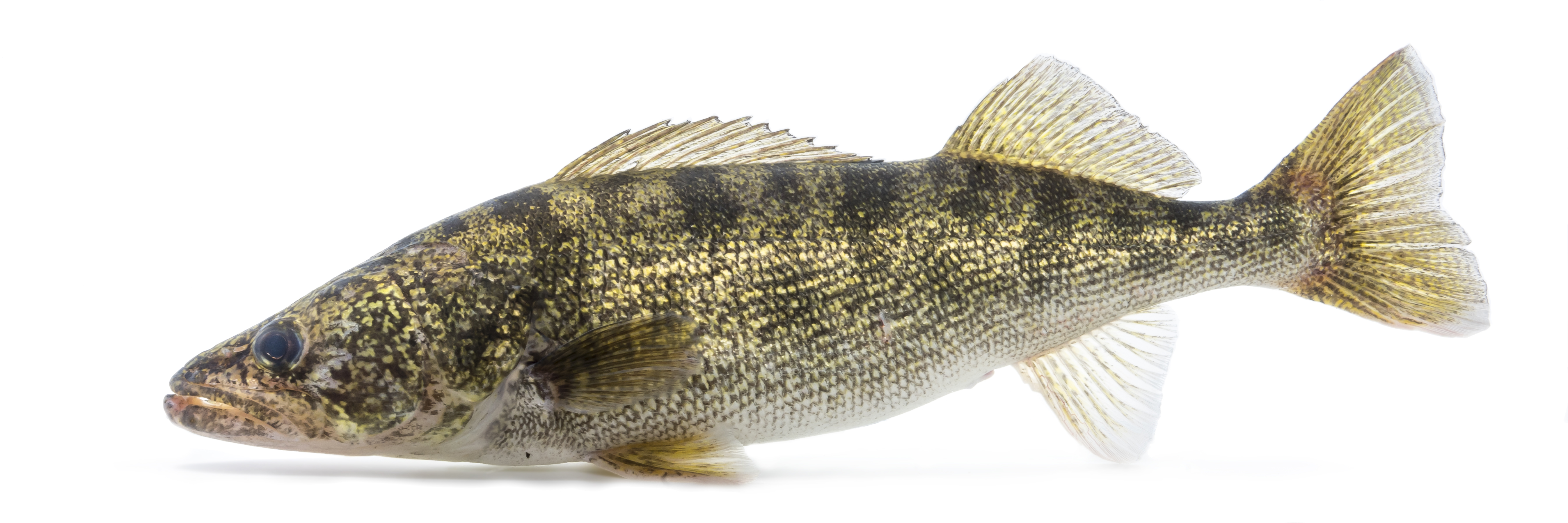

The walleye is the crown jewel of North America's northern lakes and rivers, a golden, glassy-eyed predator that is famously good at two things: being hard to pattern, and being the best-eating fish in freshwater. Walleye don't hammer a bait like a bass; they slurp it, often so softly you feel only weight or a tick. They feed hardest in low light, dawn, dusk, after dark, and under wind and clouds, using light-gathering eyes that give them a hunting edge their prey can't match. Learn to be in the right place at the right time with the right presentation, and this "tricky" fish becomes wonderfully predictable. This guide covers where walleye hold in lakes and rivers, and every core technique, with step-by-step rigging, to catch them.
The Low-Light Predator
The walleye (Sander vitreus) is North America's largest member of the perch family, think of a giant, torpedo-shaped yellow perch with a mouthful of teeth. It's named for its large, glassy, marble-like eyes, which contain a reflective layer called the tapetum lucidum (the same thing that makes a cat's eyes glow). That layer lets walleye see and feed efficiently in dim light and stained water, which is the single most important fact in all of walleye fishing: they own the low-light, low-visibility window, hunting minnows and perch when their prey is nearly blind.
Walleye are olive-and-gold with a white-tipped lower tail fin, and they school by size and age. Most "eaters" run 14 to 20 inches (roughly 1 to 3 pounds); a fish over 25 inches is a genuine trophy, and the biggest walleye push past 15 pounds. They're a cool-water fish, most active in the 55–70°F range, and they relate to structure, current, and, above all, the edge between light and dark.
Where Walleye Live
Walleye hold in different places in lakes than in rivers, and finding them is most of the battle.
In lakes and reservoirs, walleye relate to structure and breaklines, the edges where shallow feeding flats drop into deep water. Focus on points, underwater humps and reefs, sharp breaklines, rock piles, and the edges of weed beds. In daylight they hold deeper along these breaks; at dawn, dusk, and night they slide up onto the adjacent shallow flats and shoreline rocks to feed. Wind that pushes into a rocky point or shoreline, the classic "walleye chop", stacks baitfish and triggers walleye to feed shallow even in daylight.
In rivers, walleye are current-oriented. Target the slack water beside the flow: current seams, eddies, wing dams, the deep holes below riffles, and the tailraces below dams, where walleye stack to ambush disoriented baitfish. Rivers are especially productive in the pre-spawn late-winter and spring run when fish concentrate below current breaks and dams, often the single best walleye opportunity of the year, and one of the few you can enjoy from the bank. Anglers line the tailraces below dams in early spring, casting jigs and blade baits into the current seams as huge numbers of walleye push upstream to spawn. Learn the dam tailraces and river holes near you, and you'll have shore-accessible walleye action when the lakes are still locked up or barely thawed.
The Techniques That Catch Walleye
Walleye eat both jigs and live bait, and can be caught casting or trolling. Here are the core methods, how to rig each, and when to reach for it.
Jig and Minnow, the walleye standard
More walleye are caught on a jig than any other single lure. It's the go-to for cold water, current, and vertical fishing over structure.
How to rig it: Tie a lead-head jig (1/8 to 3/8 oz, heavier for deep water and current) directly to your line. Tip it with a live minnow (hook a fathead or shiner through the lips or up through the head), or thread on a soft-plastic paddle-tail or ringworm. Match jig weight to depth: you want to feel the bottom without the jig plummeting.
How to fish it: Cast it out or drop it straight down, let it hit bottom, and work it with small lifts and drops of the rod tip, pausing on the bottom between hops. Most bites come on the fall or the pause and feel like a tick or sudden weight, reel down and set. Dragging and "snap-jigging" over flats and along breaks also produces.
How to Jig for WalleyeThe Lindy Rig, live bait, slow and deadly
The Lindy rig (a slip-sinker live-bait rig) has arguably caught more walleye than any other live-bait method, it lets a walleye pick up the bait and swim off without feeling resistance.
How to rig it: Slide a walking sinker (1/4 to 1/2 oz) onto your main line, then tie on a small barrel swivel. To the swivel add a 24- to 48-inch leader and a single hook. Bait it with a lively minnow, leech, or nightcrawler.
How to fish it: Move slowly along a breakline (drifting or on the trolling motor), keeping the sinker in light contact with the bottom. When you feel a bite, often just added weight, drop the rod tip, feed the fish a little slack line for a second or two, then reel down and set. This stop-and-go, "let-them-eat-it" method is a finesse killer for neutral fish.
How to Fish a Lindy Rig for WalleyeThe Crawler Harness and Bottom Bouncer, cover water in summer
From late spring through early fall, a spinner (crawler) harness pulled behind a bottom bouncer covers water and calls fish with flash and vibration.
How to rig it: Clip a bottom bouncer (1 to 3 oz, matched to depth and speed) to your main line, its L-shaped wire arm keeps the bait a foot off the bottom and rarely snags. To the other end, attach a crawler harness (a beaded leader with a spinner blade and one or two hooks) and thread a full nightcrawler onto the hooks.
How to fish it: Troll or drift slowly (0.8–1.5 mph) along flats and breaklines, letting the bouncer tick the bottom while the spinning blade flashes. Vary blade color and size and your speed until you find the fish. It's the classic summer search technique.
How to Fish a Bottom Bouncer and Crawler HarnessThe Slip Bobber, precision over structure
When walleye are holding tight to a rock pile, reef, or specific spot, a slip bobber suspends bait right at their level and lets you soak it patiently.
How to rig it: Thread the main line through a bobber stop and bead, then a slip float, then add a small bead and a jig or plain hook with a split shot. Set the bobber stop to the exact depth the fish are holding. Bait with a leech, minnow, or half a crawler.
How to fish it: Cast beyond the spot, let the rig settle to the set depth, and wait, twitch it occasionally. When the float goes down, reel up slack and set. Deadly for suspended and structure-hugging fish, and a great way to fish at anchor over a school.
How to Rig a Slip Bobber for WalleyeTrolling Crankbaits, cover the most water
To locate scattered fish or catch suspended walleye over open water, trolling crankbaits is unbeatable.
How to rig and fish it: Tie on a diving crankbait or minnow-style bait (a Rapala Shad Rap or a Berkley Flicker Shad) and let it out behind the boat, "flat-lining," or using planer boards and lead-core line to spread lines and reach depth. Troll along breaklines and shallow flats at 1.5–2.5 mph, especially at dusk, when walleye move up to feed. Use line-counter reels to repeat the exact lead that produces, and match the crank's dive depth to the fish.
How to Troll Crankbaits for WalleyeCasting Cranks and Blade Baits, shallow and cold-water bites
Two more presentations round out the arsenal. Casting crankbaits and jerkbaits shine when walleye push shallow, over rocky shorelines at night, into river current, and onto wind-blown flats. Cast a shallow-running crank or a minnow bait, and retrieve it steadily or with a stop-and-go over the shallows at dawn, dusk, and after dark.
In cold water, a blade bait (a thin metal vibrating lure) fished vertically is a giant-killer. Drop it to the bottom and lift-drop it with short, sharp snaps, letting it flutter back down on a controlled line, most strikes come on the fall. It's a top producer for lethargic late-fall, winter, and river walleye.
How to Cast Crankbaits for Walleye How to Fish a Blade Bait for WalleyeTiming: Fish the Low-Light Window
More than any other freshwater fish, walleye success comes down to timing and conditions. The best bites come:
- At dawn and dusk, the classic feeding windows, when walleye move shallow onto flats and shoreline rock.
- After dark, especially in summer on clear lakes and over rocky shorelines, night is prime time for big walleye.
- On windy, overcast days, when the "walleye chop" and low light let fish feed shallow and aggressively all day.
- In stained or tannic water, where walleye's light-gathering eyes give them an all-day advantage.
On bright, calm, high-sky days, walleye pull deep and get finicky, that's the time to slow down with a jig or live-bait rig fished right on their noses. Read the light and the wind, and you'll be fishing when the walleye are eating.
The Best-Eating Fish in Freshwater
It's no secret why walleye are so popular: their sweet, flaky, white fillets are widely considered the finest table fare in freshwater, the centerpiece of the Upper Midwest and Canadian shore-lunch tradition. If you plan to keep a few, know your water's regulations and slot limits, keep your catch cold, and consider releasing the big females, the large fish are the prime breeders, and a lake's trophy potential depends on them. Keep a few eaters, let the giants go, and both the shore lunch and the fishery win.
Ice Fishing for Walleye
Across the walleye's northern range, the season doesn't end when the lakes freeze, it shifts onto the ice, and hardwater walleye fishing is a passion all its own. The low-light rule still governs: first ice and last ice, and the dusk-into-dark window, are prime. Walleye slide up onto the same points, humps, and breaklines you'd fish in open water, moving shallow to feed as the light fades.
Two presentations do most of the work through the ice:
- A jigging lure, a flashy jigging spoon (a Swedish Pimple or Acme Kastmaster), a swimming jig (a Jigging Rap), or a jig tipped with a minnow head, worked with sharp lifts and long pauses in one hole. The aggressive jigging call fish in; most bites come as the lure settles on the pause.
- A deadstick or tip-up in a second hole nearby, with a lively minnow on a plain hook or small jig set just off the bottom. Many anglers jig one hole to attract fish and let the quiet, motionless minnow on the deadstick get the bite from wary walleye.
A flasher or ice-electronics unit is a huge advantage, you can watch walleye rise to the lure and react in real time, adjusting your jigging on the spot. Fish the prime low-light windows over structure, and always put ice safety first: check the ice thickness, carry picks, and never venture out on early or late ice alone.
Gear for Walleye
A single well-chosen spinning setup covers most walleye fishing, with a trolling outfit added as you expand:
- All-around spinning combo: A 6-foot-6 to 7-foot medium-light or medium spinning rod with a fast, sensitive tip and a Shimano or Daiwa 2500-size reel handles jigs, live-bait rigs, and slip bobbers, sensitivity is everything for detecting soft walleye bites.
- Trolling combo: A 7-foot medium-power trolling rod with a line-counter reel for bottom bouncers, harnesses, and crankbaits.
- Line: 10-lb braid to a 6–8 lb fluorocarbon leader on the spinning reel gives maximum sensitivity plus low-visibility; 10–14 lb mono or braid for trolling.
- Terminal tackle and bait: Jigs (1/8–3/8 oz), walking sinkers, bottom bouncers, crawler harnesses, slip floats and stops, a few crankbaits and blade baits, plus live minnows, leeches, and nightcrawlers in season, cover every technique above.
Learn Your Water
Walleye are a fish where local, up-to-the-day knowledge, which breakline, which depth, which bait, at which hour, makes an enormous difference. The anglers who catch them consistently are the ones who have learned a single lake or river intimately: where the fish stage before the spawn, which points the wind turns on, and how the bite shifts from ice-out through fall. Build that knowledge deliberately. Keep a log of every trip, date, water temperature, wind, light, depth, and what worked, and the patterns start to repeat. Study a good contour map to find the points, humps, and breaklines before you ever launch, then confirm them on your electronics once you're out. Spending a day on the water with someone who already knows the lake, an experienced local angler or a guide, is one of the fastest ways to shortcut that learning curve and start reading structure, electronics, and timing for yourself. Learn to read the water, and walleye go from frustrating to predictable.