Fish
Fish Fire
Fire Hike
Hike Bird
Bird


Annapolis sits on the Severn River right where it spills into the middle Chesapeake Bay, Maryland's sailing capital and one of the best home bases for fishing the upper Bay. The Chesapeake is shallow, fertile, and absolutely defined by one fish: the striped bass, which everyone here calls rockfish. But the Bay is far more than rockfish, white perch, spot, croaker, bluefish, speckled trout, red and black drum, and the famous Chesapeake blue crab are all part of an Annapolis season. For a first-timer, the key is understanding that the Bay rewards matching your method to the season. This guide walks through how.
For the bigger picture, the species runs, the charter fleet, and the season-by-season rundown, read our complete Annapolis fishing guide.
First: License and the Rockfish Rules
Anyone 16 or older needs a Maryland tidal fishing license to fish the Bay. If you fish from a licensed charter, the boat's license covers you; fishing on your own, buy a non-resident license online from the Maryland DNR (short-term options exist for visitors). Note that Maryland's tidal and non-tidal licenses are different, the Bay and its tidal rivers need the tidal license.
Rockfish are tightly managed and the rules change yearly, so this is the one thing to verify before every season. In recent years the Chesapeake striped bass season has run roughly May 1–July 31 and September 1–December 10, with August closed, plus catch-and-release periods (spring catch-and-release returned to April), a slot/size limit, and a one-fish daily creel. Circle hooks are required when bait-fishing for striped bass in Maryland. Always check the current Maryland DNR striped bass regulations before you keep a fish, the dates and slot shift.
The Bay Bridge: Light-Tackle Jigging
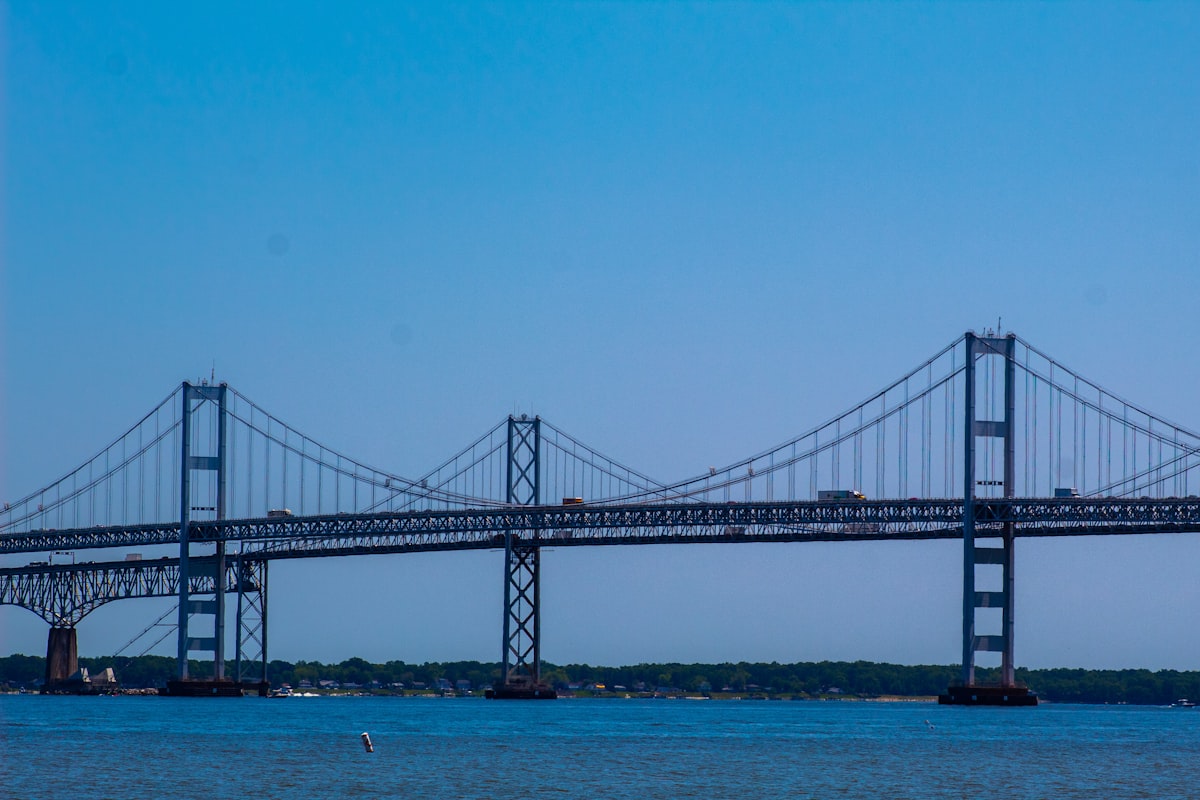
The twin spans of the Chesapeake Bay Bridge just north of Annapolis are the single most famous rockfish structure on the upper Bay. The bridge's pilings and rock piles create current breaks and shadow lines where rockfish stack up to ambush bait, and you catch them by light-tackle jigging, which is the most fun, hands-on way to fish the Bay.
The setup is simple: a 7-foot medium spinning rod, a St. Croix Mojo Inshore, with a Shimano Stradic 3000 and 15- to 20-pound braid. Tie on a soft-plastic paddletail on a jighead: a Z-Man DieZel MinnowZ or a BKD (Bay Killer Bait) in chartreuse or pearl on a 3/4- to 1-ounce head. Drop it beside a piling, let it sink to the depth the fish-finder marks fish, then work it back with a sharp lift-and-drop. The strike usually comes on the fall, so stay tight to the lure. Fish the moving tide, slack water is dead; the bite turns on when current rips past the pilings.
How to Catch Striped Bass, Light-Tackle On-Water DemoA few bridge specifics worth knowing: the deeper pilings near the main shipping channel hold bigger fish but demand heavier jigheads (1 to 1.5 ounces) to get down in the current, while the shallower flats on either end fish well with lighter heads and are friendlier for a beginner. Position the boat uptide of a piling and let the jig swing back naturally toward the structure, fish face into the current waiting for bait to wash past. Watch your electronics: when you mark a band of fish at a certain depth, count your jig down to it and you'll start connecting. And give the working boats room, the bridge gets busy, and courtesy keeps the bite (and everyone's day) good.
Topwater at Dawn
One of the most exciting ways to catch a Chesapeake rockfish is on a topwater plug at first light. In the warm months, rockfish push bait up against shallow shorelines, points, and grass edges at dawn, and a walking plug like a Heddon Super Spook or a popper worked across the surface draws explosive blow-ups. Fish the Severn River points, the rip lines off Tolly Point, and shallow flats in the low light before the sun gets high and the boat traffic builds. It's a fleeting window, usually the first hour or two of daylight, but a surface strike from a Bay rockfish is worth the early alarm. Keep a rod rigged with a topwater ready even when you're jigging; if you see fish busting bait on top, switch fast.
Trolling the Main Stem
When fish are scattered or you're after the big spring migratory rockfish, the Bay is trolled. Trolling pulls a spread of lures behind the boat to cover water and find fish. The classic Chesapeake rig is umbrella rigs and bucktails dressed with sassy/sassy-shad trailers, run off planer boards and rod-holders at varied depths. In spring, big trophy stripers move up the main stem and trolling large tandem bucktails or Mojo rigs is how you reach them. You'll fish stout trolling rods with Penn Squall 30 line-counter reels so the captain can repeat the depth that produced.
Fall is the other trolling prime time, "Rocktober." As water temps drop, rockfish school into massive feeding blitzes, often with diving birds marking the fish. Trolling, jigging into breaking schools, and casting metal all produce in the fall frenzy.
How to Troll for Fall Chesapeake Bay Rockfish and BluefishBottom Fishing and Live-Lining
The Bay's bread-and-butter, family-friendly fishing is bottom fishing for panfish and live-lining for summer rockfish.
White perch are the upper Bay's most reliable catch, they school on oyster bars and reefs and over hard bottom from late spring onward. Fish a two-hook top-bottom rig baited with bloodworms, grass shrimp, or a small piece of Berkley Gulp on the bottom in the tributaries and along structure like Hacketts Bar. Spot and croaker take the same rig through summer. It's the easiest, most kid-friendly fishing in Annapolis, steady action and great eating.
Live-lining is a summer rockfish technique: catch spot on a bottom rig first, then hook a live spot through the back on a circle hook and drift it near structure like Hacketts Bar or Tolly Point (the shoal at the mouth of the Severn), where current attracts rockfish. The live spot does the work; you just hold on when a rock eats it. Chumming, anchoring and ladling ground menhaden to draw fish to baited hooks, is the other summer anchor technique.
Catching Blue Crabs
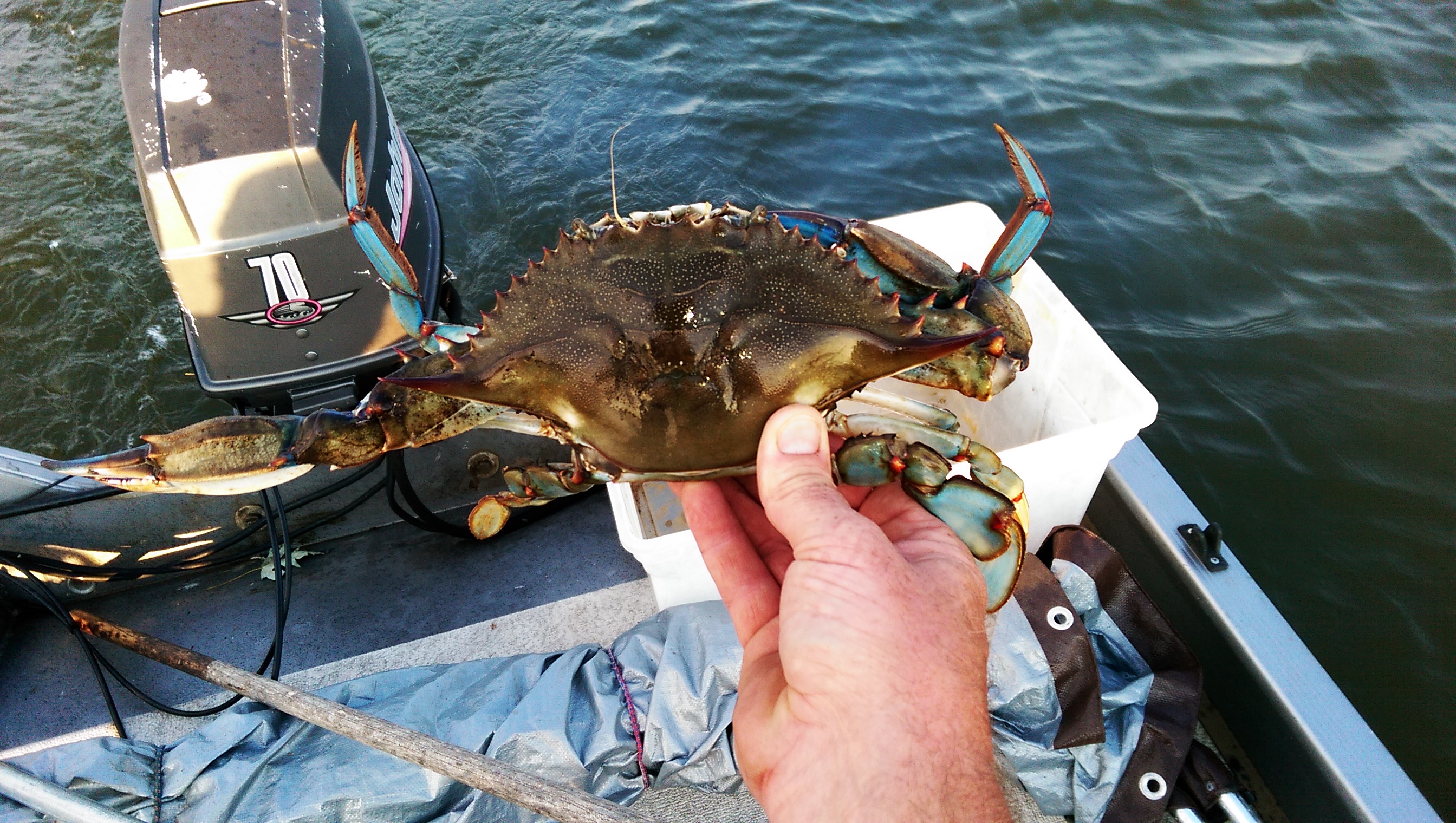
No Annapolis fishing guide is complete without crabs. The Chesapeake blue crab is a Maryland institution, and catching your own is easy and a blast for families. Two beginner methods:
- Chicken-neck handlines: Tie a chicken neck (or a fish head) to a string, drop it off a dock or bulkhead, wait for the line to go tight, then s-l-o-w-l-y pull the crab to the surface and scoop it with a long-handled dip net before it lets go.
- Trotline: A long baited line stretched between buoys, run from a boat, the traditional Maryland method for serious crabbing.
Recreational crabbing has size and season rules (crabs must meet a minimum point-to-point width, and there are limits on keeping females), check Maryland DNR crabbing regulations. A simple handline, a dip net, and a bushel basket are all you need to start.
How to Catch Chesapeake Bay Blue CrabsShore and Small-Water Options
You don't need a boat to fish Annapolis. The Severn River and its creeks, public piers around the City Dock area, and the tidal tributaries hold white perch, small rockfish, and spot within reach of the bank. Light spinning gear with a beetle-spin or a small soft-plastic catches perch and schoolie rockfish along bulkheads, docks, and rocky shorelines, especially early and late in the day on a moving tide. Sandy and Truxtun parks and various community piers give shore anglers and crabbers easy access.
Speckled Trout, Red Drum, and the Warm-Season Bonus
The middle Chesapeake has become a genuine light-tackle fishery for speckled trout and red drum (redfish) in the warmer months, and they're a fun change from rockfish. Specks hold over grass and shell in the Bay's tributaries and along the eastern-shore shallows from summer into fall; throw a soft-plastic on a jighead or a MirrOlure suspending twitchbait and work it slowly over the bottom. Puppy drum (small reds) prowl the same shallows and crush a paddletail or a gold spoon. Black drum, much larger, show on the oyster lumps in spring and take fresh clam or peeler crab on the bottom. None of these require special gear, your light jigging setup covers them all, and they add variety to a Bay day when the rockfish bite is slow.
Reading the Tide and the Weather
The Chesapeake is shallow and current-driven, so the moving tide is everything. Fish, and the bait they chase, feed hardest as water moves, so the hours around a tide change consistently beat slack water, whether you're jigging the bridge, live-lining a shoal, or dropping for perch. Learn the day's tide for your spot and plan to be there for the moving water.
Wind shapes a Bay day too. The Chesapeake is big and shallow enough to build a nasty, short chop fast, a hard northwest or south wind can blow out the main stem and the bridge, pushing you into the protected creeks and the Severn. A light wind with a moving tide and some cloud cover is prime, especially for topwater and shallow light-tackle work at dawn and dusk. In summer, early morning beats the heat and the boat traffic; in the fall, watch for diving gulls and gannets, which mark schools of rockfish pushing bait to the surface, run to the birds and cast metal or jigs into the blitz.
A Note on Conservation
The Chesapeake rockfish population has been under real pressure, which is why the rules are strict and change so often. Use the required circle hooks when bait-fishing, handle and release fish quickly (especially oversized and undersized rockfish), and keep only what's legal and what you'll eat. The same goes for crabs, respect the size minimum and the rules protecting female crabs. The Bay's fishing stays good only because anglers follow the regulations, so it's worth knowing the current rules cold before you head out.
Gear: What to Bring
On a charter, everything's provided. Fishing on your own, two setups cover Annapolis:
- Light tackle (jigging/casting): a 7-foot medium St. Croix Mojo Inshore rod, Shimano Stradic 3000, 15-20 lb braid, and a box of soft-plastic paddletails (Z-Man DieZel MinnowZ, BKD) on jigheads.
- Bottom/bait: a 7-foot medium rod, top-bottom rigs, bloodworms or Berkley Gulp, and bank sinkers. Add a long-handled crab net and a few chicken necks for crabs. A landing net, polarized sunglasses, and a Maryland tide chart round out the kit, like everywhere on the Bay, you fish the moving tide.
When to Go
- April: Catch-and-release rockfish in the rivers; the season's warm-up.
- May–June: Spring trophy rockfish trolling on the main stem; white perch reef fishing turns on by late May.
- July: Live-lining and chumming for summer rockfish, plus steady perch, spot, and croaker; prime crabbing.
- August: Rockfish typically closed, focus on perch, spot, crabs, and speckled trout in the rivers.
- September–December ("Rocktober"): The fall blitz, schooling rockfish, breaking fish under birds, light-tackle jigging and trolling at their best.
A First-Timer's Plan
For your first trip, book a half-day light-tackle charter to jig the Bay Bridge, the most fun, hands-on rockfish fishing and a captain who puts you on the structure. No boat and going solo? Fish bloodworms for white perch and spot off a Severn River pier, and drop chicken necks for crabs while you wait, a perfect, easy Chesapeake afternoon. Confirm the current rockfish season and slot before you keep a striper, and grab your Maryland tidal license online first.
For the full seasonal calendar and the charter rundown, see our complete Annapolis fishing guide. Fishing more of the Chesapeake and Mid-Atlantic? We also have first-timer guides for the Chesapeake Bay and Ocean City, MD.