Fish
Fish Fire
Fire Hike
Hike Bird
Bird

Ocean City, Maryland is one of the most popular family beach towns on the East Coast, and it happens to sit on one of the best fishing locations between New Jersey and Virginia. The Ocean City Inlet, the gap between the southern end of the island and Assateague Island, funnels tidal current between the Atlantic Ocean and the back bays, creating a natural fish highway. Striped bass (called rockfish here, always), flounder, bluefish, tautog, and sea trout all use the inlet. The head boat fleet at the docks runs daily trips for flounder and sea bass. The offshore canyons, Poor Man's, Washington, Norfolk, Baltimore, hold yellowfin tuna, white marlin, mahi-mahi, and blue marlin within a day trip.
And for a complete beginner, you can walk onto the Oceanic Fishing Pier with no license, rent a rod, and catch croaker and spot before lunch. Ocean City makes it easy.
This guide covers the practical how-to for each fishery. For the full destination overview, seasons, species, charter fleet, and trip planning, read our complete Ocean City fishing guide. For more Mid-Atlantic fishing, see our Virginia Beach guide and our Annapolis guide.
Pier Fishing: The Easiest Start
Ocean City has two main fishing options that require no license.
Oceanic Fishing Pier
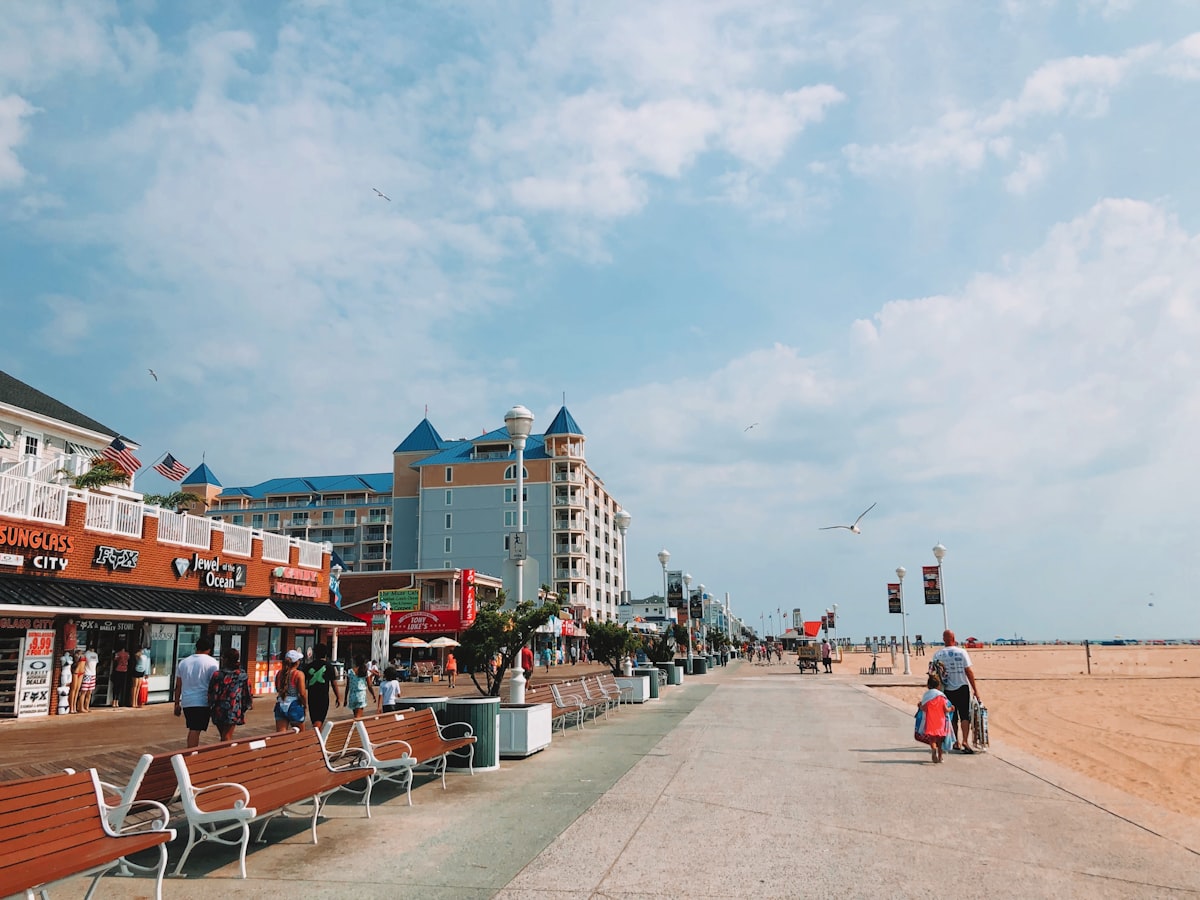
The Oceanic Pier at the southern end of the boardwalk extends into the Atlantic. It charges a small rod fee, rents tackle, and sells bait. No Maryland fishing license needed, the pier's license covers everyone. This is the most beginner-friendly fishing in Ocean City.
What you'll catch: Croaker, spot, kingfish (whiting), flounder, bluefish, and the occasional striper. Croaker and spot are the bread-and-butter pier fish, they bite all day on simple bottom rigs with cut bloodworm or squid.
Rig: A two-hook bottom rig (high-low rig) with #4 to #1 baitholder hooks and a 1- to 2-ounce bank sinker. Bait with pieces of bloodworm (the number one bait on the OC pier), cut squid, or Fishbites in bloodworm flavor. Drop it to the bottom near the pilings and wait. The fish come to you.
Gear: A 7-foot medium-action spinning rod with a 2500 to 3000 reel, a Penn Battle III 3000 combo or Ugly Stik GX2 combo, handles everything from the pier. Spool with 10- to 15-pound monofilament (Berkley Trilene XL) or 15-pound braid with a mono leader. Pier rental rods work fine for a day trip.
Free Fishing Zones
The city maintains free fishing areas at the bulkhead between 2nd and 4th Streets and at Northside Park (125th Street). No license needed, though you do need a free Maryland Recreational Fishing Registry. Fish from the bulkhead with the same bottom rig and bloodworm for croaker, spot, and perch.
How to Tie a Carolina Rig for Inshore FishingInlet Fishing: Where the Action Concentrates
The Ocean City Inlet is the engine of the local fishery. Twice a day, millions of gallons of water rush through the gap between the jetties, carrying baitfish, crabs, and shrimp, and every predator in the area knows it. The north jetty (accessible from the inlet parking lot) and the south jetty (Assateague Island side) are the two main fishing platforms.
North Jetty
Walk out the rocks from the inlet parking lot at the south end of the boardwalk. The jetty produces striped bass (rockfish), flounder, bluefish, tautog, sheepshead, and triggerfish depending on season.
For rockfish: Cast a white bucktail jig (1 to 2 ounce) or a Gotcha plug into the current and retrieve through the rip. Rockfish ambush bait in the current seams where fast water meets slow water. Spring (April through May) and fall (October through December) are the prime seasons.
For flounder: A Carolina rig with a 1-ounce egg sinker, 24-inch fluorocarbon leader, and 2/0 Gamakatsu Octopus hook baited with a live minnow (spot or mullet) or a strip of squid tipped with a 4-inch Berkley Gulp Swimming Mullet in white. Cast into the channel and let the current carry the bait along the bottom. When you feel the bite, wait 3 to 5 seconds before setting the hook, flounder inhale the bait headfirst and need time to turn it.
For tautog (blackfish): A bottom rig with a 1/0 to 2/0 short-shank hook baited with green crab or sand flea, fished tight against the rocks. Tautog live in the rocks and don't stray far. Short casts, heavy sinker (2 to 4 ounces to hold bottom in the current), and patience. Peak season is October through December.
How to Rig a Sabiki Rig and Catch Live BaitTackle for the Inlet
The inlet current is strong, you need heavier gear than the pier. A 7-foot medium-heavy spinning rod with a 4000-size reel (Penn Battle III 4000 or Daiwa BG 4000), 20-pound braid (PowerPro), and 20- to 30-pound Seaguar Blue Label fluorocarbon leader. The rocks eat line, so check your leader for abrasion after every fish.
Surf Fishing
Ocean City's beach runs for 10 miles, and you can surf fish anywhere as long as you're 50 yards from swimmers. Early morning (before the lifeguards set up) and evening (after they leave) are the prime windows during summer. Off-season (fall through spring), you have the beach to yourself.
What you'll catch: Kingfish (whiting), spot, croaker, small bluefish, and the occasional striped bass or red drum. The fall run (October through November) brings larger stripers and bluefish into the surf.
Rig: A standard two-hook pompano-style rig or a fishfinder rig with a 2- to 3-ounce pyramid sinker. Bait with bloodworm, cut mullet, Fishbites in clam or bloodworm flavor, or fresh-cut bunker. Cast into the trough between the sandbars, you can see it as darker water between the whitewater.
Gear: An 8- to 9-foot medium-heavy surf rod with a 4000 to 5000 reel. A Penn Battalion II Surf 9' or Ugly Stik Tiger Elite 9' with 20-pound braid and a 30-pound mono shock leader.
Head Boats: The Best Value on the Water
Ocean City's head boat fleet is one of the largest on the Mid-Atlantic coast. Head boats (party boats) carry 30 to 80+ anglers and run daily trips at per-person prices that make them the most affordable way to fish the ocean.
What to Expect
Half-day trips (4 to 5 hours, $45 to $65 per person) target flounder and sea bass on the inshore reefs and wrecks in 40 to 80 feet of water. The Angler, Morning Star, Ocean Princess, and Judith M are among the fleet. Everything is included, rod, reel, bait, tackle, and your fishing license. The mate rigs your rod, shows you how to drop, and helps with fish identification and size limits.
Full-day trips (8 to 10 hours, $85 to $120 per person) run farther to deeper wrecks for bigger sea bass, tautog, and sometimes cod in winter.
Technique
The mate hands you a pre-rigged rod, usually a two-hook high-low rig or a fishfinder rig with 4 to 8 ounces of lead and squid or clam strips on 3/0 circle hooks. You drop to the bottom, reel up two cranks, and wait. Sea bass hit hard, you'll feel a distinct thump. Flounder are subtler, a slow pull or just extra weight on the rod. Don't jerk, reel tight until you feel the fish's weight, then steady pressure up.
What you'll catch: Flounder are the summer star, Ocean City is one of the best flounder fisheries on the East Coast. Black sea bass are aggressive biters and excellent eating. Triggerfish show up in late summer and fall. In winter (December through March), the boats switch to tautog (blackfish) on the wrecks and sometimes cod on the deeper structure.
Tips for your first head boat trip: Arrive 30 minutes early to get a good spot on the rail, the stern corners and midship are the most productive positions. If you're prone to seasickness, take Bonine (meclizine) the night before AND the morning of, it works better as prevention than treatment. Stay on deck and watch the horizon if you feel queasy. Fish from the stern (back) if you're worried about motion.
Bring: Sunscreen, a hat, layers (ocean mornings are cool even in July), water, snacks, and a small cooler for your fillets. The crew cleans your catch at the dock, tip the mate ($5 to $10 per person is customary).
Double Uni Knot: How to Tie Braid to FluorocarbonOffshore: The Canyons
Ocean City is the White Marlin Capital of the World, the annual White Marlin Open is the largest billfish tournament in the world, with million-dollar payouts. The offshore canyon fishing here is world-class, and it starts surprisingly close.
What's Out There
The continental shelf drops off 50 to 80 miles southeast of Ocean City, creating underwater canyons where warm Gulf Stream water meets cold nutrient-rich upwelling. These canyons, Poor Man's Canyon, Washington Canyon, Norfolk Canyon, Baltimore Canyon, hold:
Yellowfin tuna (June through October), the primary target. Schools of 30- to 80-pound fish. Caught by chunking (cutting up butterfish or bunker and drifting pieces to attract a school, then dropping a baited hook into the chum slick) or trolling.
White marlin (July through September), the signature Ocean City species. Caught by trolling rigged ballyhoo at 6 to 8 knots. Most are released.
Mahi-mahi (June through September), found under floating debris and weed lines. Fast action when you find a school.
Bigeye tuna (August through November), the trophy. 100 to 300+ pounds. Caught overnight on deep-set baits.
Blue marlin (June through September), the ultimate billfish. 200 to 1,000+ pounds. Rare but present. The White Marlin Open in August is the world's largest billfish tournament and puts Ocean City on the global fishing map.
Swordfish, increasingly targeted on deep-drop daytime trips. Specialized and expensive, but available from the OC charter fleet.
What to Expect on an Offshore Trip
The boat leaves at 4 AM from the Fishing Center, runs 3 to 4 hours to the canyon, and you fish until mid-afternoon before the run home. It is a 14- to 16-hour day. The crew handles everything, rigging, baiting, gaffing, and fish care. You troll first (dragging lures and rigged ballyhoo for marlin and mahi), then the captain may switch to chunking (anchoring over structure and chumming for tuna). When a tuna hits the chunking spread, the mate hands you the rod and you fight the fish, 20 to 45 minutes for a big yellowfin, longer for a bigeye.
Cost
Private offshore charters run $2,000 to $4,000 for a full day (12 to 16 hours) for up to 6 anglers. Everything included. Some boats offer split-charter or per-person options.
For a more affordable taste, the head boats occasionally run offshore overnight trips for tuna at $200 to $350 per person. Check the fleet schedule at the Ocean City Fishing Center.
Knots You Need
Uni Knot, all-purpose for hooks, lures, and swivels.
Double Uni Knot, braid to fluorocarbon leader. Essential for every setup.
Surgeon's Loop, for creating loops on high-low rigs.
Improved Clinch Knot, fast alternative for light-line pier and surf rigs.
How to Tie a Palomar KnotPractical Details
Fishing License: Maryland requires a Chesapeake Bay and Coastal Sport Fishing License for anyone 16 and older, but it's free. Register at compass.dnr.maryland.gov. The Oceanic Pier, head boats, and charter boats cover your license. Free fishing zones (2nd-4th St bulkhead, Northside Park) just need the free registry.
Where to Buy Tackle and Bait: Oyster Bay Tackle (on the inlet) is the local institution, live bait, bloodworm, local knowledge. Bahia Marina and Ocean City Fishing Center at the inlet have bait shops and are where the head boats dock. Walmart (west OC) has general gear. For bloodworm, the #1 bait on the OC pier and inlet, buy at any of the inlet shops.
What to Wear: Layers year-round on the water. Summer mornings are cool on the ocean (low 70s at dawn). Fall and spring fishing requires a jacket and long pants. On head boats, bring rain gear even if the forecast is clear, spray happens. Non-slip shoes on boats and the jetty rocks.
Best Times: Flounder fishing peaks June through September. Rockfish (striper) run in spring (April-May) and fall (October-December). Sea bass are best September through November. Offshore tuna and marlin peak July through September. Early morning is best for pier and inlet. Head boats run on fixed schedules.
The 50-yard rule: During summer beach season (Memorial Day through Labor Day), surf fishing must be at least 50 yards from swimmers and the guarded beach. Fish early morning (before 10 AM) or evening (after 5 PM) to avoid crowds and have the best water to yourself. The north end of the island near the Delaware line is less crowded and productive year-round.
For the full rundown of Ocean City's fishing seasons, charter options, and trip planning, read our complete Ocean City fishing guide. For more Mid-Atlantic fishing, see our Virginia Beach guide.