Fish
Fish Fire
Fire Hike
Hike Bird
Bird

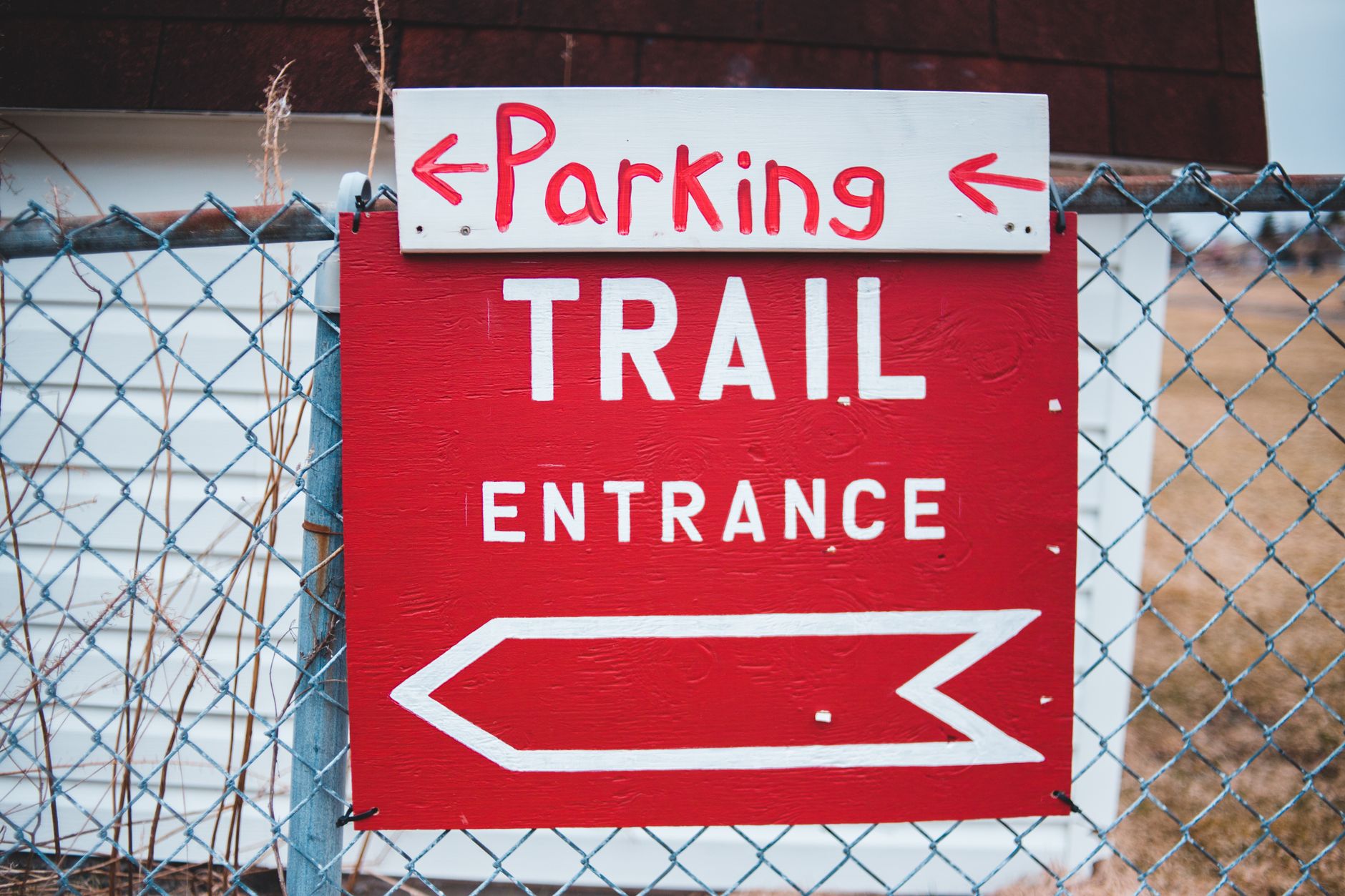

There is a particular moment familiar to anyone who hikes across state lines. You pull into a trailhead, look at the sign, and realize that the annual pass on your windshield, the one that cost eighty dollars and opens every national park in the country, does nothing here.
Federal passes do not work at state parks. Not the America the Beautiful pass, not the Northwest Forest Pass, not the Adventure Pass. State parks are a separate estate, funded separately, and every state has arrived at its own answer to the same question: how do you pay for a park system that most legislatures would rather not fund from general revenue?
Across the six states covered here there are essentially three different answers, and knowing which one you are dealing with is worth more than any specific dollar figure.
Why this is confusing in the first place
National parks are administered by one agency with one fee structure and one national pass. State parks are administered by fifty separate agencies with fifty separate structures, and the funding models diverge wildly because the politics did.
Some states charge at the gate. Some charge for parking rather than entry, which sounds like a distinction without a difference until you arrive on foot or by bike. Some collect the money through vehicle registration so that residents pay once a year at the DMV and never think about it again. One charges nothing at all. And within a single state, the state park pass frequently does not cover the state forest land next door, or the wildlife area across the road, which are different agencies again.
Washington Recreation Passes ExplainedWashington: one pass, three agencies
Washington's Discover Pass costs $10 for a day or $45 for a year. The important thing about it is not the price but the coverage, which is unusually good, because the same pass covers day-use parking on land managed by Washington State Parks, the Department of Natural Resources, and the Department of Fish and Wildlife.
That matters enormously in practice. An enormous amount of the best hiking in Washington is on DNR land rather than in state parks, including Tiger Mountain, Capitol Forest and much of the Chuckanuts, and hikers routinely assume they need something different for it. They do not, and one $45 sticker covers all three agencies.
What it does not cover is national forest. The Cascades are largely Forest Service land, where you need a Northwest Forest Pass or an America the Beautiful pass instead, and plenty of Washington hikers carry both.
Oregon: you are paying for the parking spot
Oregon charges a day-use parking permit, at $10 for the day for in-state visitors and $12 for out-of-state, with a 12-month permit at $60 for residents. The framing is deliberate: you are not being charged to enter the park, you are being charged to park a car in it, so arriving on foot, by bike or by transit costs nothing.
The more consequential fact is that the number of parks charging has been expanding. Facing a budget shortfall, Oregon State Parks announced in late 2025 that day-use fees would extend to 21 additional parks, phased in from spring 2026. Parks that were free for decades are not any more, and the list is still moving.
So the Oregon rule is to check the specific park rather than your memory of it, and to note that the coastal parks, which hold most of the good hiking, are heavily represented on the new list.
California: the most expensive, and the most fragmented
California charges per park and the amount varies by park, which makes a single number impossible to quote honestly. Day-use fees commonly land somewhere between $6 and $15, with the marquee parks at the top of that range. The annual option is the Golden Poppy Pass at $125, which covers day-use vehicle entry at many though not all state park units.
That $125 is a lot next to Washington's $45, and it reflects a system with 280-odd units including some of the most heavily visited outdoor places in the country. Whether it is worth buying comes down to simple arithmetic, since it pays for itself somewhere around ten visits a year.
California also has more designation types than anywhere else, running State Park, State Beach, State Historic Park, State Recreation Area and State Natural Reserve, and the rules differ between them. A State Natural Reserve like Point Lobos runs on tighter rules and often a reservation system, while a State Recreation Area is usually the loosest thing in the system.
Montana and Idaho: they got you at the DMV
These two solved the problem the same clever way, and it is the model most likely to confuse a visitor. Montana collects a $9 state parks fee with annual vehicle registration, and residents who pay it, which is most of them since it is opt-out, have no day-use entrance fee at any Montana state park. They have already paid, months ago, in a line at the county office. Non-residents are charged at the park instead, at $8 per vehicle for day use and $4 to walk or cycle in, with a 12-month non-resident pass at $50 and a 7-day pass at $35.
Idaho does the same thing with the Idaho State Parks Passport, a $10 annual sticker added when you register a vehicle. Ten dollars buys unlimited day-use access to every Idaho state park for the year, which is the best value in this entire article by a wide margin, and non-residents buy an $80 motor vehicle entry sticker for the equivalent.
The practical upshot for a visitor is that in Montana and Idaho you will meet locals who do not know what the entrance fee is, because they have never once paid it at a gate.
Tennessee: no fee, anywhere, since 2006
Tennessee is the outlier and deserves to be better known. There is no entrance fee and no day-use parking fee at any Tennessee state park, not at the big ones, not at the small ones, not for residents and not for visitors. The state eliminated entrance fees in 2006 and has kept them off across all of its parks since.
This is not a minor administrative quirk, because Tennessee's state park system includes some of the best hiking in the eastern United States: Fall Creek Falls, the gorges of the Cumberland Plateau, Frozen Head, the Cumberland Trail. All of it is free to walk into. Camping, cabins and some specific activities still cost money, but walking does not.
Why the state park estate is bigger than you think
The scale is worth understanding, because the national parks absorb almost all of the attention and a wildly disproportionate share of the coverage. There are 63 national parks in the United States. There are more than 6,600 state park units covering something in the region of 18 million acres, and they collectively receive far more visits per year than the entire national park system.
In the six states here, that gap shows up as a very practical thing: the trail nearest your house is far more likely to be state land than federal. California alone runs roughly 280 units, Washington has around 140, and Tennessee's 57 parks carry a large share of the hiking in the state.
State parks also tend to sit closer to population centers, because they were often created from donated estates, decommissioned military land or watershed holdings on the edges of towns rather than carved out of remote wilderness. That is why a state park is usually your Tuesday evening walk and a national park is your summer vacation. The funding follows from that history and is chronically precarious, since state park systems are among the first things cut in a bad budget year. California closed or threatened dozens of units in the early 2010s, and Oregon's 2026 fee expansion is a direct response to a shortfall. The passes exist because the general fund stopped being reliable.
What none of these passes cover
These are the expensive mistakes, so they are worth stating plainly.
-
Federal land. No state pass works on national forest, BLM, national park or national wildlife refuge land. It is a different estate entirely.
-
Other states. There is no reciprocity worth relying on between these six.
-
Camping. Every one of these systems charges separately for campsites, and none of the day-use passes above includes a night. The reservation systems are separate from the fee systems too, booking through each state's own platform or a contractor on windows that vary from six months to a year ahead, with the good sites in popular parks going in the first minutes. Several states hold back a portion of sites as first come, first served, which is the realistic route for a spontaneous trip and the reason arriving on a Thursday rather than a Friday is worth so much. Cabins, yurts and lookouts book furthest ahead of all, and Oregon and Washington have particularly good ones.
-
Some specific sites. Even inside a system, individual attractions may charge on top, including caves, ferries, guided tours and a few high-demand trails.
-
County and city parks, which in several of these states hold excellent trails and answer to nobody in the list above.
Free days and the exceptions
Most of these systems waive fees on specific days, commonly around Martin Luther King Jr. Day, Presidents' Day, Earth Day, National Public Lands Day in September, and Black Friday, which several states have adopted as a deliberate get-outside counterprogram.
Several also run library pass programs, where a day pass can be checked out with a library card, and discounts for veterans, seniors and people with disabilities that are often more generous than the federal equivalents. None of that is worth planning a trip around, but if you are going anyway it is worth thirty seconds on the relevant agency's website.
The gear
This is a paperwork article, so the gear is paperwork, and the useful part is how you carry it rather than which one you buy.
A dashboard pass holder, which sounds trivial and prevents the most common problem: a valid pass that was in the glovebox or face down when the enforcement officer walked past. Most of these passes have to be displayed, not merely owned.
The relevant agency's app, since several states now sell and display digital passes and a phone screenshot is not always accepted.
A printed backup, for the same reason in reverse. A digital pass on a dead phone at a trailhead with no signal is not a pass.
Small cash, because a surprising number of state park entrance stations are iron rangers with envelopes and no card reader.
A second pass for federal land, since a state pass covers state agencies and nothing else. In Washington that means a Discover Pass and either a Northwest Forest Pass or an America the Beautiful pass, and neither substitutes for the other.
Your vehicle registration paperwork, which matters in Montana and Idaho, where park access is bundled into vehicle registration and proving it can require the paperwork.
And a quick check of the specific park's page, because the exceptions are real: some parks charge per person rather than per vehicle, and some charge nothing at all.
How to handle it
Work out which agency owns the trailhead before you drive, because that is the whole problem in one sentence. A trail can be state park, state forest, state wildlife area, national forest, county, or private-under-easement, and the parking rules follow the owner rather than the trail. Guidepole Hike shows the managing agency for a trail, which is the fastest way to know what, if anything, needs to be on your dashboard.
After that the advice is local. In Washington, buy the Discover Pass, because at $45 covering three agencies it is close to unavoidable and the day rate punishes you quickly. In Idaho, add the $10 Passport at registration, since it is the cheapest access in the region and requires no further thought. In Montana, check your registration, because the $9 fee is opt-out and some people have opted out without realizing what they gave up. In California, do the arithmetic on Golden Poppy. In Oregon, check the specific park, because the list of parks charging is actively growing. And in Tennessee, just go.
The reason any of this is confusing is that state park funding is a political question each state answered in isolation, and the answers encode different beliefs about who should pay. Tennessee decided access should be free at the point of use. Montana and Idaho decided residents should pay quietly and once. Washington decided one pass should span three agencies. California decided the parks should largely fund themselves. You do not need to care about any of that. You need to know which of the six you are standing in, and whether the thing on your dashboard is the right thing.
More on working out who owns a trail in is that trail public, and on how the same land-manager question decides dog rules in where your dog is allowed. State park hiking in each of the six: Savage Gulf in Tennessee, the Oregon Coast, the Bay Area, Seattle, Bozeman, and Boise.
Which agency you are standing on, and therefore which pass it wants, is in state park versus national forest and is that trail public. The designation-by-designation version is in state natural areas explained. If you are camping rather than day hiking, the booking side is in state park camping reservations, and if a dog is coming, dogs in state parks.