Fish
Fish Fire
Fire Hike
Hike Bird
Bird


There is a widespread assumption that national park campgrounds are the hard ones and state parks are the fallback.
For a great many of the best state parks, this is backward. A waterfront site at a popular state park within two hours of a major city is frequently harder to book than a site in a national park, and the reasons are structural.
Why state parks are the harder booking
There are far fewer sites to begin with. A big national park campground can hold three or four hundred sites, while a very good state park campground might hold sixty, and the twelve with a water view are the only ones anybody wants.
Demand is also local, and it repeats. People visit a national park once in a decade. They visit the state park ninety minutes from home every summer, they know exactly which loop and which site number they want, and they have a reminder set for the morning the window opens. The booking windows are longer on top of that, with several state systems opening nine months ahead, which means a Fourth of July weekend is contested the previous autumn by people who have done this before.
Two smaller factors sharpen it further. The good sites are identifiable, because state park systems publish site-level maps and photographs, so demand concentrates on specific numbered sites rather than spreading across a campground. And cancellation fees are low, which encourages speculative booking and leaves people holding sites they may never use.
The windows, state by state
This is the part worth writing down.
-
Washington opens nine months ahead. This is the longest window in the group, and it means the popular coastal and island parks, including Deception Pass, Cape Disappointment and Moran, are effectively booked out for high summer before the previous winter is over.
-
Idaho also opens nine months ahead, with the day's inventory released at 7:00 a.m. Idaho time, which matters if you are booking from another time zone.
-
Oregon opens six months ahead on a rolling daily basis, and accepts same-day bookings at the other end.
-
California opens six months ahead, and given the size of the system and the population it serves, the marquee coastal and redwood parks go immediately.
-
Tennessee opens six months ahead, which is worth knowing because Tennessee charges no park entrance fee at all, so camping is where the money and the competition are.
-
Montana is the outlier and its window has moved in recent years, so check Montana FWP directly rather than assuming it matches its neighbors.
Set a reminder for the exact release time rather than the date. Most systems release inventory at a fixed hour, and the difference between logging on at the release minute and an hour later is the difference between a waterfront site and nothing at all.
How Far in Advance to Reserve Popular State ParksThe rolling window trick
This is worth understanding properly, because it changes how you book a multi-night stay. Most of these systems use a rolling window rather than a fixed release date, so on any given day the date exactly six or nine months out becomes available, and it does not open a whole season at once.
The consequence for a four-night trip is awkward. If you want Thursday to Sunday, Thursday becomes bookable first and Sunday not until three days later, so you cannot book the block in one go at the earliest moment. The usual approach is to book the first night the moment it opens and then extend each subsequent morning as the next date becomes available, since most systems let you add a night to an existing reservation and doing so is easier than starting fresh.
Some systems instead release a full season on a single date. Those are brutal but at least honest, because you know exactly when to be at your keyboard.
What to do when it is already full
It usually is. These are the routes that work.
-
First come, first served sites. Most state systems hold back a proportion of sites that cannot be reserved, and they are the realistic option for a spontaneous trip. Arrive early, Thursday rather than Friday and mid-morning rather than evening, and note that some parks run a first-come line at the entrance station.
-
Cancellation sniping. Cancellations cluster at the point where the refund policy changes, commonly two to seven days out, so checking repeatedly in that window works, and several third-party services will watch for you and send an alert.
-
Midweek. Sunday to Thursday nights at even the most contested parks are often wide open, and if your schedule flexes at all this solves the problem entirely.
-
Shoulder season. The same waterfront site that is impossible in July is available in late September, when the weather on the coast is frequently better anyway.
-
The unglamorous loop. Sites without a view, near the road, or in the tent-only section go last, and they are usually perfectly good.
-
Adjacent land. State parks are often surrounded by national forest or BLM where dispersed camping is free and unreserved, which is not an option inside the park boundary.
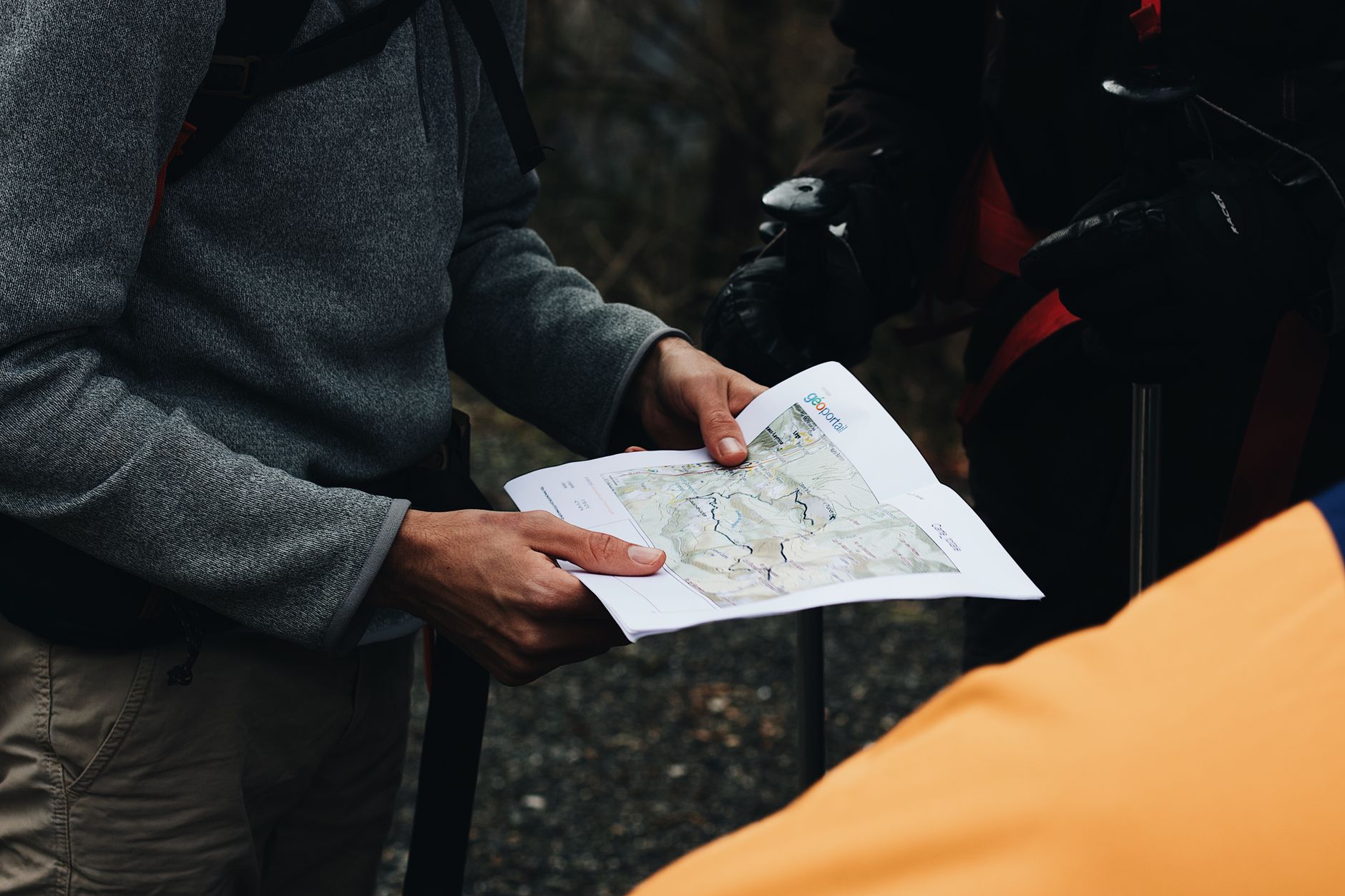
That last one is the most useful and the hardest to act on, because it turns entirely on where the boundary falls and what the land on the other side of it is. Dispersed camping that is legal on the forest a mile out is a citation inside the park, and neither is signed in any way you can rely on after dark. Guidepole Hike carries the ownership boundary and the managing agency together, which is what makes "camp just outside the park" a plan rather than a gamble. The rules that change at that line are covered in what changes underfoot.
Why the sites you want are the sites everyone wants
It is worth understanding what makes a site contested, because it lets you find the ones that are not. Water frontage is the single biggest driver, and a site on a lake, river or beach will book out months before an identical site fifty yards inland. Privacy comes second, with vegetation-screened sites going before sites in an open loop, and the state park systems that publish site photographs have made this gap much sharper than it used to be.
Proximity to the toilet block is a real and slightly comic determinant, since everyone wants to be close enough to be convenient and far enough not to hear the door, which means everybody wants the same three sites. Flat ground and pad size matter enormously to anyone in a trailer or van, which is why the tent-only loops are frequently the last to fill and are often the nicest. And shade flips seasonally, prized in July and actively unwanted in October.
Once you know this, the strategy writes itself. The open, sunny, unshaded, treeless site next to the road in the tent loop is usually available, and on a cool September weekend it is a perfectly good place to sleep.
The etiquette that state parks specifically require
Because these campgrounds sit close to cities and draw a very mixed crowd, the social rules matter more here than in the backcountry. Quiet hours are enforced, typically 10 p.m. to 6 or 7 a.m., and state park rangers do enforce them. Do not walk through other people's sites, because loops are laid out so that this is tempting and it is the most reliable way to annoy your neighbors. Generator hours are usually restricted to a window in the middle of the day.
Firewood must usually be bought locally, since moving wood between regions spreads emerald ash borer and other pests and several states regulate it directly. Check the fire ban before you plan around a campfire, because late summer bans are routine across the West now and apply inside campgrounds as well as out. And note that one vehicle per site is a common rule with extra-vehicle fees, which surprises groups arriving in three cars.
The gear
Booking a state park campsite is an exercise in being ready at a specific minute, and the gear is mostly preparation.
A calendar reminder with the exact release time, in your own time zone, which is the item that decides most of these. Windows open at a published hour and the good sites are gone within minutes.
A saved account with card details already entered and verified, since the checkout is where people lose the site they had in the cart.
A cancellation alert service, which is the underused half of this. State park cancellations are common, they release back into the system continuously, and a service that watches for them beats refreshing manually.
A printed reservation confirmation, because the ranger checking the loop at nine in the evening is doing it on paper and your phone may have no signal.
Small cash for the iron ranger, for the first-come sites and the extra vehicle fee that a great many parks charge on arrival.
A backup dispersed-camping plan on nearby national forest or Bureau of Land Management ground, decided in advance, which turns a failed booking into a different night rather than a drive home.
And earplugs, which belongs on this list honestly. State park campgrounds are closer together, closer to roads and more social than federal campgrounds, and that is the trade you are making for the location.
Cabins, yurts, and the things that go first
State parks have a category of accommodation the national parks largely do not, and it is excellent. Yurts are circular framed tents with beds, heat and a lockable door, a specialty of the Oregon and Washington systems, and they make winter coastal trips genuinely pleasant. They book out furthest ahead of anything. Cabins range from a bunk and a roof to full kitchens, and Tennessee's park system in particular runs a serious cabin and lodge operation. Fire lookouts and historic structures appear in a few systems and are the hardest bookings of all.
Hike-in and boat-in sites are the great overlooked category. They are frequently available when the drive-in loops are full, they cost less, and a mile of walking removes ninety percent of the competition. Several Washington marine state parks are reachable only by water.
How to Book National Park and State Park Camping ReservationsThe systems themselves
A small thing that saves real frustration: these states do not share a booking platform and the accounts do not transfer. Each state contracts its own reservation provider, and the providers change every few years when contracts are re-tendered, which means the interface you learned last season may have been replaced, your saved payment details may be gone, and the account you created for one state does nothing in the next.
It also means Recreation.gov is not the answer here. That platform handles federal campgrounds for the Forest Service, the Park Service and the Corps of Engineers, and has nothing to do with state parks. People assume one login covers everything and discover otherwise at the worst possible moment. Create the account, save the card, and verify you can log in before the morning your window opens, because password resets at 6:59 a.m. have cost a lot of people a lot of waterfront sites.
Group sites, and the thing nobody books
Two categories consistently go unclaimed. Group camps exist at most state parks, hold anywhere from fifteen to a hundred people, and are booked on a different page from the individual sites, frequently a different system entirely and sometimes requiring a phone call. For a family gathering or a few friends they are often cheaper per person than the individual sites, and they are regularly free on weekends that are otherwise sold out. Primitive and overflow areas appear at a lot of parks and are almost never advertised, usually amounting to a field with a toilet, costing very little, and on a busy Saturday making the difference between sleeping in the park and driving home.
Both are worth a phone call to the park office, which remains the single most underused reservation technique, because rangers know what is available including holds that have just been released, and they will tell you.
Beyond that the rules are simple enough. Book the shoulder rather than the peak, since late September on the coast beats July on every measure except water temperature. Go midweek if you possibly can. Learn one park properly rather than chasing whichever has availability, because knowing that loop C is quieter and site 43 has the view is worth more than any booking strategy. Read the cancellation policy before you speculate, since the fees are low but not nothing and holding sites you will not use is why the system is as congested as it is. And check whether your dates are really the constraint, because frequently the park is full and the state forest ten minutes away is empty and free.
More on the fees themselves in six states, six ways to charge you for a trailhead, and on the permit mindset generally in permit lotteries explained. For where to point all this: Deception Pass in Washington, Silver Falls in Oregon, and Fall Creek Falls in Tennessee.
Why state parks are a different animal from national forest campgrounds is in state park versus national forest, and the entrance fees you will also owe are in state park passes by state. The permit version of the same competition is in hiking permit lotteries explained. If a dog is coming, the rules are in dogs in state parks, and the designations that decide whether camping exists at all are in state natural areas explained.