Fish
Fish Fire
Fire Hike
Hike Bird
Bird

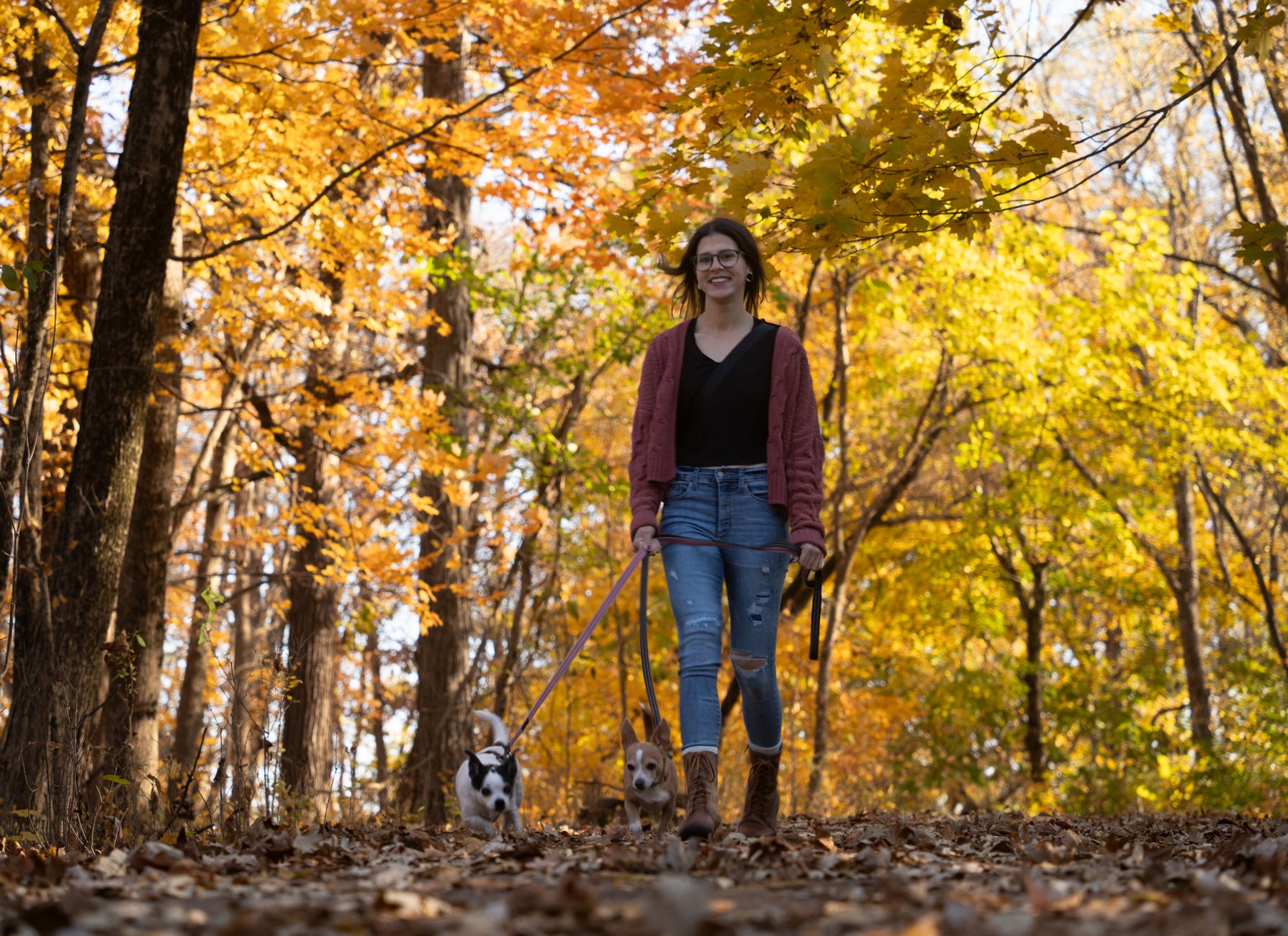

If you hike with a dog in the United States, you learn the national park rule quickly and painfully: almost nowhere. A handful of paved paths, the campground, the parking lot, and that is it.
The standard advice is that state parks are the answer. That advice is broadly right and specifically wrong in a way that will ruin a day if you take it on faith, because these six states have arrived at six different positions and one of them is nearly as restrictive as the national parks.
The national park baseline, so you know what you are comparing to
Dogs are prohibited on trails in the overwhelming majority of national parks. The reasoning offered is wildlife disturbance, predator conflict and waste in sensitive areas, and whether or not you find it convincing, it is uniform and it is enforced. A very small number of parks are exceptions in specific places: a few miles of the Olympic coast, some Acadia carriage roads, the towpath at Cuyahoga.
So when a state park allows a dog on a real trail, that is a specific offer rather than a default, and it is worth knowing which state made it.
Olympic National Park with a DogWashington: generous, with an eight-foot rule and a preserve exception
Washington state parks allow pets throughout, on a leash no longer than eight feet. That is a slightly unusual length and longer than most states permit, which matters if you use a standard six-foot lead or a long line.
The exclusions are narrow and specific: designated swimming beaches, natural area preserves, groomed cross-country and alpine ski trails during the ski season, and public buildings unless posted otherwise. The natural area preserve exclusion is the one that catches people, because a preserve can sit inside or adjacent to a park you were told was dog-friendly, and it is a distinct legal designation with its own rules, covered in what the state park labels mean.
Washington also holds an enormous quantity of DNR land where dogs are welcome and the same Discover Pass applies, which effectively doubles the dog-legal hiking in the state.
Oregon: the best in the group, and the beaches are the reason
Oregon state parks welcome dogs on a six-foot leash through most parks and campgrounds, and inland that is ordinary territory, still better than the national forest alongside is required to be. The remarkable part is the coast.
Dogs may generally be off leash on Oregon state beaches provided they are under direct control. Combine that with the fact that the entire Oregon coastline is public under the 1913 declaration and the 1967 Beach Bill, and you get 362 miles of legal off-leash beach, which is without much competition the best dog hiking in the six states covered here.
The caveats are real. Snowy plover nesting closures apply on specific beach segments in spring and summer, and "under direct control" means recall that works, near wildlife and near other people, rather than recall that usually works.
California: the restrictive one
This is the exception that undoes the general rule, and it surprises people every year. In California state parks, dogs are confined to campgrounds, picnic areas and paved roads, and are banned from most trails and most beaches, with leashes a maximum of six feet and the dog under physical control at all times.
The rationale is the same as the national parks, meaning sensitive habitat, endangered species and heavy visitation, and California has more of all three than anywhere else in the group. There are exceptions and they are unit by unit rather than systemic: some state beaches allow dogs on specific stretches, and a handful of parks permit dogs on fire roads. Do not assume, and check the individual unit.
Tennessee: welcome on the trails
Tennessee is straightforwardly good, with leashed pets welcome on trails and in campgrounds across the system. The exclusions are the built environment rather than the landscape: park inns and cabins except those specifically designated pet-friendly, lodges, food stores, picnic areas, swimming beaches and pools.
That is an unusually hiker-friendly split, because the trail is open and the restaurant is not. Combined with Tennessee charging no entrance fee at any state park, a dog owner there has it about as good as it gets in the eastern United States.
One warning specific to the state. Several of Tennessee's best trails end at gorge bottoms with swimming holes, and the combination of steep descents, slick rock and water is hazardous for dogs. Cummins Falls in particular is not a dog outing.
Montana and Idaho: permissive, and the surrounding land more so
Both states allow leashed dogs on state park trails as a general matter, with the usual exclusions around swimming areas, buildings and visitor centers. The more useful fact in both is that state parks are a small fraction of the available hiking, since Montana and Idaho are dominated by national forest and BLM land where dogs are welcome and frequently permitted off leash under voice control. The state park question simply matters less here than it does on the coast.
The wildlife reasoning, taken seriously
It is easy to read dog restrictions as bureaucratic fussiness. The reasoning is better than that, and understanding it makes the patchwork predictable rather than arbitrary.
Dogs read as predators. Deer, elk and ground-nesting birds respond to a dog the way they respond to a coyote, and the physiological stress response is the same whether or not the dog is interested. In winter, when ungulates are on tight energy budgets, being made to run repeatedly has measurable consequences.
Ground-nesting birds are the specific problem on beaches. The western snowy plover nests in open sand above the tide line, the nests are nearly invisible, and a loose dog does not have to touch anything to cause a failure, because the parent leaving the nest for a few minutes in the sun is enough. That is why Oregon's otherwise excellent off-leash policy carries hard seasonal closures on specific segments, and why they are worth respecting even when the beach looks empty.
Waste is not equivalent to wild animal waste either. Dogs are fed protein-dense food and their waste carries a nutrient load and pathogen profile the local ecosystem did not evolve with, which in heavily used areas near water is a real water quality issue. And scent persists, because wildlife avoids ground that smells of dog long after the dog has gone, which shrinks the usable habitat either side of a trail.
None of that means you should not hike with your dog. It means the restrictions cluster in predictable places, namely nesting beaches, winter range, sensitive habitat and water sources. If you can see why a rule exists, you can usually guess where the next one will be.
The gear
State parks are the most dog-friendly public land most people will use, and the gear list is about making that welcome last.
A six-foot leash, and note the exception: Washington State Parks specify eight feet, which is unusual and worth knowing if you are relying on a six-foot lead everywhere.
A collapsible bowl and extra water carried for the dog, which is the item that matters most on a hot day. Dogs overheat far faster than people and the early signs are easy to miss.
Waste bags plus the discipline to carry them out, which is the single behavior that decides whether dog access survives at a given park. Bagged waste left beside a trail is worse than no bag at all.
Paw protection, meaning boots introduced at home or a wax, for hot sand, sharp rock and winter salt.
A long line for beaches, particularly in Oregon, where the coastal state parks are unusually permissive and a thirty-foot line lets a dog run without being off leash.
A towel and a crate liner for the car, because a wet sandy dog and a three-hour drive is its own problem.
And a tick check routine done at the trailhead rather than at home, which is easier on both of you and catches them before they attach.
When the park says no
The answer is usually within a few miles, and it is almost always a different agency rather than a different state. National forest and BLM land allow dogs almost everywhere, frequently off leash under voice control, and across Montana, Idaho and much of eastern Oregon and Washington that is the overwhelming majority of the available ground. State forests, and Washington's DNR lands especially, are dog-friendly, covered by the same pass, and far emptier than the state park next door.
Two categories are easy to overlook. Regional park districts are the surprise winner in urban California, where East Bay Regional Parks allow dogs off leash under voice control on much of their network, a completely different proposition from the state park across the road. And city open space in the mountain west is often excellent, with Bozeman's trail system allowing dogs off leash on several of its best-loved trails, on ground managed by a land trust and the city rather than by a state or federal park agency at all.
Wherever you land, a few things hold everywhere. Pack out waste, because this is the single behavior that loses dog access, and bagged waste left beside the trail to collect later is worse than not bagging it. Yield to everyone, since dogs step off the trail for horses, bikes and people rather than the other way round. And check the specific unit rather than the state, because everything above describes system defaults and individual parks override them in both directions.
Rules, Tips and an Itinerary for Pet OwnersHeat, water, and the injuries dogs get
The rules are the legal problem. These are the practical ones, and they send far more dogs to a vet than any regulation prevents.
-
Heat is the killer. Dogs cool by panting, which fails in humidity and fails faster in a thick coat, and a dog cannot tell you it is in trouble until it is well into trouble. A black dog on an exposed chaparral trail at eighty degrees is in real danger, and early starts solve almost all of this.
-
Paw pads burn. Trail surface temperature runs far above air temperature, and dark rock and packed dirt in full sun can exceed anything a pad tolerates. The back-of-the-hand test for five seconds is crude and it works.
-
Cut pads are the most common injury on rocky trail. Sharp volcanic rock at Smith Rock, sandstone edges on the Cumberland Plateau and talus anywhere will slice pads that are used to pavement, so conditioning matters and so does carrying a bootie and a wrap.
-
Cold water and current. Gorge pools and mountain creeks are colder and faster than they look, and a dog that swims well in a lake can be in serious difficulty in moving water. Gorge-bottom trails are exactly where this happens.
-
Foxtails and grass awns, in California and the dry interior especially, work their way into ears, noses and between toes and cause real damage. Check thoroughly after any walk in dry grass.
-
Blue-green algae blooms in warm still water in late summer and can kill a dog that drinks from it within hours. If a lake or slow river looks like spilled paint, keep the dog out of it.
-
Porcupines, skunks and rattlesnakes are the wildlife encounters that actually happen. Rattlesnake avoidance training is a real thing in the western states and worth the money if you hike dry country often.
Water deserves one line of its own: assume none is available on the route and carry it.
The short version
Oregon is the best, and the coast is why. Tennessee is excellent and free. Washington is generous, with an eight-foot leash and a preserve exception to watch for. Montana and Idaho are fine and their surrounding federal land is better. California is the one that will catch you out.
And in every state the decisive question is not whether this is a state park but which agency manages this specific trail, which is precisely what Guidepole Hike answers before you load the dog into the car.
The federal side of the same question is in where your dog is allowed, the boundaries themselves in what changes underfoot, and the fees in six states, six systems.
The agency-by-agency version of these rules is in dog-friendly trail rules by agency, and what distinguishes a state park from the ground next door is in state park versus national forest. The designations where dogs are frequently prohibited entirely are in state natural areas explained. If you are staying the night, the booking is in state park camping reservations, and the passes are in state park passes by state.
A last note on the exception that catches Washington visitors specifically. Washington State Parks are broadly dog-friendly, but the state also manages a set of natural area preserves and natural resources conservation areas through a different agency, and dogs are prohibited outright on several of them. Those units frequently sit adjacent to state parks, share a road, and look identical from a trailhead. The park is not the preserve, and the sign at the second one says so in small letters.