Fish
Fish Fire
Fire Hike
Hike Bird
Bird

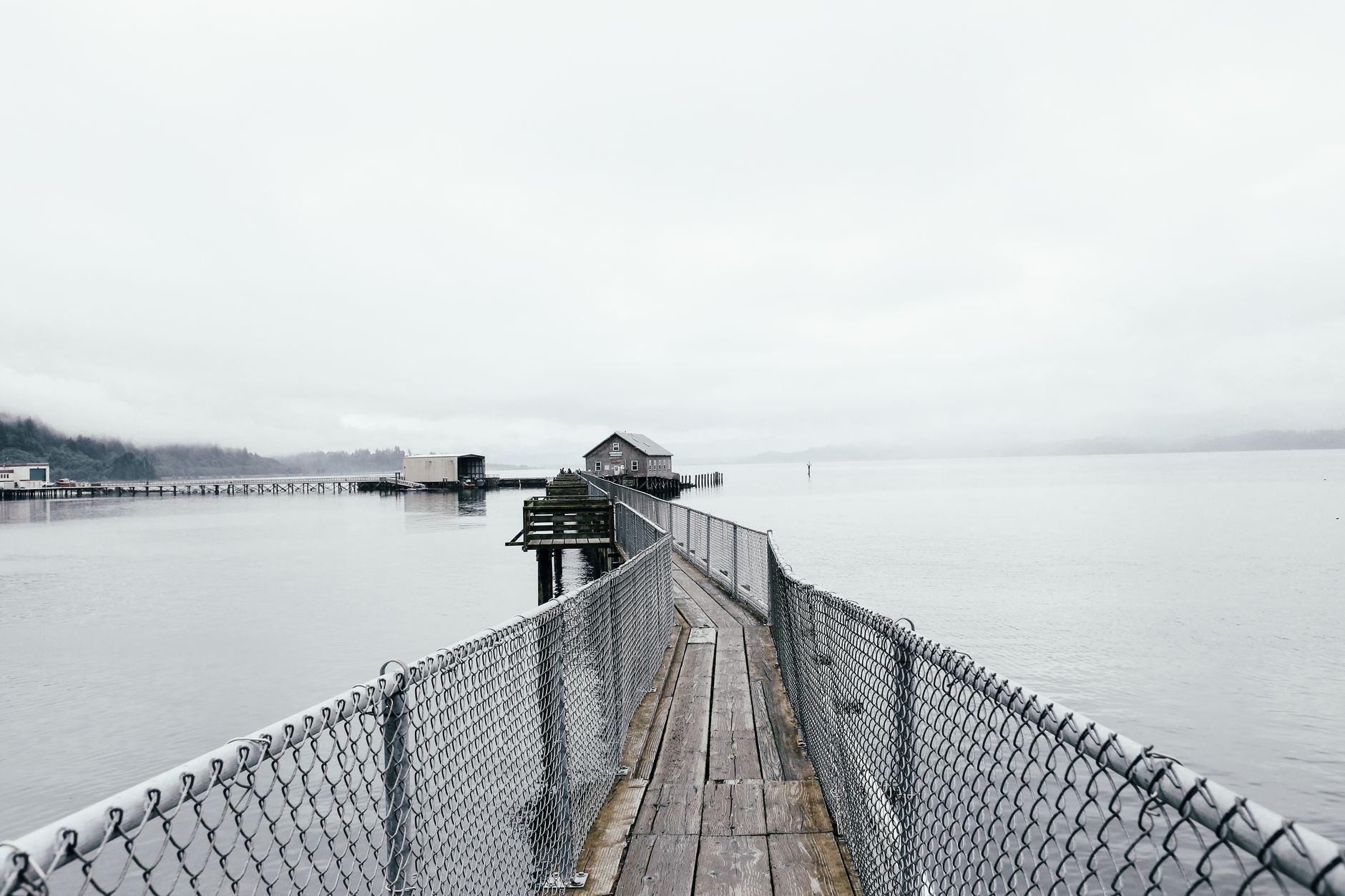

Oregon does not let you pick oysters. Not on a limit, not in a season, not with a license.
Take of native oysters is prohibited outright. Every other oyster in an Oregon bay is a cultured oyster, which is private property and may not be taken without the owner's consent. Between those two rules there is no gap for a recreational harvester to stand in.
This surprises people constantly, and it surprises people from Washington most of all, because they have driven two hours south from a state where picking oysters off a public beach is a normal weekend.
The two halves of the rule
Both parts are worth understanding, because each is doing different work.
The native oyster is the Olympia, Ostrea lurida, and Oregon protects it absolutely. It was reduced across its range by the same nineteenth-century harvest and twentieth-century pollution that nearly eliminated it in Puget Sound, and Oregon's populations, particularly in Netarts Bay and Coos Bay, are small and are the subject of active restoration work. A blanket prohibition on take is the simplest way to protect a species whose remaining populations are too thin to withstand any harvest at all. The wider story is in the Olympia oyster.
The second half is a property rule rather than a conservation one. The oysters growing in Oregon's bays in any quantity are Pacific oysters, and essentially all of them are cultured: planted, tended and owned by growers working leased tideland. An oyster on a leased bed is a crop that somebody paid for and is waiting to harvest, in the same sense as a field of wheat.
So there is no wild recreational oyster fishery in Oregon because there is barely any wild oyster population to fish, and what is there belongs to somebody.
Why Oregon and Washington ended up different
The divergence is not arbitrary and it comes down to water temperature and history.
Pacific oysters need warm water to spawn, and only a few places on this coast get warm enough. Washington has several: Willapa Bay, the southern end of Hood Canal, and various shallow south Puget Sound inlets, where Pacific oysters have gone feral and reproduce on their own. That naturalized population is what Washington's recreational fishery harvests, and it exists whether anybody manages it or not.
Oregon's bays are, broadly, colder, smaller, more river-influenced and more quickly flushed, so natural set is far less reliable. What grows there mostly grows because a grower put it there. There is no substantial feral population to open to the public, so the state never had one to regulate.
Washington also has a large public tideland estate, some of it acquired precisely to give the public somewhere to dig. Oregon's beaches are famously public above the water line, which is a real and unusual thing, but the productive oyster ground in the bays is leased tideland and always has been.
What you can harvest in Oregon
The prohibition is specific to oysters, and Oregon is otherwise a good shellfishing state with clear rules.
Bay clams have a daily limit of twenty in aggregate, of which no more than twelve may be gapers. That aggregate covers gaper, butter, cockle and littleneck together, so a mixed bucket counts as one limit rather than several. Softshell clams and purple varnish clams are managed separately and generously.
Razor clams follow the same first-dug principle as Washington: the first fifteen you dig, with no sorting or releasing. Oregon extends that logic further than Washington does, requiring that all razor, gaper, piddock and softshell clams be retained regardless of size or condition. The reasoning is identical: these are animals that generally do not survive being dug and returned, so a rule permitting release would produce invisible mortality on top of a visible limit.
Mussels are seventy-two a day, taken by hand or hand-powered tools.
Dungeness crab is the other major recreational fishery, worked from bay docks and boats, and it is one of the most accessible crab fisheries in the country. The gear rules and the reasoning behind them are in crab pot rules explained.
The license, and the age that catches people
Everyone twelve years and older needs a shellfish license in Oregon.
That is a lower threshold than several neighboring states, and it is the detail most likely to catch a visiting family: a child who would not need a license in Washington does need one in Oregon. Licenses are sold daily or annually, online, through agents and at ODFW offices.
Bringing the wrong state's license is a separate and very common error. Neither state honors the other, and the Columbia River is a hard boundary for shellfish rules in both directions.
Who closes what, which is two agencies
Oregon splits shellfish authority in a way that catches people looking in the wrong place.
The Department of Fish and Wildlife sets harvest rules: limits, seasons, methods, licenses. The Department of Agriculture runs the biotoxin program and issues the closures, with a shellfish safety hotline on 1-800-448-2474.
So the agency that tells you the limit is not the agency that tells you whether the beach is open, and a closure can be in force while the season is technically open. Coastwide closures for mussels and bay clams happen regularly, and razor clam beaches close for domoic acid on the same basis as Washington's. The mechanism is in shellfish biotoxin closures.
That split is the practical reason to have the current status against the specific bay rather than reconstructing it from two agency websites and a regulation booklet. Guidepole carries the closure status and the ownership picture together, which on a coast where the oysters in front of you are legally somebody's property and the clams beside them are open under a twenty-in-aggregate limit is the distinction that matters.
The bays, and what each is actually for
Oregon's estuaries are worth knowing individually, because they are not interchangeable.
Netarts Bay is small, clean and almost entirely tidal, with no significant river, which is why it is a shellfish bay and why Whiskey Creek Shellfish Hatchery is there. It is also where oyster larvae started dying in 2007 and where ocean acidification was first shown to have hit an American business, which is covered in when the oyster larvae started dying. It holds remnant Olympia oysters and active restoration.
Tillamook Bay is larger, takes five rivers, and carries both an oyster industry and significant clam and crab fisheries. Yaquina Bay at Newport is the research and working-port bay, with the Hatfield Marine Science Center on it, and it is productive for crab. Coos Bay is the largest estuary entirely within Oregon, an industrial port with real shellfish ground and its own Olympia oyster remnant. Alsea, Siletz, Nehalem and Umpqua fill in between.
For clams and crab these are all worth a trip. For oysters, they are places to buy rather than places to pick.
Restoring Wild Olympia Oysters in Netarts BayThe Olympia restoration you are protecting
The blanket prohibition on native oyster take is doing real work, and Oregon has active restoration to protect.
Netarts Bay and Coos Bay both hold remnant Olympia populations, and both have been the subject of restoration effort: substrate placement, monitoring and in some cases hatchery-reared seed set on shell. Coos Bay in particular has been a focus for research, partly because the estuary is large enough and varied enough to test where the species will and will not re-establish.
A remnant population that is scattered and thin can be functionally unable to reproduce, because Olympias brood their larvae internally and need adults close together, so an individual animal removed from a restoration site is a larger loss than its size suggests. That is why the rule is a flat prohibition rather than a small limit: there is no harvest level that a population at this density can absorb.
The practical instruction is the same as in Washington. If you turn over a rock on an Oregon tideflat and find something small, flat, round and about the size of a coin, you are looking at a native oyster. Put it back exactly as you found it.
Purple varnish clams, the one nobody mentions
If the oyster ban is the disappointing news, this is the compensating fact.
The purple varnish clam, sometimes called the mahogany or savory clam, arrived in the Northwest in ballast water in the 1980s and has established itself densely in Oregon estuaries. It is an introduced species, it is abundant, it sits shallow in the mixed sand and mud of the upper intertidal, and it is easy to dig with a shovel or even by hand.
Because it is introduced and abundant, the limits are generous compared with native bay clams, and it fills exactly the role a visiting family wanted the oysters for: a shellfish you can go and get, in quantity, without much equipment or skill. The meat is good in broth and in chowder, and it benefits from purging in seawater to clear the sand.
For an Oregon trip that came for shellfish and hit an oyster prohibition, the varnish clams are the honest answer.
Breeding Pacific Oysters for Resistance to Ocean Acidification (ODFW)The gear
Oregon's shellfish gear list is short, and one item on it exists purely because of the rule that makes this state different.
An Oregon shellfish license, which every harvester needs individually and which the state sells online and at most coastal sporting goods counters. Note the age threshold, since it catches visitors who assume it matches Washington's.
A clam gun, tube or shovel, depending on the bay and the species. Oregon bay clamming is mostly gaper, cockle, butter and softshell, and the tool follows the depth the species sits at.
A clam gauge you will barely use, because most Oregon bay clams have no minimum size, but the one place it matters is worth having it for.
Two bookmarks rather than one, and this is the item that matters most. Oregon Department of Fish and Wildlife sets the seasons and the limits; Oregon Department of Agriculture closes beaches for biotoxins. They are different agencies, the answers change independently, and having only one of them open is how people end up on a legally open beach digging clams that are not safe to eat.
A crab gauge and a ring, since the same trip almost always includes Dungeness and the bays are set up for it.
A cooler with ice.
And cash for the farm gate, because Oregon does not permit recreational oyster harvest and the way you eat an Oregon oyster is to buy it from a grower on the bay it came out of, which is a better experience than picking anyway.
Buying, which is the actual Oregon oyster experience
The state's answer to a visitor who wants Oregon oysters is straightforward: buy them, frequently from the people who grew them.
Growers operate on Netarts, Tillamook, Yaquina and Coos, and several sell at the farm or nearby. Buying at the source is cheap by restaurant standards, the oysters are hours out of the water, and it is the best version of the thing a picker was hoping for.
Commercially sold shellfish also arrives with a tag recording the harvest area, date and dealer, which is a legal traceability document rather than packaging. That matters more than it sounds, because it means somebody is monitoring the growing area continuously rather than you being responsible for checking a closure yourself.
The bays open and close for commercial harvest on biotoxin grounds like everywhere else, so a farm gate can be shut in a bad bloom. That is worth a phone call before driving out.
The Washington comparison, in full
If you are moving between the two states, the differences are large and none of them are guessable.
Washington permits recreational oyster harvest on designated public beaches at eighteen per person, minimum two and a half inches, with mandatory shucking on the beach and every shell returned at the same tide height. Oregon prohibits recreational oyster harvest entirely.
Washington licenses shellfish harvest from age fifteen or sixteen depending on the license; Oregon from twelve.
Washington's biotoxin closures come from the Department of Health; Oregon's from the Department of Agriculture. Both states' harvest rules come from their fish and wildlife agencies.
Both states run the same first-dug rule on razor clams, and Oregon extends the retention requirement to gaper, piddock and softshell clams as well.
And in both states, whether the ground under you is public is a separate question from whether the season is open, though it bites differently: in Washington the problem is privately owned tidelands, and in Oregon it is leased aquaculture ground. The Washington version is in public tidelands and private beaches.
The short version
You cannot recreationally harvest oysters in Oregon. Native oysters are protected outright and every cultured oyster is private property.
The reason is that Oregon's bays are mostly too cold and too flushed for Pacific oysters to go feral at scale, so there is no wild population to open, while Washington has several bays warm enough that a naturalized population exists to harvest.
You can harvest a great deal else: bay clams at twenty in aggregate with no more than twelve gapers, razor clams on the first-fifteen rule, mussels at seventy-two, and Dungeness crab. Everyone twelve and over needs a license.
ODFW sets the harvest rules and the Department of Agriculture issues the biotoxin closures, so check both, and the hotline is 1-800-448-2474.
And if you came for oysters, buy them at the farm gate on Netarts or Tillamook. They will be hours out of the water and you will not be committing theft.
The clam that fills the gap where an Oregon oyster trip would be is in purple varnish clams in Oregon, and the state next door, where you may pick your own if you shuck on the beach, is in picking oysters on Puget Sound.