Fish
Fish Fire
Fire Hike
Hike Bird
Bird

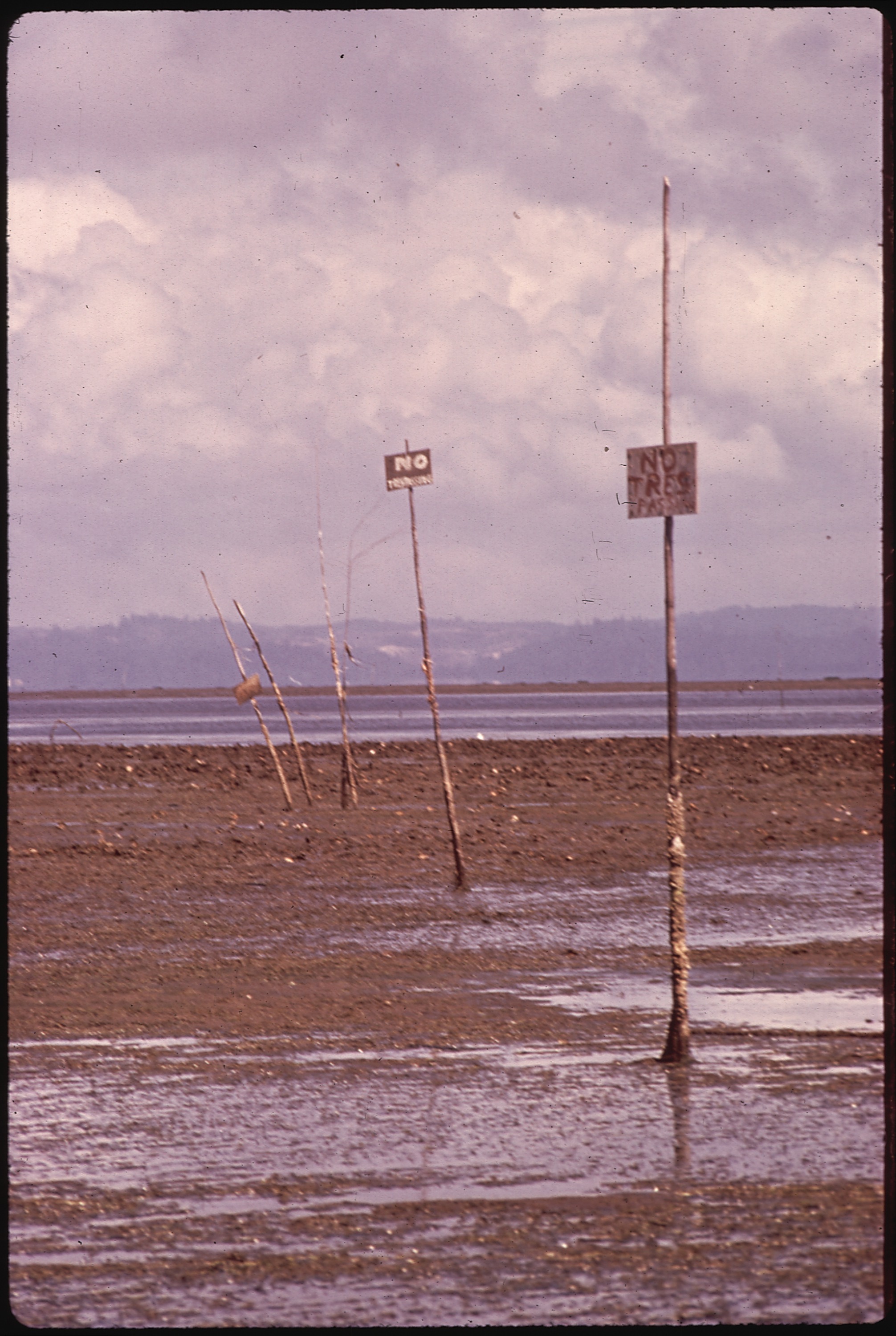
Willapa Bay is a working bay. Most of the tideland in it belongs to somebody, and a good deal of what looks like open mudflat at low water is a farm with a crop on it.
That is the first thing to understand before planning a clamming trip here, because it is the opposite of how the Washington coast usually works. There are genuinely good public beaches on this bay. There are just not many, they are not obvious from the road, and the ground between them is private.
What the bay actually is
Willapa is a large, shallow, extremely productive estuary behind the Long Beach Peninsula, and it has been an oyster bay since the nineteenth century. Its tideflats are the reason: enormous, gently sloping, and exposed by a wide margin on a good low tide.
Those same qualities made it worth owning. Washington sold the great majority of its tidelands into private hands before the practice ended in 1971, and on Willapa the buyers were largely oyster growers. What that produced is a bay where the flats are divided into working parcels, marked with stakes, and farmed on a cycle. The wider version of that story is in Willapa Bay oysters.
The practical effect is that access here is a question you answer before you leave, not one you work out at the water. There is no reliable way to tell a leased bed from a public flat by looking at it.
The public beaches, which is a short list
Four sites carry public harvest, and they are not interchangeable.
Nemah, on the east side of the bay, is public tideland and the most usable of them from a car. Washington lists it as open for clam, mussel and oyster harvest year-round, and the species there are Pacific oysters, eastern softshell clams, Manila clams and cockles. Access is at Pickernell Creek off Highway 101, from a gravel turnout on the west side just south of the creek at milepost 37.7.
The important detail at Nemah is where you start walking. The state's own guidance is to go beyond the first point of land, roughly a quarter mile north, specifically to avoid private clam grounds, after which the public area runs about three and a half miles up the shore. Walking straight down from the turnout puts you on somebody's beds. Note also that the entrance and parking close for construction from the first of December for around six weeks.
Nahcotta Tidelands is forty acres owned by the Department of Fish and Wildlife, on the peninsula side. It is the one that catches people out, because the seasons there are split by species: oysters are open for harvest year-round and clam and mussel seasons are closed year-round. Oysters are plentiful. Clams are not on the menu, regardless of what you find in the mud. Park at the Nahcotta Tidelands Interpretive Site, reached on Sandridge Road.
Hawk's Point and the Tokeland area, at the north end, is public tideland listed as open year-round, and it comes with an honest warning attached: there are currently no oysters available for harvest and the clam resources are limited. The state attributes the change to burrowing shrimp, of which more below. Access is by boat, or by land along State Route 105 from three gravel turnouts on the north side between mileposts 13 and 15.
Long Island Northwest, at Diamond Point, holds Pacific oysters, Manila clams and cockles, and is accessible by boat only. It sits inside the Long Island Oyster Reserve, and the harvestable ground is defined by reserve monuments rather than by anything you can see, which makes it a site for people who have done their homework.
Bay Center, and the honest version of it
Bay Center sits on a spit on the east side of the bay, and it is where a lot of people actually dig, including the author of the trip this article was built around.
It is not a public beach. The tideland worked from the KOA campground there is private, and digging it is a privilege of staying on the property rather than a public right. That is a perfectly good way to get a bucket of clams, and it is worth saying plainly rather than dressing up: you are paying for access, the same way you would at any private tideland with an arrangement.
This matters because Bay Center is exactly the sort of place that gets passed along as a tip without the access half attached. Somebody hears that the clamming is good at Bay Center, drives out, walks onto the nearest flat, and is digging a lease. The distinction between a beach that is open and a beach that is good is the entire subject of this bay.
If you want to dig at Bay Center, book the campground. If you want a public beach, drive to Nemah.
Softshell Clams: Clamming with ODFWWhat you are digging
The species list on Willapa is different from Puget Sound's, and it is worth knowing which animal you have.
Eastern softshell clams are the most abundant thing in the mud on much of this bay. They are thin-shelled, oval, with a long siphon and a shell that will not close fully, and they are the species most likely to fill a bucket. They are also fragile: a shovel through the shell is a wasted clam, and they sit deeper than people expect.
Manila clams are the small, hard, ridged clam most people picture, and they sit shallow, frequently in the top four to six inches of gravelly mud. They are the best eating of the group and the easiest to dig.
Cockles are round, heavily ribbed and sit almost on the surface, so they are found by looking rather than digging. Note the size rule changed: the cockle minimum went from one and a half inches to two and a half inches on 1 April 2026, which takes a lot of previously legal cockles off the table.
Pacific oysters are on the ground rather than in it, and Washington requires you to shuck them on the beach and leave the shells there.
Butter clams occur in the region and are a firmer, chowder-grade clam that holds paralytic shellfish poisoning toxin far longer than anything else here, which is a genuinely separate problem covered in butter clams and PSP.
The burrowing shrimp, which is why some ground is empty
If you dig a flat on this bay and find soup where you expected substrate, this is why.
Willapa has a large and expanding population of ghost shrimp, Neotrypaea californiensis, that tunnel through the sediment. The bay's native mud shrimp, Upogebia pugettensis, are a different story: their population collapsed around 2002 under an invasive parasite, the bopyrid isopod Orthione griffenis, and has stayed low rather than expanding. At high density the ghost shrimp turn firm ground into a soft, liquefied mud that neither oysters nor most clams can live in, because anything sitting on it sinks and anything in it suffocates.
This is not a hypothetical. The state's own description of the Hawk's Point and Tokeland beach says the harvest profile has changed dramatically in recent years because of increased burrowing shrimp abundance, which is a plain-language way of saying the clams and oysters that used to be there largely are not. It is the central management fight on this bay, and it is why a beach that produced well for somebody a decade ago may produce nothing now.
The shrimp themselves are excellent bait, which is a separate activity covered in pumping ghost shrimp for bait.
The gear
Willapa is soft ground, big tides and long walks, and the list reflects all three.
Boots you can get out of, which is the item that matters most here. This is deep, soft estuarine mud over a wide flat, and it takes footwear off feet. Something that straps tight, or that you can pull a foot out of deliberately, beats anything loose.
A shovel rather than a clam gun, because the productive species on this bay sit in mud rather than in sand. A narrow clam shovel moves the ground; a gun pulls a core that collapses.
A rake, for the cockles and Manilas that sit shallow, which is a different tool for a different depth and the reason people bring both.
A mesh bag, so the catch drains and stays alive rather than sitting in a bucket of warm water.
A tide table corrected for the bay rather than for the coast. Willapa is large and the timing inside it differs meaningfully from the ocean beaches a few miles west, which is the correction people skip.
A land ownership map, or at minimum the state's beach list downloaded before you go, because there is no cell coverage on most of this shoreline and the ownership question cannot be answered from the flat.
And a container of clean seawater carried home, because softshell clams in particular hold grit and need a purge before they are worth cooking.
Reading the flat
Once you are legally standing somewhere, the finding is straightforward.
Softshell clams show as a hole, sometimes with a squirt, and they are deeper than the hole suggests. Dig beside the show rather than on top of it, and go down further than feels reasonable before giving up.
Manilas and cockles are a surface game. Rake a few inches and work sideways rather than down, and cover ground instead of excavating one spot.
Work the tide out and back. The productive band moves with the water, and the mistake is to walk straight to the low-water line and then get cut off on the return. Willapa's flats are wide enough that the flood comes in behind you across ground you thought you had crossed. The arithmetic is in minus tides for clamming.
And fill your holes. On a soft flat an open hole kills whatever is left in the spoil, and on a bay where the public ground is this limited that matters more than it does somewhere with miles of beach.
Cockles: Clamming with ODFWWhen to go, and the other thing to do here
The seasons at the public beaches are nominally year-round, so timing is decided by tide and weather rather than by a calendar.
You want a genuine minus tide in daylight, which on this coast means the winter and spring series if you are willing to work in the cold, and the summer midday lows if you are not. Willapa is exposed and flat, so wind matters more than it does in a sheltered inlet: a hard southwesterly puts chop across the flats and makes the walk back unpleasant.
Winter is also when the bay is at its best for a different reason. Willapa is one of the more important shorebird stops on the Pacific Flyway, and standing on a flat at low water in spring migration is worth the trip on its own even if the clams do not cooperate.
And there is a crab option worth knowing about. The nearest boat launch to the Nahcotta tidelands is at the Port of Peninsula, reached via 275th Street, and the state notes that crabbing is permitted off the docks there with parking available, though there is no public camping at the site. Dock crabbing is a reasonable fallback on a day when the tide is wrong for digging.
Limits, licenses and the check you cannot skip
Washington's clam limit is forty clams and not more than ten pounds in the shell, all species combined, excluding horse clams and geoducks. It is a combined limit, so a mixed bag of softshells and Manilas counts together.
Butter clams carry a one and a half inch minimum. Cockles now carry two and a half inches. Everyone harvesting needs their own shellfish or combination license, and the cross-state version of that question is in shellfish licenses by state.
The check that ends more trips than any rule is the biotoxin one. A beach being open in the state's season table is not the same as being safe to harvest: the Department of Health closes areas by beach and by species, sometimes for months, and those closures move independently of the season. Check the shellfish safety map for the specific beach on the morning you drive, not the week before. That whole mechanism is in shellfish biotoxin closures.
Putting it together
Decide the access question first, because on this bay it is the hard one. Nemah for a public beach reachable by car. Nahcotta for oysters only. Hawk's Point if you want to see what burrowing shrimp have done. Diamond Point if you have a boat and have read the reserve boundaries. Bay Center if you are staying at the campground and digging their tideland.
Check the biotoxin map for that beach and that species on the day.
Bring a shovel, a rake, boots you can escape from, and a corrected tide table.
Walk past the first point at Nemah before you start, because the ground below the turnout is not yours.
And treat an old tip about a productive flat with some suspicion here. This bay has changed, the shrimp are a large part of why, and a beach that filled a bucket for somebody in 2015 is not a promise.
The ownership history underneath all of this is in public tidelands and private beaches, and the oyster half of the bay is in Willapa Bay oysters.