Fish
Fish Fire
Fire Hike
Hike Bird
Bird

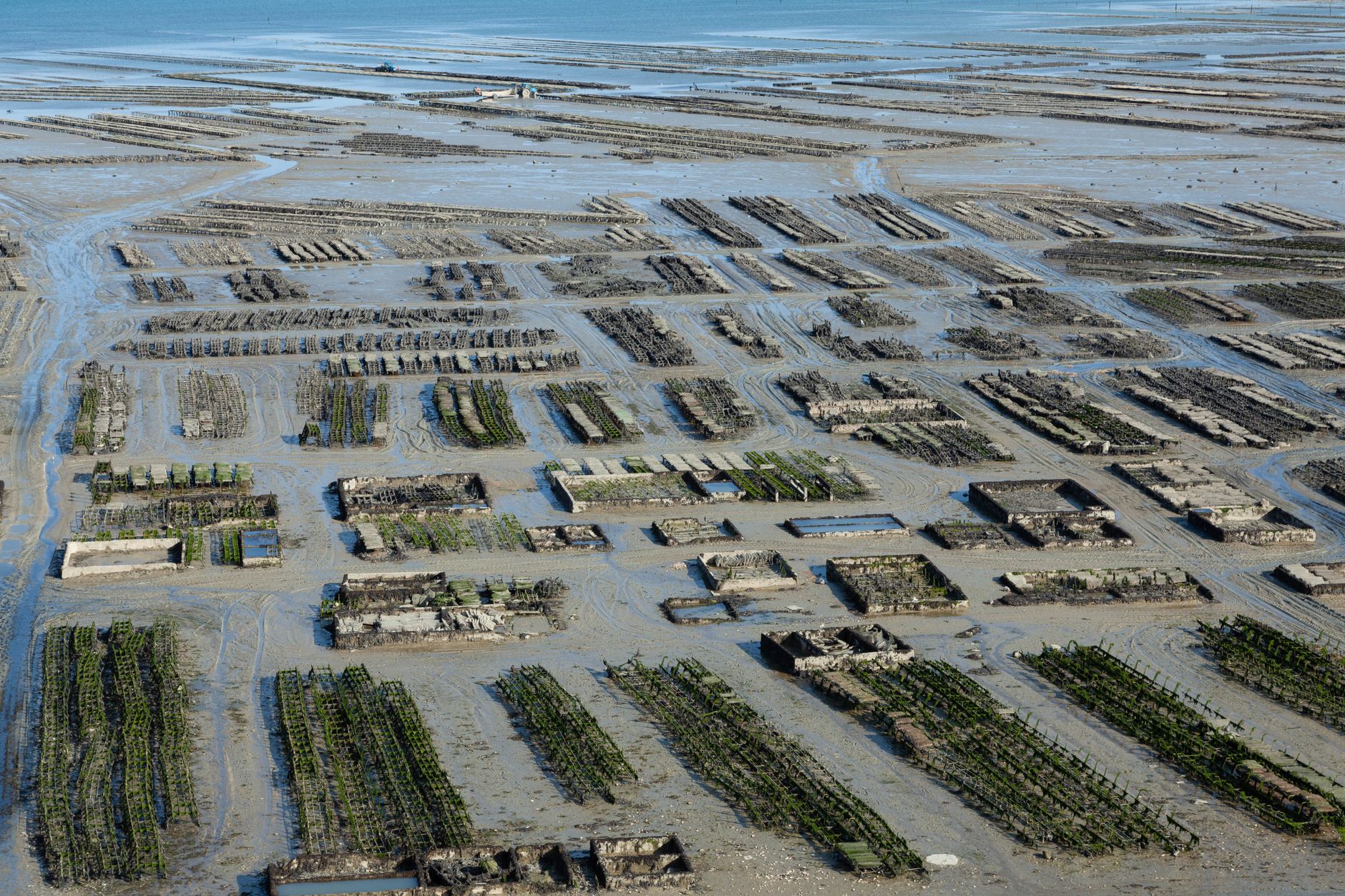

One in six oysters produced in the United States comes out of a single shallow bay in the southwest corner of Washington that most Americans could not find on a map.
Willapa Bay is about twenty-five miles long, mostly less than ten feet deep at low water, and roughly half of it drains to mudflat twice a day. It has no major city on it, one modest river system feeding it, and an oyster industry that has been continuously worked since the 1850s.
It is also in the middle of an argument about a native shrimp that has no clean answer.
Why this bay and not another one
Willapa produces at that scale because several things line up here that rarely line up together.
It is enormous and it is shallow, which means a very large area of tideflat at the elevation where oysters grow well. Tidal exchange is strong, flushing the bay substantially on every cycle and delivering the plankton the animals feed on. The Columbia River plume and coastal upwelling keep the water productive. And there is almost no industrial development and only a small population on the watershed, so the water quality is good by the standards of most American estuaries.
Then there is temperature. Most of Washington's waters are too cold for Pacific oysters to spawn reliably, which is why the industry imported seed from Japan for decades. Willapa is one of the exceptions: it warms enough in summer that Pacific oysters set naturally here. That makes it one of a small number of places on this coast where the industry can catch wild spat on shell rather than buying hatchery seed, and it is a large part of why the bay has been able to keep producing at scale for over a century.
The bay that started it all
Willapa was Shoalwater Bay when the first oyster boom happened, and it was the native Olympia that boomed.
San Francisco after 1849 wanted oysters and had exhausted its own. In 1851 the first sacks of Shoalwater Olympias reached the city's shellfish merchants, and what followed was a schooner trade that dominated the California oyster market from 1850 through the end of the 1860s, with one company alone shipping something like fifty thousand bushels a year. The wild beds were worked out within a couple of decades.
Eastern oysters were tried next, shipped from the Atlantic, and they grew here but never established a self-sustaining population. The bay's modern industry dates from the Pacific oyster arriving from Japan through the 1920s and 1930s, and the full history of that is in the oyster on your plate came over on a steamship.
So Willapa has now had three different oyster industries in a hundred and seventy years, built on three different species, two of which it destroyed.
The shrimp
The current problem is a native animal doing what it has always done, in a place where humans now want something else.
Burrowing shrimp, ghost shrimp and mud shrimp, live in the sediment of the tideflats and turn it over constantly. That bioturbation is a normal ecological function and in a bay with no oyster farms it would be unremarkable. On an oyster bed it is a disaster, because the churned sediment goes soft and soupy, and oysters settled on it sink and suffocate. A bed with a heavy shrimp population stops being ground you can farm.
Populations have expanded substantially over recent decades, and the reasons are not fully settled. Loss of predators, changes in sediment, the removal of eelgrass, historic pesticide use suppressing them artificially for years, and general estuarine change have all been proposed. What is agreed is that the affected acreage has grown and that growers have lost productive ground.
For decades the industry controlled them with carbaryl, an older pesticide, applied to the tideflats. That was phased out under legal and regulatory pressure, and the search for a replacement is where the story gets difficult.
The Threat To Willapa OystersThe imidacloprid fight
In 2016 the Willapa Grays Harbor Oyster Growers Association applied to spray imidacloprid, a neonicotinoid insecticide, onto shellfish beds in Willapa Bay and Grays Harbor. It had never previously been approved for aquatic use anywhere.
They applied again in 2017. In 2018 the Washington Department of Ecology denied the permit, citing new science on the effects of neonicotinoids on non-target species. The National Marine Fisheries Service had opposed the proposal on the grounds of risk to other marine life, and a substantial public campaign against it developed, with a number of prominent Seattle chefs taking a visible role in opposing a product that would be used to grow the oysters they served.
The growers appealed to the Pollution Control Hearings Board. In 2019 the appeal ended in a settlement, in which the association abandoned the effort and agreed to work on an integrated pest management approach instead.
It is worth being fair to everyone in this. The growers were not proposing to poison a bay for fun; they were watching farmed ground turn to soup and were asking for the tool their industry had used for fifty years, and a Washington State University scientist publicly warned that denial would be economically severe. The opponents were objecting to broadcasting a neonicotinoid across an intertidal ecosystem, in water, at scale, with unresolved questions about what it would do to everything that was not a shrimp. Both positions were reasonable and they were incompatible.
What growers do now
The alternatives are less effective, more expensive and more labor intensive, which is the honest summary.
Some ground is worked mechanically, harrowing or otherwise disturbing sediment to make it less hospitable. Some is given up. Growing methods have shifted toward getting oysters up off the bottom, in bags, on longlines or on racks, where soft sediment matters less, and that is a substantial capital and labor change from the traditional practice of broadcasting oysters onto the flats.
Integrated pest management, which is what the settlement pointed at, means combining monitoring, cultural practices, habitat management and targeted intervention rather than a single broadcast treatment. It is harder and it is where the industry now is.
The underlying question, which nobody has answered, is what the bay is for. A native species is expanding in its native estuary and displacing an introduced species farmed for profit. That framing is unfair to the growers and it is not wrong, and it is the reason the argument has not gone away.
The other bay, and the wider argument
Grays Harbor sits immediately north of Willapa and shares most of this story, including the shrimp and the pesticide applications, which covered both estuaries.
Taken together the two bays represent the great majority of Washington's coastal, as opposed to Puget Sound, shellfish ground. That concentration is why a single regulatory decision about a single insecticide became an existential question for an industry rather than a local difficulty, and why the response from growers was as forceful as it was.
It also explains the shape of the opposition. A proposal to broadcast a neonicotinoid across intertidal ground in two of the most important estuaries on the Washington coast, both of them major shorebird sites, was never going to be treated as a routine agricultural permit. The Center for Food Safety, the Center for Biological Diversity and a number of Seattle restaurants campaigned against it, and the chefs mattered because they were the customers.
The gear
Willapa is a working bay rather than a park, and the gear list reflects a place where the mud is deep and the public access is limited.
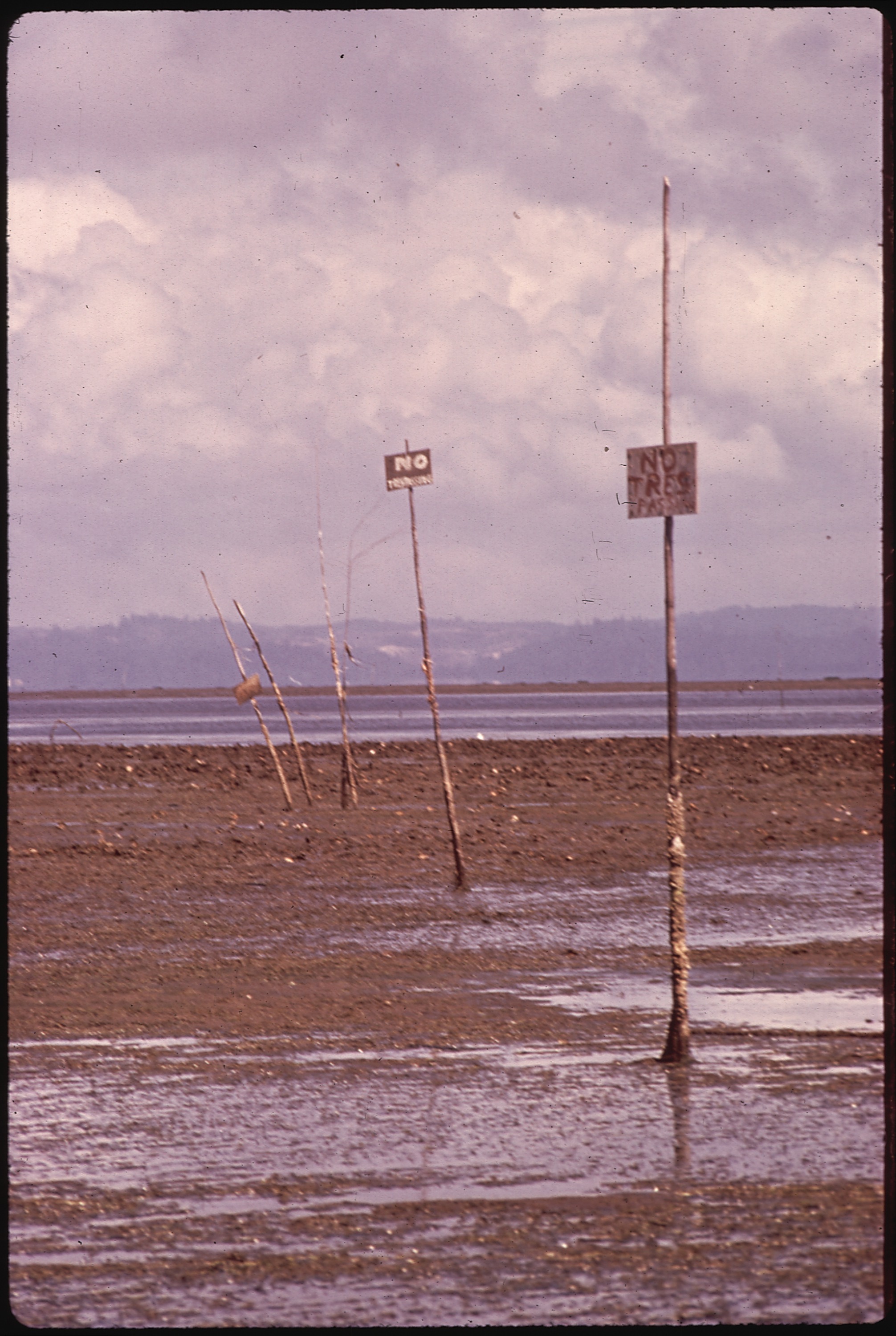
The state public beach list, because most of Willapa's tideland is either privately owned or under active commercial lease, and the beds that look most productive from the road are almost always somebody's farm. Harvesting from a lease is theft rather than a misunderstanding, and it is taken seriously here.
A shellfish license, and the same Washington rule that applies everywhere in the state: shuck on the beach, leave the shells.
An oyster knife and a heavy glove, since anything you take here you open here.
Boots that handle deep mud, and this is not a formality on Willapa. The bay is shallow, soft and enormous, the flats run for a long way out, and the substrate in the middle of it will take a boot and keep it.
Binoculars, which is an unusual entry on a shellfishing list and belongs on this one. Willapa is one of the more important shorebird stops on the Pacific Flyway, the spring migration through here is spectacular, and half the reason to stand on this bay at low water has nothing to do with oysters.
A tide table for the specific part of the bay, because Willapa is large enough that the timing at the north end and the south end are meaningfully different.
And a cooler with ice, for the drive back over the hills.
What this means for the oysters you buy
The practical effects reach the counter, slowly and indirectly.
Losing farmable ground reduces supply and raises price, and shifting from broadcasting oysters on the bottom to growing them in bags and on racks changes both the cost structure and the product. Off-bottom oysters are typically deeper cupped, cleaner shelled and more uniform than bottom-cultured ones, because they are tumbled by the tide and never sit in mud, which is why a great deal of what appears on a raw bar now looks different from what a Willapa oyster looked like fifty years ago.
So the shrimp argument is visible in what you eat, if you know to look for it. A tray of neat, deep-cupped, individually named oysters is partly an aesthetic choice and partly the consequence of an industry that has been pushed off the bottom of the bay.
Natural set, and what it means for a visitor
Because Willapa is warm enough for Pacific oysters to spawn, it is one of the places where you find wild oysters rather than escaped farm stock, and the bay has been recruiting on its own for the better part of a century.
Public recreational harvest in Willapa is more limited than on Puget Sound, because a very large share of the tideland here is either privately held or under aquaculture lease, and a leased bed is somebody's crop rather than open ground. The state publishes the public beaches and they are the only ones to use.
The rules are the Washington rules: shuck on the beach, leave the shells at the same tide height, eighteen oysters, two and a half inch minimum, license for everyone. Those are covered properly in picking oysters in Puget Sound, and they apply here.
Whether a specific flat is public, leased or private is not visible from the shore, and on a bay where half the productive ground is somebody's farm this is the question that decides whether a visit is legal at all. That is the layer Guidepole carries against the specific tideflat, alongside the closure status, and it matters more here than almost anywhere.
The Oystermen of Willapa BayThe rest of the bay
Willapa is not only an oyster factory, and the other things about it are the reason it works.
Willapa National Wildlife Refuge covers a substantial part of the bay and its margins, and the estuary is one of the more important shorebird stopovers on the Pacific Flyway, with very large numbers moving through on migration. The mudflats that make oyster farming possible are the same mudflats the birds are feeding on, which is a useful thing to hold in mind during any argument about what to spray on them.
Long Beach Peninsula forms the bay's western edge and is one of the four Washington razor clam beaches, so a trip here can reasonably combine both, and that fishery is covered in razor clamming the Washington coast.
The towns are small: South Bend, Raymond, Tokeland, Nahcotta, Oysterville, which was platted in 1854 during the Olympia boom and is now a preserved village of a few dozen people with a name that has outlived its industry twice.
The short version
One in six American oysters comes from Willapa Bay: shallow, well flushed, thinly populated and warm enough that Pacific oysters spawn naturally, which is rare on this coast.
It has had three oyster industries in under two centuries. The Olympia boom fed Gold Rush San Francisco from 1851 and was worked out by the 1870s. Eastern oysters never established. The Pacific oyster from Japan built the modern industry.
Burrowing shrimp, a native animal, turn tideflat sediment to soup and sink oysters. Growers used carbaryl for decades, applied to spray imidacloprid in 2016 and 2017, were denied by Ecology in 2018 on non-target species grounds, appealed, and settled in 2019 by abandoning it for integrated pest management.
Recreational harvest is limited here because most productive tideland is leased or private, and the boundaries are invisible. Use the state public beach list.
And the mudflats that grow the oysters are the same mudflats that feed the shorebirds, which is the whole difficulty in one sentence.
Why the same species tastes different here than it does forty miles north is in why oysters taste different. The chemistry problem that nearly ended the seed supply for this bay and every other is in ocean acidification and the oyster hatcheries. And the newest arrival in the bay, which growers here watch more closely than anybody, is in the green crab problem.