Fish
Fish Fire
Fire Hike
Hike Bird
Bird


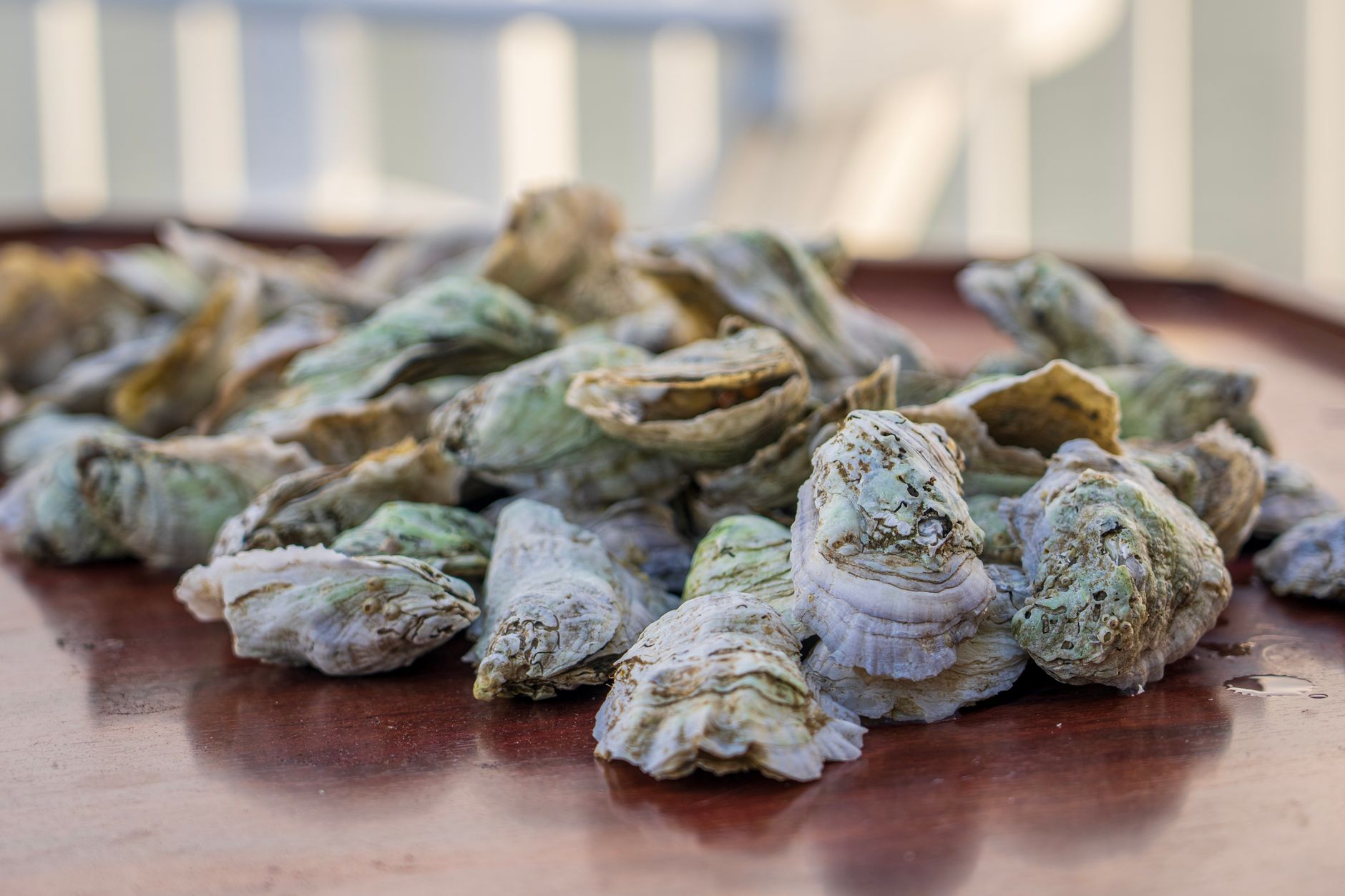
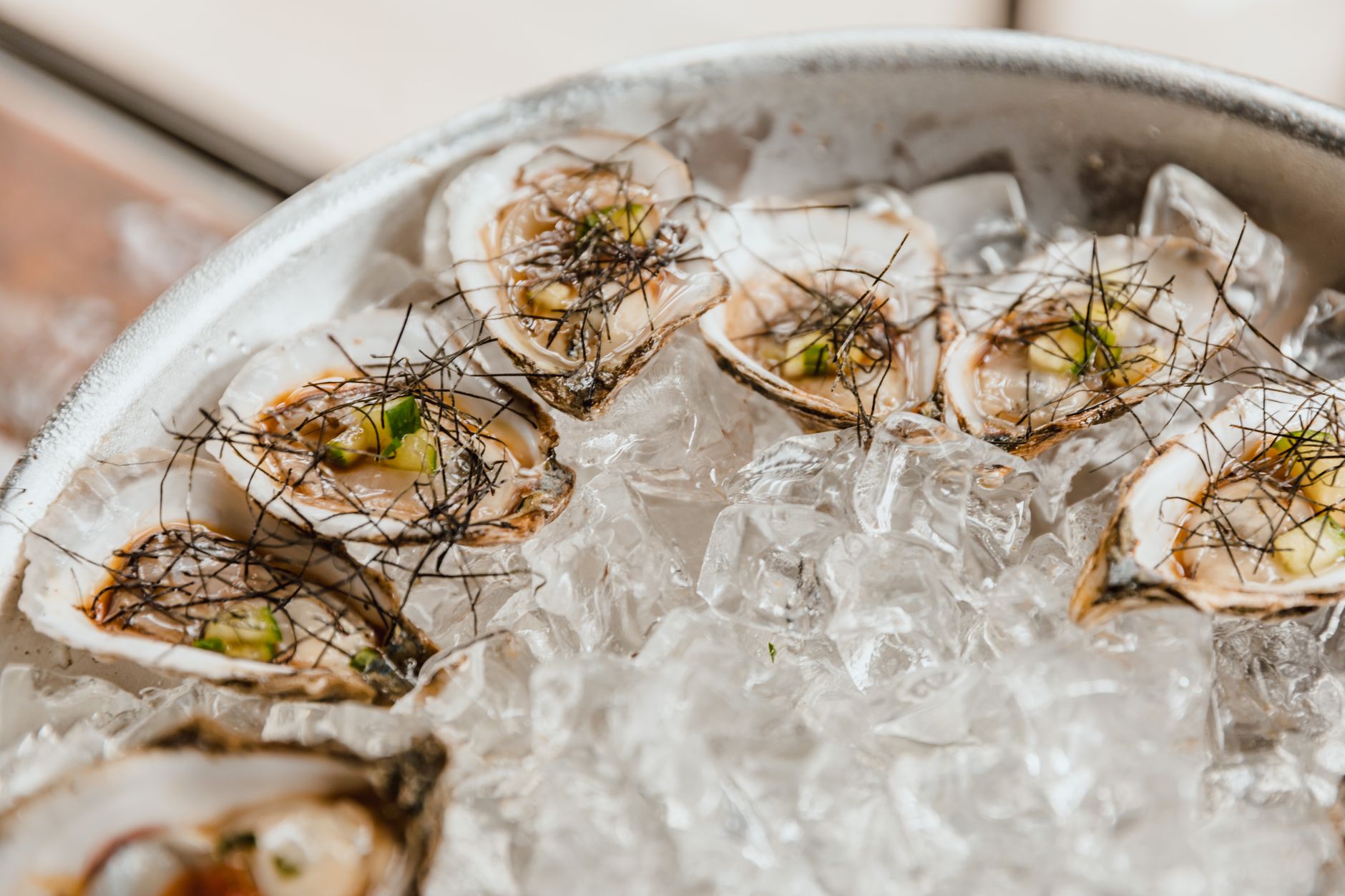
Nearly every oyster eaten on the American west coast is a Pacific oyster, and the Pacific oyster is from Japan.
It arrived in cases on steamships, it was brought here largely by Japanese immigrants who knew how to farm it, and it saved an industry that had destroyed its own native species. The people who brought it were then legislated out of the business and, twenty years later, imprisoned by their own government.
That is the actual history of the oyster on the half shell in Seattle, and it is not the version most menus tell.
The industry had run out of oysters
By the early twentieth century the Northwest oyster business was in trouble of its own making.
The native Olympia oyster had been the industry, and it had been worked hard. Schooners had run Washington oysters to Gold Rush San Francisco from 1851, the wild beds in Shoalwater Bay were exhausted within a couple of decades, and the cultivated beds in south Puget Sound were about to be hit by pulp mill pollution. The Olympia was also small, slow-growing and labor-intensive, which made it a difficult basis for a modern industry even before the collapse.
Eastern oysters had been tried in Willapa Bay, shipped across the country, and they never reliably reproduced in these waters.
What the industry needed was a large, fast-growing, hardy oyster suited to cold Pacific water. There was one, on the other side of the same ocean, already farmed by an industry with centuries of experience.
Who was already doing the work
The link was not accidental, because Japanese workers were already central to the Northwest oyster business before any oysters were imported.
By around 1900, Japanese labor supplied most of the workforce in Washington's oyster industry, having succeeded Native American and Chinese workers who had been pushed out of it by a combination of exclusion laws and violence. Many of those Japanese immigrants came from coastal prefectures with long-established oyster cultivation, and they brought technical knowledge of a kind the local industry did not have.
So the people best positioned to see that a Japanese oyster would solve an American problem were the people already standing on the tideflats.
April 1919
The importation that mattered has a date, a ship and two names.
In April 1919 the steamship President McKinley carried roughly four hundred cases of oyster seed from Miyagi Prefecture to Samish Bay in northern Puget Sound, consigned to the Pearl Oyster Company, a venture founded by J. Emy Tsukimoto and Joe Miyagi.
Experimental shipments had come earlier, from around 1902, and had mostly failed or produced inconclusive results. The 1919 shipment and the ones that followed through the 1920s and 1930s were the ones that worked, and they established the Pacific oyster as the commercial species of this coast. Seed came from Miyagi, from Hiroshima Bay and from Chiba, and the strain names traveled with the animals.
The reason seed had to be imported rather than grown here is worth understanding, because it shaped the industry for decades. Pacific oysters spawn only when the water is warm enough, and most of Washington's waters are too cold for reliable natural set. So for most of the twentieth century the Northwest bought its oyster seed from Japan, annually, by ship. The industry was structurally dependent on a supply chain across an ocean.
The Alien Land Law
In 1921 Washington State passed an alien land law, one of a family of statutes across the western states designed to prevent Asian immigrants from owning or leasing land. Japanese immigrants were barred from naturalizing, and the law used that ineligibility as its mechanism.
For an oyster grower this was not an inconvenience, it was the end. Oyster farming is tideland farming, and it requires holding tideland. A law that prevents you from owning or leasing the ground removes the business entirely.
In 1923 Tsukimoto and Miyagi sold the Samish Bay tidelands and the company to E. N. Steele and his partner J. C. Barnes, who renamed it Rock Point Oyster Company. Steele went on to become one of the significant figures in the Washington oyster industry and wrote its history.
Tsukimoto returned to Japan, where he continued supplying seed oysters to Steele and to other Washington growers. The man who had been legislated out of owning tidelands in Washington spent the following years shipping the animals that made the Washington industry possible, from the other side of the Pacific, as a supplier rather than an owner.
Then 1942
Executive Order 9066 removed people of Japanese descent from the west coast to incarceration camps, and it took the remaining Japanese American oyster growers and workers with it.
Businesses were abandoned, sold under duress, or left in the hands of others. Tidelands, gear, boats and standing crops were lost. Masahide Yamashita, held at Tule Lake, is one of the growers whose attempt to rebuild afterward has been documented, and the pattern he represents was common: people returned after the war to find the ground and the business gone, and started again from nothing or did not start again at all.
The industry itself continued. The oysters kept growing. The seed kept coming from Japan once trade resumed. What changed permanently was who owned the tidelands, and the answer was almost never the families who had brought the species across.
What the oyster did on its own
The Pacific oyster turned out to be better suited to this coast than anyone had planned for, and in places it stopped needing us.
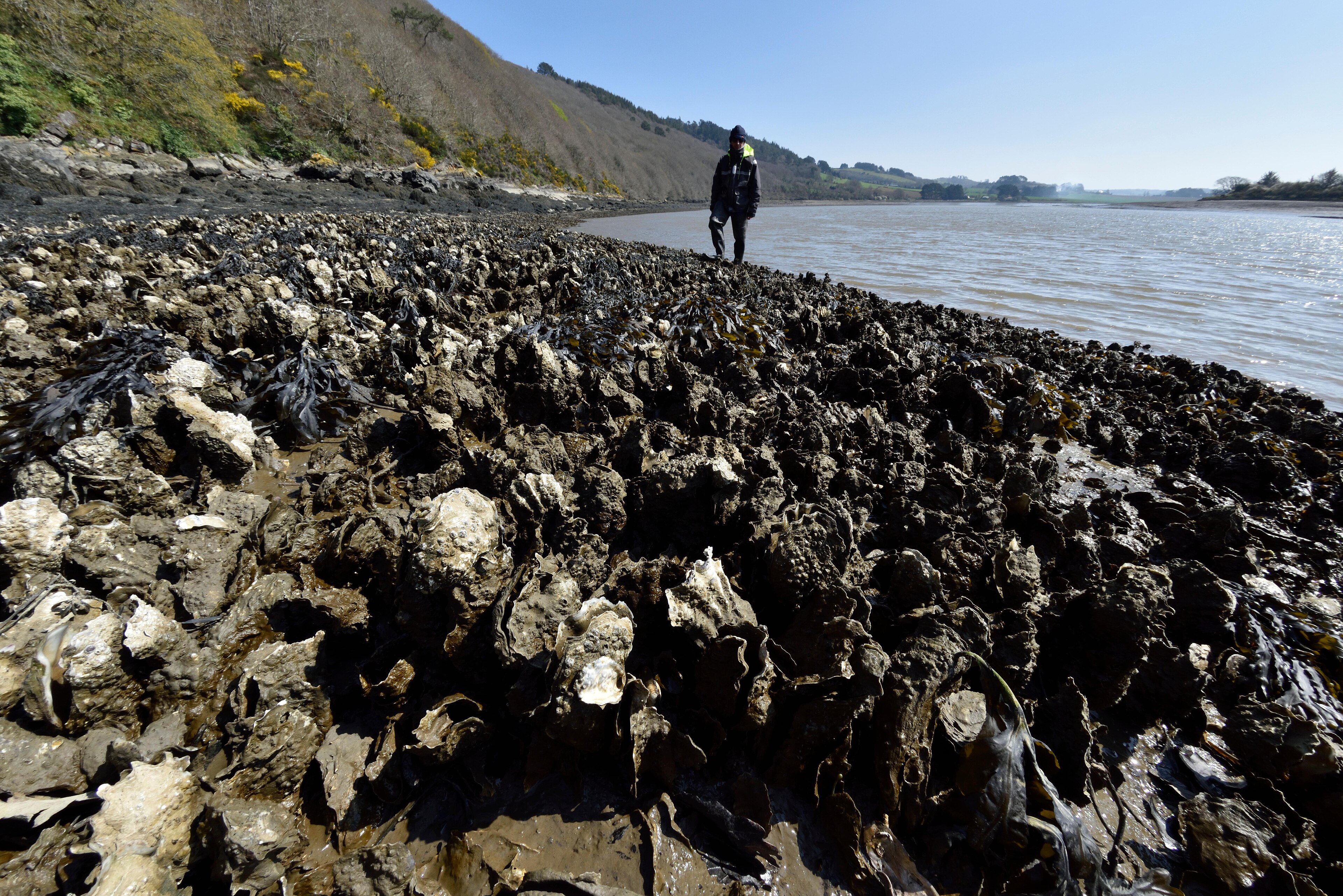
Washington's waters are mostly too cold for reliable spawning, which is why seed was imported for so long. But some places are not. Willapa Bay warms enough in summer for natural set. So does the southern end of Hood Canal, and so do several shallow inlets in south Puget Sound. In those places the Pacific oyster went feral and has been reproducing on its own for the better part of a century.
That is why there are wild Pacific oysters on public beaches at all. What a recreational harvester picks up on Hood Canal is not a planted crop, it is the descendant of a naturalized population founded by imported seed. The practical rules for taking them are in picking oysters in Puget Sound.
It also spread beyond where anyone wanted it. Pacific oysters have naturalized on coastlines around the world, from British Columbia to northern Europe to Australia and New Zealand, and in several of those places they are treated as an invasive species that displaces native shellfish and alters intertidal habitat. In Washington the introduction is generally regarded as a success. In parts of the Wadden Sea it is regarded as a problem. Both assessments are about the same animal.
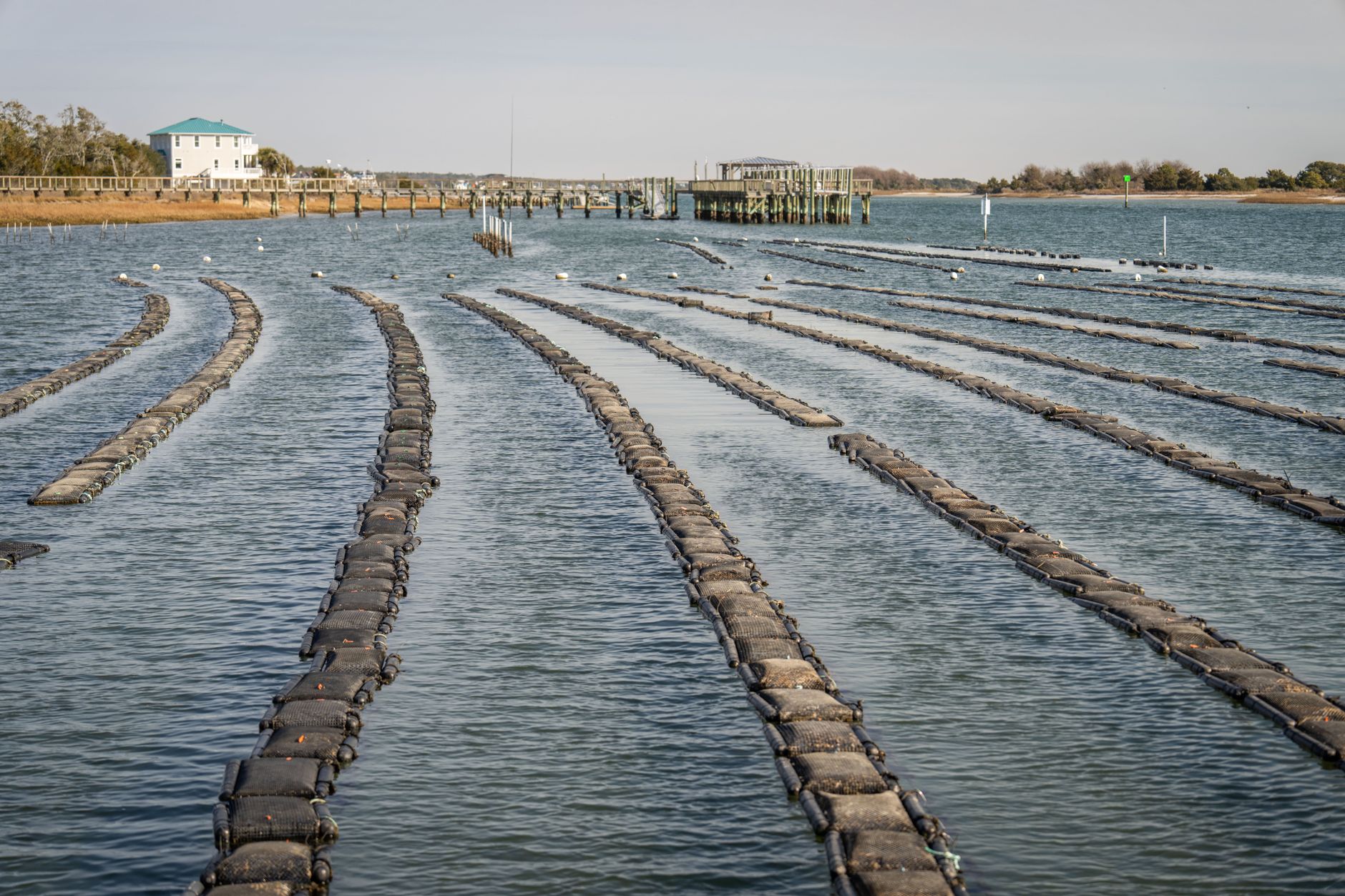
Off-Bottom Japanese Pacific Oyster Culture Using LonglinesWhere the seed comes from now
The dependency on Japanese shipments ended, and how it ended shaped the modern industry.
Northwest hatcheries were developed from the middle of the twentieth century onward precisely because buying seed across an ocean every year was a fragile way to run a business, and wartime severed the supply entirely. Producing larvae domestically, in tanks, on a schedule, removed that vulnerability and made it possible to select for traits, breed for disease resistance and supply growers reliably.
It also concentrated the risk somewhere new. An industry that once depended on a shipping route now depends on a small number of hatcheries drawing seawater from a coast that turned out to be at the leading edge of ocean acidification. When the larvae at Whiskey Creek began dying in 2007, the failure propagated across every grower who bought that seed, which is the modern version of the same structural problem. That story is in when the oyster larvae started dying.
Natural set still matters in the places warm enough for it, which is why Willapa Bay and the southern end of Hood Canal remain unusual. In those bays the industry and the feral population overlap, and some growers still catch wild spat on shell rather than buying it.
Every Type of Oyster That We Eat in the United StatesThe names on the menu
The history is still visible in what oysters are called, if you know to look.
A Miyagi is a Pacific oyster of the strain that came from Miyagi Prefecture, and it is the workhorse of the west coast. The name has been in commercial use here for a century and refers to an origin most people ordering one have never thought about.
A Kumamoto is a separate species, Crassostrea sikamea, smaller and deep-cupped, brought over from Kumamoto Prefecture in the 1940s. It was imported partly by mistake, mixed in with Pacific oyster seed, and turned out to be commercially valuable in its own right. Kumamotos are now largely extinct as a farmed animal in Japan and thriving on the American west coast, which is an unusual reversal.
Everything else on a west coast raw bar with a place name attached is almost always a Pacific oyster grown somewhere specific. Which is not nothing, because growing conditions change the animal, but the species underneath is the same immigrant.
The gear
The gear for this article is mostly a way of looking at things you were going to encounter anyway.
A raw bar menu, read carefully, is the first. Almost every West Coast name on it is one species, Crassostrea gigas, grown in different water by different methods, and the menu is describing places rather than animals. Once you know that, the list stops looking like a catalogue of oysters and starts looking like a map.
The state public beach list, if you want to pick your own, since the feral Pacifics on a Washington beach are descended directly from the seed this article is about.
A shellfish license, and the reminder that Washington requires shucking on the beach with the shells left behind.
An oyster knife, short and stout with a guard, because the animal that made this industry is also the one you will be opening.
A visit to Samish Bay, which is where a good deal of the early Japanese seed work happened and where the industry that grew out of it still operates.
The Wing Luke Museum in Seattle, or a local historical society on the coast, if you want the part of this that is not about oysters. The Japanese American growers who built the seed trade were interned in 1942 and most did not get their operations back, and that is a matter of record rather than interpretation.
And a willingness to say where it came from, which costs nothing and is the honest version of a story usually told as if the oysters simply appeared.
Why any of this matters at a raw bar
The direct reason is that the Northwest's most celebrated regional food is an import, and the people who brought it are missing from how the region tells the story.
Menus and tasting notes talk about terroir and about the purity of Northwest waters and about a local tradition. The tradition is a century old, it began with four hundred cases of seed from Miyagi Prefecture on a steamship in 1919, and the men who arranged it sold out two years after a law was passed for the express purpose of making it impossible for them to continue.
There is also a straightforwardly practical point. An industry that depended on imported seed for fifty years became fragile in exactly the way that dependency implies, which is a large part of why Northwest hatcheries were developed in the first place. And those hatcheries turned out to be the point at which the industry felt ocean acidification first, which is a different story and is in when the oyster larvae started dying.
The short version
The Pacific oyster, Crassostrea gigas, is native to Japan and is the basis of essentially the entire west coast oyster industry.
It was brought in because the native Olympia had been overharvested from the 1850s and then poisoned by pulp mills, and because eastern oysters would not reproduce here.
Japanese immigrants supplied most of the industry's labor by 1900 and brought the cultivation knowledge with them. The shipment that established the species arrived on the President McKinley in April 1919: about four hundred cases from Miyagi Prefecture, to the Pearl Oyster Company on Samish Bay, founded by J. Emy Tsukimoto and Joe Miyagi.
Washington's 1921 alien land law made it illegal for them to own or lease the tidelands their business required. They sold in 1923. Tsukimoto returned to Japan and kept supplying the seed. In 1942 the remaining Japanese American growers were incarcerated and mostly lost their businesses.
The oyster naturalized in the warmer bays and is now feral on public beaches, and the strain names on a menu are the last visible trace of where it came from.
The native oyster it replaced is in the Olympia oyster, and the beach rules for the feral descendants are in picking oysters in Puget Sound.
The bay where most of that seed ended up is in Willapa Bay oysters, and the reason the same species tastes different from one bay to the next is in why oysters taste different. If you want to go and find the feral descendants of that seed yourself, the beaches are in Hood Canal oysters, where the water is warm enough that Pacifics have been setting naturally for a century without anybody planting them.