Fish
Fish Fire
Fire Hike
Hike Bird
Bird


You may not carry a whole oyster off a Washington beach. Not one.
Every oyster has to be shucked where you picked it, and the empty shells go back down on the beach of origin, at roughly the tide height you took them from. Walking to the car with a bucket of unshucked oysters is an offense, and it is one the Department of Fish and Wildlife actively enforces.
This strikes most people as fussy the first time they hear it. It is the single most important conservation rule in the state's shellfish regulations, and once you understand why, the rest of oyster picking makes sense.
The shells are the point
An oyster larva spends its first two or three weeks swimming. Then it has to find something hard, clean and calcareous to cement itself to, permanently, for the rest of its life. If it cannot find one, it dies.
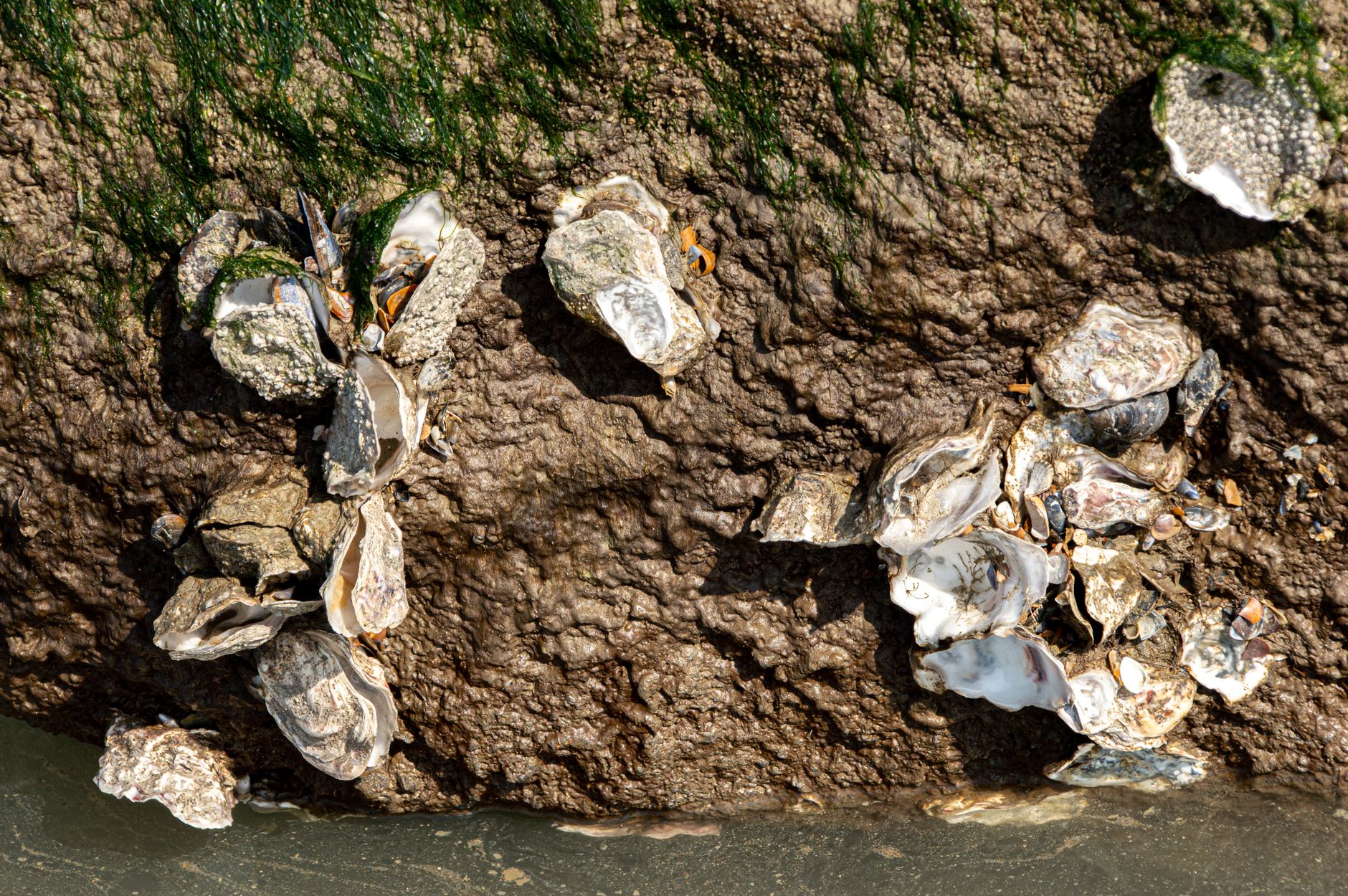
What it is looking for, overwhelmingly, is old oyster shell. Growers call it cultch, and the entire commercial industry is built on providing it deliberately, by spreading cured shell across the tideflats before a spawn so the larvae have somewhere to land.
On a public beach, the cultch is whatever previous pickers left behind. Take the shell home and you have not just removed an oyster, you have removed the surface next year's oysters needed. Do it at the scale of a popular beach on a good tide series and the bed stops recruiting, quietly, over a few seasons, and nobody can point to the day it happened.
So the rule is not about litter. It is a requirement to return the substrate, and the instruction to leave shells at the same approximate tide height matters too, because an oyster that settles too high dries out and one that settles too low gets eaten. The band where they survive is narrow, and a pile of shell dumped at the top of the beach is shell removed from the system.
The limit, the size and the license
The rest of the rules are straightforward and they are checked.
Eighteen oysters per person per day, with a shell at least two and a half inches at its longest dimension. You need a shellfish or combination fishing license, everyone harvesting needs their own, and everyone shucks their own oysters into their own container.
Enforcement is real rather than theoretical. In 2026 a group who had taken a rideshare out to Hood Canal were cited after being found with roughly five hundred oysters, which is a useful illustration of both the scale people occasionally attempt and the fact that officers work these beaches on good tides.
The size minimum has a purpose beyond conservation: an oyster under two and a half inches is not worth the effort of shucking. You will discover this yourself around the fourth one.
How To Forage for Shellfish on Washington's Hood Canal - Raking Clams and Shucking OystersFinding a beach you may actually pick
This is the part that catches visitors, and in Washington it is a hard question.
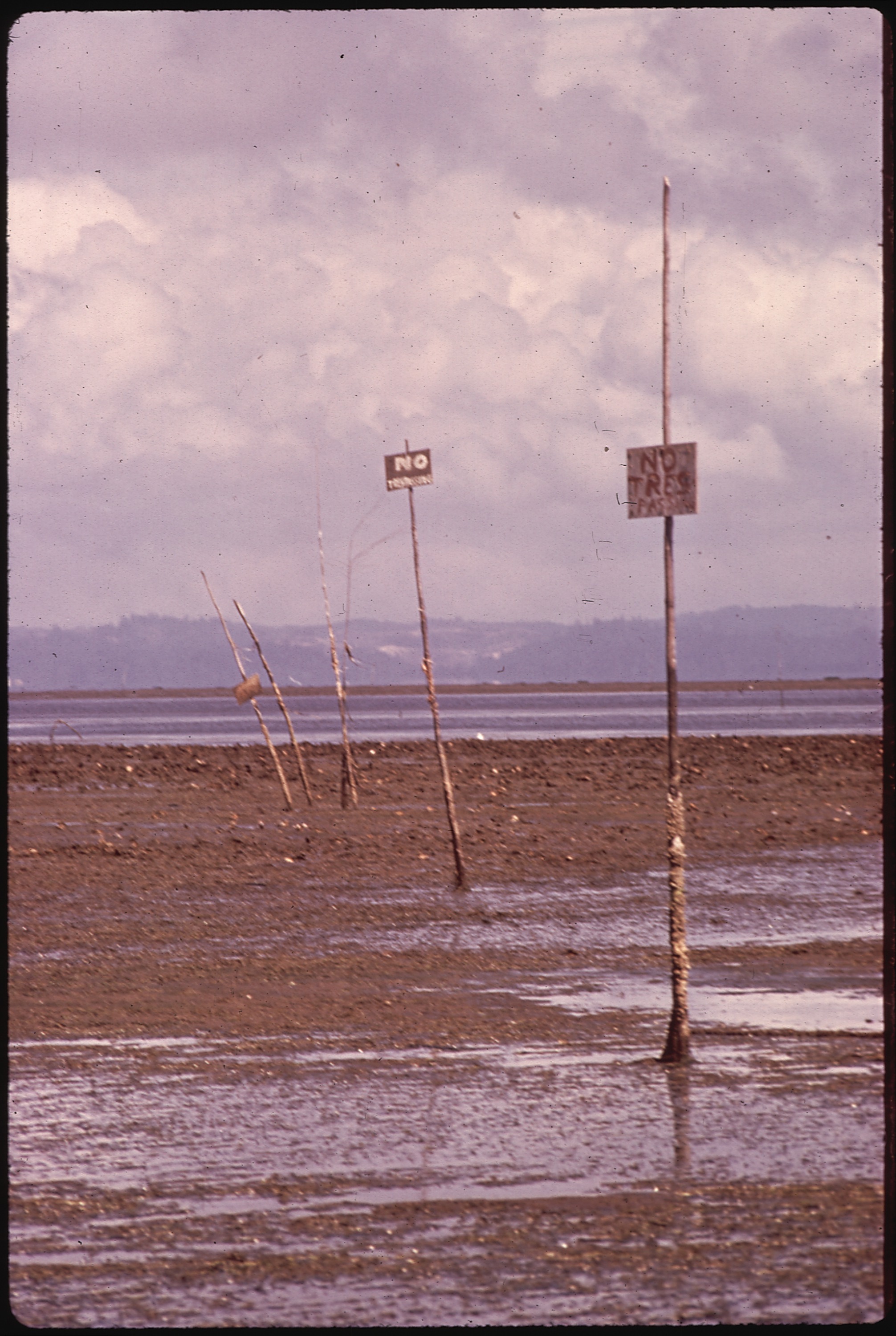
The state sold roughly seventy-one percent of its tidelands into private ownership before the practice ended in 1971, and the oysters on a private tideland belong to the tideland owner. There is nothing at the waterline to tell you which kind you are standing on, no requirement to post it, and most of it is not posted.
The Department of Fish and Wildlife publishes a list of public shellfish beaches with maps and seasons, and that list is the authoritative starting point. It is not a formality: a great many beaches that look public, have a path down to them and show obvious signs of previous picking are private tideland where a great many people have been quietly trespassing for years.
The other trap is the boundary. A public beach has surveyed ends rather than visible ones, and a public stretch two hundred yards wide sitting between two private parcels is the normal case on Puget Sound rather than the exception. Working along the shore while picking is how a law-abiding person ends up on somebody else's ground.
That is three separate questions before you leave the house: is the beach public, is it open this season, and is it currently closed for biotoxin. Three sources, two agencies, and the answers change independently. Guidepole carries the ownership boundary, the season and the current closure status against the specific beach, which is the combination that decides whether a trip is legal, and it is the reason not to rely on a beach list you screenshotted in March. The wider ownership picture is in public tidelands and private beaches.
When to go
Oysters are a cold-weather food in the Northwest, and the reasons are biological rather than traditional.
Spring is the optimum window on Puget Sound and Hood Canal. The water is still cold, the animals are fat from winter feeding and have not yet spent themselves spawning, and the tides in late winter and spring give good daytime lows rather than the midnight lows of December.
Summer is the poor season and it is poor twice over. Pacific oysters spawn when the water warms, and a spawning oyster puts everything into gametes, which turns the meat thin, soft and milky. It is not dangerous, it is just unpleasant, and this is the real biology behind the old rule about months with an R in them. The second reason is Vibrio, which multiplies in warm water and in shellfish left warm after harvest, and which is a genuine illness risk from May through September.
Autumn is good again as the water cools and the animals recondition. Winter is excellent for quality and poor for daylight, since the biggest low tides of the year fall after dark.
Tide is the other half. Oysters sit relatively high in the intertidal, which is the good news: you do not need the extreme minus tides that geoducks demand, and a low of around zero to plus one exposes plenty of them. The tide arithmetic is in minus tides for clamming.
The gear
Washington requires you to shuck on the beach, which means the tools that would normally live in a kitchen have to come to the tideflat.
A proper oyster knife is the first item and there is no substitute: short, stout, blunt-tipped, with a guard between blade and handle. A kitchen knife is thin and sharp and will snap under the twist, and a screwdriver is how people end up in an emergency room. Bring a spare, because you will drop one in the mud.
A heavy glove or a folded towel for the holding hand is the second, and it is the item people wish they had brought. You are opening eighteen oysters with cold wet hands on a beach against a rising tide, and most shucking injuries are the blade entering the hand holding the shell.
A jar or sealing tub for the meat comes third, since the shells stay on the beach by law and what goes home is shucked oysters in their own liquor.
Boots with grip rather than waders, because oyster beds are sharp, uneven and slick with algae, and a fall onto a bed of oysters is a nasty way to end a morning.
A cooler with ice, especially between May and September when Vibrio is the live risk, so the meat goes cold immediately.
And two pieces of information: a shellfish or combination license for everyone harvesting, and the state public beach list downloaded before you leave, because signal at a Puget Sound beach access is unreliable and the ownership question cannot be answered by looking at the beach.
Picking well
Once you are on an open public beach at low water, the actual selection is where most people go wrong.
Take singles, not clusters. Pacific oysters grow in clumps welded together, and it is tempting to lever off a whole mass. A cluster contains oysters of several sizes, including small ones you will have to break to separate, and breaking a small oyster kills it. Look for individuals sitting proud of the cluster, or work one free at its narrow attachment point.
Take the ones on shell rather than the ones on rock, where you have a choice. An oyster cemented to bedrock is welded there and comes off in pieces. An oyster on old shell can frequently be worked free with the shell intact, which goes back on the beach.
Look at the shape. A deep-cupped oyster carries meat; a flat, thin, sprawling one is mostly shell and will disappoint you after all the work of opening it. Growers tumble and split their oysters specifically to force deeper cups, and on a wild beach you are selecting for what happened naturally.
And leave the small ones alone rather than measuring every one. If it obviously looks under two and a half inches, do not pick it up. Handling an oyster you are going to put back is not free.
Finding Clam and Oyster Beaches in Washington StateShucking on the beach, in the cold
Since the law requires it, you may as well be good at it.
The tool is a proper oyster knife: short, stout, blunt-tipped, with a guard. Not a kitchen knife, which will snap, and not a screwdriver, which is how people end up in an emergency room with a hand injury. Bring a heavy glove or a folded towel for the holding hand.
The oyster has a hinge at the narrow end where the two shells are joined by a ligament, and that is where you go in, not along the side. Hold the oyster cup down, flat shell up, so the liquor stays in the deep half. Work the knife tip into the hinge, twist rather than push, and the shell will pop. Then run the blade along the underside of the flat top shell to cut the adductor muscle, lift the top off, and slide the blade under the meat to free it from the cup.
Into your container, the shells onto the beach, and repeat seventeen times with cold hands and a rising tide. Bring more than one knife, because you will drop one.
If you want them whole in the shell for later, the practical answer is to shuck the meat into a jar with its own liquor and take that home. You cannot take the shells, and that is the whole point.
What you are picking up
Almost every wild oyster on a Puget Sound beach is a Pacific oyster, and it is not native.
Pacific oysters, Crassostrea gigas, came from Japan, brought over experimentally from about 1902 and established as a commercial species through the 1920s and 1930s from Miyagi and Hiroshima Bay seed. They naturalized so thoroughly in Washington's warmer inlets that most of what you find on a public beach is feral rather than planted, descended from a century of industry spat.
The native is the Olympia oyster, Ostrea lurida, and it is small, flat, round and roughly the size of a fifty-cent piece. It is also almost gone: Puget Sound may have held twenty thousand acres of Olympia beds historically, and by 2010 the estimate was under four percent of historic core populations. If you find one, leave it. They are not what the eighteen-oyster limit is for and picking them helps nothing.
Kumamotos are a third species, smaller and deeper-cupped, grown commercially rather than found wild.
Closures, which are not optional reading
Everything above assumes the beach is open, and it frequently is not.
Paralytic shellfish poisoning closes Puget Sound beaches every year, sometimes for months, and it is the one that kills people. Saxitoxin is not destroyed by cooking, it does not change how an oyster looks or tastes, and the first symptom is a tingling in the lips half an hour after eating. Vibrio is the separate warm-weather problem, solved by cooking and by getting the catch cold immediately, and it is why the Department of Health advises cooking all recreationally harvested shellfish from May through September.
Check the Department of Health shellfish safety map for the specific beach, for oysters specifically, on the morning you go. Not the week before, because a single sample over the action level closes a beach the same day. The whole mechanism is in shellfish biotoxin closures and it is worth reading once, properly.
The short version
Shuck on the beach, leave every shell at the tide height you took it from, on the beach you took it from. Oyster larvae settle on old shell, so the shell is next year's oysters.
Eighteen per person per day, two and a half inches minimum, license for everyone, and each person shucks their own.
Confirm the beach is public before you go, because Washington sold most of its tidelands and none of it is marked. Confirm it is open for oysters that morning.
Go in spring or autumn, not summer, when the animals are spawning and thin and the Vibrio risk is real. Take singles rather than clusters, deep cups rather than flat ones, and bring a proper oyster knife and a spare.
And if you find a small flat round one about the size of a coin, that is an Olympia. Put it back.
The native oyster you should leave alone is in the Olympia oyster, and where the species you are picking came from is in the oyster on your plate came over on a steamship. The best public beaches in the state are in Hood Canal oysters, and the shucking technique and the food safety behind it are in the R rule is right for the wrong reason.