Fish
Fish Fire
Fire Hike
Hike Bird
Bird


Seattle is a good birding city, and the reason is geography rather than green space. It sits on a narrow isthmus between Puget Sound and Lake Washington, in the Pacific Flyway, with saltwater on one side and freshwater on the other and a strip of hills in between.
That produces three things worth understanding before you plan a day. Two entirely different waterbird communities sit within four miles of each other, with scoters, alcids and marine grebes on one side and coots, freshwater diving ducks and grebes on the other, and very few American cities let you work both before lunch. Birds moving along the lowlands are squeezed between water on both sides and hills to the east, which concentrates passage over a narrow strip. And the forested parks are isolated fragments in a built landscape, which makes them exactly the sort of trap that concentrates tired migrants, on the same principle as an island or a desert oasis.
The practical version is to pick sites from opposite sides of the isthmus on the same day, and to treat the wooded parks as small patches worked thoroughly rather than large areas walked through.
Discovery Park
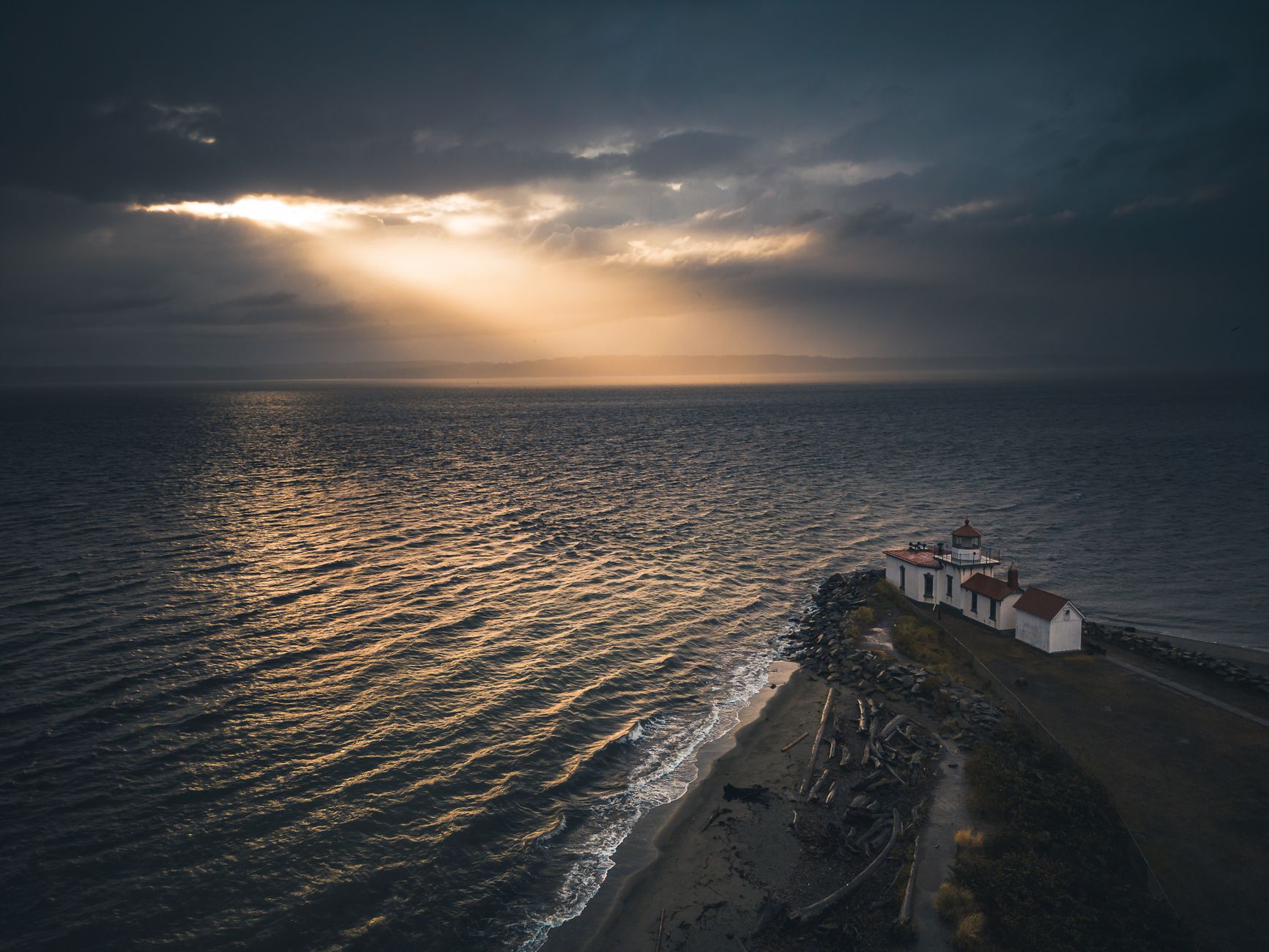
Discovery Park is 534 acres on the Magnolia bluff, the largest park in the city, and it is the anchor site. What makes it work is that it holds four habitats in one place: mature mixed forest on the upper park, open meadow on the bluff, beach and tideline below, and open saltwater off West Point. The park list runs well over 250 species.
The practical notes matter here more than at most city parks. Parking is limited and the lots fill, with the East and South lots the usual entries, and there is a restricted road down to the lighthouse area intended for people with mobility needs while everyone else walks. It is a long way down and back up, since the bluff is a real descent to the beach and a real climb out, so budget for it.
The West Point tip is the seawatching spot, producing loons, grebes, scoters, alcids and, in the right winter conditions, something better. The meadows hold sparrows and raptors over the bluff, and in autumn a real chance of something unusual dropped into the isolated cover.
Union Bay Natural Area: The Best Birding Spot in SeattleUnion Bay Natural Area, and Magnuson
Still called the Montlake Fill by everyone who birds it, the Union Bay Natural Area is a capped former municipal landfill on the University of Washington campus, now grassland, ponds and scrub on the edge of Lake Washington. It is small, flat and free, and it has one of the best species lists of any comparable site in the state, because it is the only substantial open habitat on that side of the city and has been birded intensively for decades. It produces waterfowl on the ponds and the bay, sparrows in the grassland in autumn and winter, marsh birds in the cattails, raptors overhead, and a long history of rarities, with spring and autumn passage the best of it. Note that it sits on university land, so parking is university parking and paid on weekdays, and walking or transit is easier.
Magnuson Park, on the site of the decommissioned Sand Point Naval Air Station, gives a third character again, with constructed wetlands, meadow, shoreline on Lake Washington and a lot of edge habitat. The wetland ponds are the birding, holding waterfowl, herons and marsh species plus good sparrow habitat in the surrounding rough grass, and the park is large enough that the crowds concentrate near the beach and the off-leash area, leaving the wetlands relatively quiet.
The rest of the city
Seward Park holds a remnant of old-growth forest on a peninsula in Lake Washington, with a long-established Bald Eagle nest and a woodland bird community you cannot get anywhere else in the city. Washington Park Arboretum and the Foster Island marsh give waterfowl, migrants in the plantings and easy walking. Green Lake is unpromising on paper and reliable in practice for waterfowl and gulls in winter. Lincoln Park and Alki Point in West Seattle give the best accessible saltwater viewing in the city, and the winter alcid and scoter watching from Alki is good. And Golden Gardens and the Ballard Locks add shoreline plus, at the locks, the odd experience of watching birds and salmon in the same structure.
Gulls, which Seattle takes seriously
The Pacific Northwest has a gull situation and a visiting birder should be warned. Glaucous-winged Gull is the abundant large gull here, Western Gull occurs particularly toward the coast, and the two hybridize extensively, producing a spectrum of intermediate birds sometimes informally called Olympic Gulls. The result is that a substantial proportion of large gulls in Seattle are not confidently assignable to species, and that is the correct answer rather than a failure of skill.
Added to that, Herring, Thayer's-type Iceland, California, Ring-billed, Mew, now Short-billed, and Heermann's Gulls all occur seasonally, while Glaucous, Slaty-backed and Black-tailed have all been found. The Ballard Locks, Alki, the Duwamish and any waterfront in winter are the places to work them.
The advice for a visitor is to enjoy the identifiable ones, learn the hybrid spectrum, and let the rest go. Local birders spend a lot of time on this, and the ones who enjoy it most are those who accept that a fraction of the birds are simply intermediate.
Birding in the City: Discovery ParkThe crow roost
One strange urban wildlife event that Seattle does better than almost anywhere. Through autumn and winter, more than ten thousand American Crows converge on a single communal roost north of the city. For years that roost was the University of Washington Bothell campus, but the crows abandoned it between 2023 and 2024 and the campus count fell to zero by early 2025; the roost has since moved to the Sammamish Valley near Redmond, so where the birds settle for the night is less fixed than it once was. Birds stream in from across the region in the last hour of light, gathering first in staging areas and then dropping into a wooded wetland in a continuous river of birds, and on a good evening the sound is disorienting.
Why they do it is still partly open. Communal roosting probably offers warmth, safety in numbers against owls, and information transfer about food sources, and crows are social enough that the roost is likely doing several jobs at once.
For a visitor it is free and takes an hour: arrive about forty-five minutes before sunset, stand somewhere with an open view of the sky, and watch the lines converge, though it is worth checking recent reports first because the roost has been on the move. It is also a useful corrective, because a birder can spend a decade chasing rarities and miss the fact that the most impressive bird spectacle within thirty miles involves a species everyone ignores.
The gear
Seattle birding is a city with saltwater on one side and a lake on the other, and the gear list covers both plus the rain.
A spotting scope, because Puget Sound in winter is a scope game. The alcids, loons, grebes and scoters off Discovery Park and Alki are out on the water and they are small.
A transit card, which is a genuine recommendation here rather than a green gesture. Discovery Park, Union Bay, Seward Park and Magnuson are all reachable by bus, parking at all four is difficult, and Discovery Park's lots fill by mid-morning on any decent weekend.
Rain gear that works standing still, which is a different specification from rain gear that works while walking. Seattle rain is light and continuous and it defeats anything merely water-resistant over two hours.
Footwear for a real climb, because the walk back up from Discovery Park's beach and lighthouse is a serious hill and people underestimate it consistently.
Binoculars with good low-light performance, since the Northwest winter gives you a narrow band of usable light and much of the best birding happens in it.
A tide table for the beach sections, which govern what is exposed at Discovery Park and at Golden Gardens.
And a land ownership map for the shoreline, because the waterfront north and south of the parks is largely private and the public sections end without a sign.
Owls in the city, and a word about disclosure
Seattle's forest parks hold owls, and the way birders handle that has changed. Barred Owl is now common in the larger wooded parks and frequently seen by day; it arrived in the Pacific Northwest during the twentieth century and is the direct competitor implicated in Northern Spotted Owl decline, which makes it an awkward bird to enjoy. Western Screech-Owl has declined markedly in the region, quite possibly because of Barred Owl predation, and is now scarce where it was once routine. Great Horned Owl persists in the larger parks, and Northern Saw-whet Owl passes through and winters in dense cover.
The etiquette point is that precise roost locations for the scarcer owls are increasingly not published, and that is a deliberate community norm rather than gatekeeping, because a day-roosting owl at a publicized site gets visited continuously, photographed with flash, and eventually moves or fails. If you find one, enjoy it quietly, do not post a pin, and do not use playback in a city park where forty other people will do the same thing that week.
The seasons, and what Seattle is missing
Winter is the strongest season, which surprises visitors, because Puget Sound holds large numbers of wintering waterbirds: three scoter species, Barrow's and Common Goldeneye, Bufflehead, Long-tailed Duck, Common and Pacific Loon, Horned and Red-necked Grebe, and alcids including Pigeon Guillemot, Rhinoceros Auklet and, with luck, Marbled Murrelet. Spring migration peaks late April into May, with warblers, vireos and flycatchers through the wooded parks and shorebird passage on the few available flats. Summer is quietest, with breeding species in the forest parks and Purple Martins on nest boxes at several waterfront sites. Autumn is the rarity season, with the isolated cover at Discovery Park and the open habitat at Montlake Fill doing the concentrating. And year-round the city holds Anna's Hummingbird, Bald Eagle, Barred Owl in the larger forest parks, and enough crows to become a spectacle in their own right.
Being honest about the gaps saves a wasted morning. Shorebirds are thin, because the city has very little exposed mudflat and the estuary habitat that produces numbers is south at Nisqually or north in the Skagit, so a serious shorebird day means leaving. Grassland birds are essentially absent, since there is no meaningful open grassland in the city and the eastern Washington species are a mountain range away. Raptor variety is limited to Bald Eagle, Cooper's and Sharp-shinned Hawk, Red-tailed Hawk and Merlin as regulars, with the Skagit and Samish flats in winter the destination for the wider set. And alpine species require a drive, because the Cascades are close but nothing above the treeline is inside the city.
What Seattle does have in abundance is wintering marine waterbirds, mature conifer forest species, and an unusual density of well-watched urban habitat patches. Plan around those rather than against them.
A day in the city
Start at Discovery Park at first light. Work the meadows, walk down to West Point, scope the water, walk back up. Mid-morning, cross to Union Bay Natural Area and walk the loop slowly. In the afternoon take Magnuson for the wetlands or Seward Park for the forest, depending on what you are missing. Then end at Alki or Lincoln Park for the last hour of light on the water, which in winter is the best of the day.
All of it is free, all of it is on transit, and none of it requires a car if you would rather not.
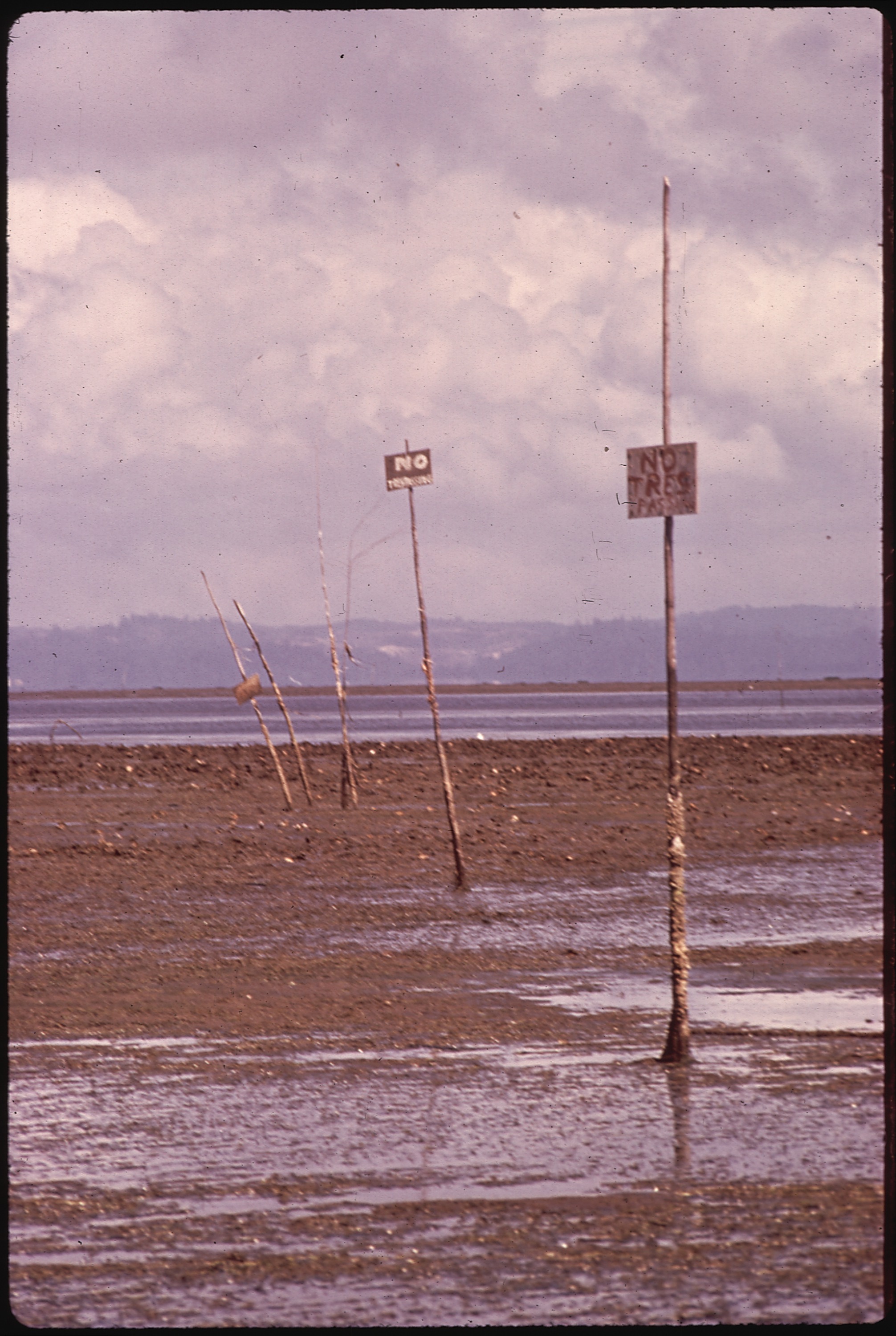
Urban birding looks like the easy case for a map and it is not, because a Seattle birder is moving between city parks with their own hours, university land with its own parking rules, state and county shoreline, a federal lock, private waterfront, and beaches where the boundary between public tideline and private upland is unclear. Washington's tideland ownership is the particular trap, since a significant proportion of Puget Sound tidelands are privately owned, which is not intuitive to anyone arriving from a state where the beach is public. Guidepole Bird carries that layer, so where you may legally stand on a shoreline is visible rather than assumed.
For the region beyond the city, the Skagit Flats snow geese are an hour north, and Nisqually NWR is an hour south with the best estuary birding in the state.
The winter goose and swan spectacle an hour north is in Skagit flats snow geese and where to see trumpeter swans. The best estuary within an hour south is Nisqually National Wildlife Refuge, and the seabirds that require getting further out are in where to see puffins in Washington and your first pelagic trip. The saltwater timing here runs on shorebirds and tides.
A last note on what Seattle does uncommonly well, which is winter. Most American cities are at their best in May and comparatively dull from November to March. Here it is closer to the reverse: the spring passage is thin because the Cascades and the coast take most of it, and the winter salt water is genuinely excellent, with three loon species, five or six alcids, both goldeneyes and rafts of scoters visible from a city park. If you have one day and a choice of month, take January over May.