Fish
Fish Fire
Fire Hike
Hike Bird
Bird

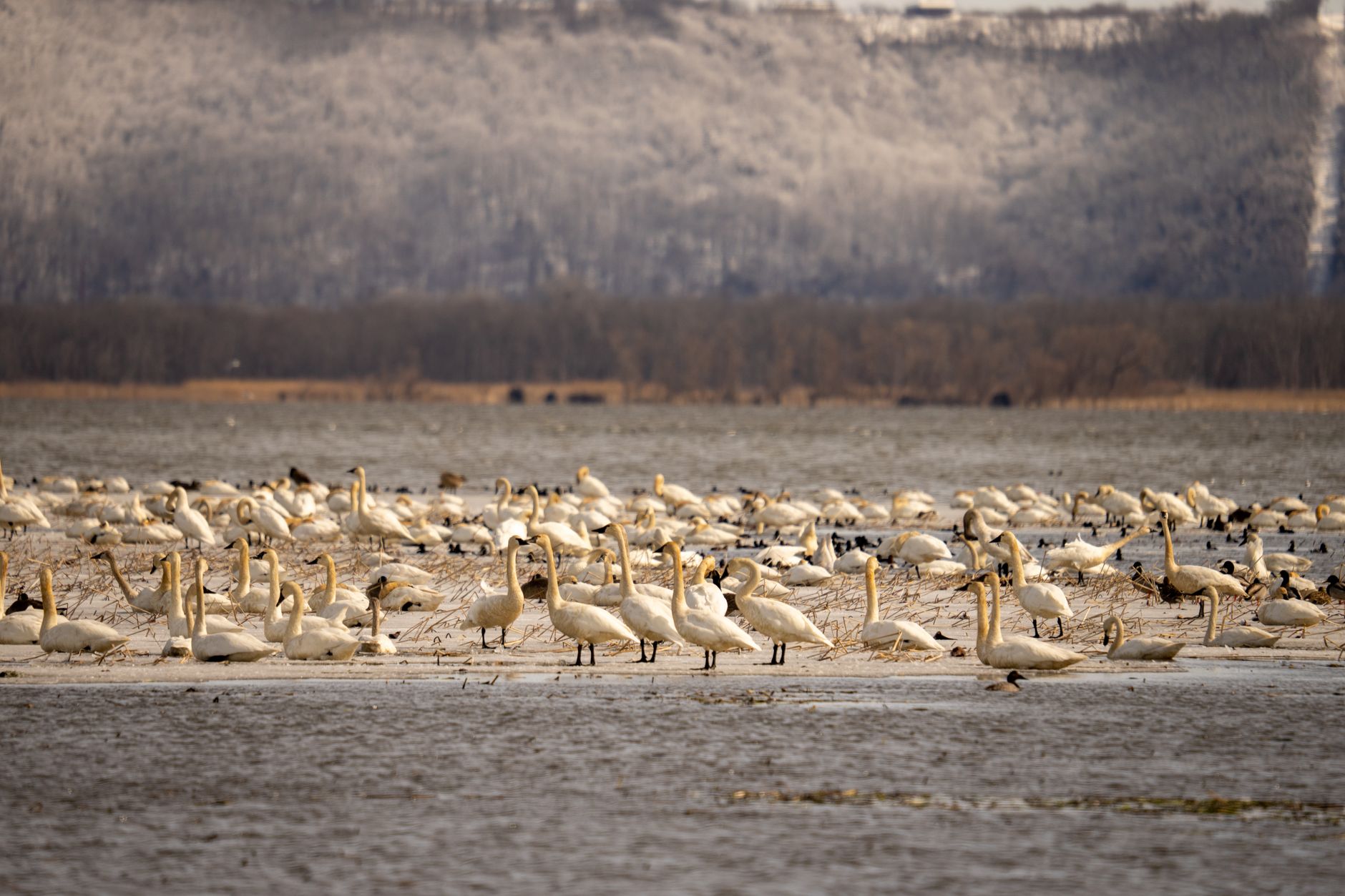

In 1932, biologists went looking for Trumpeter Swans in the lower 48 states and found 69 birds.
Not 69 in one place. Sixty-nine in total, with nearly half of them in Montana's Centennial Valley around what is now Red Rock Lakes, and the rest scattered across Yellowstone and the surrounding region. The largest waterfowl in North America, hunted for skins and quills and driven off its breeding marshes, was down to a rounding error.
There are now more than 63,000 in North America. This is one of the great conservation stories on the continent, and the place it happened is still the place to go.
Red Rock Lakes, where it started
Red Rock Lakes National Wildlife Refuge, in the Centennial Valley of Beaverhead County, Montana, was established in 1935 specifically because of those 69 birds. It is one of the earliest examples in American history of a refuge created to pull a single species back from the edge.
What happened next is why the number changed. Red Rock Lakes became the source population, sending swans and eggs out to western refuges through the 1930s and 1940s, and from 1959 supplying birds to zoos and private propagators, translocating them to other national wildlife refuges, and feeding the early Midwest efforts that rebuilt the Interior Population. By 2002 an estimated 3,000 trumpeters were wintering on the refuge, many of them birds moving down from summer range in Canada, and today roughly 500 birds hold the tri-state area of Idaho, Wyoming and Montana, including the Red Rock Lakes flock.
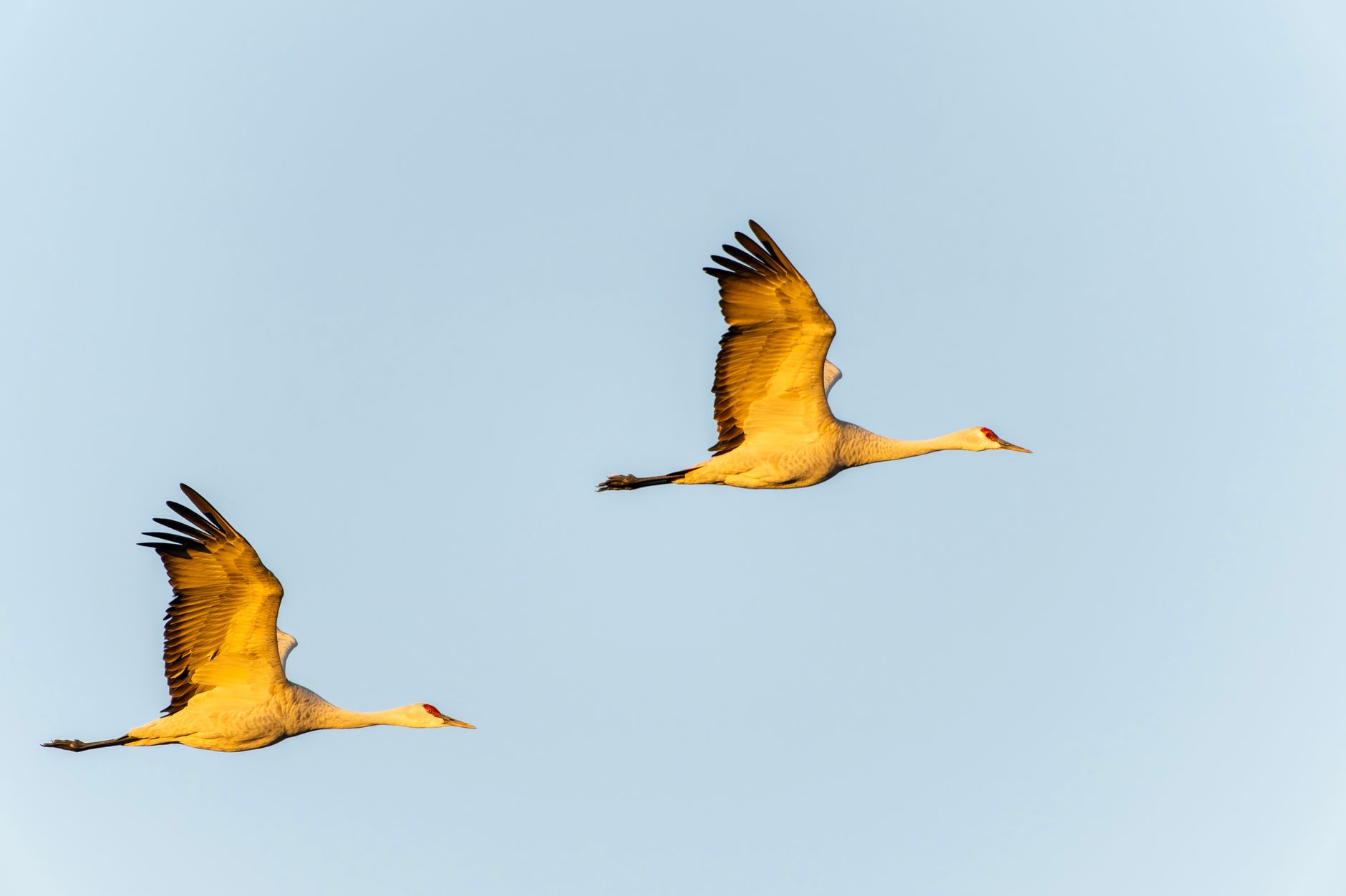
The refuge is remote, and that remoteness is a large part of why the swans survived there at all. The Centennial Valley is reached on gravel from Monida on Interstate 15 or from Lakeview, and the roads are unpaved, occasionally rough, and can be impassable when wet or snowed. Services are minimal to the point of absence, so bring fuel, food and water, because there is no store. Camping is available at refuge campgrounds, primitive and beautiful. Summer is the practical season, giving breeding swans and cygnets alongside an outstanding supporting cast of Sandhill Crane, moose, pronghorn, a strong raptor list and one of the better wildflower displays in Montana. Winter access is difficult and should not be attempted casually, since the valley is high, cold and remote and the road is not a plowing priority.
This is not an auto-tour site with interpretive panels every mile. It is a large, quiet working refuge in an empty valley. Go for the swans and the history, and stay because it is one of the more beautiful and least visited places in the northern Rockies.
Where else, and when
The recovery means you no longer have to go to the Centennial Valley to see one.
-
The Skagit and Whatcom valleys, Washington. The largest wintering concentration in the lower 48, where the Pacific Coast Population, which breeds in Alaska, winters alongside the snow geese in farm fields from November through March, viewed from the farm roads.
-
Yellowstone National Park. A small resident population plus wintering birds on the Madison, Firehole and Yellowstone rivers, where geothermal input keeps the water open through the winter. Arguably the most photogenic setting of any of them.
-
Harriman State Park and the Henrys Fork, Idaho. A significant wintering concentration on spring-fed water, in a park managed with the swans in mind.
-
The Mission Valley and western Montana. Breeding and staging birds on the pothole wetlands under the Mission Mountains.
-
Monticello, Minnesota. The celebrated Midwest site, where a stretch of the Mississippi stays open and hundreds of swans gather in winter, all of them direct descendants of the Interior Population restoration.
-
Iowa, Wisconsin, Michigan and Ontario. Restored breeding populations that would have been unthinkable in 1932, and the clearest evidence that the translocation program worked.
-
Alaska. The largest breeding population of all, and where most Pacific Coast birds come from.
The pattern across that list is worth noticing. Three of those places hold swans because of deliberate reintroduction, two hold them because geology keeps water open in winter, and one holds them because farmers flood their fields. Almost none of it is accidental.
The three populations
Understanding the structure makes the map make sense.
The Pacific Coast Population breeds in Alaska and winters from British Columbia south into Washington and Oregon. It is by far the largest of the three and it is the source of the swans in the Skagit fields.
The Rocky Mountain Population includes both the tri-state resident flock around Red Rock Lakes, Yellowstone and the Henrys Fork, and a larger interior Canadian breeding group that winters partly in the same valleys. The resident tri-state birds are the direct descendants of the 1932 remnant and remain a specific conservation focus, because a flock that does not migrate far is vulnerable to a single bad winter.
The Interior Population is the restored one, rebuilt from Red Rock Lakes stock and other sources across Minnesota, Wisconsin, Iowa, Michigan, Ontario and neighboring states from the 1960s onward. It is now large and self-sustaining, and it did not exist as a functioning population within living memory. That last point is worth sitting with: a trumpeter swan in Minnesota today is there because somebody moved birds out of a Montana valley on purpose.
The gear
Swans are large, white and conspicuous, which makes this the one species article in this library where the gear is about telling them apart rather than about finding them.
A spotting scope, because the identification problem is a bill pattern seen at distance. Trumpeter and Tundra Swans mix in the same fields, and the yellow lore spot that separates most Tundras is not a binocular feature at three hundred yards.
A window mount, since almost all winter swan viewing is done from a road at the edge of a field, and getting out of the vehicle is what puts the flock up.
A recording of both calls, which is the most reliable way to separate them. The Trumpeter's low two-note horn and the Tundra's higher, more yelping call are unmistakable once you have heard them, and they carry further than the bill pattern is visible.
A vehicle you trust on gravel, because the best fields are on farm roads.
Serious cold-weather layers, since this is a winter activity in northern latitudes and it is done standing at the edge of open agricultural ground with nothing blocking the wind.
A land ownership map, because the birds are almost always on private farmland and the legal position is that you are watching from the road.
And non-toxic shot if you also hunt the same wetlands, since lead poisoning from ingested shot remains a documented cause of swan mortality in several wintering areas.
Telling them from Tundra Swans
This is the identification that matters, because the two overlap in winter across much of the range and Tundra Swans are frequently the more numerous.
Bill shape and facial pattern do most of the work. A Trumpeter has a large, straight, entirely black bill with the black extending broadly to the eye, giving a heavy wedge-shaped head profile, and the border between bill and forehead forms a V pointing up toward the eye. A Tundra has a smaller, slightly concave bill, usually with a yellow spot at the base in front of the eye though not always, and the bill-forehead border is rounder and more U-shaped, so the eye tends to look separated from the bill rather than merged into it.
The safest single mark is where the black meets the eye. On a Trumpeter the eye sits inside the black of the face and is hard to pick out at any distance, so the head reads as one solid dark wedge. On a Tundra the eye is usually visible as a separate dark point against the paler skin around it, even where the yellow spot is missing entirely, which happens often enough that you should not rely on the yellow alone.
Voice is the reliable separator and worth learning in advance. A Trumpeter gives a deep, resonant, nasal honk that is genuinely trumpet-like, where a Tundra is higher, softer and more yelping, which is where the old name Whistling Swan came from. Size is real but hard to use without a direct comparison, though a Trumpeter is noticeably larger and longer-necked in a mixed flock. Mute Swan, introduced and feral in parts of the country, has an orange bill with a black knob and holds its neck in an S-curve, and is not a genuine confusion once seen.
Trumpeter Swan Life History and RecoveryWhat nearly finished them
The cause was unusually specific. Trumpeter Swans were hunted commercially, and not primarily for meat: skins and feathers were a trade commodity, with the Hudson's Bay Company and others shipping tens of thousands of skins to Europe across the eighteenth and nineteenth centuries for powder puffs, hat trim and other fashion uses, while the quills were used for pens.
Add the draining of breeding marshes across the interior for agriculture, and the loss of wintering wetlands, and the species was squeezed from both ends. By the time the Migratory Bird Treaty Act arrived in 1918 the population in the lower 48 was already close to gone, and the 1932 count of 69 birds was the result.
The recovery required three things in sequence: stopping the killing, which the MBTA did; protecting the last habitat, which Red Rock Lakes did in 1935; and actively moving birds into empty range, which is what turned a remnant into a continental population. That third step is the one people forget. Legal protection alone would have left trumpeter swans as a Montana curiosity. Somebody had to physically carry them to Minnesota.
Wintering Trumpeter Swans on Washington Dairy FarmsWatching them well
Swans are more sensitive to disturbance in fields than geese are, and in winter they are frequently on private ground. Watch from the road, because in the Skagit, the Mission Valley and most farm-field situations the road right of way is the only legal vantage and the vehicle is the best hide you have. Do not feed them, since feeding concentrates birds unnaturally, spreads disease and produces habituated animals that become a management problem. Give nesting pairs a wide berth in summer, because Trumpeters defend nests aggressively and a disturbed pair may abandon. And be aware of lead, since poisoning from shot ingested off old wetland sediments has been a significant cause of swan mortality in some wintering areas, which is one more argument for non-toxic shot.
The reason not to push a flock becomes obvious once you can read what you are looking at. Trumpeter Swans stay in family groups through the first winter, so a pair with two to five gray-brown cygnets traveling and feeding together is the normal winter unit, and the young stay with the adults until the following spring. Cygnets are gray-brown with a pinkish bill that darkens through the season, whitening gradually until by late winter they look patchily white and still noticeably dingier than their parents. Watch them feed and the point becomes concrete: the adults are stronger and reach deeper, and the cygnets frequently take material the adults dislodge.
Pairs are long-term and both parents raise the young, which is why the family unit holds together at all. Counting cygnets is also useful data, since the proportion of young in a wintering flock is a rough index of how the breeding season went. And a family flushed off a field and separated has paid a real cost, because in a cold January there is no spare energy for finding each other again.
The plan
For the easy version, go to the Skagit Valley between November and March and drive the farm roads. You will see hundreds, and the ownership question is the whole game, because the birds are in fields belonging to somebody and the road is your vantage. That layer is what Guidepole Bird is for: where the right of way ends and whose field you are looking at, rather than a guess made from the shoulder.
For the beautiful version, go to Yellowstone in winter and find them on open geothermal water with steam coming off it.
For the meaningful version, drive the gravel into the Centennial Valley in summer, stand at Red Rock Lakes, and look at swans on the water where the whole thing was 69 birds and a decision.
For the wider region, western Montana birding covers the Mission Valley, and the Skagit Flats covers the winter fields the swans share with the geese.
The fields where most people in the Northwest actually see them are covered in Skagit flats snow geese, which is the same trip in the same month. The refuge where the species was pulled back from a few dozen birds sits in the country described in western Montana birding. The roadside etiquette that keeps these fields watchable is in can you legally bird here, the hunting seasons that overlap are in birding during hunting season, and the refuge system that did much of the recovery work is explained in a wildlife refuge is not a park.