Fish
Fish Fire
Fire Hike
Hike Bird
Bird

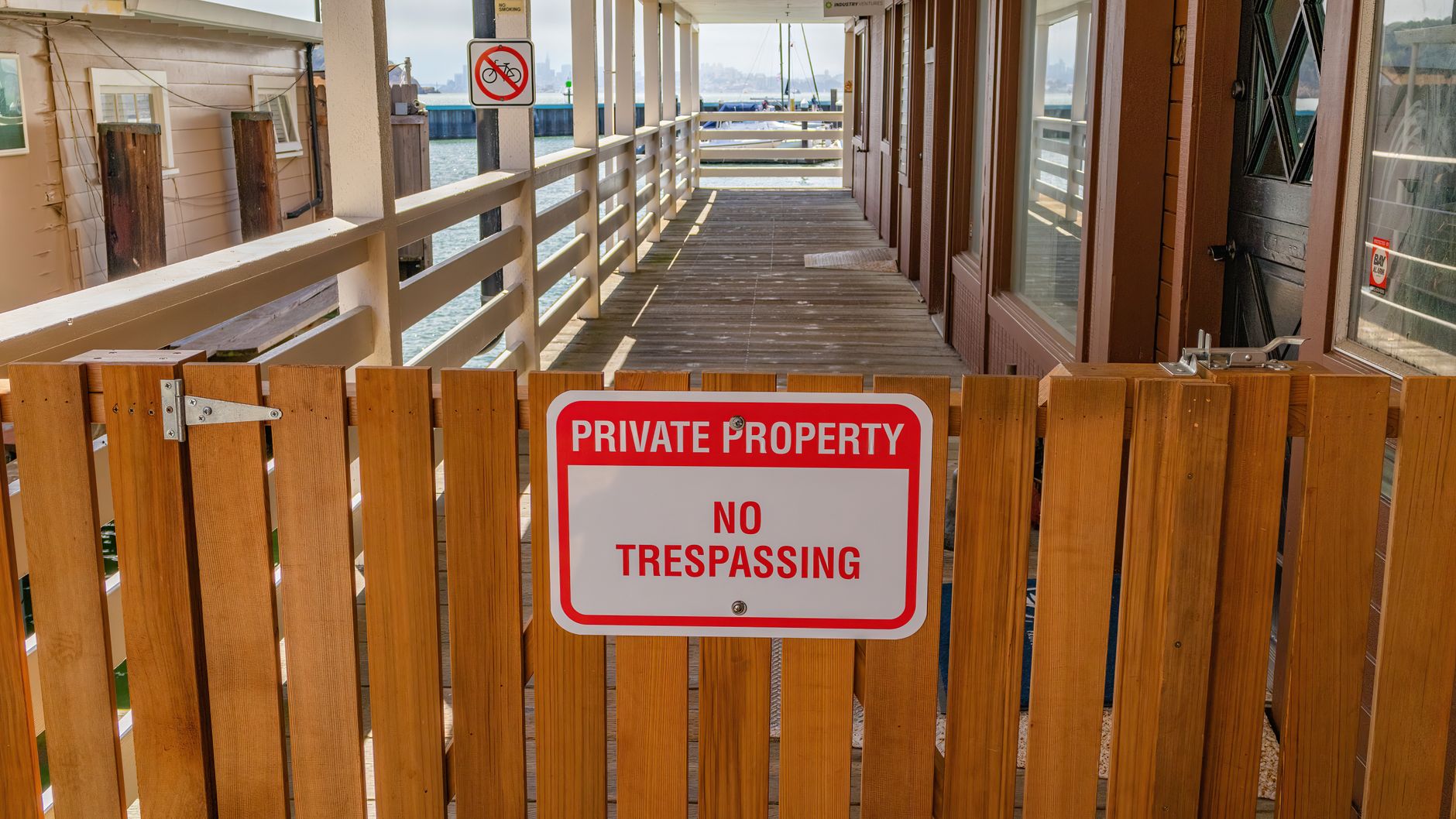
A Northern Lapwing turns up on a flooded field in November. Word goes out. By the weekend there are forty cars on a gravel shoulder and a farmer standing in his driveway wondering what is happening.
This plays out somewhere in the United States several times a year, and the confusion behind it is remarkably common among otherwise careful birders. The bird is protected. The land is owned. Those are unrelated facts.
The Migratory Bird Treaty Act does not give you access
The Migratory Bird Treaty Act of 1918 is one of the oldest and strongest wildlife laws in the country. It implements four international treaties, with Canada in 1916, Mexico in 1936, Japan in 1972 and Russia in 1976, and it makes it unlawful to take, kill, possess, sell or transport protected migratory birds, their parts, nests or eggs without authorization. It covers roughly a thousand species.
What it does not do is create any right for you to go and look at one. The MBTA regulates what may be done to birds and says nothing whatever about who may walk where. A federally protected species standing on private ground confers exactly as much access right as a federally protected species standing in a zoo, which is none.
The distinction matters because a surprising number of birders have absorbed a vague sense that public interest in a wild animal somehow softens property law. It does not, anywhere in the United States.
So who owns the ground?
In practice you will be standing on one of six things, and the rules differ on each:
-
Private land. No access without permission, and that includes the field, the pond, the woodlot and, in many places, the roadside.
-
Federal public land. Refuges, national forests, BLM and national parks, generally open with rules that vary enormously between them. A refuge is not a park, and the difference is substantial enough to need its own explanation.
-
State land. State parks, wildlife areas and trust lands. Frequently open, frequently requiring a pass, and often carrying hunting seasons you should know about.
-
County and municipal land. Parks, greenbelts and water district holdings, with rules set locally and sometimes idiosyncratic.
-
Roads and their rights of way. The most misunderstood category and the one that matters most for rare-bird chases.
-
Conservation easements. Privately owned land with development rights sold or donated. An easement is not public access, most grant no public entry at all, and a great many birders assume otherwise because the land is described as protected.
The road right of way, where most chases happen
When a rarity appears on private land, birders stand on the road, and whether that is legal depends on details that vary by state and by road. A public road usually includes a right of way wider than the pavement, often extending some distance either side, and within it you can generally stand and generally look.
The specifics are what bite. Stopping is not the same as parking, many rural roads prohibit shoulder parking outright, and a line of forty cars on a blind bend is both a hazard and a citation waiting to happen. The right of way is an easement for travel rather than a public park, so setting up a scope for six hours is a different activity from stopping to look and some jurisdictions treat it differently. Fences are not reliably the boundary, since a fence is often set back inside the property line and the ground immediately outside it may still be private. Some states have specific rules about observing or photographing onto private land from a public place, and several have addressed drones explicitly.
Blocking a driveway, gateway or field entrance turns a birding crowd into an obstruction very quickly, and it is the single most common reason a landowner shuts access down for good.
Corner Crossing Hunters Win Big in Federal CourtCorner crossing, and why it comes up
In the western states an enormous quantity of public land is landlocked by private land in a checkerboard pattern left over from nineteenth-century railroad grants, with alternating square-mile sections of public and private land meeting at their corners. Corner crossing means stepping from one public square to the diagonally opposite one at the point where four sections meet, without touching private ground.
That question is now settled in part of the country. A Tenth Circuit ruling in March 2025 held that crossing without physically touching the private land is lawful, and the Supreme Court declined to hear the appeal in October 2025, which makes it settled law in Wyoming, Colorado, Utah, New Mexico, Kansas and Oklahoma. It is not settled anywhere else, including Montana, Idaho and the west coast states, and the detail matters enough to have its own article.
What matters for a birder is simpler regardless. A green square on your map may be unreachable on foot without trespassing, because public ownership is not the same thing as public access, and in the interior West that gap is enormous.
The state-by-state differences that bite
Trespass law is state law, and the variation is larger than most traveling birders realize.
Posting requirements differ fundamentally. Some states require land to be posted, fenced or marked before entry is an offense, which leaves unmarked open ground legally ambiguous. Others treat all private land as closed by default whether or not anybody has put up a sign. Assuming the first rule in a state that uses the second is how people get charged.
Purple paint laws exist in a growing number of states, where a vertical purple stripe on a tree or post carries the same legal weight as a No Trespassing sign, used because paint survives weather and vandalism in a way signs do not. If you do not know the convention you will walk straight past a legal boundary marker.
Navigable waters are their own tangle. In some states you may float a river and stand on the bed below the ordinary high water mark even where both banks are private; in others the bed itself is privately owned and touching bottom is trespass, which for a birder in a kayak is not an academic distinction. Beaches vary just as much, with Oregon's entire coast public to the vegetation line and most states nothing like that. Penalties range from a warning through infraction to, in a few states and circumstances, criminal charges.
The practical rule for anyone birding across state lines is to look up the trespass and posting rules for the state you are in, once, before the trip. It takes ten minutes and it is the difference between confident birding and a nervous guess at every fence line.
The rare bird problem, specifically
Rarities concentrate every access problem into a few days, which is why they generate almost all of the incidents. The dynamics are predictable: a bird is found, often by someone with local permission or on their own land, word spreads within hours, and dozens or hundreds of people arrive at a site with parking for four cars, in an area whose residents have no idea what is happening.
The finder is in a genuinely difficult position, because reporting the bird may cost them a relationship with a neighbor. A significant number of rarities go unreported for exactly that reason, which is a real loss to the record. Good practice looks like the finder specifying access terms clearly in the report, a local coordinator liaising with the landowner, designated parking, and the rare bird alert carrying the conditions alongside the sighting. Bad practice looks like a location pin with no access note and four hundred people working it out individually. If you find something, write the access terms into the report itself; it takes one sentence and it is the most useful thing a finder can do.
The most underused tool in all of this is a knock on a door. Landowners refuse for predictable reasons, including liability, livestock, crops and previous bad experiences, but a substantial proportion say yes, particularly if you ask in advance rather than after being spotted, if you are specific about where you want to go and for how long, and if you are one or two people rather than a coach party. Close gates, park where you are told, stay off the crops, and then come back afterward and tell them what you saw. That last part is what birders forget, and it is what turns a one-off yes into standing permission.
When a genuine rarity appears, the local bird club or state records committee will often negotiate access on behalf of everybody. Let them, because forty individual requests to the same farmhouse in one morning is how a site gets closed.
And if the answer is no, respect it immediately and completely, and say so publicly. The correct response to a rarity on inaccessible land is to view it from the nearest legal vantage point or not to view it at all. Birding has a poor recent record here, and a handful of incidents involving trespass, damaged fences and blocked lanes have cost access to sites that had been open for decades. That cost is never borne by the person who trespassed; it is borne by everyone who comes afterward.
The gear
The equipment that answers an access question is mostly information, and the one physical item that matters is the one that lets you stay further away.
A land-ownership map you trust, showing parcel boundaries and ownership against aerial imagery. This is the tool that turns a guess into a check, and it is the difference between birding a road confidently and birding it nervously.
A vehicle you can park entirely off the roadway, which is the single most common cause of friction. Almost every complaint that ends with a road being posted started as a parking complaint rather than a trespass, and a car with two wheels on the pavement in front of a gate is what generates the phone call.
A scope rather than a closer approach, which is the answer to most of the situations this article describes. If the bird is on private ground, the legal and the ethical answer are the same: look at it from where you are allowed to be, with enough magnification to make that satisfying.
A phone number for the local bird club, because when a rarity turns up on private land the local birders usually know who owns it, whether access has been arranged, and what the landowner has asked for.
Something to write on, for a note on the dash explaining who you are.
Blaze orange in autumn, since a great deal of accessible birding ground is also hunted.
And the willingness to leave, which is genuinely the most useful thing here.
The Real Difference Between an Easement and a Right of WayRoadside birding without annoying anybody
Most birding access friction happens within twenty feet of a vehicle, so a few habits solve nearly all of it:
-
Park facing the direction of travel, fully off the carriageway, never on a bend or a crest.
-
Leave gateways and field entrances clear, including the ones that look disused. Farm traffic arrives without warning and a blocked gate is remembered for years.
-
Wave at people. A raised hand from someone standing beside a scope reads as neighborly; ignoring a passing truck reads as furtive.
-
Keep off the crop margin. Walking a planted field edge to get an angle costs the farmer money, and it is the complaint that comes up most.
-
Do not point optics at houses. Obvious, and still the fastest way to have police called on a group of birders.
-
Consolidate vehicles when a group is heading somewhere narrow.
Checking before you go
Look up ownership before you drive, rather than from the shoulder with a scope already out. Parcel and land-ownership data exists for most of the country and answers the question directly: who owns this, which agency manages it, and where does the boundary fall. That is what Guidepole Bird is for, and it is the difference between a chase that works and one that ends in a conversation with a sheriff's deputy.
Check the specific unit's rules rather than the category, because two refuges twenty miles apart can have completely different open areas, seasons and permit requirements. Check for seasonal closures, which are common and often not signed at every entrance. And assume nothing from the color on a map: green means protected, not open, and certainly not reachable.
The bird's legal protection and your legal access are separate questions. Answer the second one before you leave the house.
The rules that govern each land type are covered in a wildlife refuge is not a park and sharing a wildlife area with people who are shooting. Seasonal restrictions are in nesting closures explained. The equivalent question for hikers, and much of the same law, is in is that trail public and state park, national forest, or wilderness.
The road right of way question in its own right is in bridge and road end river access, the corner crossing case is in corner crossing explained, and the state land category people most often mistake for open public land is in state trust lands and access. Refuges have their own rules on top of all of this, covered in a wildlife refuge is not a park, and the seasonal version is in nesting and seasonal closures explained and birding during hunting season.