Fish
Fish Fire
Fire Hike
Hike Bird
Bird

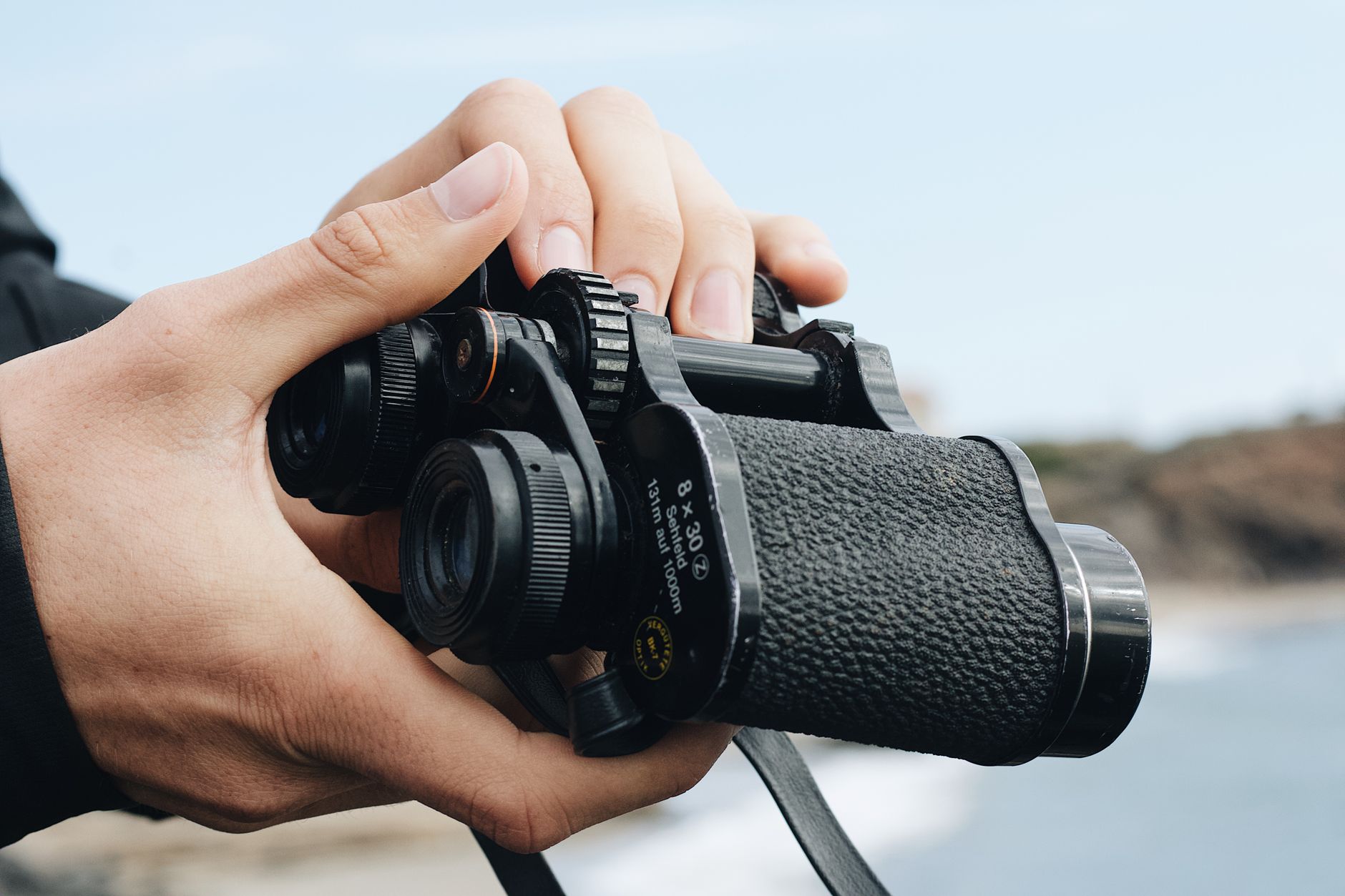

Walk into a shop and every pair of binoculars is labeled with two numbers: 8x42, 10x50, 8x32. Magnification, then objective lens diameter in millimeters.
Those two numbers tell you less about whether you will enjoy using the binocular than four specifications that are frequently in small print or missing from the box altogether.
Start with the answer: 8x42
For the overwhelming majority of birders, 8x42 is correct, and understanding why explains everything else on this page.
Eight times magnification is enough to identify almost anything at realistic range, and low enough that you can hold the image steady without a tripod. Forty-two millimeter objectives gather enough light to work at dawn, at dusk and inside dense forest, without carrying the weight of larger glass. Put together they produce a wide field of view, forgiving eye placement, and a weight you will still be happy carrying at hour six.
Deviate from that for a specific reason, not by default.
Why more magnification is usually worse
The instinct is that 10x must beat 8x. It frequently does not, for four reasons that compound.
Shake is magnified along with everything else. At 10x the tremor in your hands is amplified ten times rather than eight, the image visibly dances, and in practice a shaky 10x view resolves less detail than a steady 8x one. Field of view shrinks, so you see less of the world at once, which makes finding a moving bird in a canopy dramatically harder and is the single biggest cause of beginner frustration. The exit pupil shrinks too, which costs you in low light for reasons worth their own section below. And eye placement gets fussier, so the image blacks out more readily when your head is not perfectly positioned.
Ten times is right for open country, seawatching, raptor watching at range, and anyone birding mostly from a vehicle or a fixed position. Eight is right for woodland, warblers, general use, hiking, anyone with unsteady hands, and anyone who is not sure.
Which Are the Best Binoculars for Bird Watching?The four specs that decide it
Field of view, usually given as feet at 1,000 yards, is the specification that determines whether you can find the bird at all, and it is where cheap binoculars are worst. A wide field lets you get onto a moving warbler; a narrow one means you spend the encounter searching an empty green blur while the bird leaves. Around 400 feet at 1,000 yards in an 8x is generous, and under about 330 is tight.
Eye relief is the distance behind the eyepiece at which the full image is visible, and if you wear glasses it is the most important number on the page. You need roughly 16mm or more to see the whole field with glasses on; below that you get a tunnel with black edges and no amount of adjustment will fix it. The eyecups should twist down to sit comfortably against your lenses. A great many people conclude they dislike binoculars when what they have is insufficient eye relief.
Close focus is how near an object can be and still come into focus. It is irrelevant for hawks and decisive for everything else, because a great deal of birding is a bird in the hedge directly in front of you. Under about 8 feet is good and under 6 is excellent, and good close focus also turns the same binocular into a butterfly, dragonfly and wildflower instrument.
Weight is the specification people ignore in the shop and think about all day in the field. Under about 25 ounces is comfortable for all-day carry, and beyond about 30 you will start leaving them in the car, which makes them worthless regardless of how good the glass is.
Exit pupil, and the arithmetic of low light
This is the one piece of genuine optics worth carrying around, and it is simple: exit pupil equals objective diameter divided by magnification. An 8x42 gives 5.25mm, a 10x42 gives 4.2mm, an 8x32 gives 4mm and a 10x50 gives 5mm.
That number is the diameter of the beam of light leaving the eyepiece. In bright daylight your own pupil contracts to two or three millimeters and anything above that is wasted. In low light your pupil dilates to five millimeters or more, and a binocular with a smaller exit pupil physically cannot fill it.
So at dawn, at dusk and in dark forest, exit pupil is the reason an 8x42 looks brighter than a 10x42 despite both having identical objectives. It is also why a larger exit pupil is more forgiving of imprecise eye placement, which is a large part of why 8x42 simply feels easier to look through.
The specs that are mostly marketing
A short list of things that appear prominently and matter less than the box implies:
-
Prism type. Roof prisms are more compact and porro prisms are often cheaper to make well, but at any given price both can be good. It is not a quality indicator on its own.
-
Fully multi-coated. Essentially universal now at any reasonable price. Its absence is a warning; its presence tells you nothing.
-
ED, HD and similar glass designations. Extra-low dispersion glass reduces color fringing, but the label is applied inconsistently across brands, and a well-corrected non-ED binocular can beat a poorly executed ED one.
-
Nitrogen purging and waterproofing. Worth having, standard above the budget tier, and not a differentiator.
-
Magnesium versus polycarbonate bodies. Affects weight and durability, not the image.
-
Twilight factor. A calculated number that appears in specification tables and predicts real low-light performance poorly. Exit pupil and glass quality tell you more.
The one genuine category people overlook is image stabilization, which is underrated for anyone with unsteady hands or who birds from boats, at the cost of weight, batteries and price. Worth trying if 8x still dances for you.
What price buys
-
Under about $150: real compromises. Narrow field, poor low-light performance, chromatic aberration, often no waterproofing. Usable, and vastly better than nothing.
-
$200 to $400: the sweet spot for most people. Modern coatings, phase-corrected prisms, waterproof, decent field, adequate eye relief. This range has improved enormously, and a good binocular here outperforms a flagship from twenty years ago.
-
$500 to $900: noticeably better edge sharpness, contrast, color and build.
-
$1,500 and up: the alpha class. Genuinely better, particularly at the edges and in bad light, with warranties measured in decades. Diminishing returns, but the returns are real and they appear most in exactly the difficult conditions where identification is hardest.
Buy the best you can afford once rather than three upgrades in a row. Good binoculars hold their value and last decades.
The gear
This whole article is a gear list, so what follows is the short version: the seven things that decide whether a pair works for you.
Eight by forty-two, which is the answer for almost everybody. Eight power is steady enough to hold, forty-two millimeters gathers enough light for early and late, and the combination produces a field of view wide enough to find a moving bird. Deviate from it only for a specific reason you can articulate.
At least sixteen millimeters of eye relief if you wear glasses, and this single spec disqualifies more otherwise-good binoculars than any other. Without it you lose the edges of the field and the instrument feels like looking down a tube.
A binocular harness rather than a neck strap, which costs twenty dollars and eliminates the neck ache that ends long days.
A rainguard and a lens cloth, both of which live on the harness rather than in a pack, because the moment you need them is the moment you cannot stop.
A hard edge against bright sky, which is the test to run in the shop. Point them at a roofline or a bare branch against a bright overcast and look for color fringing. That is chromatic aberration, it is what a lot of the price difference buys, and it is far more visible in the field than any spec sheet suggests.
Your own face, since interpupillary distance and eye placement vary and a pair that suits somebody else may not suit you.
And a transferable warranty, which is what makes buying used sensible.
Buying, new or used
Before you buy anything, try them on your own face. Interpupillary distance varies and some binoculars will not close far enough for narrower-set eyes, which is a common problem for smaller adults and for children. Check the focus wheel for position, direction, smoothness and how many turns it takes from close focus to infinity, because a stiff or slow wheel loses birds. Check that the diopter adjustment locks or is stiff enough not to drift. Handle them with cold or wet hands if you can. And look at a hard edge against bright sky to check for color fringing, which is chromatic aberration and the fastest way to separate price tiers in a shop.
Used is an underrated route to far better glass than the budget suggests, precisely because optics hold value and last decades, so a ten-year-old flagship frequently outperforms a new mid-range binocular at the same money. Check collimation by looking at a distant straight edge and seeing whether the two images merge without eye strain. Check for internal haze or fungus by holding them up to a bright sky. Confirm the focus is smooth without grinding, the armor is intact and the coatings are unscratched.
The sleeper advantage is warranty transferability, since several premium brands honor service regardless of who bought the binocular originally, which effectively de-risks the whole purchase. Birding club sales, the classified sections of birding forums and estate sales are where the good glass surfaces.
How to Get Crystal Clear Focus with Your BinocularsLooking after them
Binoculars are a decade-plus purchase if you treat them reasonably, and optics that get used hard last longer than optics that get babied, provided you observe a few basics.
Blow or brush grit off before you wipe anything, every time, because most scratched coatings were caused by somebody grinding sand across the lens with a cloth. Use a proper lens cloth or lens pen rather than a shirt. Rain is fine on a sealed pair, since modern nitrogen-purged binoculars are waterproof, so dry them at the end of the day and do not worry during it. Salt is not fine, and anything exposed to it needs a fresh-water rinse, because salt is the fastest way to destroy an armor coating and seize a focus wheel. Never store them in a sealed case while wet, which is how fungus starts on internal surfaces and is not cheaply repairable.
Use a harness rather than the neck strap. It moves the weight onto your shoulders, stops the swing when you bend over, and prevents the single most common accident, which is swinging your binoculars into a rock. It is the cheapest meaningful upgrade most birders can make.
And use the service. Premium brands will re-collimate and clean, often for very little and often decades after purchase, and a tired old pair can come back essentially new.
When you need a scope
This is the follow-up question every birder eventually arrives at, and the threshold is simpler than the marketing suggests: do you regularly find yourself unable to resolve detail at distance with binoculars? If you have never had that frustration, you do not need a scope yet.
You need one for shorebirds at range, waterfowl on open water, seawatching, hawk watching and any distant perched raptor, which is to say any birding where the bird will not come closer and neither can you. You do not need one for woodland, warblers, hedgerow birding or anything mobile at close range, where the setup time means the bird has gone before you are on it.
Zoom eyepieces of roughly 20x to 60x are now standard and good, though most scope time is spent at the low end because atmospheric shimmer defeats high magnification on most days. The tripod matters as much as the scope, since a good scope on a flimsy tripod is worse than a modest scope on a stable one, and this is where beginners most often economize wrongly. Angled versus straight is genuine personal preference: angled is easier for sharing and for people of different heights, straight is faster to get onto a moving bird.
The short version
Buy 8x42 unless you have a specific reason not to. Check eye relief first if you wear glasses, then field of view, then close focus, then weight. Ignore magnification bragging, because a steady 8x resolves more than a wobbling 10x every single time.
Spend the $250 to $400 if you can, buy a harness, then stop thinking about binoculars and go and look at birds.
When a scope becomes necessary is a separate question, and it comes up fastest in shorebirding and at hawk watches.
The one situation where the standard answer is wrong, and lighter beats brighter, is described in hawk watches explained. The situations that push you toward a scope instead are covered in shorebirds and tides and where to see trumpeter swans, where the identification is a bill pattern at three hundred yards. Close focus matters most in the forests described in birding Kauai, and on a boat the case for eight power is made in your first pelagic trip.