Fish
Fish Fire
Fire Hike
Hike Bird
Bird

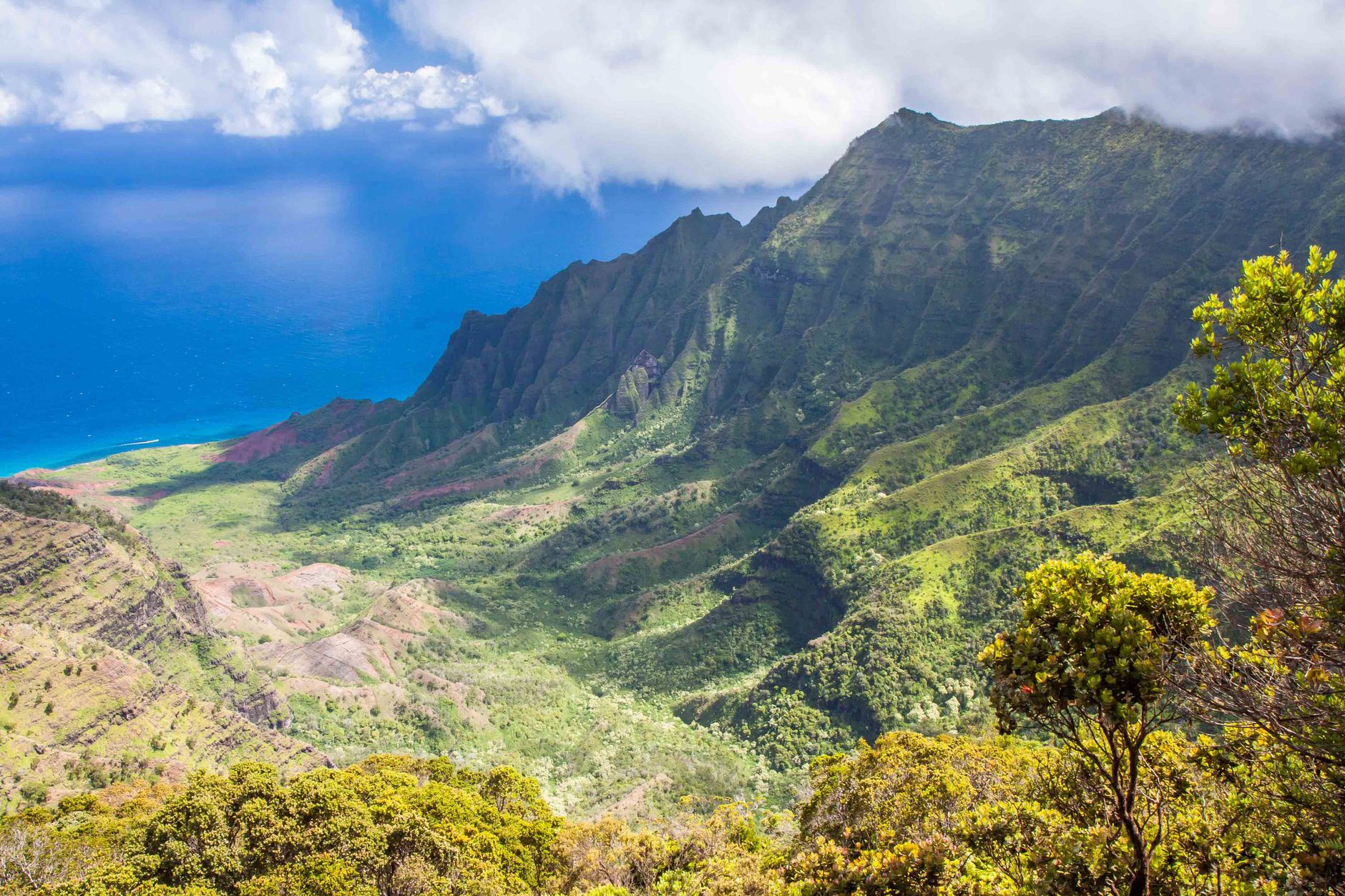

Kauai gives a visiting birder two experiences that could not be less alike.
One is a clifftop refuge with a lighthouse where thousands of seabirds wheel past at eye level and a Laysan Albatross may sit on a nest twenty feet from the path. You book it online and it costs eleven dollars.
The other is a rainforest where several endemic birds are in freefall and at least one has effectively vanished from the wild during the working lifetime of birders who are still going out to look for it.
Both are worth your time. They ask different things of you.
Kilauea Point, and the booking you must not forget
Kilauea Point National Wildlife Refuge, on the north shore, is the most accessible seabird viewing in the Hawaiian islands, and it runs on a tight, specific system that rewards planning and punishes turning up.
It opens Wednesday to Saturday, 10am to 4pm, with arrival required before 3:30pm, and closes on or near major holidays. Reservations are required for all adults 16 and older, booked through Recreation.gov or its app. Entry is $11.00 for adults 16 and over with a reservation, $1.00 for interagency pass holders with a reservation, and $20.00 for a Kamaaina annual pass for Hawaii residents with valid ID, while America the Beautiful passes, military ID and Federal Duck Stamps are accepted. Those four opening days and the 3:30 cut-off are the things to plan around, and a great many visitors arrive on a Monday.
What you get for it is one of the largest colonies of Red-footed Boobies in the world, along with Red-tailed Tropicbirds and, depending on season, Laysan Albatross, Wedge-tailed Shearwater, Great Frigatebird, Brown Booby and White-tailed Tropicbird, with Nene, the Hawaiian Goose, usually on the grass. The albatross are the special thing, coming ashore to breed from roughly November through July, and watching a bird that spends most of its life over open ocean sit calmly beside a footpath is not an experience most seabird colonies offer.
Kokee, the Alakai, and what is happening there
Drive up the west side to Kokee State Park and the Alakai Plateau and you are in the forest that holds Kauai's endemics. Apapane and Kauai Amakihi are common in the ohia, Anianiau, a tiny yellow honeycreeper found only here, is regular, and Kauai Elepaio, a monarch flycatcher, is confiding and reliable. Iiwi occurs but has become much scarcer.
Then there are the others. Akekee and Akikiki are critically endangered, and the Akikiki in particular has collapsed in the wild to the point of functional extinction, with the species' survival now resting on a captive population. Birders who saw them in the Alakai twenty years ago were watching something that has essentially gone in the interval.
The cause is the one that governs all Hawaiian forest birds: avian malaria carried by introduced mosquitoes, against which these species have almost no resistance, combined with a mosquito line that has moved upslope with warming. Kauai's particular problem is that it has no high mountain, since its summit is far lower than Maui's or the Big Island's, so there is no cold refuge left above the mosquitoes. That is the whole story in one sentence.
Go, look, and understand what you are seeing. Landscape-scale mosquito suppression work is under way in Hawaii and is the only realistic hope for these species.
Why Kauai has seabirds when the other islands do not
A piece of natural history explains most of the island's birdlife. The small Indian mongoose was introduced to Hawaii in the nineteenth century to control rats in sugarcane, which it failed to do, being largely diurnal while rats are nocturnal. What it did instead was eat ground-nesting and burrow-nesting birds, and it became established on the Big Island, Maui, Molokai and Oahu. It did not become established on Kauai.
The consequence is direct. Kauai retains burrow-nesting seabird colonies, including the great majority of the world's Newell's Shearwaters, and holds ground-nesting and low-nesting birds in numbers the other main islands cannot, which is the main reason Nene and seabirds do comparatively well there.
That status is not guaranteed. There have been confirmed mongoose detections on Kauai and an active response effort, because everyone involved understands exactly what is at stake. Feral cats and rats are present too and are significant predators of seabird colonies, and predator-proof fencing at some colony sites is doing a great deal of the conservation work on the island.
A Guide to Birding Kauai: Kilauea Point and the Mohihi-Waialae TrailThe other sites
Hanalei National Wildlife Refuge protects taro fields and wetland in the Hanalei valley and holds the four endangered Hawaiian waterbirds: Alae ula the Hawaiian Gallinule, Alae keokeo the Hawaiian Coot, Aeo the Hawaiian Stilt and Koloa maoli the Hawaiian Duck. The refuge itself is closed to general public entry, and the standard viewing is from the Hanalei Valley Lookout on the highway above it, which works well with a scope. Other coastal wetlands around the island hold the same waterbird set in smaller numbers.
Kilauea Point's surroundings, including the Princeville area, hold nesting Laysan Albatross on private and residential ground, which should be watched from public roads and not approached. And Waimea Canyon on the drive up produces White-tailed Tropicbird sailing below the rim, which is a strange and excellent thing to watch.
Meet the Last Eight Forest Birds of KauaiThe fallout season, and the thing you can do
This matters and almost no visitor knows about it. Newell's Shearwater and Hawaiian Petrel nest in burrows in Kauai's mountains and fly to sea at night, and fledglings making their first flight navigate by natural light. Artificial light disorients them, so they circle, exhaust themselves and come down, usually between mid-September and mid-December, in what is called fallout. A grounded fledgling cannot take off again and will die of dehydration, predation or a vehicle.
The Save Our Shearwaters program operates aid stations around the island where you can drop off a downed bird. If you find one, pick it up gently with a towel, put it in a ventilated box somewhere dark and quiet, do not give it food or water, and take it to a station as soon as you can. Beyond that, shield or turn off outdoor lights at your accommodation during the season and drive carefully at night in the fallout months.
This is one of the very few places where an ordinary visiting birder can directly save an endangered seabird in an afternoon.
The gear
Kauai birding splits cleanly into a coastal half and a plateau half, and the gear list has to cover both because you will do them on the same trip.
A Recreation.gov booking for Kilauea Point, made in advance, is the item people forget. The refuge runs on timed entry, it sells out, and turning up without one means looking at the lighthouse from the road.
A towel and a ventilated cardboard box, from September to December. This is the fallout season, when fledgling Newell's Shearwaters and Hawaiian Petrels are drawn down by artificial light and end up grounded, unable to take off again. A grounded bird picked up in a towel, put in a ventilated box and handed to a Save Our Shearwaters aid station usually lives. This is the single most useful thing a visiting birder can do on Kauai.
Full rain gear for the plateau, and not a light shell. The Alakai is one of the wettest places on earth and Kokee weather bears no relation to the coast.
Close-focusing binoculars, because forest birds here are small, fast and frequently within twenty feet in dense ohia.
A spotting scope for the seabird cliffs, where the tropicbirds and boobies are worth resolving properly.
Boots cleaned before you fly, which is a biosecurity measure rather than a courtesy. Rapid Ohia Death moves on soil, and the ohia is the forest the birds depend on.
And a vehicle with reasonable clearance for the Kokee roads.
Trails and roads on the west side
The Kokee road network is where most visiting birders spend their time and it is not obvious from a map. The Kokee and Waimea Canyon roads are paved to the main lookouts and form the spine of any west-side day. Halemanu and Faye roads drop off the main road into forest and are unpaved, frequently rutted, and where a good deal of the honeycreeper birding starts.
The Pihea Trail runs from the end of the road at Puu o Kila along the rim of Kalalau Valley and into the Alakai, and is the classic route for the higher-elevation endemics, muddy in a way that has to be experienced rather than described. The Alakai Swamp Trail continues from Pihea on boardwalk across the plateau bog, and the boardwalk exists to protect the bog surface as much as your boots, so staying on it matters. Berry Flat and Puu Ka Ohelo loops give easier forest walking near the campground.
Two cautions. Weather closes this in fast, and the plateau in cloud with no visibility is disorienting. And the unpaved roads deteriorate quickly in rain, which is most days, so a vehicle with clearance is a real advantage.
The introduced birds, which are most of what you will see
Set expectations, because a first-time visitor's day list will be dominated by species that are not native. Around the coast and the resorts you will see Red-crested Cardinal, Northern Cardinal, Zebra Dove, Spotted Dove, Common Myna, Japanese White-eye, House Finch, Red Junglefowl in enormous numbers, Java Sparrow, Chestnut Munia, Northern Mockingbird and Western Meadowlark, among others.
The Red Junglefowl are the ones everybody asks about. Kauai's feral chicken population is descended in part from birds brought by Polynesian voyagers, mixed with escaped domestic stock, and the absence of mongoose is a large part of why they thrive here and not elsewhere.
Two things follow. Do not be disappointed, because the introduced avifauna is what a lowland Hawaiian day looks like now and some of it is attractive, while the native forest birds are up the mountain and the native seabirds are on the cliffs, and reaching either takes deliberate effort. And do not confuse them, because Japanese White-eye is superficially similar to a small honeycreeper at a glance in poor light and is abundant in exactly the forest where you are hoping for something rarer.
Timing, and a four-day plan
The island reads differently across the year, and the differences matter more than for most destinations. November to July is the Laysan Albatross window, with courtship displays in November and December the spectacle and chicks on nests through spring the easy viewing. March through November covers Wedge-tailed Shearwater at the coastal colonies. Mid-September to mid-December is fallout season. Forest birds are present year-round but sing and move most in spring, and the Alakai is marginally less wet in summer, which is a low bar. Winter brings a small number of North American migrant shorebirds and ducks to the wetlands, which are notable records in Hawaii and a fun secondary target. And Kolea, the Pacific Golden-Plover, is on lawns, golf courses and roadsides across the island from August to April, returning to the same territory year after year, and is one of the easiest and most charming birds you will see.
If you want the maximum, come in late March or early April: albatross chicks, active forest birds, shearwaters back at the colonies, and kolea in increasingly smart breeding plumage before they leave for Alaska.
Book Kilauea Point first, because the opening days and the reservation constrain everything else, and aim for a morning slot. Give two days to Kokee and the Alakai, starting at first light, walking slowly and accepting the weather, since the plateau is one of the wettest places on earth and the forecast is a suggestion. Use a half day for Hanalei from the lookout and the coastal wetlands. And if you are there between September and December, keep a towel and a ventilated box in the car.
One planning note: Kauai looks simple on a map and is not, with state park, forest reserve, natural area reserve, a refuge closed to entry, county land, resort ground, private residential parcels with albatross nesting on them and hunting units open on some days all interleaved. Guidepole Bird carries the ownership and access layer, which here means knowing whether the pull-off you found is state forest reserve you may walk into or a residential access road you may not, and whether the refuge on the map is one you can enter at all.
For the wider picture, Hawaiian honeycreepers and where to find them covers the other islands, and Hakalau Forest covers the Big Island's guided-access stronghold.
Why the forest birds are confined to the high plateau, and what is being done about it, is in Hawaiian honeycreepers and where to see them and Hakalau Forest National Wildlife Refuge. The seabird half of a Kauai trip has a Pacific coast equivalent in where to see puffins in Washington. The refuge rules that shape a Kilauea Point visit are explained in a wildlife refuge is not a park, and if you want the offshore version of the seabirding, that is your first pelagic trip.