Fish
Fish Fire
Fire Hike
Hike Bird
Bird


There is a particular kind of disappointment reserved for the birder who flies to the Big Island, drives up Mauna Kea Access Road at four in the morning, finds the gate for Hakalau Forest National Wildlife Refuge, and discovers they are not allowed through it.
This happens often enough to be worth writing down. Hakalau Forest is closed to self-guided activities, and the only legal access is with a commercial operator holding a Special Use Permit. That is not bureaucratic obstruction. It is a disease control measure, and understanding it changes how you feel about it.
Why it is closed
The refuge is closed to self-guided use because of Rapid Ohia Death, a fungal disease that has killed thousands of acres of mature ohia trees on the island.
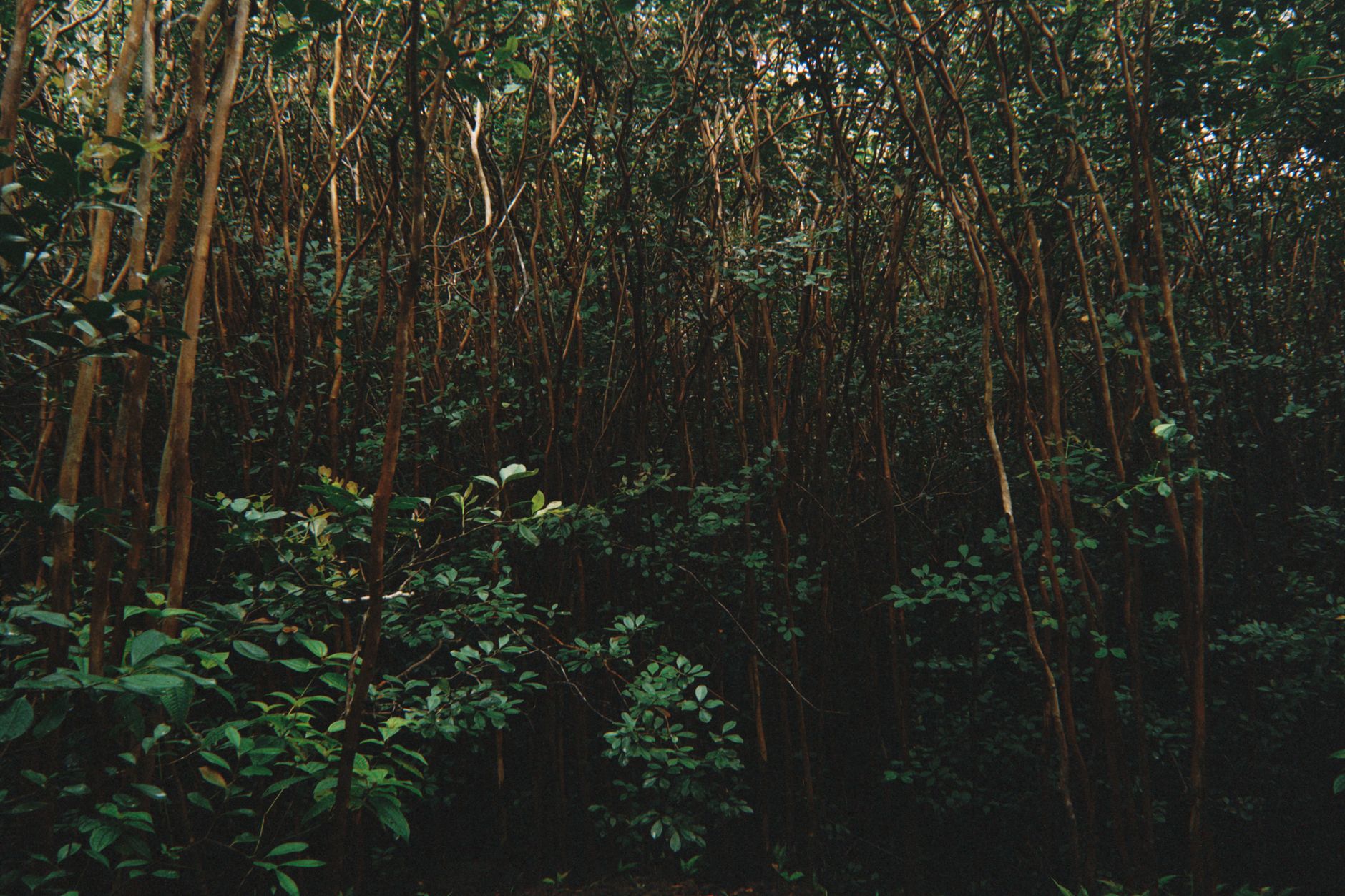
Ohia lehua is the foundation species of Hawaiian montane forest. It is the tree the honeycreepers feed in, the tree that holds the watershed, and the tree the whole system is built around. The pathogens spread in soil and in wood, and boots, tires and gear are an efficient way to move them into uninfected forest.
A managed number of visitors arriving with guides who follow decontamination protocols is a very different risk profile from open access. Given that Hakalau holds some of the best remaining populations of birds that exist nowhere else on Earth, the trade seems reasonable.
How to go, and what the day looks like
Access is through commercial guided tours under Special Use Permits, and five licensed operators currently offer birdwatching and nature trips: Hawaii Bird Guide LLC, Hawaii Birds LLC, Hawaii Forest and Trail, Hawaii Bird Tours and Hawaii Nature Explorers. Book well ahead, because permitted capacity is limited and the good operators fill their birding dates early. The refuge has two units, of which Pua Akala is the one accessible with commercial guides while Upper Maulua is closed to public access entirely. Hunting, firearms, domestic animals, alcohol, ATVs, camping, fires, removing plants and disturbing wildlife are all prohibited throughout.
The day itself is not a refuge visit in the mainland sense, so it helps to set expectations. Pickup is typically well before dawn from Hilo or Waimea, because the drive up is long and slow. The route climbs from sea level to montane forest on saddle roads and then on rough four-wheel-drive track, which is a genuine requirement rather than a suggestion and another reason the guided arrangement makes sense, and you should expect a couple of hours in the vehicle each way.
Once there the walking is generally neither far nor steep, but you are at altitude in cold, wet, often windy forest, and the pace is slow and quiet. A great deal of the time is spent standing still, because honeycreepers are located by sound and then waited for, and a good guide will park the group under a productive tree and let the forest come to you. Groups leave in the early afternoon, partly because the weather closes in and partly because the drive out takes as long as the drive up.
Expect numbers rather than variety. The species list for a day here is short, which is not a poor day; it is what an intact Hawaiian forest bird community looks like, and every bird on the list is one you cannot see anywhere else on Earth. And expect weather, because this is windward Mauna Kea at elevation where rain, wind and cold are normal, and a beautiful morning in Hilo tells you nothing at all.
Birds of Hakalau Forest National Wildlife RefugeWhat you are going to see
This is the reason people accept all of the above. Hakalau protects koa and ohia forest on the windward slope of Mauna Kea, holding the surviving Hawaiian forest avifauna.
Akiapolaau is the headline: a honeycreeper with a straight lower mandible for hammering and a long decurved upper mandible for probing, using both like a woodpecker and a probe at once. It is endangered, it is bizarre, and this is among the best places to find it. Hawaii Akepa is a small orange endangered honeycreeper that nests in tree cavities, which is unusual among its relatives, and Alawi, the Hawaii creeper, is endangered and easily overlooked as it works trunks and branches. Iiwi is the scarlet bird with the long decurved bill that serves as the icon of Hawaiian forest and has declined severely at lower elevations, Apapane is the most numerous native forest bird, crimson and abundant in the ohia canopy, and Hawaii Amakihi is small, green and comparatively resilient. Io, the endemic Hawaiian Hawk, and Pueo, the Hawaiian Short-eared Owl, are both possible over the forest.
A few things beyond the birds make the trip richer. Mature Acacia koa is one of the great trees of the Pacific, carrying sickle-shaped phyllodes rather than true leaves on adult growth, and the stands here are among the better remaining examples. The understory is a lesson in itself, because where fencing has excluded ungulates for decades the difference in ground cover, tree fern regeneration and native shrub diversity against unfenced ground is stark and visible from the track. Ohia lehua flowering is what draws the honeycreepers in, and the density of red blossom varies enormously between trees and seasons, so a tree in heavy flower is where you stand. Endemic invertebrates are present in numbers, including Hawaiian picture-wing flies and native land snails, both as threatened as the birds and considerably less celebrated. And on the rare clear morning the view runs out over the windward slope to the ocean, with Mauna Loa across the saddle.
What the refuge was created to do
Hakalau is unusual among American refuges and the reason is worth knowing. Most national wildlife refuges were established for waterfowl, as breeding grounds, staging areas or wintering habitat, which is why the system is dominated by wetlands and why the Duck Stamp funds so much of it. Hakalau was established in the mid-1980s specifically for endangered forest birds, which made it a new kind of refuge at the time.
What that means on the ground is that management here looks nothing like a refuge auto tour. The work is fencing and removing feral ungulates, principally pigs, cattle and sheep, which destroy understory and create the wallows that breed mosquitoes; replanting koa and ohia across former pasture to reconnect fragmented forest; and controlling invasive plants that outcompete the natives the birds depend on. Decades of that work have produced measurable results, with forest regenerating across areas that were cattle pasture within living memory, and several honeycreeper populations stable or increasing here while declining elsewhere.
So the closed gate is not protecting a wilderness that manages itself. It is protecting an intensive, expensive, ongoing restoration project that happens to contain birds found nowhere else.
Witnessing Hawaiian Native Honeycreepers at Hakalau ForestThe mosquito line, which explains everything
This is the fact that makes sense of Hawaiian bird conservation. Hawaiian honeycreepers evolved with no exposure to avian malaria, which arrived with introduced mosquitoes in the nineteenth century, and the birds have almost no resistance; for many species a single infective bite is fatal.
Mosquitoes are limited by temperature, so historically they could not breed above roughly a certain elevation, and that created a refuge in altitude: forest high enough to be too cold for mosquitoes, where honeycreepers survived while lowland populations were wiped out. Hakalau sits in that high band, and that is the entire reason these birds are still there.
The problem is that a warming climate moves the mosquito line upslope, and on most Hawaiian islands there is not much mountain left above it. That is why you will hear about landscape-scale mosquito suppression work using incompatible-insect techniques, and why it is treated with such urgency, since several species have gone extinct in recent memory while the tools were being developed.
So the forest you are standing in is not a stable relic. It is a shrinking one.
The gear
Hakalau is at six thousand feet on the windward slope of Mauna Kea, it is wet and cold, and you are going with a guide because that is the only way in. The list is short and two items on it are not about birds.
A booking with a permitted operator, which is the whole access question. The refuge is closed to general public entry, a small number of guides hold permits, and the trips fill months ahead. There is no walk-up option and no gate to talk your way through.
Full rain gear, because this is windward Hawaii at elevation and the forest is wet by definition. This is where the trade wind moisture lands.
Warm layers, which surprises people who packed for Hawaii. Six thousand feet in the early morning is in the forties.
Boots you have cleaned before the trip, and this is the item that matters most for the resource. Rapid Ohia Death is soil-borne, ohia is the forest these birds live in, and a visitor carrying spores from an infected area to a clean one does damage that no amount of careful birding offsets.
Close-focusing binoculars, since honeycreepers work ohia blossoms at close range in dense canopy.
Recordings of the target calls for learning rather than for playback, which is the distinction that matters here. Playback at critically endangered species is not acceptable and the guides will not permit it.
And a camera with good high-ISO performance, because the forest is dark and the birds are fast.
Etiquette around critically endangered species
This matters more here than almost anywhere, because the populations are small enough that individual birds count.
-
No playback. Several of these species are listed, the populations are tiny, and drawing a territorial male off a nest in a place with this much predation pressure is not a reasonable trade for a better view. Your guide will not do it and you should not ask.
-
Stay on the route. Off-trail movement spreads Rapid Ohia Death, damages regenerating understory and disturbs birds, and the whole reason you are allowed in is that the visit is controlled.
-
Keep your distance from anything that looks like nesting behavior. Hawaii Akepa nest in tree cavities, and an adult that will not approach the nest while you watch is losing feeding time it cannot spare.
-
Report what you see, because these populations are monitored and a well-documented checklist from a permitted trip has real value.
-
Do not publicize precise locations of rare individuals. eBird already treats several Hawaiian endemics as sensitive and hides the records, which is a feature rather than an inconvenience.
-
Support the operators and the friends group, since the permitted operators are part of the funding and monitoring picture here rather than just a way through the gate.
If you cannot get a permitted trip
Hakalau is not the only option and the alternatives are good. Hawaii Volcanoes National Park is open, free to walk, and holds Apapane, Amakihi and Iiwi in accessible forest. Hosmer Grove on Haleakala, on Maui, is the classic roadside honeycreeper site. Kokee and the Alakai on Kauai hold that island's endemics. And the Puu Oo Trail and other state ground on the Big Island offer forest birding without a permit.
None of these will give you Akiapolaau as reliably as Hakalau. All of them are better than standing at a locked gate.
The honest summary
Book a permitted guide, months ahead, and treat it as the centerpiece of the trip rather than a morning you can slot in. Go up in the cold and the rain and stand under a koa tree while an Akiapolaau hammers above you.
The wider difficulty is that Hawaii is a hard place to read from a map, with federal refuge, national park, state forest reserve, natural area reserve, Department of Hawaiian Home Lands, private ranch and conservation easement all interleaving under very different access rules and almost no consistency in how they are signed. Guidepole Bird carries the ownership and access layer, which here is the difference between a forest reserve you may walk into and a refuge unit that turns you away at a locked gate after a two-hour drive. That is the exact failure this article exists to prevent.
And then go and look at what is happening to the forest below the mosquito line, because that is the other half of the story and it is the half that is moving.
For the wider picture, Hawaiian honeycreepers and where to find them covers the accessible alternatives island by island, and Kauai birding covers the other endemic stronghold.
The disease story that explains why this forest exists as a refuge at all is in Hawaiian honeycreepers and where to see them. The other island where the same drama is playing out, with fewer birds left, is in birding Kauai. Why the refuge is closed to you rather than open is in a wildlife refuge is not a park and nesting and seasonal closures explained. The playback question, which is sharper here than anywhere else in this library, is in playback ethics.
And if a permitted trip is not available in your window, the honest alternative is Hawaii Volcanoes National Park, where several of the same species occur in accessible ohia forest at similar elevation and where you can walk in without a guide.