Fish
Fish Fire
Fire Hike
Hike Bird
Bird

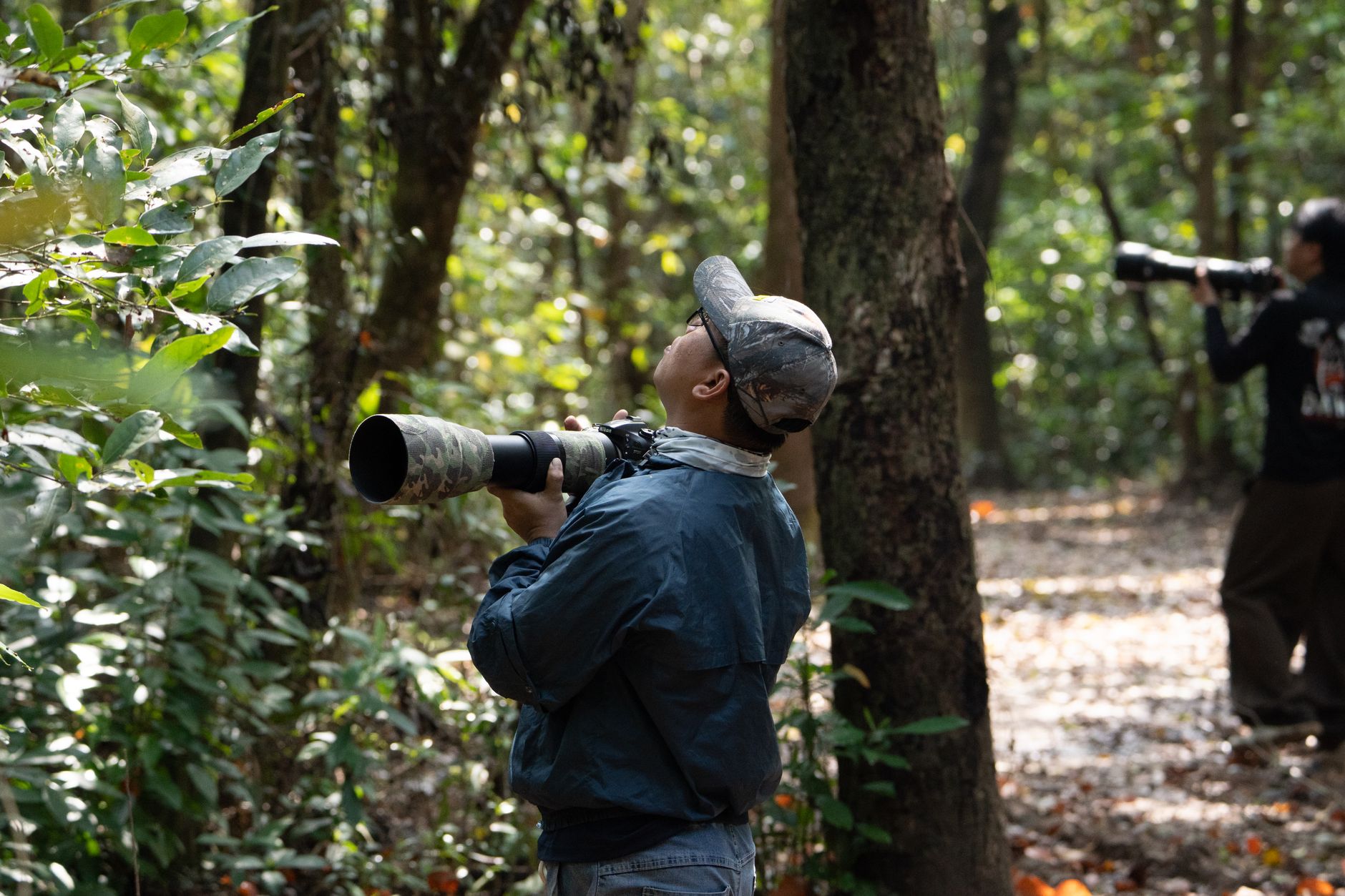
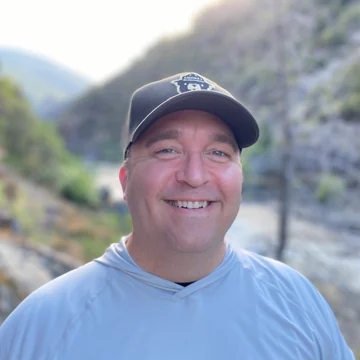
Play a recording of a Northern Pygmy-Owl in the right patch of forest and you may get every songbird within two hundred yards mobbing you inside a minute. Play a male's own song back at him in his territory and he will come to fight it, because from his point of view a rival has appeared in his hedge and is refusing to back down.
Both work extremely well. That is the problem.
What playback does
It is worth being precise here, because disturbance is a vague word doing very heavy lifting in most discussions of this.
Territorial song is a challenge. A singing male is advertising occupancy and fitness, and when he hears a rival his options are to escalate or to cede ground. The response is not casual; it is an energetic, hormonal, high-stakes reaction to a genuine threat to his breeding season. The difference between that and a real dispute is that he cannot win. The rival never backs down, never leaves and never resolves, so the encounter has no ending. It costs him time and energy at the point in the year when both are scarcest, and it pulls him away from foraging, from his mate and from watching the nest. Repeated challenges in a territory can cause a bird to shift or abandon it, and there is evidence of reduced pairing success in heavily played-to territories.
Predator calls work on an entirely different system. Playing an owl or a raptor triggers mobbing, which is a real antipredator response with real costs: the birds are exposed, agitated, and not doing anything else while it lasts.
None of this makes playback categorically wrong. It makes it a tool with a price attached, which turns the question into when that price is worth paying.
Where it is prohibited
The rules here are real but scattered, which is why they catch people out. Many national parks prohibit or restrict it, and Park Service policy addresses audio devices directly, with several parks carrying explicit birding-playback restrictions. National wildlife refuges frequently prohibit it, particularly around sensitive species, and some state parks and preserves ban it outright. Organized events and private reserves usually have their own rules, and guides on commercial trips are often bound by them.
The one most birders have never considered is the Endangered Species Act. Deliberately harassing a listed species can constitute take, and harassment includes disruption of normal behavior patterns such as breeding. Using playback on a listed bird is legally exposed in a way that has nothing to do with etiquette.
As with everything else in access, the category tells you very little and the specific unit tells you everything, so check the site rather than the type of site.
Ten Rules for Using Audio Playback While BirdingWhat the ABA Code says
The American Birding Association Code of Birding Ethics is the closest thing the hobby has to a shared standard, and its position is narrower and more useful than a flat prohibition. It asks birders to limit the use of recordings and other methods of attracting birds, and it singles out three situations where restraint matters most: heavily birded areas, species that are rare in the area, and threatened or endangered species.
That framing is valuable because it identifies the actual variable, which is cumulative pressure on an individual bird rather than the abstract wrongness of a speaker. In a heavily birded spot the bird is not hearing your playback, it is hearing this month's forty-third. A vagrant is already under stress and is the single bird most likely to be played to repeatedly by everyone who comes to see it.
The same logic sits behind eBird's decision to hide locations for around 325 taxa across nine categories of risk, because publishing a precise location was demonstrably causing targeted disturbance from birders and photographers. That is a striking admission from a platform whose entire purpose is sharing sightings. If a species is on that list, the community has already concluded that access to it should be limited, and playing a recording at it is the opposite of that conclusion.
A workable personal standard
Reasonable birders differ on this, but most experienced ones land somewhere near the following line.
Do not use playback at all for listed species, known nest sites, rare or vagrant birds, owls at a day roost, anything at a well-known staked-out location, or anywhere it is prohibited. Consider it acceptable, used sparingly, for common species in unbirded country, when you need to confirm an identification, in a research or survey context, outside the breeding season, or for teaching where a single brief use replaces an hour of frustration.
If you do use it, the mechanics matter:
-
Keep it short. Ten or fifteen seconds, not a loop.
-
Keep it quiet. As low as will work, not as loud as the phone goes.
-
Play it once. If the bird responds, you got what you came for.
-
Stop the moment it works. Continuing to play at a bird that has already come in is the most common and least defensible error in the whole business.
-
Never at a nest.
Group birding is where all of this compounds, and it deserves its own thought. On a guided trip a single playback serves twenty people at once, which sounds efficient and is why it is common on commercial tours. The other side of the ledger is that a site visited by three tour groups a week receives three playbacks a week at the same territory, indefinitely, and the individual bird experiences that as continuous harassment. Good guides know this and manage it by rotating sites and using it rarely, and many well-run operations have internal policies stricter than any regulation. As a participant it is entirely reasonable to ask what a leader's policy is before booking. As a leader, the honest position is that your obligation to show people the bird does not outweigh the bird's interest, and saying so out loud to a group is good teaching.
Owls are the sharpest case
Night birding with playback deserves a separate warning, because owls are highly responsive and it works spectacularly well on them, which is precisely why they are so heavily played to.
Day roosts are the worst version of it. A roosting owl disturbed in daylight gets mobbed by songbirds, loses sleep, and may be forced to move to a worse roost; some well-known sites have been abandoned entirely. Several owls are also listed, so the legal exposure is not hypothetical, and eBird treats owls as sensitive for exactly these reasons.
The standard among careful birders is increasingly not to play to owls at all, and to find them instead by listening and by learning where they are.
Is Playing Bird Sounds Actually Bad for Birds?What the research shows
Both sides of this argument tend to assert rather than cite, so it is worth summarizing honestly.
Playback reliably increases detection, and this is not in dispute. It is why survey protocols for many secretive species use it, and why rails, owls and some woodpeckers are surveyed with standardized call-broadcast methods rather than passive listening, which misses them. Responses are strong and measurable, since birds approach, sing more and change their behavior, which is the entire basis of the technique. Effects on individuals are documented too, with studies finding changes in singing behavior, movement and time allocation both during and after exposure.
Population-level effects are considerably less settled. Some studies find measurable consequences in heavily played-to areas, others find effects that fade quickly, and the honest summary is that it depends heavily on species, intensity, timing and how often a given individual is exposed.
That uncertainty is an argument for restraint rather than against it. The species where the evidence looks most concerning are exactly the ones people most want to play to, which is to say rare, range-restricted, heavily targeted birds, where cumulative exposure per individual is highest and where sample sizes for research are smallest. It is also worth noting that standardized research use is not the same activity as recreational use: a survey plays a fixed protocol once, at a defined point, in a defined season, by one observer, and records that it happened.
The gear
This is the one gear list in the library where the most important item is the thing you decide not to use.
Patience instead, which is the actual alternative and works more often than people believe. Most secretive birds are found by standing still at the right edge at the right hour, and the birders with the longest lists are generally the ones who wait rather than the ones who broadcast.
Knowledge of the local rules, because playback is flatly prohibited in national parks, on most national wildlife refuges, and at many state and local reserves, and prohibited by law for federally listed species. This is not a matter of personal ethics in those places; it is a regulation.
A recorder rather than a speaker, which is a genuinely better tool. Recording an unidentified song and studying it later teaches you more than playing a song back does, and it produces documentation.
A good pair of ears, developed over a winter with recordings, which is what actually finds birds.
A volume habit, if you use playback at all where it is legal: barely audible, at the level of a distant bird, not at the level of one in the next bush.
A mental timer, because the defensible version is fifteen or thirty seconds and then stopping, not a loop.
And the willingness to dip, which is the whole ethic compressed into three words. Not seeing the bird is an acceptable outcome.
Alternatives that work better than people expect
Most of the situations where a birder reaches for a phone have a better answer available.
Pishing, a soft repeated sound that mimics scolding, draws birds in on curiosity or mobbing instinct. It is effective on many passerines, far weaker in intensity than territorial playback, and much more easily ignored by a bird that does not want to engage. Sitting still is the single most underused technique in birding: someone who sits down for twenty minutes in the right spot will usually see the skulker, and will also see everything else that had been avoiding them.
Beyond that it is mostly a matter of putting yourself in the right place at the right time. Knowing where a species forages within a patch beats calling it out of the wrong end of it. Most difficult birds are not difficult at dawn, they are difficult at eleven in the morning, which is when most people go looking. A bird that skulks in July sings from an exposed perch in May. And a species you did not see is a reason to go back, which is not the worst outcome available.
Photographers, and the harder version of the same problem
Playback is one instance of a wider question, and bird photography is where that question currently bites hardest, because the incentives are different. A birder needs a view. A photographer needs a close, clean, well-lit, unobstructed view, which is a far more demanding requirement and pushes steadily toward getting nearer.
Baiting with live or dead prey to draw raptors and owls into position is widespread, contested, prohibited in many places, and changes behavior in ways that get birds killed on roads. Nest photography is the sharpest case, since a hide placed too close or vegetation trimmed for a clear line exposes a nest to predators that would never otherwise have found it. Flash at night on owls is contentious and, at close range, plainly not costless. Drones near nests and colonies flush birds at scale, which is why they are prohibited across most public land.
The test is the same one that applies to playback. If the bird's behavior changed because you were there, you were too close, too loud or too persistent, and the photograph is not worth it.
The honest version
Playback is not evil, and blanket condemnation of it is not a serious position. Researchers use it, surveys depend on it, and a fifteen-second clip in empty country is not a conservation crisis.
But the situations where birders most want to use it, meaning a rare bird, a difficult skulker or a staked-out owl, are precisely the situations where it does the most harm and where the largest number of other people are doing it too.
The rule that survives contact with all of the above is short. The more you want to play the recording, the less you should.
Access and legality generally are in that bird is on private land, refuge rules in a wildlife refuge is not a park, and seasonal disturbance in nesting closures explained. For the reporting side, see what an eBird hotspot tells you.
The places where playback moves from questionable to indefensible are covered in Hakalau Forest National Wildlife Refuge and Hawaiian honeycreepers and where to see them, where the target species number in the hundreds. The regulatory side is in a wildlife refuge is not a park and nesting and seasonal closures explained. The same disturbance logic governs roosts, in shorebirds and tides, and the reporting etiquette around a found rarity is in can you legally bird here.