Fish
Fish Fire
Fire Hike
Hike Bird
Bird

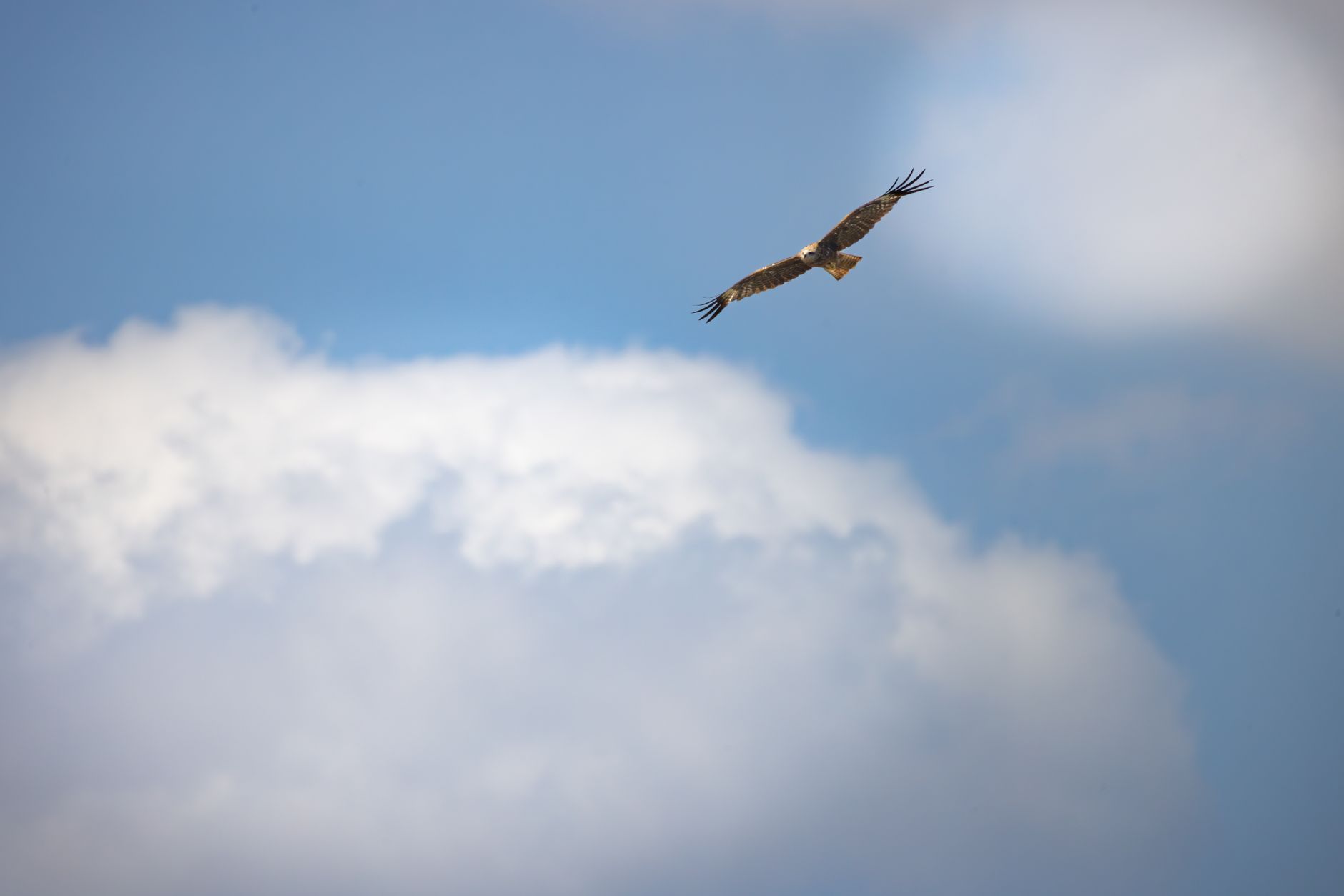

There is a folding chair on a ridge in Virginia with somebody in it, every day from late August to late November, from about eight in the morning until the thermals die. They are counting hawks, and they have been doing it at that site for decades.
It looks like an eccentric endurance sport. It is, for several species of raptor, the primary long-term population dataset in existence.
Why raptors concentrate
Migrating songbirds move on a broad front, mostly at night, and there is no hill from which you can count them. Raptors do something entirely different, and that difference is the reason hawk watching works at all.
Most migrating raptors avoid flapping. Powered flight is metabolically expensive for a large bird, and a hawk that flaps its way to Central America arrives in poor condition or does not arrive, so instead they use free lift. Thermals are columns of rising air over sun-heated ground: a raptor circles up inside one, gaining hundreds or thousands of feet without a wingbeat, then glides down-course until it finds the next. The entire migration is a series of these, and a group of birds circling together in one is a kettle. Ridge lift is the other mechanism, where wind striking a long ridge is deflected upward into a continuous band of rising air, and a bird can hold that line for miles. The Appalachian chain is essentially a raptor highway.
The consequences are strict, and they are what put the chair where it is. Thermals do not form over cold water, so raptors avoid crossing large water bodies and funnel around them instead. They follow ridges. They stack up at peninsulas and shorelines where the land runs out and they have to decide whether to commit. Put a chair at one of those leading lines and the entire regional migration files past you.
The great watch sites are all variations on that single situation. Ridge lines carry birds along the Appalachians on north-west winds. Peninsula tips stack them up as they hesitate before a crossing, which is the story of Cape May and of Kiptopeke on the Delmarva. Lake shores deflect birds along their edges, producing enormous spring counts at particular points on the Great Lakes. In the west it is coastal ridges like the Marin Headlands above the Golden Gate, and mountain passes and desert ranges in the interior. The common ingredient is always a barrier the birds will not cross and a feature that carries them along it.
Raptor Migration by the Millions and the Methods Behind the NumbersThe count is real data
This is the part visitors tend to miss. A hawk watch is not a hobby dressed up as science, it is a standardized monitoring program with a protocol, and the protocol is what makes it worth anything.
Counts record hours of effort, weather, wind direction, visibility and species by hour. Effort is the critical field, because it is what makes a number from one Tuesday comparable to a number from a Tuesday in 1987. Data goes to HawkCount, the database maintained by the Hawk Migration Association of North America, as hourly and daily totals. Some sites have been running continuously since the 1930s, and that length of record is rare in wildlife monitoring.
Undercounting is expected and, crucially, consistent. A hawk watch does not claim to record every bird that passed. It claims to record a comparable sample, the same way, every year, which is a much more useful thing to have.
What the day looks like
Mornings are slow, because thermals need the ground to warm first, and the opening hours are often quiet early in the season. Late morning into early afternoon is the flight, as the lift strengthens and birds get up and move. By late afternoon the thermals collapse and the birds settle.
Wind direction matters more than anything else on the calendar. Every site has a known good wind, usually the one that generates lift along the local terrain and pushes birds toward the lookout, and on the wrong wind the same hill records a tenth of the birds. The event worth planning around is a cold front: the day after one passes in autumn, with north-west winds behind it, is when the big eastern flights happen. Experienced watchers read the synoptic chart rather than the date.
Most days produce modest numbers. Occasionally a site records thousands of birds in a few hours, and those days are the reason people keep turning up for the other ones.
Species move on a schedule
This is one of the more satisfying things to learn, because it is predictable. Late August into September brings bald eagles, ospreys, American kestrels and the first broad-winged hawks. The broad-wing peak is a narrow window in mid-September across much of the east and it is the spectacle of the season, with birds moving in enormous kettles and single-day counts running into the thousands or tens of thousands.
Late September into October shifts to sharp-shinned and Cooper's hawks, peregrines, merlins and harriers. From late October into December it is red-tailed and red-shouldered hawks, golden eagles, rough-legged hawks and northern goshawks.
The practical upshot is that the same lookout gives you a completely different set of species depending on the week. Turning up in mid-September and again in early November is effectively visiting two different sites.
Learning to identify them
Hawk watching is identification at range, in silhouette, usually against bright sky, and it is a different skill from garden birding. The colors are gone at that distance, so shape is all there is: wing proportions, tail length, head projection.
Flight style does most of the remaining work. Accipiters flap-flap-glide. Falcons are direct and powerful. Buteos soar on broad wings. Harriers tilt and rock low over open ground. Eagles are slow and enormous. Wing position sorts several of the rest, with turkey vultures teetering in a strong dihedral where a bald eagle holds flat.
The fastest way to get better at any of this is to stand next to somebody who has done ten thousand hours of it and listen to what they call and why. Hawk watch counters are, almost universally, generous teachers.
What the counts caught
The strongest argument for long-term monitoring is what these sites documented while it was happening.
DDT came into wide use from the 1940s, accumulated up food chains, and in birds at the top of them interfered with calcium metabolism to produce eggshell thinning. Eggs broke under the weight of incubating adults. Bald eagles, peregrines, ospreys and brown pelicans all collapsed, and the peregrine was extirpated as a breeding bird from the entire eastern United States. Because the watches had been counting the same way since the 1930s, the decline appeared in their data as a documented trend rather than as anecdote. DDT was banned in the United States in 1972, the peregrine and bald eagle were listed, and captive breeding and reintroduction followed. The same counts then documented the recovery: peregrine numbers at eastern watches climbed from almost nothing to routine, and the species was delisted in 1999, with bald eagles following in 2007.
The record keeps earning its keep. Broad-winged hawk trends are difficult to assess any other way, because the species is dispersed and inconspicuous on the breeding grounds and concentrates spectacularly only on migration. Long runs of data let researchers detect shifts in migration timing that a short study cannot separate from ordinary year-to-year noise. And the decline of the American kestrel is one of the clearer signals in eastern count data, and still not fully explained.
That is what an afternoon of squinting at distant specks contributes to.
The Migration Network: Thirty-Five Years and CountingGoing to one
Hawk watches are almost all free, open to the public, and pleased to have visitors. A few things make the day work better:
-
A folding chair. There is rarely seating and you will be there for hours.
-
Sun protection, because you are looking up, in the open, all day.
-
Binoculars you can comfortably hold overhead, which favors lighter models more than usual.
-
The site's operating dates and hours, which are seasonal and specific, along with any access road or parking restrictions. Worth confirming before a long drive, and exactly what Guidepole Bird is for.
The etiquette is short. Do not block the counter's view, do not call out birds unless you are confident, and ask before sitting in a spot that is obviously somebody's.
If you want to go further than visiting, most watches would be glad of the help and the entry path is gentler than it looks. Start by turning up regularly, because consistency matters more than expertise and counters will teach anyone who keeps coming back. Learn to spot before you learn to identify, since finding a distant speck is a separate skill from naming it and it is the one the count most needs. Learn the protocol, which is about effort and consistent method rather than about catching every bird. And under-call rather than over-call: an unidentified raptor recorded as unidentified is useful data, where a misidentified one is worse than nothing. Many sites run on a paid seasonal counter supported by volunteers, and a good number have been short of both in recent years.
The gear
A hawk watch is several hours of sitting on a ridge looking up, and the gear is chosen for comfort and for a very specific kind of looking.
A folding chair, which is the item that separates people who stay all day from people who leave at noon. Hawk watching is sitting, and the good flights frequently happen in the afternoon.
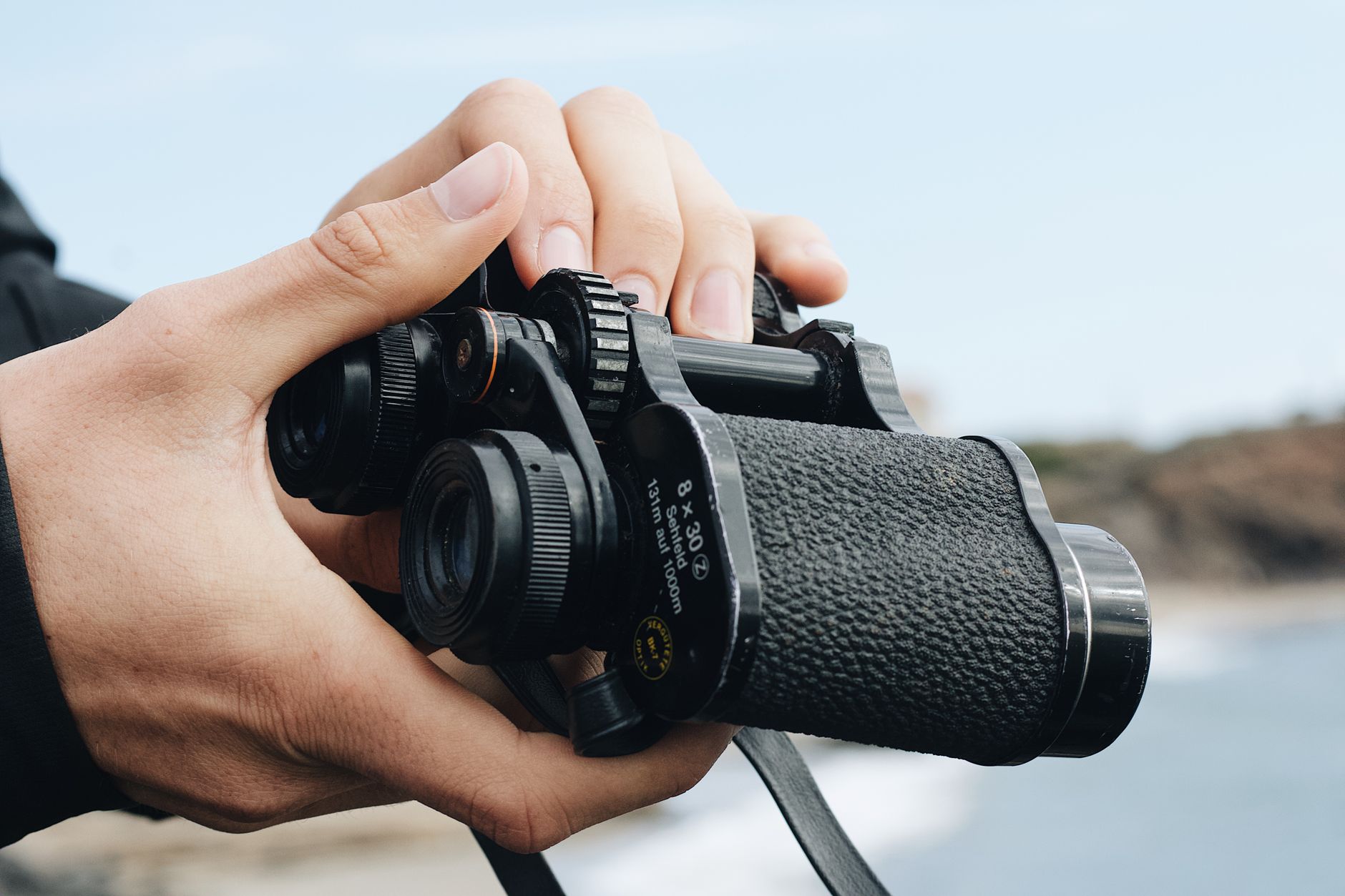
Light binoculars, and this is the one situation in birding where weight matters more than aperture. You are holding them above the horizontal for hours. Eight by thirty-two beats eight by fifty-six here, comfortably.
A hat with a brim and sunglasses, because you are looking toward the sky most of the day and the glare is genuinely tiring.
A synoptic forecast rather than a local one, which is the planning skill. Eastern hawk watches fire on the day after a cold front passes, with northwest winds behind it. Knowing that turns a hawk watch from a lottery into a decision.
Layers, since a ridge in October runs from cold at dawn to warm at noon and back.
A raptor-specific guide, ideally one organized by shape and flight style rather than by plumage, since almost everything is a silhouette at distance.
And the willingness to ask, which is the real gear. The counters at a hawk watch are usually happy to explain what they just called and how they called it, and a day spent next to one is the fastest raptor identification tuition available anywhere.
Spring is a different animal
Almost all hawk watching is autumn, and the spring version behaves differently enough to be worth knowing about. There are fewer sites, because birds returning north spread out rather than funneling, and much of the eastern concentration simply does not happen. The Great Lakes are the exception: birds moving north hit the water, track along the shores rather than crossing, and produce enormous counts at specific points.
The weather trigger inverts too. Autumn flights follow cold fronts and north-west winds, where spring flights follow warm fronts and southerlies pushing birds north. So does the age structure: autumn is dominated by juveniles on their first migration, which is a large part of why autumn identification is harder, while spring skews toward adults in clean plumage. Spring birds are also in a hurry, since breeding territory is contested and arriving early matters.
Fewer birds, better-looking birds, and a considerably easier identification problem. It is a good place to start.
The short version
Raptors migrate on free lift, free lift only exists in particular places, and hawk watches sit in those places and count.
Go on a north-west wind the day after a front, in mid-September if you want broad-wings or early November if you want eagles, with a chair and a hat. Then stand next to the counter and ask what they are looking at.
Access and land-manager questions are in that bird is on private land. Refuges, which host several major watches, are in a wildlife refuge is not a park, and the data side of birding is in what an eBird hotspot tells you.
The nesting-season equivalent of a big raptor concentration, in country that looks nothing like a ridge, is in the Snake River Birds of Prey area. Winter concentrations are in where to see bald eagles in winter and the Klamath Basin refuges. The data culture that hawk watches share with eBird is in reading eBird hotspots, and the optics decision behind that light pair of binoculars is in choosing binoculars.
A final note on what the counts are for, since it is easy to treat a hawk watch as a spectacle rather than as a monitoring station. These sites produce some of the longest continuous wildlife datasets in North America, several of them running unbroken since the 1930s, collected almost entirely by volunteers standing on a ridge writing numbers down. That is why the raptor declines of the DDT era were detected when they were, and it is why a bad year for a species shows up in the data before anybody has a mechanism to explain it.